startups
(104)
Lore would like a word with your buzzwords
A PR consultancy made a font that crosses out jargon. The joke explains its serious business: helping people with something to say become worth listening to.
F6S built a business around the work between the big ideas
A network of 6.5 million members, a cupboard full of software deals and a growing role in European innovation: F6S makes the unglamorous parts of building a company easier to find.

AvidXchange and Rho Are Barely Rivals
They both automate accounts payable, but the resemblance ends there. One is built around the messy workflows of established industries; the other starts with the bank account of a funded startup.
The VC Who Sells Before He Wires
Jordan Wan spent ten years staffing the sales teams of a thousand startups. Now he invests in the founders before they have one - and helps them figure out how to sell.

Commsor Bet That Your Network Was the Product
The community-software startup spent six years arguing that trust, not cold email, is how companies actually grow - then folded the idea, and itself, into The Swarm.

Plain and Gladly Are Both Trying to Kill the Support Ticket
Two startups, two very different customers, one shared enemy. Plain wants developers to forget the inbox; Gladly wants retailers to forget the case number. Here is what the end of the ticket actually looks like.

Attio
The AI-native CRM rebuilding customer relationship software around flexible data and always-on revenue agents - trusted by more than 30,000 companies including OpenAI, Linear, and Ramp.
Adalo
Adalo is a no-code platform that lets anyone design, build, and publish database-driven native mobile apps and web apps - straight to the Apple App Store and Google Play - using a drag-and-drop visual canvas and AI-assisted building, without writing code. Founded in 2018 by David Adkin, Ben Haefele, and Jeremy Blalock and based in St. Louis, Missouri, Adalo has grown to hundreds of thousands of registered makers and now offers flat-rate pricing that stays fixed regardless of app usage.

Florin
Florin is a financial operating system for startups that brings banking, payments, cards, and treasury into a single account. Rather than reselling another bank's rails, the company is building the underlying infrastructure end to end, so money moves in real time on a single ledger it owns. Florin launched out of Y Combinator's Summer 2026 batch with an invite-only membership for venture-backed companies.
Techstars
Techstars is a global pre-seed investor and startup accelerator founded in Boulder, Colorado in 2006. It runs three-month, mentorship-driven accelerator programs that give early-stage founders capital, a dense mentor network, and lifelong connections in exchange for equity. Since its first class in 2007, Techstars has backed more than 10,000 founders across programs in dozens of cities and 150+ countries, producing companies such as SendGrid, DigitalOcean, ClassPass, PillPack and Remitly.

Roger
Roger is a New York eSignature and contract platform (YC W21) that turns clunky PDF signing into an app-like, mobile-first experience. Built for startups, SMBs, and growing sales, HR, and finance teams, it pairs reusable templates, approval workflows, smart reminders, and a searchable contract repository with pay-as-you-go pricing - positioning itself as a faster, simpler alternative to DocuSign.
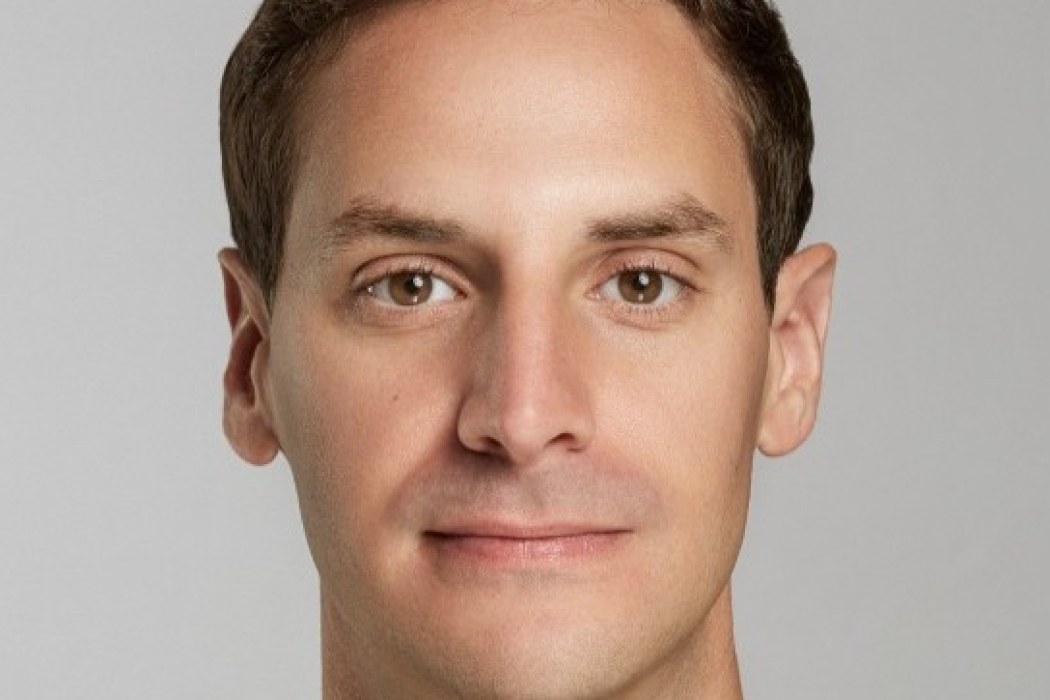
Sam Blond
Sam Blond is a go-to-market operator turned founder who built his reputation scaling startup sales teams. He was VP of Sales at Zenefits and Chief Revenue Officer at Brex, where he helped drive revenue from near zero to roughly $400M ARR. After an 18-month run as a partner at Founders Fund, he decided investing was not his fit and went back to operating. In 2026 he co-founded and now leads Monaco, an AI-native sales platform for startups, alongside his brother Brian Blond.
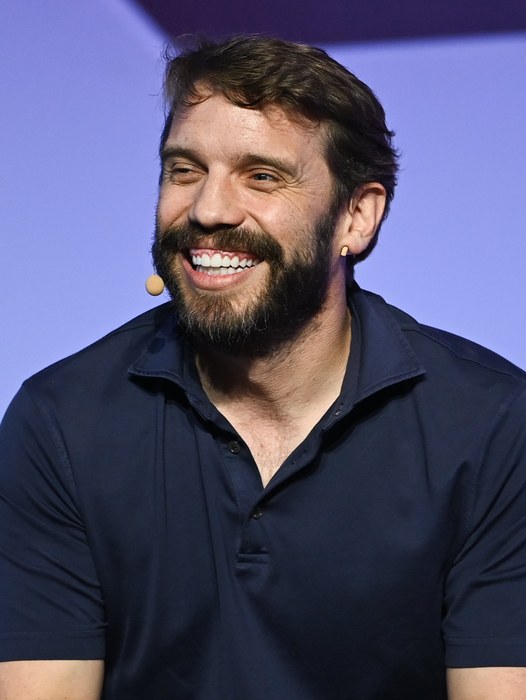
Ryan Petersen on AI, Logistics, and the Future of Flexport
In this episode of Y Combinator's podcast The Light Cone, Flexport founder and CEO Ryan Petersen explains how artificial intelligence is transforming global logistics. Petersen details how AI already saved 2% of Flexport's ocean freight spend while improving transit time 20%, how the company aims to make ocean container shipping 8-10% cheaper, and how AI agents now make phone calls, parse contracts, detect unhappy customers, and automate freight forwarding work. He also reflects on incumbency advantages in AI, his personal 'founder mode' evolution, capital discipline, and a sweeping philosophical vision of what automation means for humanity.
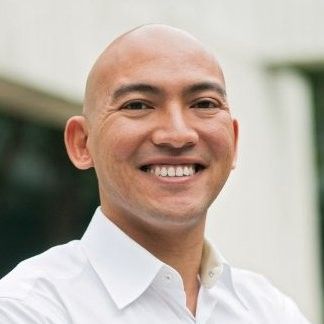
Zouhair Belkoura
Zouhair Belkoura is the founder and CEO of Keepsafe, a San Francisco company that builds a family of consumer privacy apps used by tens of millions of people worldwide. A former electrical engineering PhD who researched mobile video coding, he has built Keepsafe around the idea that privacy is a form of freedom and that ordinary people deserve simple tools to control their personal photos, messages, and browsing. He is a frequent writer and speaker on the difference between abstract data privacy and the content privacy that actually matters to people's daily lives.
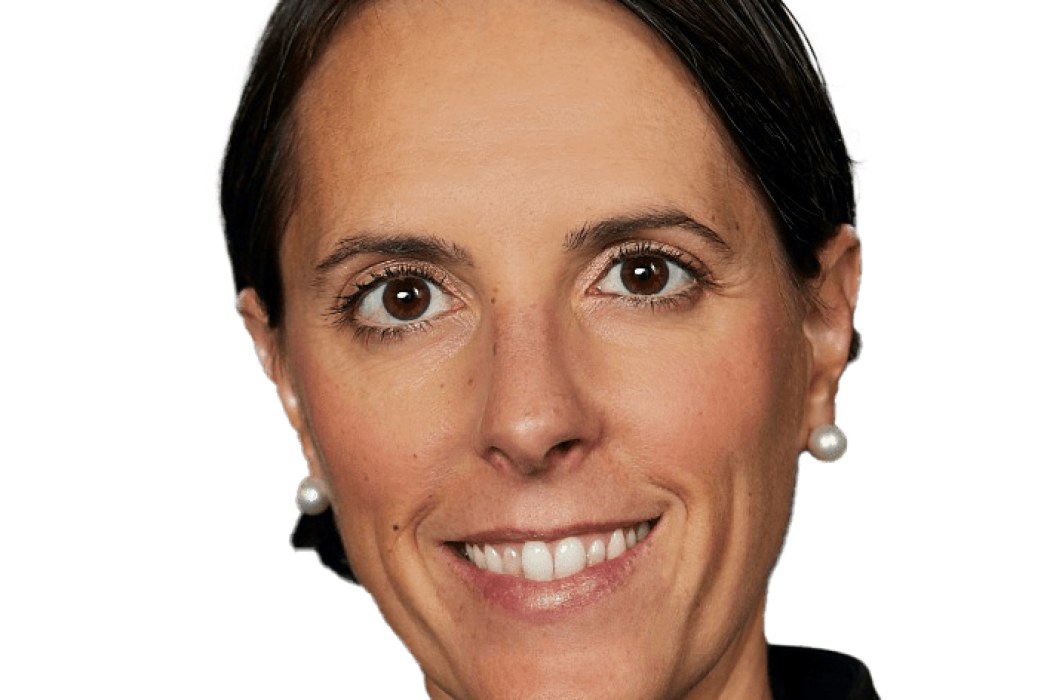
Cristina Vila Vives
Cristina Vila Vives is the founder and CEO of Cledara, a SaaS spend-management platform that gives companies visibility and control over their software subscriptions. After more than a decade running operations teams in the financial industry, she launched Cledara in 2018 to solve a problem she kept seeing firsthand: companies losing money and time to a sprawling, unmanaged stack of software. Cledara now serves over a thousand customers across Europe and the United States, and Forbes has named her among the business leaders changing the world.

The Data Was Locked in a Vault. Subsalt Found a Way to Share It Without Opening the Door.
This Microsoft customer story details how healthcare technology startup Subsalt built a HIPAA-compliant synthetic data sandbox on Microsoft Azure and Microsoft Fabric to help medical researchers and students at UT Southwestern Medical Center access real-quality clinical data in days instead of months, accelerating research outcomes while safeguarding patient privacy.
COLABS
COLABS is a flexible workspace and community platform that provides fully serviced offices, coworking space, and back-office support for startups, scaling companies, and enterprise teams. Founded in Pakistan in 2019 by twin brothers Omar and Ali Shah, it operates more than 500,000 square feet across 10+ locations serving over 5,000 members, and in April 2026 opened a 4,000-square-meter flagship campus in the Al-Narjis district of northern Riyadh to anchor its expansion into Saudi Arabia.

Fez Zafar
Fez Zafar is Chief of Staff at Mercor, the AI talent marketplace that vets, matches, and pays experts powering frontier AI labs. A 2024 Harvard graduate who was elected First Marshal of his class, he helped scale Mercor through one of the fastest revenue ramps on record and now leads hiring and cross-functional operations across its San Francisco and New York teams. Before Mercor he was an analyst at Village Global, a research assistant to economist Larry Summers, and a campus builder known for comedy, community events, and a student interview podcast.
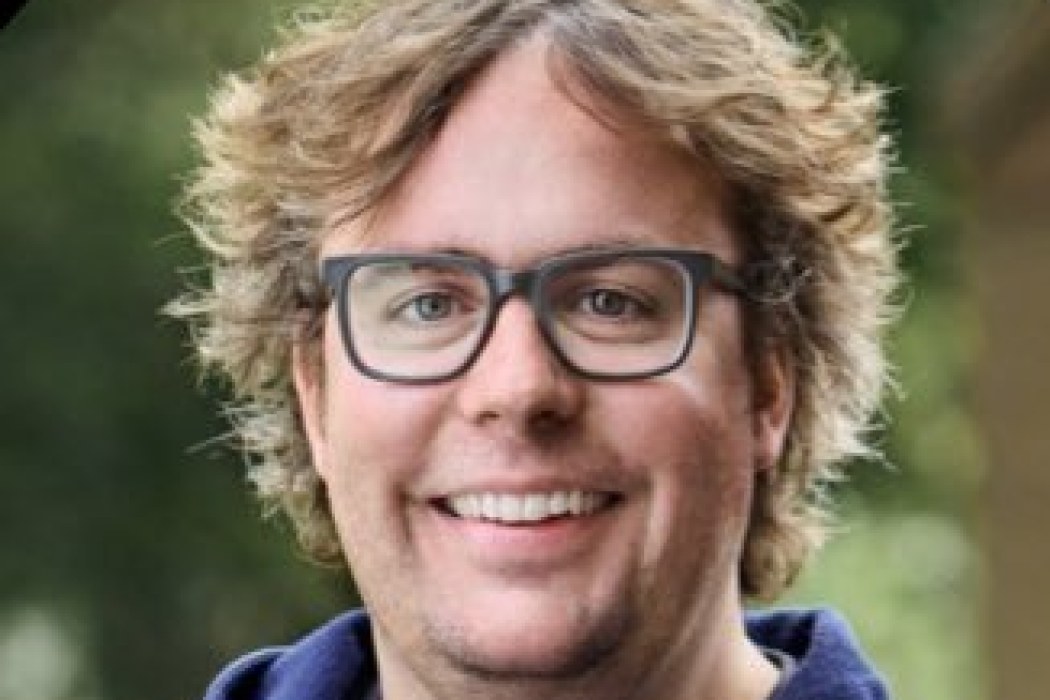
Jonathan Cornelissen
Jonathan Cornelissen is a Belgian entrepreneur, PhD in financial econometrics, and the co-founder and founding CEO of DataCamp, the online data science education platform he started in 2013. Frustrated while teaching himself R during his doctorate, he built DataCamp to make data skills accessible through interactive, browser-based courses. Over six years as CEO he grew it to more than 10 million learners, 200,000 paying subscribers, 2,500 enterprise customers and over $50 million in annual recurring revenue. He authored an introductory R course completed by over a million learners. Since stepping back from the CEO role he has focused on angel investing across education, AI and crypto, and writes about company building, hiring and startup equity.

How My Company Built an AI App So Good We Sold It for $650 Million
In this Y Combinator Startup School talk, Jake Heller, co-founder and CEO of Casetext, explains how his team stopped everything at $20M in revenue to build CoCounsel, the first AI assistant for lawyers, on early access to GPT-4 — a bet that led to a $650 million acquisition by Thomson Reuters. He lays out a practical playbook across three areas: how to pick an idea (target jobs people already pay for, in categories of assist, replace, or do the previously unthinkable), how to actually build reliable AI (map exactly what a professional does, turn each step into prompts or plain code, and grind on evaluations until you pass 97-99% of tests), and how to market and sell it (build a genuinely great product first, price to value, build trust with head-to-head comparisons, and watch out for pilots that never convert to real revenue).
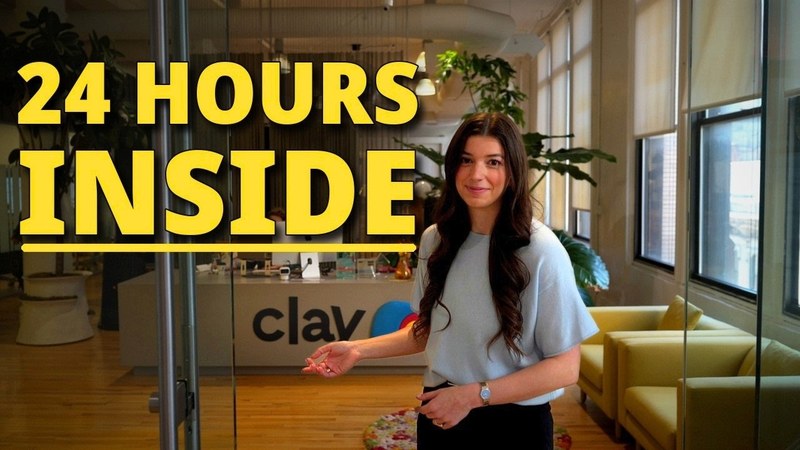
Inside Clay: What Is a Go-To-Market Engineer?
In this episode of 'Stories of Scale,' a host spends a full day inside Clay, the $5 billion New York startup that coined the term 'go-to-market engineer,' to figure out what this fast-growing role actually is. Shadowing Everett Berry, Clay's Head of GTM Engineering, along with teammates like Spencer, Varun (co-founder), and George, the video unpacks how GTM engineers blend engineering, marketing, and sales to build automated systems that find, understand, and reach customers. It also reveals Clay's two-team 'flywheel' — an internal pipeline team and a forward-deployed customer-facing team — that helped the company scale from five years of near-zero revenue to over $100 million and 16,000+ customers.
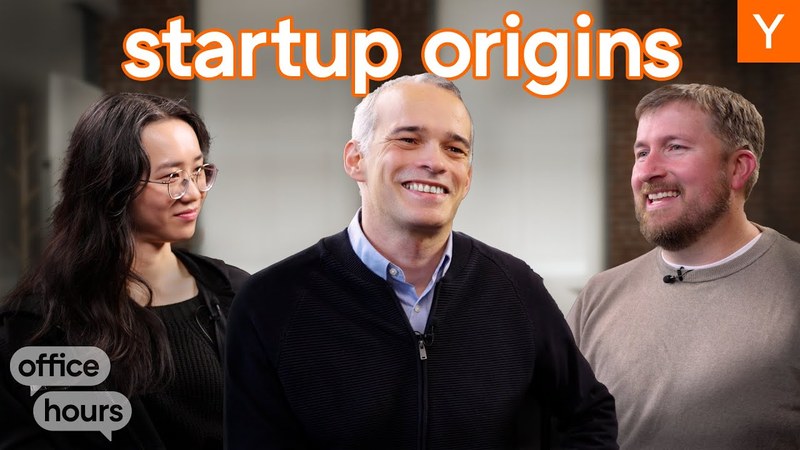
How the Best Startups Really Begin — YC Office Hours
In this episode of Y Combinator's Office Hours, a rotating cast of YC group partners pulls back the curtain on how legendary startups actually began. Using real interview memories of companies like Solugen, CaptivateIQ, Amplitude, Segment, Brex, Jeeves and Nourish, the partners argue that companies such as Airbnb, Stripe and Dropbox looked indistinguishable from every other early-stage startup on day zero. The through-line: greatness comes not from a magical origin but from tens of thousands of decisions, a bias for action, obstinate conviction, clear and honest communication, and the willingness to pivot until you build something people want.
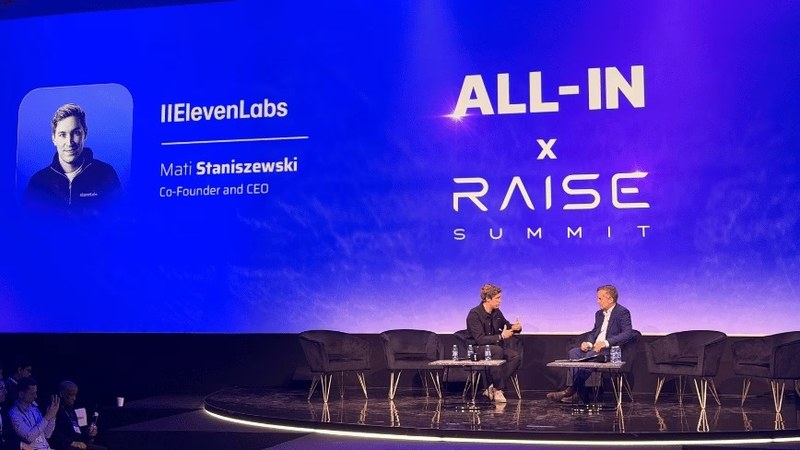
The AI-Native Empire: ElevenLabs and Legora on the All-In Stage
Recorded live at the RAISE Summit inside the Louvre, this two-part All-In Podcast conversation, hosted by Jason Calacanis, features ElevenLabs co-founder and CEO Mati Staniszewski and Legora founder and CEO Max Junestrand. Staniszewski details how ElevenLabs raced from a research project to roughly $600 million in annual revenue in under three years, why the company runs on small engineer-embedded teams with zero product managers, how it protects voices from impersonation while paying creators over $22 million, and how it out-competes frontier labs like OpenAI and Anthropic on voice. Junestrand explains how Legora is compressing the trillion-dollar legal-services market with AI agents, growing 50% quarter-over-quarter for seven straight quarters, deploying 'forward-deployed lawyers,' and disrupting legacy players like LexisNexis and Westlaw.
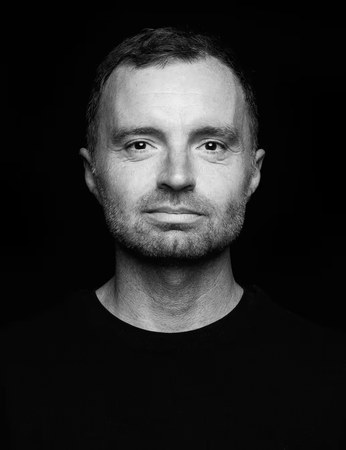
David Senra breaks down Peter Thiel's Zero to One
In this episode of the Founders podcast, David Senra revisits Peter Thiel and Blake Masters' book 'Zero to One: Notes on Startups, or How to Build the Future' after a four-year gap, deliberately re-reading a fresh copy so his old highlights wouldn't influence him. He argues the book isn't a how-to manual but a prompt for your own thinking, whose central message is that founders should aim to build a 'creative monopoly'—a business so good no one else can offer a close substitute. Threading examples from Apple, Amazon, PayPal, Polaroid, Howard Hughes, and Steve Jobs, Senra explores Thiel's key ideas: thinking from first principles, the contrarian question, secrets, the power law, durability over growth, sales and distribution as product design, and the irreplaceable value of the founder.

Monaco
Monaco is an AI-native sales platform - billed as 'the first revenue engine for startups' - that replaces the usual patchwork of CRM, outbound tools, and pipeline software with a single system. Founded in 2025 by former Brex CRO Sam Blond alongside his brother Brian Blond, Abishek Viswanathan, and Malay Desai, Monaco builds a company's total addressable market, runs outbound, captures every call and email, and manages pipeline using AI agents paired with embedded human sales experts. It launched from stealth in February 2026 and, three months later, raised a $50M Series B led by Benchmark, pushing total funding past $85M.

Paraform
Paraform is a San Francisco recruiting platform that connects companies with a network of 10,000+ independent recruiters and pairs them with custom AI agents to fill hard roles fast. Instead of betting that software alone can screen resumes, Paraform keeps humans in the loop and gives them AI tools plus white-glove operational support, handling intake calls, hiring-manager feedback, and payments. Companies like Palantir, Rippling, Cursor, and Cognition use it to meet candidates in days rather than months. Founded in 2022 by John Kim and Jeffrey Li, the company has raised $65M total, most recently a $40M Series B led by Scale Venture Partners in March 2026.
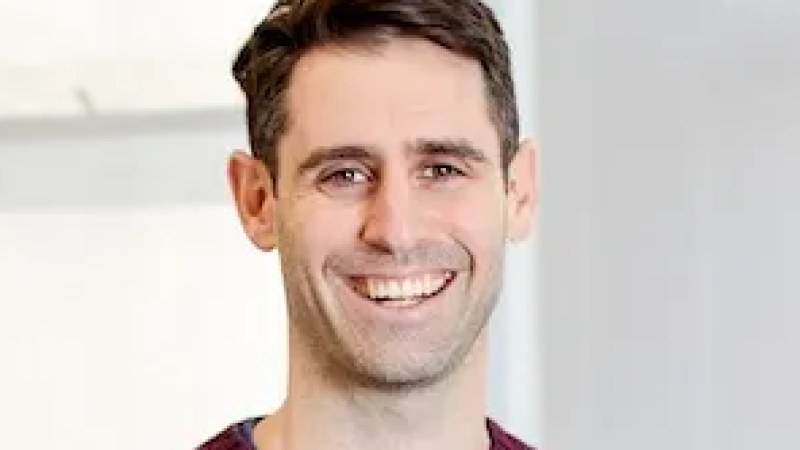
Michael Hershfield
Michael Hershfield is the founder and CEO of Accrue, a New York fintech that lets retailers embed FDIC-insured, brand-customized savings wallets inside their shopping experience. He built the company around a simple flip of buy-now-pay-later: save first, then spend. Before Accrue, he was SVP of Sales at WeWork and COO at Nucleus, with earlier operating stints across Kitchensurfing, Sailthru, Howcast, and his own ticketing startup LiveStub.

Nima Roohi Sefidmazgi
Nima Roohi Sefidmazgi is co-founder and CEO of Blooming Health, a New York City startup that uses AI to automate outreach, screening, and referrals for social care - the food, transportation, and support services that sit outside the doctor's office but often decide how a person actually fares. He is a former global data science lead with a decade in machine learning for healthcare and a PhD from the University of Wisconsin-Madison. He started the company in East Harlem in 2020 after becoming a full-time caregiver for his mother-in-law during the pandemic; it has since raised $32.5M, including a $26M Series A led by Insight Partners in April 2025, and operates across 25 states.
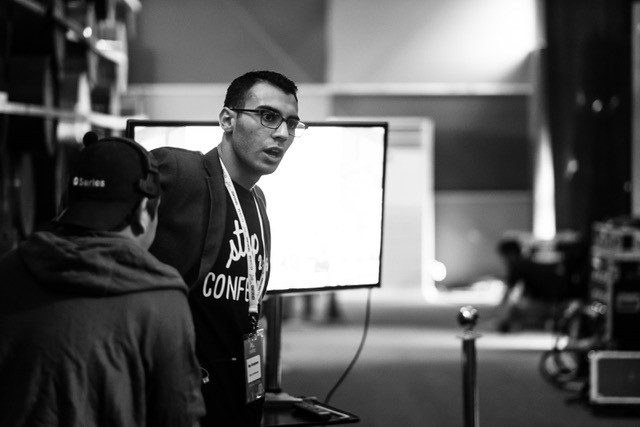
Ray Dargham
Ray Dargham is the co-founder and CEO of Step, the Dubai-born media and events company behind the Step Conference, a startup and tech festival that grew from about 100 people in a co-working space in 2012 into an 8,000-plus attendee gathering that now travels between Dubai, Riyadh and San Francisco. He also runs the digital publishers StepFeed and YallaFeed, founded the brand-tech shop Spiderfrogs, and hosts the Maté podcast for MENA founders. Forbes put him on its 30 Under 30 cover in 2018.

Sam Seely
Sam Seely is the co-founder and CEO of Knock, a New York-based notification infrastructure company that turned the tedious plumbing of transactional email, push, SMS and in-app messages into an API and workflow engine used by Vercel, Amplitude and others. He and CTO Chris Bell, who met at Frame.io, launched Knock in 2021 and raised a $12M Series A led by Craft Ventures in February 2024, bringing total funding to $18M.