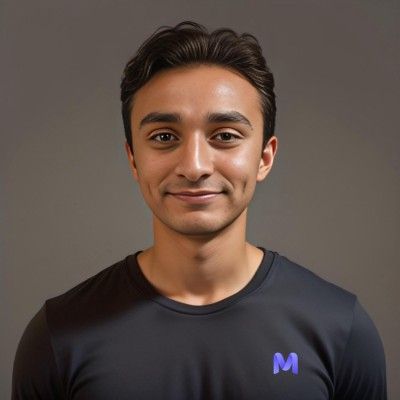
The operator behind an AI talent marketplace in a hurry
Fez Zafar spends his days on a problem that sits at the center of the AI boom: the models everyone is racing to build still depend on people. Mercor, where he is Chief of Staff, is a marketplace that finds, vets, matches and pays the human experts who feed and evaluate frontier AI systems. Zafar's job is the connective tissue of a company moving fast - operations, cross-functional projects, and above all hiring the people who make the rest of it possible.
His current pitch is blunt and repeated often. "Mercor is opening an office in NYC by the start of 2026," he wrote. "We're searching for the greatest operators and engineers in the world to join our team." The company now recruits for both San Francisco and New York, hunting for Strategic Project Leads, software engineers, and machine learning engineers. For a role that in many companies is quiet and internal, Zafar's version is unusually public - he treats recruiting as a front-line mission rather than a back-office function.
That instinct did not appear overnight. It is the same one that shaped his years at Harvard, where he built a reputation less for a single achievement than for a habit: finding ways to bring people together and then executing on them at scale.
A class that started in isolation
Zafar entered Harvard in the fall of 2020, the strangest possible year to begin college. His class spent much of its first year under pandemic protocols, scattered and remote. He kept coming back to that fact. "We began our freshman year in circumstances that I don't believe any other class at Harvard has had to experience," he said after being elected First Marshal of the Class of 2024, the student chosen through two rounds of voting to lead his class's traditions and, later, its alumni engagement.
His diagnosis of the problem was social, and so was his response. "There weren't many opportunities for our grade to come together in the way that a lot of freshman classes usually do," he said. The remedy he became known for was ambitious and a little absurd: in the spring of 2023 he organized a game of assassins - the campus elimination game - that drew 632 players, far past the 150 he had set as a floor. One story from that game became campus lore. A participant was assigned a stranger as his target, got her out of the game, and within a couple of days the two went on a date.
We began our freshman year in circumstances that I don't believe any other class at Harvard has had to experience. — Fez Zafar, on being elected First Marshal of the Class of 2024
Comedy, community, and a summa cum laude degree
Alongside the events, Zafar built a campus footprint that ran through humor and student media. He was part of On Harvard Time, the long-running satirical comedy news show, and served as co-social chair of the South Asian Association. He also created Profiles in Excellence, a podcast on the Harvard College Podcast Network that interviewed accomplished figures across politics, sports, and entertainment - an early sign of a lasting curiosity about how successful people think and work.
None of that came at the expense of the coursework. Zafar graduated summa cum laude in 2024 with a degree in Government on the Tech Science track, the kind of interdisciplinary path that mixes public policy with the mechanics of technology. His pre-Mercor resume leaned toward finance and venture: an internship in strategy and business development at The D. E. Shaw Group, a stint as a research assistant to economist Larry Summers at the Harvard Kennedy School, and an analyst role at Village Global, where he worked on portfolio support and deal sourcing.
Why the startup, and why this one
A summa cum laude government major with a Village Global line on his resume has plenty of conventional options. Zafar chose a startup instead, and a specific kind of startup - one betting that the AI industry's appetite for high-quality human expertise would only grow. Mercor's model is to be the marketplace where that expertise gets sourced, vetted, and paid, serving AI labs that need experts to create and evaluate training data.
He has been vocal in cheering the founders on. When Mercor raised its Series A, Zafar publicly congratulated co-founders Brendan Foody, Surya Midha, and Adarsh Hiremath, calling them builders of "one of the most promising companies in Silicon Valley" on a mission to "help a billion people find their next job." He has also amplified the founding story that has followed the company - a young, dyslexic dropout building one of the fastest-revenue-growing businesses on record.
A community-builder's career, stage by stage
Zafar's throughline is scale - each chapter a bigger group of people to organize around a shared goal.
Illustrative scale of the groups Zafar has organized across projects. Figures from public reporting; not to a single unit.
The role, up close
Chief of Staff is a title that means something different at every company. At a hypergrowth startup it tends to mean triage: sitting close to the founders, owning the projects that fall between departments, and keeping hiring ahead of the curve. That last part is where Zafar is most visible. He has led recruiting drives for new-grad and technical talent, and he frames the search in superlatives - the greatest operators, the best engineers - because at Mercor's pace, the constraint is rarely ideas. It is people who can execute.
The community skills he sharpened at Harvard translate directly. Recruiting the best engineers in the world is, in the end, a persuasion-and-belonging problem: convincing talented people that a mission is worth their time and that they will find their people once they arrive. Zafar has been doing that since he talked hundreds of classmates into a game of assassins.
What he is building toward
Zafar's ambition tracks Mercor's. The company wants to be the default marketplace for AI-era talent, and his part of that is the human infrastructure - the teams, the offices, the pipelines of people. The 2026 New York expansion is the clearest recent marker: a second hub, a bigger recruiting surface, and a bet that demand for expert human input into AI will keep climbing.
For someone who spent college worrying that his class had missed its chance to come together, the through-line is almost tidy. The scale has changed - from a dorm-room startup to a game of assassins to a class of 1,700 to a company hiring across two coasts - but the work is recognizably the same. Find the people. Give them something worth showing up for. Then do it again, bigger.