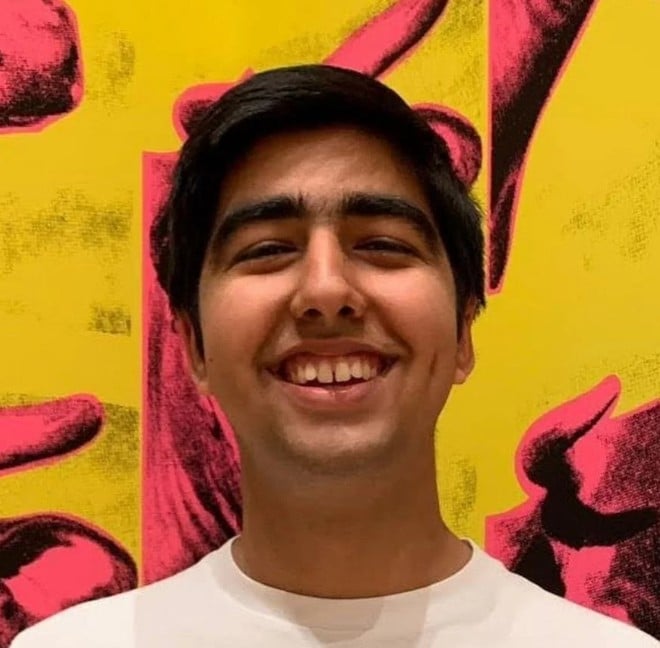
São Paulo, Spring 2023
Mercor didn't begin in a garage or a dorm room. It started at a hackathon in São Paulo, Brazil, in spring 2023. Midha, Hiremath, and their third co-founder Brendan Foody discovered a model: match skilled engineers abroad with companies that needed them, handle all the logistics, take a service fee. Their first client paid $500 a week for a developer. It was not a $10 billion idea. It was a $500-a-week idea - which is how most good ideas start.
Within nine months, Mercor hit a seven-figure annual revenue run rate without outside capital. Then they raised $3.6 million in a seed round led by General Catalyst. The co-founders were 20 years old. They had skipped their college finals to build this. That spring, all three received Thiel Fellowships - the $200,000 grant from Peter Thiel designed to encourage talented young people to leave school and start companies.
The Pivot That Changed Everything
The original model - matching engineers with companies - was a solid business. But around 2024, Mercor began moving toward something considerably larger: organizing human intelligence to train AI. The insight was that AI labs needed vast quantities of expert human evaluation. Not just coders. Lawyers, doctors, bankers, researchers, chess grandmasters - people who could assess whether an AI model's output on a complex professional task was actually correct.
Mercor built the infrastructure to recruit these experts at scale, assess their competence, match them to AI training projects, and handle global payments. For AI labs spending hundreds of millions on training data, Mercor became a critical supplier. The company developed APEX-Agents, a benchmark measuring how effectively AI models perform real business tasks across banking, law, consulting, and medicine.
By September 2025, Mercor was generating $500 million in annual revenue and managing more than 30,000 active contractors, paying out over $1.5 million every day. Clients included OpenAI, Anthropic, and Google DeepMind. In October 2025, investors valued the company at $10 billion in a $350 million Series C round.
The Transition
That same month, Midha stepped back from his role as Chief Operating Officer to become Chairman of the Board. The announcement, shared first on X, was characteristically measured: "This decision comes from a place of conviction, not doubt. I believe in our mission more deeply than ever and have complete faith in the team to carry Mercor into its next chapter."
Brendan Foody, his co-founder since high school, remains CEO. Adarsh Hiremath, the debate partner he first met at age ten, is CTO. The three hold roughly 22% equity each - a stake that, at Mercor's $10 billion valuation, puts each of them north of $2 billion on paper.
The Thinking Behind the Brand
Midha runs a personal blog called Musings, where he writes with the precision you'd expect from someone who spent years winning arguments under pressure. In one post, he examines the gap between inputs and outcomes - the unglamorous reality that success in most endeavors looks random from the outside while being deeply systematic from the inside. "The only mechanism of justice is time," he wrote. "Success requires being relentlessly persistent over the course of a few decades."
He was in his early twenties when he wrote that. He has been proven right faster than he expected.