materials-science
(79)
Area Science Park puts a laboratory in the startup cheque
In Trieste, a public research organisation pairs funding with access to microscopes, genomics and computing. Its bet: give difficult ideas the equipment and expertise to prove themselves.

Schrödinger Spent 30 Years Teaching Computers Chemistry. Now It Wants Every Lab to Predict Before It Pours.
The molecular-software veteran has a blunt pitch for modern R&D: compute first, synthesize less. Its own numbers show both the leverage of that idea and the expensive limits of prediction.

Billy McCall Is Teaching Polyester How to Leave
A lifelong surfer and polymer scientist built Kintra Fibers around one unfashionable question: what if a high-performance synthetic could do its job, then make a graceful exit?

Michael Markesbery Put Space-Age Insulation in a Foam Roll
A freezing climb gave him the problem. An astronaut scholarship gave him the material. A decade later, the jacket company has become a bet on better insulation almost everywhere.

Mark Granahan Retired. Then He Found a Better Way to Use Silicon.
A retired chip executive went back to the journals, rented time in a university nanofab, and spent seven years proving that ordinary silicon still had another act.
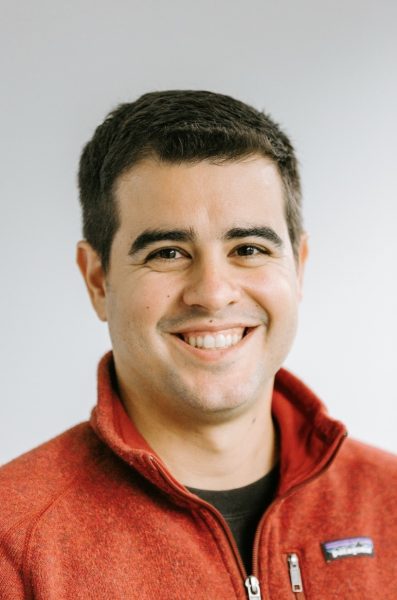
Gabriel Rodríguez-Calero Bet on the Unfashionable Molecule
A Puerto Rico-born chemist found a stubborn industrial problem hiding inside a membrane. A decade later, his company is trying to make green hydrogen ordinary enough to buy.

Dillon Baxter Bet on a Fork That Could Disappear
A college golfer sold straws door to door, quit banking after one month, lost an $8 million commitment, and kept building. Now PlantSwitch is trying to make the useful life of plastic match the life of the thing it serves.

Sandeep Nijhawan Is Teaching Iron to Take a Cold Bath
At Electra, a former semiconductor operator is replacing the blast furnace's inferno with a 60°C electrochemical process - and betting that cleaner iron must compete without a green premium.
MITO Spent a Decade Making Graphene Boring Enough for the Factory Floor
Graphene had extraordinary lab results and an ordinary factory problem: it clumped, wandered and asked manufacturers to change too much. MITO built its business around the unglamorous fix - make the wonder material behave like an additive people can actually use.
The Texas Startup That Coats Roofs So They Sweat Heat Back at the Sky
NanoTech Materials built a ceramic particle that radiates heat away instead of trapping it. Now it is selling that trick to roofers, oil refineries and towns bracing for the next wildfire.

The Company Keeping Water Out of 15 Million Cars
It started in a Malden kitchen and now guards the circuit boards inside 15 million cars. actnano bet that a gel could do what a hard shell couldn't - and that dropping the fluorine would become the whole point.

The Fund Betting That the Hard Problems Are Made of Atoms, Not Apps
A $66 million debut fund is putting first checks into space refueling, biometric firearms and board games - on the theory that the world's hardest problems are made of atoms, not apps.
The Venture Fund With an Admissions Requirement: You Had to Go to Oxford
A Palo Alto fund turned an alumni network into an asset class - if your startup wants in, someone in the founding story has to have walked through an Oxford quad.
The Invisible Chemistry Inside Modern Life
Momentive rarely appears on the box. Its silicones, silanes and specialty additives are the reason thousands of other products can survive heat, moisture, motion and time.

3M
The Post-it Note is the famous part. The more revealing story is the science hidden in factories, fiber connections, race cars and ordinary drawers - a portfolio built to make other products work better.

Sam Dai
Sam Dai is the co-founder and CEO of Enpower Greentech, a battery cell maker building semi-solid-state, lithium-metal, and silicon-rich cells. Trained as a physicist at Tsinghua and a materials scientist at UT Austin under Nobel laureate John B. Goodenough, he started the company in 2012 with fellow post-doc Che Yong. The company has shipped over 3 million solid-state cells, holds more than 100 patents, and runs facilities across the US, China, Japan, and Germany. Dai was selected for Unreasonable Impact Asia Pacific 2024.

Stefan Pastine
Stefan Pastine is an American chemist, inventor and deep-tech founder who builds materials most people never think about but every device depends on. After earning a PhD in organic chemistry from Columbia and doing postdoctoral work at UC Berkeley, he founded Connora Technologies to make recyclable epoxy resins, which was acquired by Aditya Birla Chemicals in 2019. That same year he founded Thintronics, a Bay Area startup developing next-generation dielectric insulator films for printed circuit boards and semiconductor packaging. His pitch is deceptively simple: the insulator, long ignored while engineers obsessed over transistors, is the overlooked bottleneck for faster, cooler AI data centers - and Thintronics wants to unseat a Japanese giant that has held 90% of the market for three decades.

Patsnap
Patsnap is a Singapore-founded innovation intelligence company whose AI-native platform helps R&D and IP teams search, analyze, and act on the world's patents, scientific literature, and market data. Used by more than 10,000 organizations across 50-plus countries, its flagship Eureka platform applies large language models and specialized AI agents to compress labor-intensive tasks - prior art search, freedom-to-operate analysis, patent landscaping, and drug-discovery intelligence - from weeks into minutes.
Polymateria
Polymateria is a London-based materials science company that has developed Biotransformation, a masterbatch additive that lets everyday polyolefin plastics fully biodegrade in the open environment within about a year - breaking down into a wax that microbes consume, leaving only CO2, water and biomass with no microplastics. Its technology underpins the BSI PAS 9017 standard and is sold to converters and brands worldwide through its consumer-facing Lyfecycle brand.

Sujeet Kumar
Sujeet Kumar is the co-founder and CEO of Ionblox, a Fremont, California battery company building pre-lithiated silicon-anode lithium-ion cells for electric vehicles and electric aviation. A materials scientist with a Ph.D. from the University of Rochester and more than 60 patents to his name, he previously served as CTO of Envia Systems, where his team developed one of the first 400 Wh/kg lithium-ion cells with a silicon anode. Ionblox, formerly Zenlabs Energy, has raised roughly $32 million in Series B funding from backers including Lilium, Applied Ventures, Temasek and Catalus Capital, and markets cells that promise higher energy density, up to five times more power, and 10-minute fast charging.

6K
6K is a North Andover, Massachusetts advanced materials company that uses its proprietary UniMelt microwave plasma technology - which reaches roughly 6,000 degrees, hence the name - to produce battery cathode materials and additive-manufacturing metal powders faster, cleaner, and with fewer processing steps than conventional methods. Spun out of research at MIT and the University of Connecticut, the company operates through two divisions, 6K Energy (battery cathode active materials) and 6K Additive (sustainably sourced metal powders), and is building a domestic U.S. supply chain for critical materials backed by federal grants and more than $348 million in venture funding.
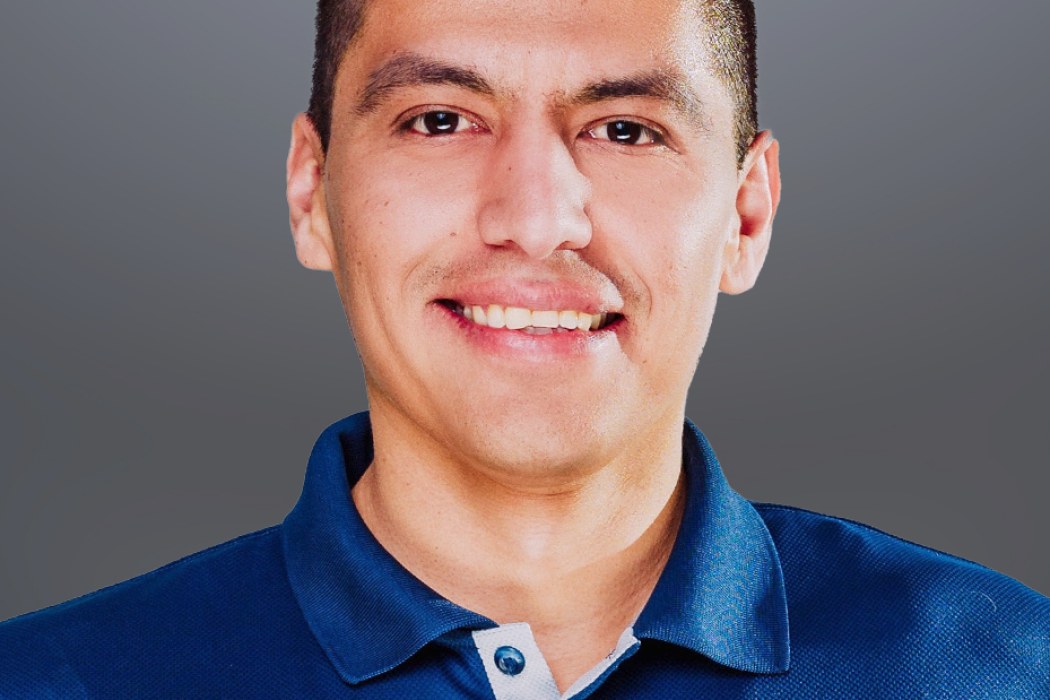
David Arreaga
David Arreaga is the co-founder and CEO of Ares Materials, a Plano, Texas deep-tech company building AI-designed optical polymers for flexible and foldable electronics. A materials scientist with a Ph.D. from UT Dallas, he turned doctoral research on polymer substrates into a company whose Pylux cover-window and adhesive materials target the next generation of foldable displays. Ares pairs high-throughput experimentation with machine learning to shorten materials development from decades to years, and closed the first trench of a $12M Series B round in 2025.
Kintra Fibers
Kintra Fibers is a Brooklyn-based materials science company developing a bio-based, biodegradable alternative to conventional polyester. Built on polybutylene succinate (PBS) derived from plant sugars rather than fossil fuels, Kintra's yarn performs like standard polyester and runs on existing melt-spinning equipment, but composts in controlled conditions and sheds far less persistent microplastic. Founded in 2018 by Billy McCall and Alissa Baier-Lentz, the H&M Group-backed company has raised roughly $10M total and is piloting its fiber with brands including Inditex, BESTSELLER, Reformation and PANGAIA.
Nabaco® Inc.
Nabaco® Inc. is a San Marcos, Texas materials-science company that makes self-assembling natural barrier coatings to keep fresh produce fresh longer and cut food waste. Its flagship product, NatuWrap®, is a GRAS-listed edible coating built from clay and plant extracts that locks moisture in while keeping oxygen and microbes out - applied by spraying, dipping or brushing at a fraction of the cost of rival coatings. Founded on nanotechnology research from Texas State University, Nabaco is expanding into pre-harvest crop protection (Envello) and post-harvest processing aids (Vanterra) to protect food across the whole supply chain.

NxLite
NxLite (formerly 3E Nano) makes next-generation, transparent energy-control coatings for glass and lightweight polymers. Spun out of the University of Toronto in 2015, the company's patented nano-thin, low-emissivity and solar-control coatings are air-stable and can be applied to glass, acrylic (PMMA) and polycarbonate, cutting the heat that windows gain or lose. NxLite sells to window and door makers, refrigeration and transportation manufacturers, and building-retrofit customers, and runs a 45,000-square-foot Advanced Innovation & Manufacturing (AIM) Center in Canton, Michigan.

Simplifyber
Simplifyber is a North Carolina biomaterials company reinventing how soft goods are made. Its proprietary natural-fiber liquid, Fybron, is injected into 3D molds to form fabric directly, skipping the spinning, weaving, cutting, and sewing steps of conventional textile production. Founded in 2021 by fashion veteran Maria Intscher-Owrang and Phil Cohen, the company targets fashion, footwear, bags, automotive and aviation interiors, and consumer packaging with a cellulose-based, largely biodegradable alternative to fossil-derived materials. It closed a $12M Series A led by Suzano Ventures in April 2025.

QC Ware Corp.
QC Ware is a Palo Alto-based enterprise software company that builds quantum and quantum-inspired tools for hard scientific problems. Founded in 2014 by veterans of NASA Ames, it started as a hardware-agnostic quantum cloud platform (Forge) and evolved into Promethium, a GPU-accelerated quantum chemistry SaaS that runs density functional theory calculations on molecules up to thousands of atoms, claiming speeds 10 to 100 times faster than legacy tools. The company also runs Q2B, the largest annual practical quantum computing conference, and counts Goldman Sachs, Airbus, BMW and Covestro among its collaborators and investors.

Thintronics
Thintronics is a San Francisco-based advanced materials company reinventing the humble insulator - the dielectric films that sit between the copper layers of every chip and circuit board. Founded in 2019 by chemist Stefan Pastine, the company designs new insulating materials from the molecular level up, aiming to deliver faster, lower-loss, lower-power interconnects for AI data centers, high-speed networking, and RF/millimeter-wave systems. Its pitch is pointed: challenge the Japanese incumbent Ajinomoto, which has held more than 90% of the dielectric build-up film market for three decades, with a US-made alternative built for the terabit age.

1s1 Energy
1s1 Energy is a materials-science company making green hydrogen cheaper by rethinking the guts of the electrolyzer. Instead of the fluorinated (PFAS) membranes the industry has leaned on for decades, 1s1 builds boron-based proton-exchange membranes and electrochemical components that its partners report can produce a kilogram of hydrogen using roughly 70% of the energy of incumbent devices - already hitting efficiency targets the U.S. Department of Energy set for 2031. Founded in 2019 and run out of Portola Valley, California with labs in Lisbon and Campinas, Brazil, the company sells core components to electrolyzer and fuel-cell makers and runs pilots with utilities and heavy industry.

Crystal Sonic
Crystal Sonic is a Phoenix, Arizona deep-tech startup that uses sound to cut semiconductor costs. Its patented Sonic Lift-off (SLO) technology acts as an 'acoustic scalpel,' peeling thin device layers off expensive wafers so the underlying substrate can be reused instead of ground into dust. Legacy manufacturing wastes 90% or more of substrate material, and substrates can account for up to half of a device's cost - Crystal Sonic wants to reclaim that. Spun out of an Arizona State University lab in 2018, the company has won backing from NASA, the Department of Energy, the NSF, and Lam Capital.