Breaking Savor's carbon-synthesized butter launches commercially in March 2025 TIME Magazine: Savor named one of Best Inventions of 2025 Bill Gates' Breakthrough Energy Ventures backs Savor with $33M total Kathleen Alexander: MIT PhD - Co-Founder & CEO - Hertz Fellow 2013 Michelin-starred Atelier Crenn & SingleThread serve Savor butter Savor GRAS regulatory approval secured November 2024 1000x smaller land footprint than conventional butter production Series B fundraise targeting commercial 10,000-ton facility
Co-Founder & CEO, Savor • San Jose, CA • MIT PhD

Kathleen
Alexander

"She dropped out at 16, built from scratch, and is now making butter from the air. The carbon chef of the future is already cooking."

The materials scientist who decided that if butter is just carbon, hydrogen, and oxygen, then why do we need a cow to arrange them?

CEO & Co-Founder TIME Best Inventions 2025 $33M Raised Hertz Fellow 2013 MIT PhD
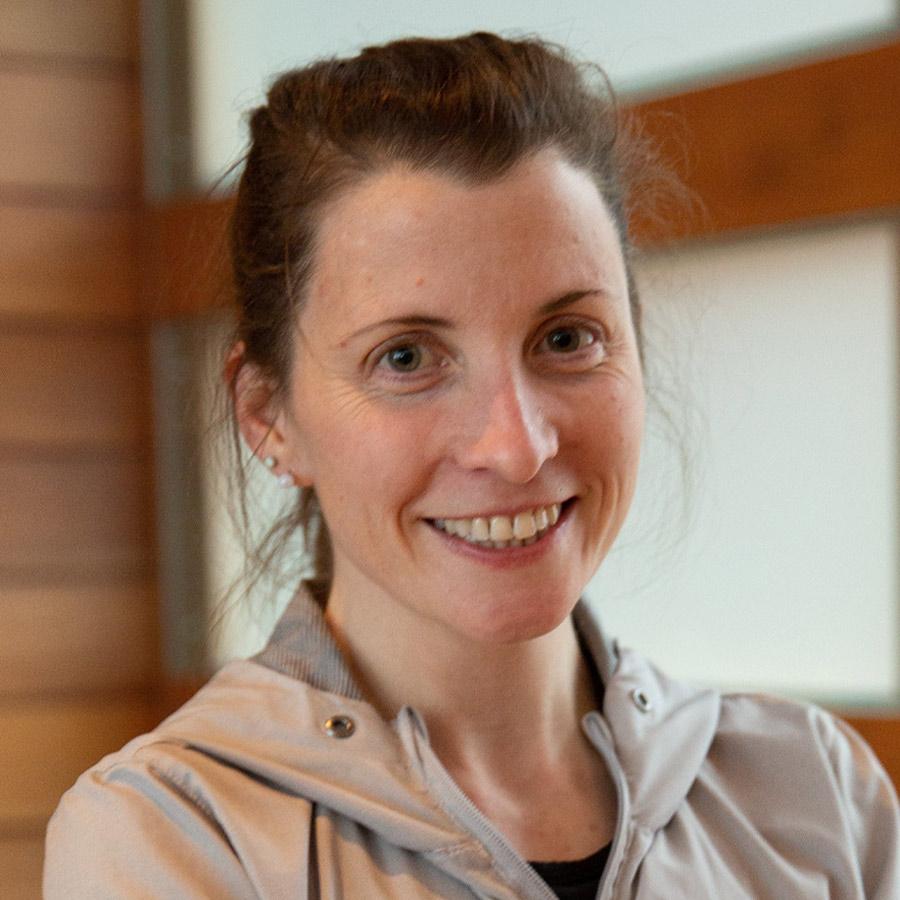
Kathleen Alexander, Co-Founder and CEO of Savor Kathleen C. Alexander / Savor
$33M
Total Funding Raised
1000x
Less Land Than Dairy Butter
2022
Savor Founded
3
Michelin-Star Restaurant Partners
Profile

Making Butter From Thin Air - Seriously

Kathleen Alexander did not set out to become a food entrepreneur. She set out to fix the planet. What she discovered, after years of working across climate-tech disciplines, was that the most scalable lever she could pull was the most mundane object in your refrigerator: butter. Savor, the company she co-founded in 2022, builds fat molecules from carbon dioxide, hydrogen, and oxygen - the same atoms that make up animal and plant fats - through a thermochemical process that requires no farmland, no animals, no fertilizers, and no agriculture at all.

The numbers are clarifying. Agriculture consumes roughly 50% of the world's habitable land and accounts for 20-30% of global greenhouse gas emissions. Fat and oil production alone accounts for more than 7% of anthropogenic greenhouse gases and 15% of habitable land. Savor's process needs land 1,000 times smaller than conventional butter production to produce the same output. The technology is not a plant-based substitute or a lab-grown animal product. It's something genuinely different - fats synthesized at the molecular level, with tunable properties that no cow or coconut can match.

"All of our hardest sustainability problems are materials problems."
- Kathleen Alexander

Alexander grew up in Corvallis, Oregon, with an early conviction that the planet needed fixing. Her first instinct was policy. She enrolled at the University of San Francisco at 16. But she quickly realized something: advocacy without technical literacy hits a ceiling. She dropped out, attended community college to build the math and science foundation she'd skipped, and then transferred to MIT, where she earned both her undergraduate degree and a PhD in Materials Science & Engineering. Her doctoral thesis - "An Off-Lattice Kinetic Monte Carlo Method for the Investigation of Grain Boundary Kinetic Processes" - is about as far from butter as physics can get. But it gave her a precise way of thinking about material structure at the molecular scale that would, years later, become the intellectual core of Savor.

She met co-founder Ian McKay through the Hertz Fellowship - a prestigious network for doctoral students in applied science, math, and engineering. They co-founded Orca Sciences, a philanthropist-backed R&D organization exploring the intersection of energy and climate. By 2020, Alexander was doing top-down analysis across sustainability sectors, looking for where a materials scientist could do the most damage. Agriculture's numbers stopped her cold. Fat and oil, she realized, was the most tractable piece of that system to rethink. Carbon, hydrogen, oxygen. High heat. High pressure. Fatty acids. That was the idea.

"Ultimately, I'm still that kid who wanted to make the planet better. Savor is a way to meet human needs while giving nature some breathing room."
- Kathleen Alexander

Savor officially launched in March 2022, on the anniversary of its founding three years later, with commercial butter available to a select group of chefs and food manufacturers. The launch timed perfectly with two milestones: FDA self-affirmed GRAS (Generally Recognized as Safe) regulatory approval, secured in November 2024, and a partnership with some of the most demanding palates in food. Pastry chef Juan Contreras at three-Michelin-starred Atelier Crenn used Savor butter to revive a dairy-free brioche the restaurant had taken off its menu when it stopped serving dairy. Kyle Connaughton at SingleThread in Healdsburg used it with his signature precision. Dirt Candy in New York signed on. These are not soft endorsements - Michelin chefs notice when something is off.

The business model is deliberately B2B. Alexander is not trying to sell butter directly to consumers. She wants to become the ingredient supplier to large food companies - a specialty fats and oils producer positioned between commodity palm oil (the target cost: $1/kilogram at scale) and premium dairy. The pilot facility operates near Chicago. A 10,000-ton commercial facility is in planning. A Series B fundraise is expected in the second half of 2025. Backing so far includes Bill Gates' Breakthrough Energy Ventures and food-tech firm Synthesis Capital - a combined $33 million that recognized the rare combination of scientific credibility and commercial pragmatism Alexander brings.

TIME named Savor's butter one of its Best Inventions of 2025. Fast Company named Savor one of its Most Innovative Companies of 2025. The co-authored paper "Food Without Agriculture," published in Nature Sustainability, laid out the scientific case. Alexander is also a monthly donor to the Hertz Foundation and a regular speaker at its events for current fellows - the latest link in a chain that started with a 16-year-old dropout from Corvallis who wanted to save the world and decided to do it one fat molecule at a time.

The Science

Fat, Molecule by Molecule

Savor's process starts with carbon gases (including CO2), hydrogen, and oxygen. High heat and pressure do what deep-sea hydrothermal vents have done for billions of years - form fatty acids. Those acids are assembled into triglycerides. The result is chemically identical to the fats in butter, palm oil, or cocoa butter - tuned to whatever molecular specification a food manufacturer needs.

Thermochemical Synthesis

Carbon, hydrogen, and oxygen subjected to high temperatures and pressure form fatty acids - the same building blocks found in every animal and plant fat. No fermentation. No agriculture. Pure chemistry, at scale.

Molecular Tunability

Savor can produce beef tallow that melts like corn-fed cattle, or adjust it to match grass-fed. Butter. Palm oil. Cocoa butter. Each fat's unique carbon-chain structure and melting profile can be reproduced and customized on demand.

1000x Land Efficiency

Savor's process requires roughly 1,000 times less land than conventional butter production. The entire food system's land and emissions footprint becomes optional when fats are synthesized rather than grown or raised.

By the Numbers

Savor vs. Conventional Butter

Conventional Butter

100%
Agriculture Required
High
Land Use
Fixed
Molecular Properties
~7%
Global GHG from fats/oils
vs

Savor Carbon Butter

0%
Agriculture Required
1/1000
Land Footprint
Tunable
Molecular Properties
Near-0
Agricultural GHG
Career Arc

The Long Road to Butter

Age 16
Enrolled at University of San Francisco intending to pursue policy and environmental advocacy - having only completed trigonometry
Shortly After
Dropped out. Recognized that technical expertise was essential for real-world impact. Enrolled at community college to build math and science foundations from scratch
MIT
Earned undergraduate degree followed by PhD in Materials Science & Engineering. Thesis: grain boundary kinetic modeling for metals and ceramics
2013
Awarded prestigious Hertz Fellowship - connecting top doctoral students in applied science, engineering, and math. Met future co-founder Ian McKay through the network
2013-2021
Worked across climate tech: alternative fuels, cements, steels, energy generation, and storage solutions. Served as Project Director at Orca Sciences
2020
Systematic top-down analysis of sustainability sectors revealed agriculture's outsized footprint - 50% habitable land, 20-30% global emissions, 70%+ freshwater use
2022
Co-founded Savor with Ian McKay and Henrik Bennetsen in March. Focus: thermochemical fat synthesis without agriculture, targeting butter, palm oil, and cocoa butter markets
2024
Secured $23M Series A (Feb). GRAS regulatory approval granted (Nov). Commissioned pilot production facility near Chicago
2025
Commercial butter launch in March. TIME Best Inventions 2025. Fast Company Most Innovative 2025. Michelin-starred restaurant partnerships. Series B planning underway
Next
10,000-ton commercial production facility targeted for North America. Series B fundraise to pursue industrial scale. Long-range goal: compete with commodity palm oil at $1/kg
In Her Own Words

What Drives Her

"
All of our hardest sustainability problems are materials problems.
"
If you think of the land footprint, our process is about a thousand times smaller than traditional agriculture, specifically if you're looking at butter.
"
What if you wanted to feed our species on a much smaller footprint - how could you do it?
"
This thing is going to keep you up at night, it's going to take all of your spare cycles... So it better be something that you just can't stop thinking about.
"
I can make you a beef tallow equivalent that will melt like the tallow from a corn-fed cow. Or I can even make you one that melts like grass-fed.
"
Over the course of the last 10,000 years of scaling up agriculture, we've consumed over 70% of Earth's primary forests.
Track Record

What She's Built

Co-founded Savor in March 2022 - the world's first company producing fats and oils through thermochemical synthesis without any agricultural input

Raised $33M from Bill Gates' Breakthrough Energy Ventures and Synthesis Capital across seed and Series A rounds

Secured US GRAS regulatory approval for Savor's carbon-synthesized fats in November 2024 - clearing the path to commercial food ingredient sales

Commercially launched Savor butter in March 2025 - first carbon-synthesized fat product available in the US market

Named in TIME Magazine's Best Inventions of 2025 and Fast Company's Most Innovative Companies of 2025

Co-authored "Food Without Agriculture" in Nature Sustainability, establishing the academic foundation for carbon-synthesized food ingredients

Secured partnerships with Michelin-starred restaurants Atelier Crenn (3 stars), SingleThread, and Dirt Candy for first commercial product rollout

2013 Hertz Fellow - among the most competitive doctoral fellowships in applied science and engineering in the United States

Fast Facts

The Details That Matter

01

Savor's process is inspired by deep-sea hydrothermal vents - one of nature's oldest chemical factories, operating for billions of years, synthesizing organic compounds without sunlight or agriculture.

02

Her PhD thesis was titled "An Off-Lattice Kinetic Monte Carlo Method for the Investigation of Grain Boundary Kinetic Processes" - which sounds nothing like food, but taught her exactly how to think about materials at the molecular scale.

03

Savor can reproduce the exact melting profile of corn-fed beef tallow, grass-fed beef tallow, dairy butter, palm oil, or cocoa butter - each with distinct carbon-chain lengths and structures.

04

Kathleen Alexander has a childhood-inspired fascination with nanobots for landfill mining - a passion she traces to early interest in circular material cycles. The science evolved; the curiosity never left.

05

She enrolled at the University of San Francisco at 16 - then dropped out and went to community college. She walked into MIT's PhD program from there. Not the conventional route.

06

When Savor launched commercially in March 2025, it coincided exactly with the company's third birthday. Atelier Crenn's pastry chef used the butter to revive a dairy-free brioche that had been off the menu since the restaurant stopped serving dairy.

Scrapbook

The Stories Behind the Science

The Dropout Who Went to MIT

She started college at 16 at the University of San Francisco, planning to fix the planet through policy. She had only completed trigonometry in high school. Quickly realizing she was missing the mathematical foundation required for real technical work, she dropped out - a decision most people would not make - attended community college to build prerequisites, and then transferred to MIT, where she completed both her undergraduate degree and a PhD in Materials Science. That recursive route, circling back to build what was missing, is the same instinct she applied to food systems two decades later.

A Fellowship, a Co-Founder, a Company

The Hertz Fellowship is one of the most selective doctoral awards in the US, connecting applied scientists with funding and a tight professional community. Kathleen Alexander received it in 2013. A few years later, through that same network, she met Ian McKay - a 2014 Hertz Fellow who shared her interest in climate and materials. They co-founded Orca Sciences together first. Then Savor. The fellowship was not just academic recognition - it was the room where the founding team assembled.

The Michelin Test

When Pastry Chef Juan Contreras of three-Michelin-starred Atelier Crenn used Savor butter to recreate the restaurant's dairy-free brioche - a dish removed from the menu when the restaurant stopped serving dairy - and found it worked, that was not a marketing story. Michelin-starred chefs work at a level of sensory precision where substitutes fail immediately. The brioche came back to the menu. That's the test that matters most.

The Pivot From Tallow to Butter

When Savor launched in 2022, Alexander's original go-to-market assumption was beef tallow. By launch day in 2025, the headline product was butter - then cocoa butter and specialty palm oils. The pivot was not a failure of conviction but a market reality check: where is the premium, the regulatory pathway clear, and the consumer pull strongest? Butter won that analysis. The technology can produce tallow whenever the market is ready.

Share This Profile