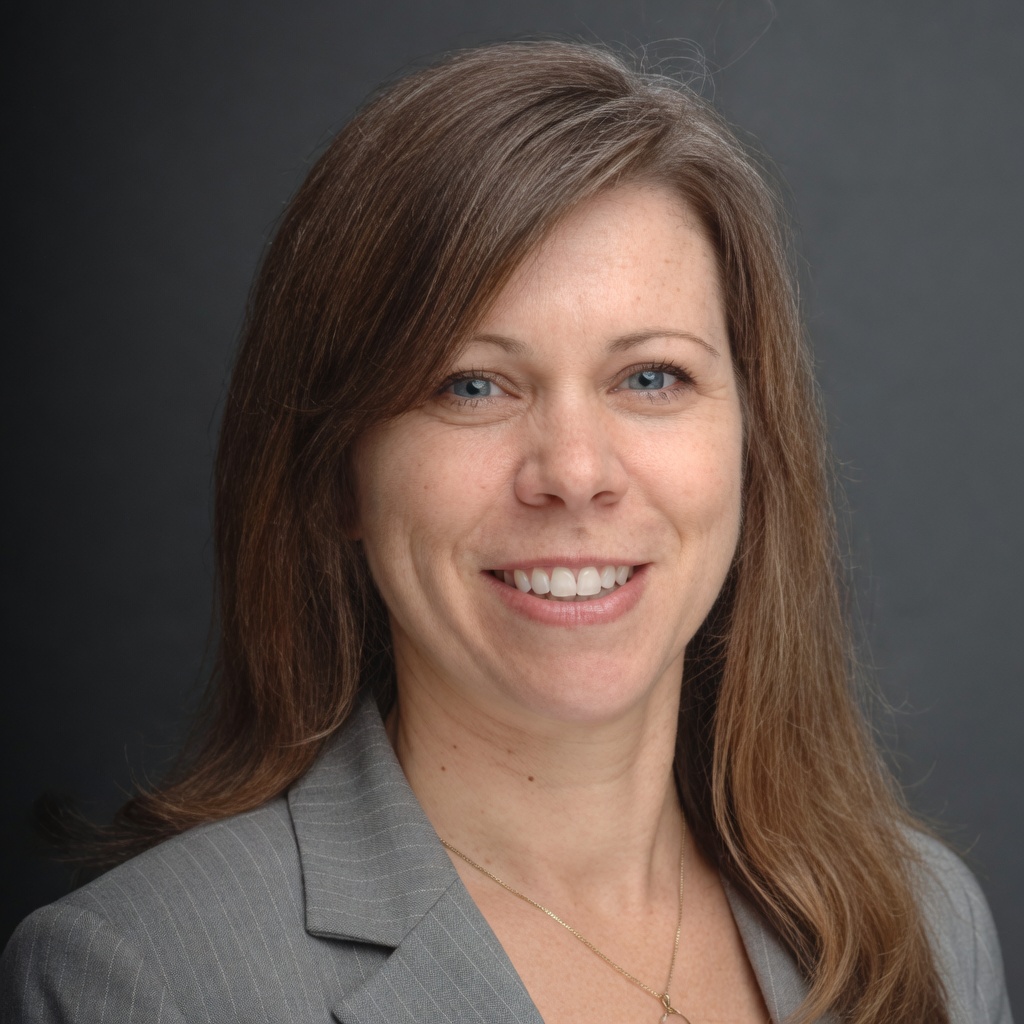
The Scientist Who Wouldn't Stay in the Lab
In 2025, Cerapedics became the only company on earth holding two FDA PMA-approved bone grafts for spinal fusion. The person who made that happen started her career measuring the behavior of materials at the atomic scale. That's not a coincidence.
Valeska Schroeder earned her BS, MS, and PhD in Materials Science and Engineering from UC Berkeley - three degrees, one discipline, one university. That level of focus is either stubbornness or precision. In her case, it turned out to be the foundation for a career that has moved from the laboratory bench to the boardroom with unusual coherence.
After completing her doctorate, she worked in product development, program management, and marketing across multiple medical device companies - the kind of cross-functional exposure that most engineers spend careers avoiding. She was learning how things break, how they get approved, how they get sold, and crucially, how the gap between a promising technology and a patient outcome actually gets closed.
In 2016, she joined KCK MedTech as part of the firm's Medical Technologies Investment Group, eventually becoming Managing Director. KCK runs as a single-family evergreen fund - patient capital, long horizon. It's the kind of investor that backs technologies measured in decades, not quarters. The P-15 peptide at the core of Cerapedics' products had been in development for over 30 years when Schroeder first encountered it. She recognized what it was.
When KCK invested in Cerapedics in 2018, Schroeder joined the board. She was one of a handful of investors also serving on boards at Sight Sciences, Aerin Medical, Intuity Medical, and Lungpacer simultaneously - companies across ophthalmology, ENT, diabetes management, and pulmonary medicine. The thread connecting all of them: drug-device products tackling stubborn clinical problems with evidence-based technology.
By 2021, she had deepened her operational involvement with Cerapedics and taken the Chairman seat. A year later, on November 1, 2022, she became CEO. Greg Garfield, Senior Managing Director at KCK, described her as having demonstrated "leadership ability, clear vision for strategic growth and operational efficiency" during her board tenure. That's the kind of endorsement that turns investors into operators.
The years since have moved fast. Under her leadership, Cerapedics pushed PearlMatrix P-15 Peptide Enhanced Bone Graft through its pivotal ASPIRE study - a multi-center clinical trial for single-level lumbar fusion that showed statistically superior clinical success and, critically, more than twice as many patients achieving fusion at six months compared to local autograft. In June 2025, the FDA granted premarket approval. Cerapedics became the only company with two PMA-approved spinal biologics on the U.S. market - i-FACTOR for cervical fusion, PearlMatrix for lumbar. Two of only three such products in the country.
By January 2026, the FDA had approved expanded indications for PearlMatrix to cover not just transforaminal lumbar interbody fusion (TLIF) but also ALIF, PLIF, OLIF, and LLIF - essentially, every major lumbar approach a surgeon might take. That same year, a Vizient supplier agreement put Cerapedics products in reach of over 65% of U.S. acute care providers, including 97% of academic medical centers.
Schroeder lives in Menlo Park, California - the geographic heart of venture capital - but runs a company headquartered in Westminster, Colorado that's expanding its office space to accommodate growth. She's spoken publicly about supporting women leaders in medtech, and colleagues note she spends time in the outdoors when she's not in front of a screen. For a person who built her professional life on the science of how materials bind together, heal, and hold - that instinct toward the physical world makes a certain kind of sense.
The P-15 peptide she's staked Cerapedics' future on is a 15-amino-acid synthetic sequence that mimics a collagen binding domain. It doesn't grow bone itself. It activates the body's own osteogenic cells to do the work. Schroeder's career trajectory follows a similar logic: she doesn't replace the underlying systems, she activates them. Companies. Technologies. Teams. She finds the binding site and gets things moving.