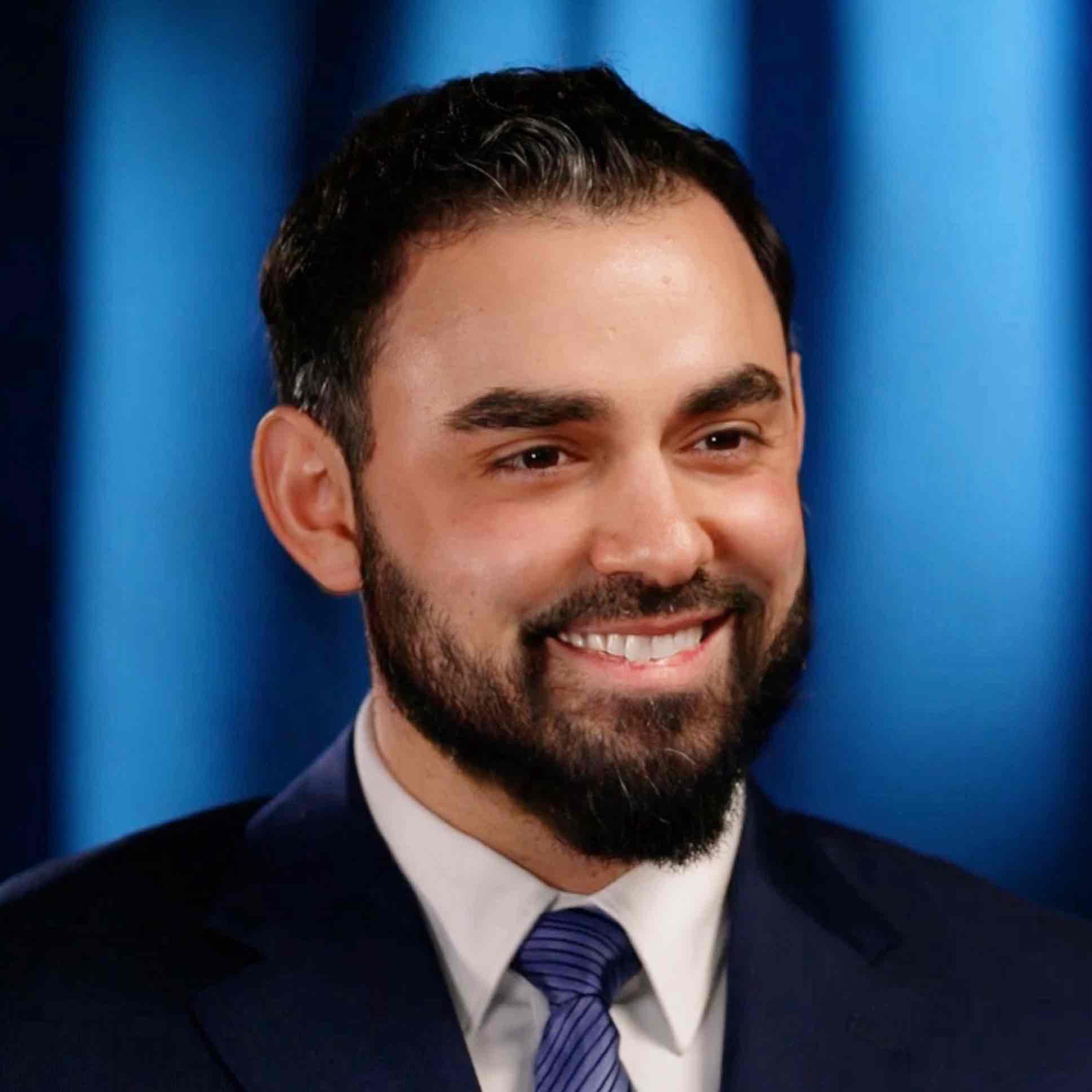
The Slide-Reader Who Changed the Rules
A Stanford Hospital clinic. A dermatologist is examining a lesion. Next to her, an algorithm is running. The algorithm spots an early-stage melanoma. The dermatologist did not. That was 2017 - and the moment Andre Esteva understood that what he had built in a Stanford lab was not a research toy. It was a clinical tool that did not blink, did not get tired, and did not miss.
The paper that followed made the cover of Nature. It was the first peer-reviewed evidence that an AI system could match board-certified dermatologists at identifying skin cancer from clinical images. Esteva did not treat it as a finish line. He treated it as a calibration point. If AI could read a photograph well enough to spot what a specialist missed, what would happen if you pointed it at a biopsy slide from a cancer patient trying to decide whether the next decade of their life would include chemotherapy?
That question became ArteraAI. Founded in September 2021, the company develops multimodal AI tests that analyze digitized histopathology images of cancer biopsies - the actual stained tissue slides from a patient's procedure - combined with clinical data, and output a prognostic score: what is this patient's 10-year risk of distant metastasis? Will hormone therapy benefit them? Should they receive radiation? The AI pulls 98% of its signal from the tumor image itself.
Doctors are the first to tell you they could use help with this.
- Andre Esteva on the clinical need for AI in oncologyThe path to ArteraAI was not straight. Esteva grew up in Texas, left UT Austin in 2011 as Engineering Valedictorian with dual degrees in electrical engineering and pure mathematics, then spent a year researching computational nuclear fusion at Sandia National Laboratories. He enrolled at Stanford for a PhD in applied physics - and then, midway through the program, pivoted. Deep learning was changing the landscape of every domain it touched. He switched to artificial intelligence. The nuclear fusion years were not wasted; they taught him to think in physical systems, in constraints, in the discipline of measurement that keeps a scientist honest.
After Stanford, he went to Google Research, then to Salesforce, where he built and led the medical AI function. It was there, introduced to radiation oncologist Dr. Felix Feng through Salesforce CEO Marc Benioff, that the ArteraAI idea took shape. Benioff reportedly encouraged them to start the company - and then led the $90M funding round that launched it publicly in 2023.
Between Stanford and ArteraAI, Esteva also co-founded Cresta, an AI company for contact centers that grew to a $1.6B valuation while he moved on. He started Silverback Capital Management, running algorithmic AI trading strategies on his own capital in micro-cap markets. He holds fellowships from Charles River Ventures, Greylock, Sequoia, and Accel. He is, in the most literal sense, a serial builder who does not stop between builds.
The difference between successful people and really successful people is that really successful people say no to almost everything.
- Andre Esteva, on building companies that matterArteraAI's test for prostate cancer is now included in the National Comprehensive Cancer Network (NCCN) Clinical Practice Guidelines in Oncology - the standard-of-care reference used by oncologists across the United States. The FDA granted it de novo authorization, making it the first AI tool authorized to prognosticate long-term outcomes in localized prostate cancer. Medicare reimburses it. Hospitals in multiple countries use it. A company that launched in 2021 is, by 2025, part of the clinical infrastructure of cancer care.
The company raised $175M total: $90M at launch, $20M in 2024, and a $65M round in December 2025. It employs 140 people, generates $34M in annual revenue, and is expanding internationally. TIME named the ArteraAI Prostate test a 2024 Best Invention. The World Economic Forum selected the company as one of the world's top growth-stage companies through its Global Innovators program.
Esteva's research, accumulated across Stanford, Salesforce, and ArteraAI, has been cited over 25,000 times. His papers have appeared in Nature, Nature Medicine, Cell, and The Lancet. He is on TIME100 Health 2025. He made Modern Healthcare's 40 Under 40 for 2025. He appeared on the OncoDaily list of the 100 Most Influential People in Oncology for 2025.
When asked what it takes to run a company like this, his answer is not about the science or the fundraising. It is about the mental game. "Mental fortitude matters most," he has said. "Handling chaos, stress, and pressure separates capable CEOs from successful ones." And then, with characteristic efficiency: "Rest is a form of productivity."
The goal is not one cancer type. It is every cancer type. Every biopsy slide from every patient who deserves to know - before the treatment begins - whether it will actually benefit them. The vision is the elimination of oncology's most persistent flaw: that treatment decisions are made by probability tables built on population averages, not on the specific molecular and morphological reality of this patient's tumor.
It will save many lives.
- Andre Esteva on ArteraAI's trajectoryHe says it plainly. No caveats, no hedges. Coming from someone who has spent fifteen years proving the point in peer-reviewed publications, clinical trials, and FDA filings - it lands differently than the usual startup confidence. He has the citations. He has the guidelines. He has the data. The claim is not ambition. It is a projection from a trajectory already in motion.