He started teaching machines to write advertising in 2018. The rest of the world caught up five years later.
Most founders chase the trend. Hikari Senju started his company five years before the trend had a name. When ChatGPT arrived in late 2022 and the whole world suddenly discovered generative AI, Senju had already been quietly running Omneky on the same idea since 2018 - that machines could generate, test, and optimize advertising better than agencies could, and far cheaper. The bet looked early for a long time. Then it looked obvious.
Omneky is a generative AI platform that creates, analyzes, and optimizes advertising creative at scale. Plug in a brand, and the system writes copy, generates images, and stitches together video, then measures which combinations actually move the numbers. Under the hood it leans on the heavyweights of the field at once - DALL-E, GPT, and Stable Diffusion - and adds computer vision that correlates the features of an ad (character counts, color schemes, sentiment, design trends) with real performance.
The promise Senju keeps returning to is unsettling and democratic in equal measure: "With AI, it is possible to generate an ad targeting every person individually, based on their design and messaging preferences." A campaign that once meant one hero image now means a million quiet variations, each tuned to a single human.
There is a guardrail he repeats like a mantra. No ad goes live unless a person signs off on it. The machine drafts; the human decides. In an industry sprinting toward full automation, that line is a deliberate choice, not a limitation.
In 2024 and 2025 he pushed the company past simple generation into agentic AI - autonomous agents that set campaign goals, break them into subtasks, and move budget across Meta, Google, and TikTok on their own. The tool that wrote your ad is learning to run your whole campaign.
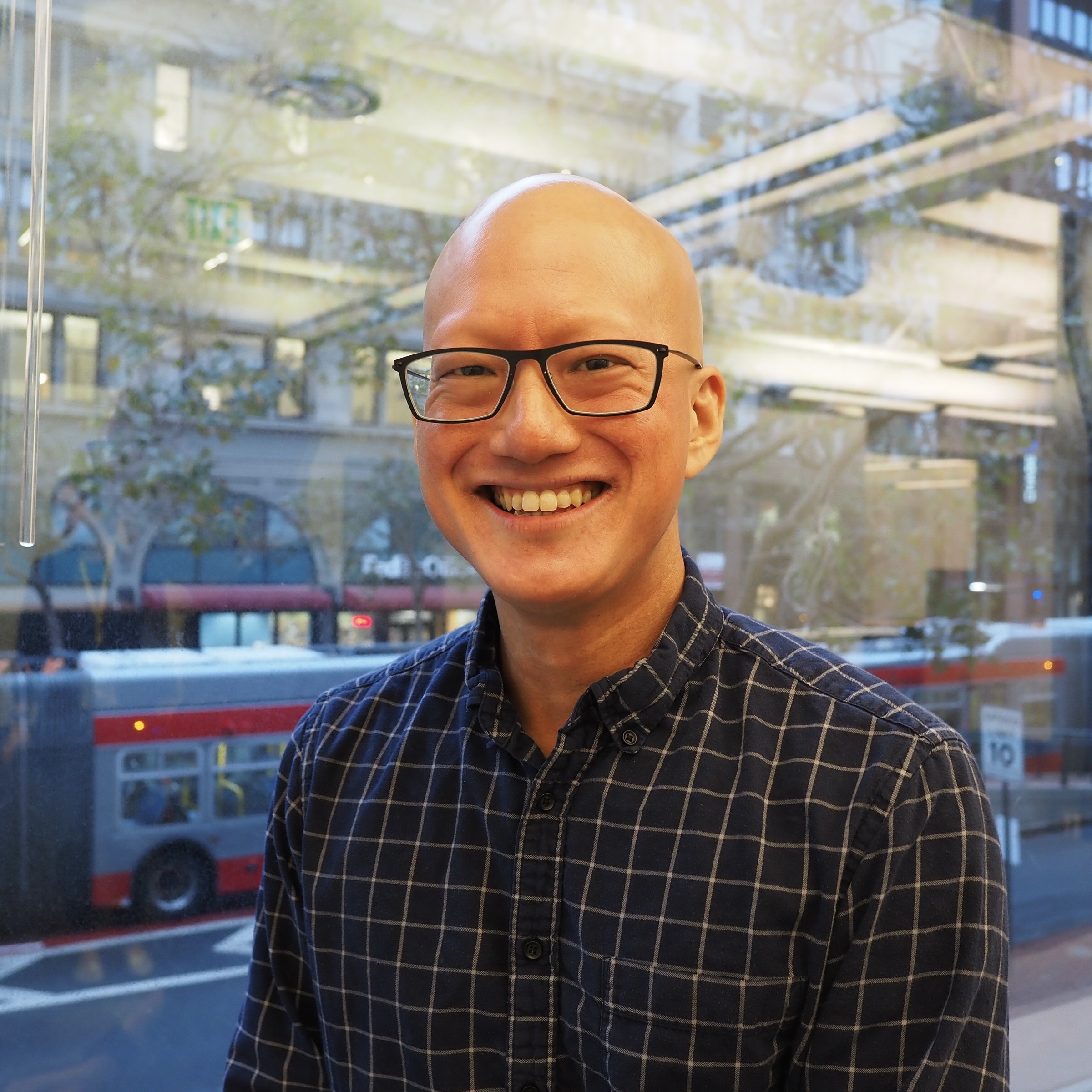
Our mission is to empower human creativity and democratize growth through AI.— HIKARI SENJU
Before there was code, there was paint. Senju's father is Hiroshi Senju, the celebrated Nihonga painter known for vast, luminous waterfalls rendered in a centuries-old Japanese style. The artistic streak runs deep on that side of the family - his uncle Akira Senju is a composer, his aunt Mariko Senju a violinist.
Growing up in Westchester, New York, Senju absorbed a particular idea: that creative work has enormous value, and that making it is slow, expensive, and rare. He would spend his career attacking exactly that scarcity - not by replacing the artist, but by lowering the cost of getting their work seen.
At Harvard he studied computer science with a focus on AI and machine learning, graduating in 2015 and cross-registering for classes at MIT along the way. By his early thirties he had already founded two startups: Balloon, an app for meeting up with friends, and QuickHelp, an on-demand tutoring app.
QuickHelp was acquired by Yup.com, where Senju became Head of Growth. That job is where Omneky was really born. Watching budgets up close, he saw "how hard A/B testing was at scale and how much money was being spent on inefficient ads." The waste was the opportunity.
"The high cost of marketing has historically been a barrier for products to succeed." Great products die unseen because their founders can't afford to be heard.
"By lowering the cost of advertising effectively online, we are democratizing growth and empowering small businesses to grow." No million-dollar budget required.
"I expect that the majority of advertising and marketing content will be generated by an AI in the next five years." He said it early, and kept saying it.
Content is king, distribution is temporary.
No ad is launched unless it's explicitly approved by humans.
With AI, it is possible to generate an ad targeting every person individually, based on their design and messaging preferences.
If we can lower the cost of marketing such that anyone, anywhere, with a compelling idea could reach their customers, that promises a more vibrant world.
Where Hikari Senju and Omneky live online.
Compiled from public sources including Crunchbase, LinkedIn, the Center for Data Innovation, Authority Magazine, Frontlines.io, and Wikipedia. Quotes are drawn from published interviews. Facts only - where the record was silent, we left it silent.