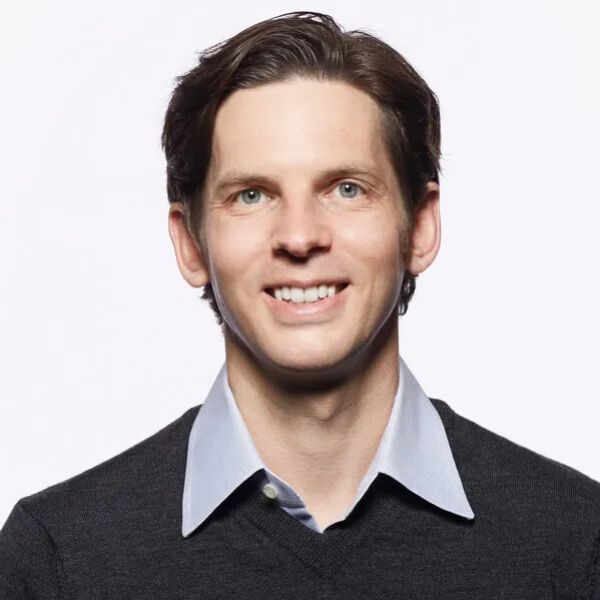
He Saw the Problem at Scale First
Most startup founders identify a market gap from the outside. Nick Elprin found his from the inside - deep inside Bridgewater Associates, the world's largest hedge fund, where he spent seven years building the quantitative research platform that powered their analytical machinery.
The paradox he watched unfold: even Bridgewater, with extraordinary talent and resources, couldn't make data science scale without deliberate infrastructure. Individual researchers could start projects, run analyses, produce insights. But reproducing those insights six months later? Sharing them with a new team member? Deploying a model into production without losing what made it work? Each step was friction. Each friction was lost value.
When Elprin left Bridgewater in 2013 alongside colleagues Christopher Yang and Matthew Granade, he wasn't walking away from quantitative research - he was going to fix the scaffolding that holds it up. They founded Domino Data Lab in San Francisco, and they started building.
Can we automate data science is a bit like asking, 'could we automate science.' Because like any scientific or truth-seeking activity, the questions you ask matter as much if not more than the techniques you use.
- Nick ElprinGitHub for Data Science - Then a Lot More
The original pitch for Domino was compact: give data scientists version control, reproducibility, and compute access without the infrastructure overhead. Think GitHub, but for models and analyses rather than code. But Elprin's ambition didn't stay compact for long.
Domino became an enterprise-grade platform for the entire AI model lifecycle - from experimentation through deployment, from a single analyst to a global team working across regulated industries. Pharma companies run FDA-compliant AI workflows on it. Financial institutions use it to pass audit trails. Defense agencies trust it with sensitive model infrastructure.
Seven Years at the World's Most Intense Hedge Fund
Elprin almost didn't go to Bridgewater. Finance wasn't the plan for a Harvard computer science graduate who'd just finished a master's degree. But Bridgewater wasn't a typical finance company - it ran on radical transparency, systematic decision-making, and a deep belief that algorithms and human judgment could be combined into something better than either alone.
He started as an intern. He stayed for seven years. By the end, he was a senior technologist building the firm's next-generation research platform - the system that let Bridgewater's quantitative researchers ask better questions faster, with all the data they needed at their fingertips.
Two things followed him out. First: a meditation practice, introduced through Bridgewater's transcendental meditation program, that he has maintained for over a decade. Second: a clear-eyed understanding of exactly where enterprise data science breaks down at scale - and what an actual fix would look like.
Companies could start data science projects fine at small scale. They couldn't industrialize them - couldn't reproduce results, couldn't collaborate across teams, couldn't deploy models into production without losing what made them work. Domino was built to fix that gap.
The Scale of What He's Built
He's Not Buying What Everyone's Selling
In a world drowning in AI hype, Elprin occupies an interesting position: he runs an AI infrastructure company, and he's skeptical of AI oversimplification. When asked whether large language models and automation will make data scientists obsolete, he doesn't hedge.
Data scientists will not become less important. They will do more - more software engineering, more model governance, more production work. The rise of generative AI doesn't replace the need for people who understand what the models are actually doing. It raises the stakes for having those people in place.
His view on "automating data science" is sharper still: asking whether we can automate data science is like asking whether we can automate science itself. The tools get better. The questions still require humans. That's not a limitation to be solved around - it's a structural feature.
It feels like we're having a 'tale of two cities' moment with AI.
- Nick ElprinHis benchmark for measuring real AI progress isn't model accuracy benchmarks or headline demos. It's simpler: what percentage of a data scientist's time is spent on their actual problem versus connecting to data sources, waiting for code to run, or configuring infrastructure? That ratio is what Domino is built to move.
Timeline
Quotes Worth Keeping
- "Get your hands dirty as much as you can. Trying things is the best way to learn."
- "Things look bigger up close." - His mantra for managing team anxiety during stressful stretches
- "Aligning the title with true influence and capability is key in the evolving role of a Chief AI Officer."
- "I'm more intellectually honest than a lot of folks."
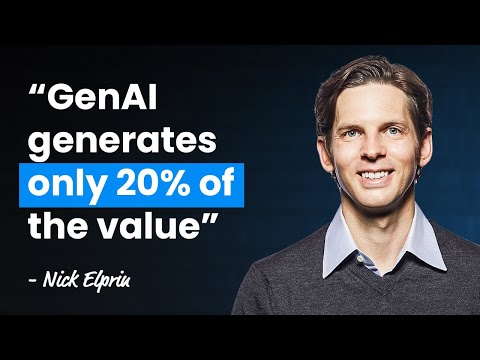
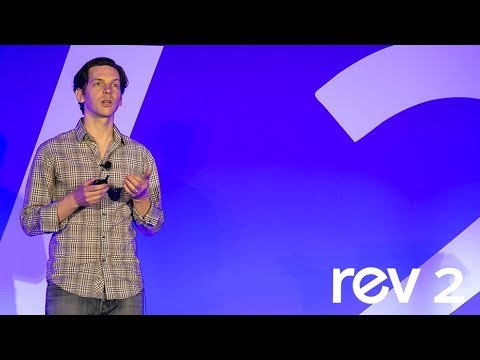
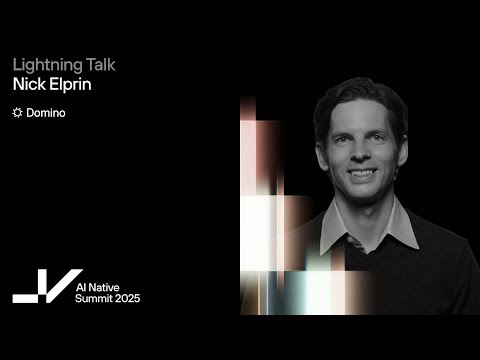
Nick Elprin on Video

The Operator Behind the Platform
Elprin runs Domino with the intellectual discipline of a quantitative researcher and the interpersonal instincts of someone who has spent a decade watching how the best research cultures actually function. He is transparent about difficulty - when his company faces hard stretches, he names them rather than papering over them.
His hiring instinct is less formal than most CEOs': he reads energy. Conversations that leave him engaged signal cultural fit as clearly as any structured assessment. He prioritizes values alignment, believing that people who share how Domino thinks about work are more valuable than credentials alone.
On difficult decisions without obvious right answers, he evaluates two things: how reversible is this, and what information could we gather before committing? The combination makes him unusually good at moving quickly without overcommitting - a quality that has served him across twelve years of platform pivots, funding cycles, and market shifts.
The meditation practice that Bridgewater introduced him to has become a genuine fixture of how he operates. Ten-plus years of daily practice. He credits it with clarity under pressure and a better ability to distinguish what's genuinely urgent from what just feels that way at close range.