additive-manufacturing
(40)
Ali Tamijani Wants 3D Printing to Learn From the Toolpath
The aerospace professor turned founder is building software that remembers a printed part is made in layers - and that the path from a phone photo to a trustworthy component should not take weeks.
Jeff Thornburg Wants Spacecraft to Stop Sitting Still
After three decades making launch systems move faster, the Raptor architect is taking on the part of spaceflight that usually stays put: the satellite itself.
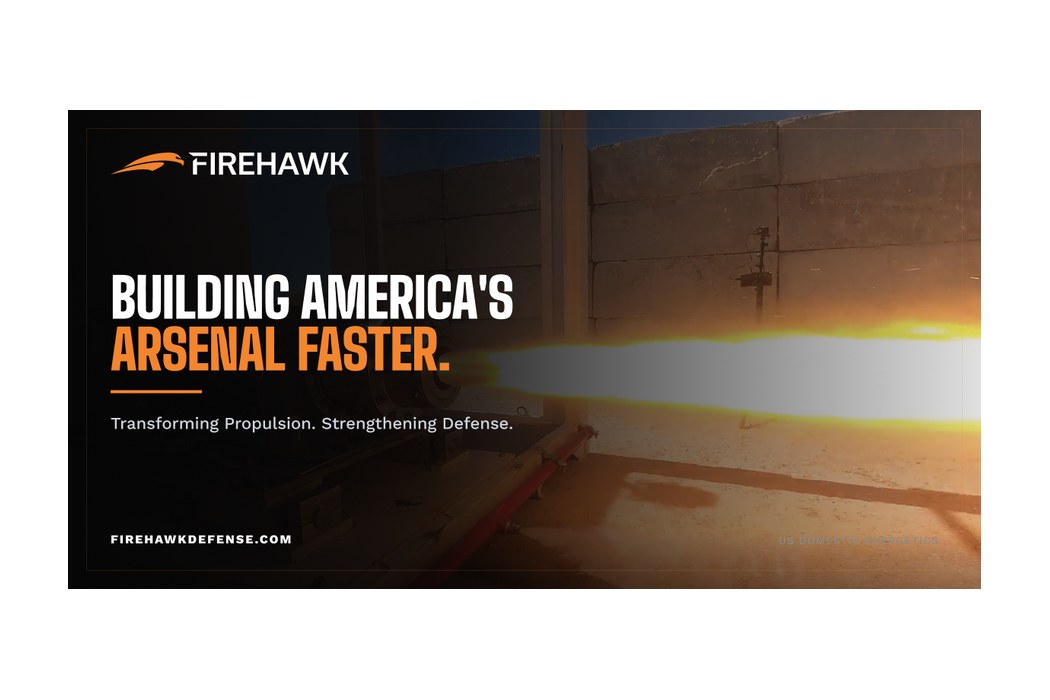
Firehawk’s $5,000 Demo: How a Rejected Rocket Startup Learned to Sell the Pentagon Speed
Firehawk began by pitching a new kind of rocket engine. The Pentagon wanted an easier swap. One cheap printer, a filmed hot-fire test and a strategic retreat turned that rejection into a plan for rebuilding the propellant supply chain.

Novineer Is Teaching 3D Printing to Stop Guessing - Before the Plastic Gets Expensive
A seven-person Florida startup wants to replace the print-break-redesign loop with a photograph, a toolpath and a useful prediction. Its bet is simple: the next advance in industrial 3D printing may come from software that understands how the machine actually lays down material.
Nikon Spent a Century Perfecting Light. Now It Is Betting the Company on Everything Except Cameras.
The camera brand your grandparents trusted now etches microchips, prints jet parts in metal, and photographs living cells. In 2026 that pivot is running at a loss - and Nikon says that is the point.
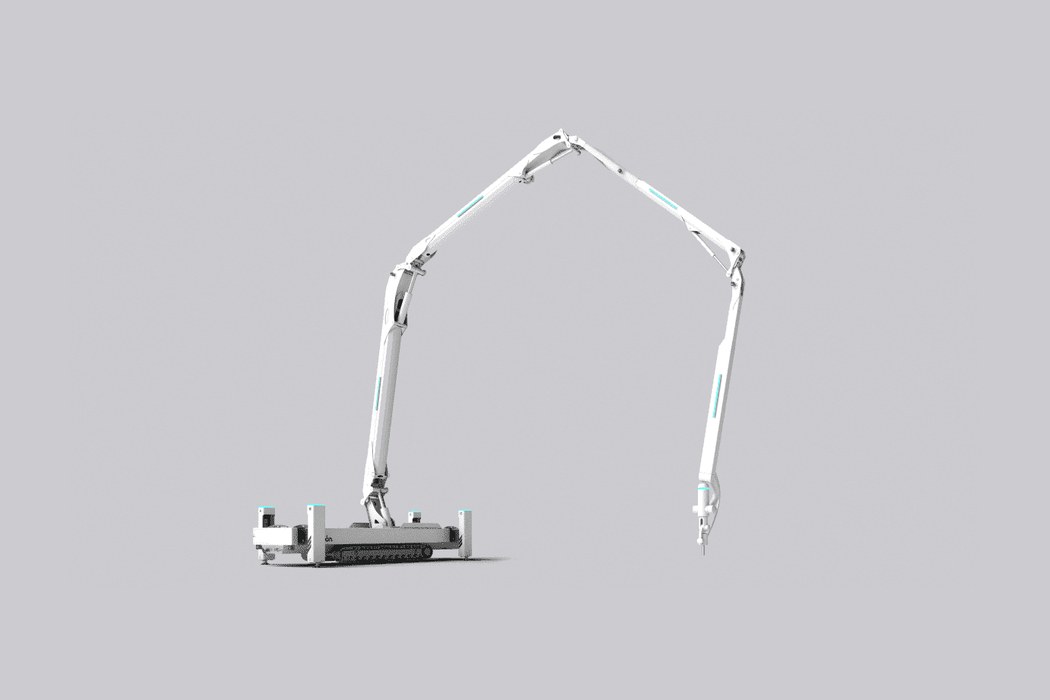
ICON Is Selling the Machine That Prints the Walls
After years spent proving that a robot can print a neighborhood, ICON is putting its construction system in other builders' hands. The harder test starts now: turning spectacular machinery into ordinary infrastructure.

GE Aerospace
GE Aerospace sells some of the most complicated machines humans make. The deeper business begins after delivery, when decades of maintenance, data and parts turn an engine under the wing into a long-lived service relationship.

6K
6K is a North Andover, Massachusetts advanced materials company that uses its proprietary UniMelt microwave plasma technology - which reaches roughly 6,000 degrees, hence the name - to produce battery cathode materials and additive-manufacturing metal powders faster, cleaner, and with fewer processing steps than conventional methods. Spun out of research at MIT and the University of Connecticut, the company operates through two divisions, 6K Energy (battery cathode active materials) and 6K Additive (sustainably sourced metal powders), and is building a domestic U.S. supply chain for critical materials backed by federal grants and more than $348 million in venture funding.
Shapeways
Shapeways is an Eindhoven-based 3D printing and digital manufacturing company that lets individuals and businesses upload 3D files and receive custom parts made through additive manufacturing, CNC machining and injection molding. Founded in 2007 inside Royal Philips, it pioneered a public 3D printing service and marketplace, went public via SPAC in 2021, filed for bankruptcy in 2024, and was relaunched in December 2024 by its original founders and the profitable Eindhoven factory team with a renewed focus on B2B customers, sustainability and operational stability.

Simplifyber
Simplifyber is a North Carolina biomaterials company reinventing how soft goods are made. Its proprietary natural-fiber liquid, Fybron, is injected into 3D molds to form fabric directly, skipping the spinning, weaving, cutting, and sewing steps of conventional textile production. Founded in 2021 by fashion veteran Maria Intscher-Owrang and Phil Cohen, the company targets fashion, footwear, bags, automotive and aviation interiors, and consumer packaging with a cellulose-based, largely biodegradable alternative to fossil-derived materials. It closed a $12M Series A led by Suzano Ventures in April 2025.

unspun
unspun is a San Francisco-based fashion-technology company that built Vega, the world's first 3D weaving system for apparel. Vega weaves garments directly from yarn in minutes, skipping cut-and-sew steps to enable on-demand, near-zero-waste, locally produced clothing. A certified B Corp founded in 2015, unspun sells custom-fit jeans direct to consumers while licensing its hardware and software to brands and retailers aiming to decarbonize their supply chains. Its stated mission is to reduce global human carbon emissions by 1%.

Maria Intscher-Owrang
Maria Intscher-Owrang is the co-founder and CEO of Simplifyber, a Raleigh-area materials startup that molds cellulose-based liquid directly into finished textile and composite parts, eliminating spinning, weaving, cutting and sewing. After more than two decades designing for Vera Wang, Calvin Klein, Dirk Bikkembergs and Alexander McQueen, she left luxury fashion to rebuild manufacturing from the fiber up, landing partnerships with GANNI and Kia and a $12M Series A led by Suzano Ventures.

PIX Moving
PIX Moving is a city-robotics company that builds modular, drive-by-wire electric 'skateboard' chassis and autonomous 'mobile spaces' such as its RoboBus and RoboShop. Founded in 2014 and rooted in both Silicon Valley and China, PIX combines metal 3D printing, generative design, and self-driving software to turn vehicles into reconfigurable rooms on wheels - a shuttle that can become a cafe, gym, retail pop-up, or library. It sells its chassis and full vehicles to developers, cities, and mobility operators, and runs a Robot-as-a-Service model aimed at deploying fleets across dozens of countries.

Marleen Vogelaar
Marleen Vogelaar is a Dutch entrepreneur who co-founded Shapeways in 2007, helped build it into the world's largest 3D printing marketplace, left in 2014 to start the on-demand apparel company Ziel, and then returned to Shapeways as CEO in December 2024 after the company went bankrupt - buying back the brand and rebuilding it around a leaner, B2B, profit-first model. A former competitive heptathlete and industrial engineer, she is known for pairing operational discipline with an insistence that a company's mission should not be hostage to its investors, an idea she put into practice by converting Ziel to steward-ownership.
Saurabh Ullal
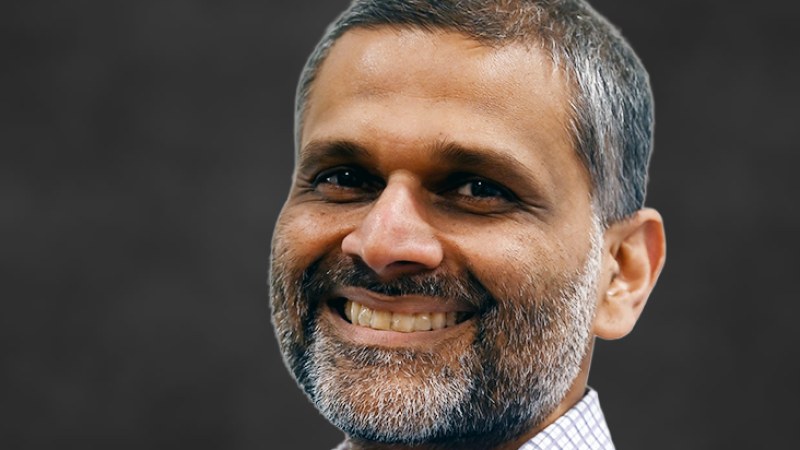
Saurabh Ullal is the CEO of 6K, an advanced materials company in North Andover, Massachusetts that uses a microwave-plasma process called UniMelt to make battery cathode powders and metal powders for additive manufacturing. A chemical engineer by training with a PhD from UC Santa Barbara, he joined 6K as COO and stepped into the CEO role in September 2024 alongside an $82M Series E close, tasked with scaling a technology invented at MIT into industrial tonnage.

MacLean-Fogg
MacLean-Fogg is a fourth-generation, family-owned American manufacturer founded in 1925 that grew from a single railroad lock nut into a global maker of fasteners, engineered components, plastics, and additive-manufacturing tooling. Headquartered in Mundelein, Illinois, the roughly $1.2 billion-a-year enterprise supplies the automotive, heavy-truck, electric utility, telecom, and industrial markets from dozens of plants across North America, Europe, and Asia. In 2025 it marked its 100th anniversary still owned and led by the MacLean family.

Z-Polymers
Z-Polymers is a Lowell, Massachusetts materials science company that emerged from the UMass Lowell Innovation Hub to build Tullomer, a PFAS-free liquid crystal super-polymer spun into ultra-fine fibers and 3D-printing filament. Founded in 2021 by materials scientist Dr. Michael Zimmerman, the company claims strength up to four times that of PEEK - and up to six times stronger than steel at a sixth of the weight - while printing on desktop machines without annealing. Its materials target aerospace, defense, medical devices, energy, and functional fabrics, and in 2026 it secured a strategic seed investment and joint development agreement with Japan's Kureha Corporation.
Gregory Mark
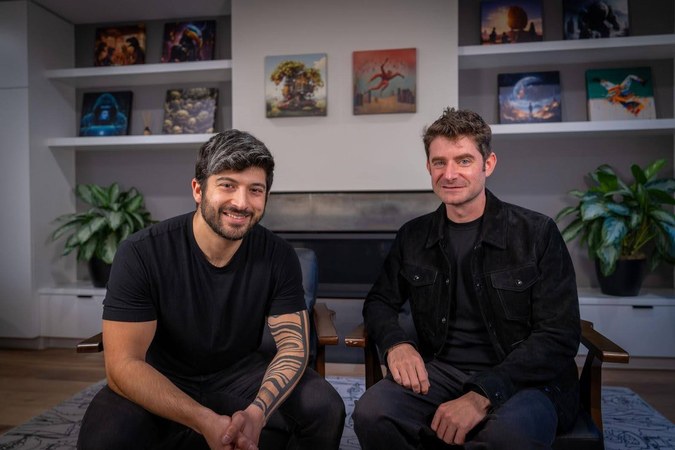
Gregory Mark is a three-time founder and MIT-trained aerospace engineer who is rebuilding how physical things get made. After inventing continuous carbon fiber 3D printing and taking Markforged from a garage idea to a $2.1B public company, he launched Backflip AI in 2024, a generative AI tool that turns text, sketches, and scans into 3D-printable, manufacturable models. Backflip raised a $30M Series A co-led by NEA and Andreessen Horowitz, with angels including Microsoft CTO Kevin Scott and 'Attention Is All You Need' co-author Ashish Vaswani.

James Hedrick
James Hedrick is the co-founder and CEO of Azul 3D, a Skokie, Illinois deep-tech company commercializing HARP (High Area Rapid Printing), a resin 3D-printing technology he helped invent during his PhD at Northwestern University in Chad Mirkin's lab. HARP uses a flowing, non-stick liquid interface to carry away heat, letting large parts print continuously up to 100 times faster than layer-by-layer machines - fast enough and strong enough to challenge injection molding. Hedrick started his first company at 16 to pay his way through MIT, where he was an NCAA athlete, and was named to the Forbes 30 Under 30 Manufacturing & Industry list in 2020.

Jifei Ou
Jifei Ou is the founder and CEO of OPT Industries, a Medford, Massachusetts company that turned a decade of MIT Media Lab research into a new kind of factory. After nearly seven years spent learning to 3D-print fur, hair, and micro-textures no mold could produce, Ou built RAMP, described as the world's first roll-to-roll 3D printing system, which prints intricate microstructures by the mile. Rather than sell machines, OPT sells the products it makes on them - false eyelashes, beauty applicators, and diagnostic swabs that outperformed the gold standard during COVID. Ou raised $15M in Series A funding and is betting that reconnecting design and production can bring precision manufacturing back onshore.

LuxCreo
LuxCreo is a digital manufacturing company turning dental clinics and labs into same-day production floors. Its patented LEAP (Light Enabled Additive Production) printers, ActiveMemory polymers, and LuxFlow software combine to deliver FDA-cleared, directly 3D-printed clear aligners, night guards, dentures and crowns - cutting weeks of traditional workflow down to hours.

Naweed Tahmas
Naweed Tahmas is the founder and CEO of Aeon (Aeon Industrial), an Austin-area defense startup building Zeus, a software-defined, 3D-printed modular guided missile priced around $50,000 - a fraction of legacy tactical munitions. Before defense, he was a Special Assistant to the President and Associate Director in the Trump White House, coordinating policy and personnel across 15 federal agencies. Years earlier he was the combative vice president of the Berkeley College Republicans at the height of the 2017 campus free-speech battles, a fight he carried all the way to a DOJ-backed lawsuit. He has since traded the campus quad for a Cedar Park factory floor, where Aeon aims to turn out more than 10,000 missiles a year.
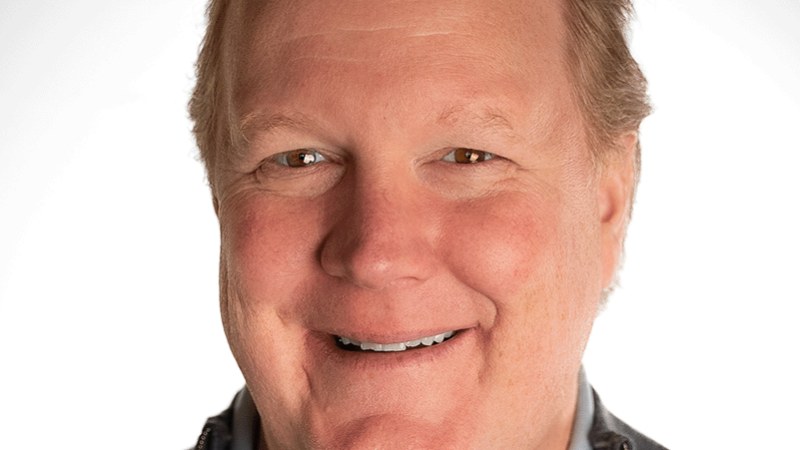
Duncan MacLean
Duncan MacLean is the President and CEO of MacLean-Fogg, the Mundelein, Illinois manufacturing company his great-grandfather founded in 1925. A Dartmouth-trained engineer who started in quality control as a teenager, he is the fourth generation of his family to run the roughly $1 billion enterprise. He joined as a manufacturing engineer in 1996, spent 4.5 years in Germany, rebuilt the components business after the 2008 recession, and now leads global operations across fasteners, power systems, plastics, and 3D-printed tooling as the company crosses its 100-year mark.
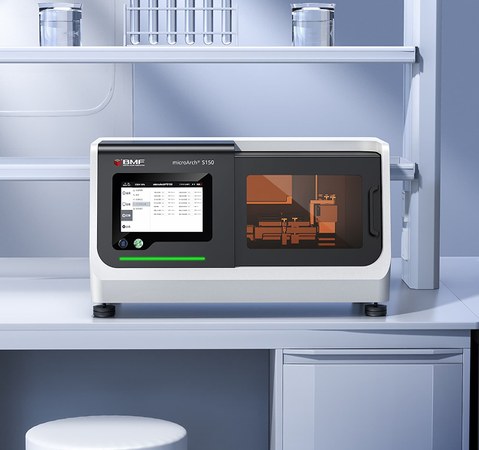
Boston Micro Fabrication (BMF)
Boston Micro Fabrication (BMF) builds 3D printers that work at a scale most machines can't reach - resolutions down to 2 microns with tolerances of about plus or minus 10 microns. Its microArch printers use a proprietary process called Projection Micro Stereolithography (PuSL) to make tiny, complex parts for medical devices, microfluidics, optics, connectors and semiconductor packaging. Founded in 2016 and headquartered in Maynard, Massachusetts, BMF has placed machines with more than 2,000 customers across roughly 35 countries.
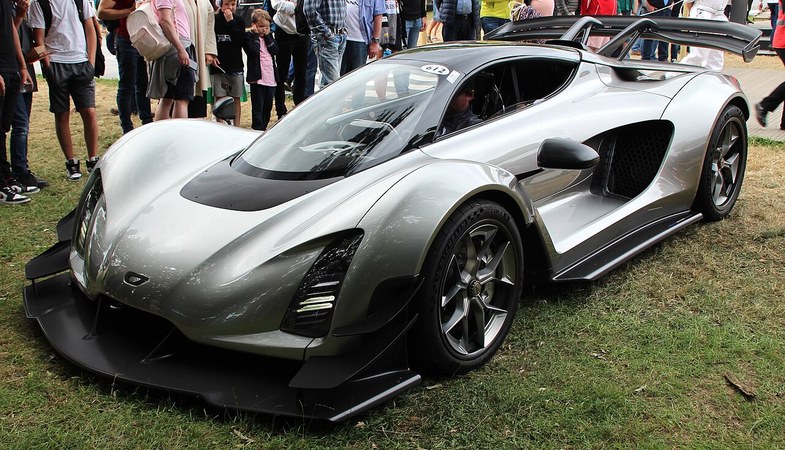
Divergent
Divergent Technologies is a Torrance, California digital-manufacturing company behind DAPS, the Divergent Adaptive Production System - an end-to-end platform that pairs AI-driven generative design, metal 3D printing, and software-defined robotic assembly to produce complex automotive, aerospace, and defense structures without part-specific tooling. The same system that builds the record-setting Czinger 21C hypercar now turns out missile airframes and drone aerostructures for U.S. defense primes.

Gamma Alloys Inc
Gamma Alloys is a Santa Clarita, California advanced-materials company that reinforces aluminum with homogeneously distributed nano-ceramic particles to create metal matrix composites that are stiffer, stronger, more wear-resistant and stable across a wider temperature range than conventional aluminum. Its materials ship as wrought stock (bar, tube, plate), additive powders and additive wire for metal 3D printing, and are aimed at aerospace, defense, automotive, motorsports and even luxury goods. Founded in 2008 and led by CEO Mark Sommer, the company drew an investment from Boeing HorizonX Ventures in 2017 and partners with precision manufacturer Del West USA.
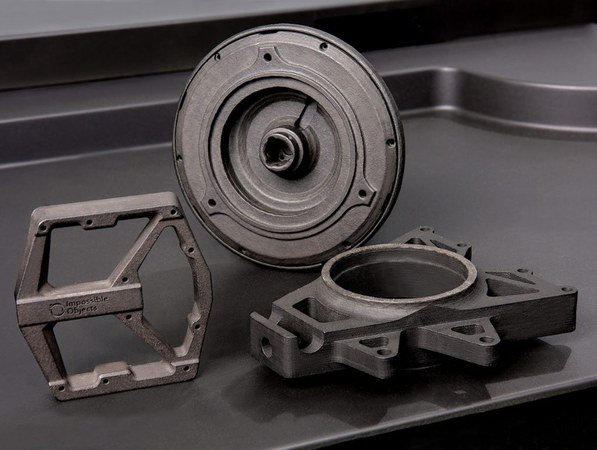
Impossible Objects, Inc.
Impossible Objects is a Northbrook, Illinois manufacturer of industrial 3D printers built around its proprietary CBAM (Composite-Based Additive Manufacturing) process. Instead of melting plastic filament, CBAM stacks long-fiber sheets of carbon fiber or fiberglass, inkjet-prints each layer with a fluid, bonds them with high-performance polymer powders like PEEK and nylon, then compresses and heats the stack into a solid composite part. The result is parts the company says are stronger, more dimensionally accurate, and printed up to 15x faster than competing methods - aimed at aerospace, defense, automotive, and electronics customers that need composite parts at production volume.
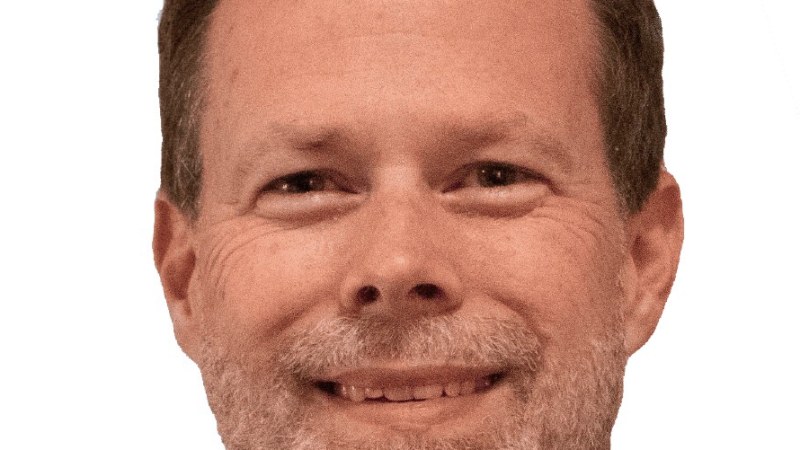
Brad Kreger
Brad Kreger is a medical device and manufacturing executive who became CEO of Baltimore-based CoapTech in November 2025, taking over from co-founder Howard Carolan. He brings nearly three decades of operations experience, most recently turning around metal 3D-printing company Velo3D as its CEO, with earlier senior roles at Fluidigm/Standard BioTools, Thermo Fisher Scientific, and Affymetrix. At CoapTech he leads commercialization of the percutaneous ultrasound gastrostomy (PUG) system, an ultrasound-guided method of placing feeding tubes at the bedside that has been used in more than 1,000 patients.

Relativity Space
Relativity Space is an American aerospace company building rockets in a radically different way - by 3D printing the bulk of each vehicle with its proprietary Stargate metal printers and autonomous robotics. Founded in 2015, it became the first company to launch a largely 3D-printed rocket (Terran 1) in 2023, and is now focused on Terran R, a medium-to-heavy-lift, fully reusable launch vehicle aimed at the commercial and government markets. Under CEO Eric Schmidt, who took the helm in 2025, the company is also exploring orbital infrastructure for AI and high-performance computing.

James DeMuth
James DeMuth is the co-founder and CEO of Seurat Technologies, a Wilmington, Massachusetts metal additive manufacturing company chasing a single audacious goal: printing metal parts fast and cheap enough to compete with mass production, then planting factories next to the customers who need them. He co-invented Seurat's Area Printing technology while working on laser fusion research at Lawrence Livermore National Laboratory, holds a hand in roughly 145 patents, and has raised more than $181 million to reshore manufacturing and cut carbon out of how metal gets made.