100
Years Family-Owned
He learned the family business from the machine shop up. Now he runs it - all $1 billion of it, four generations deep.
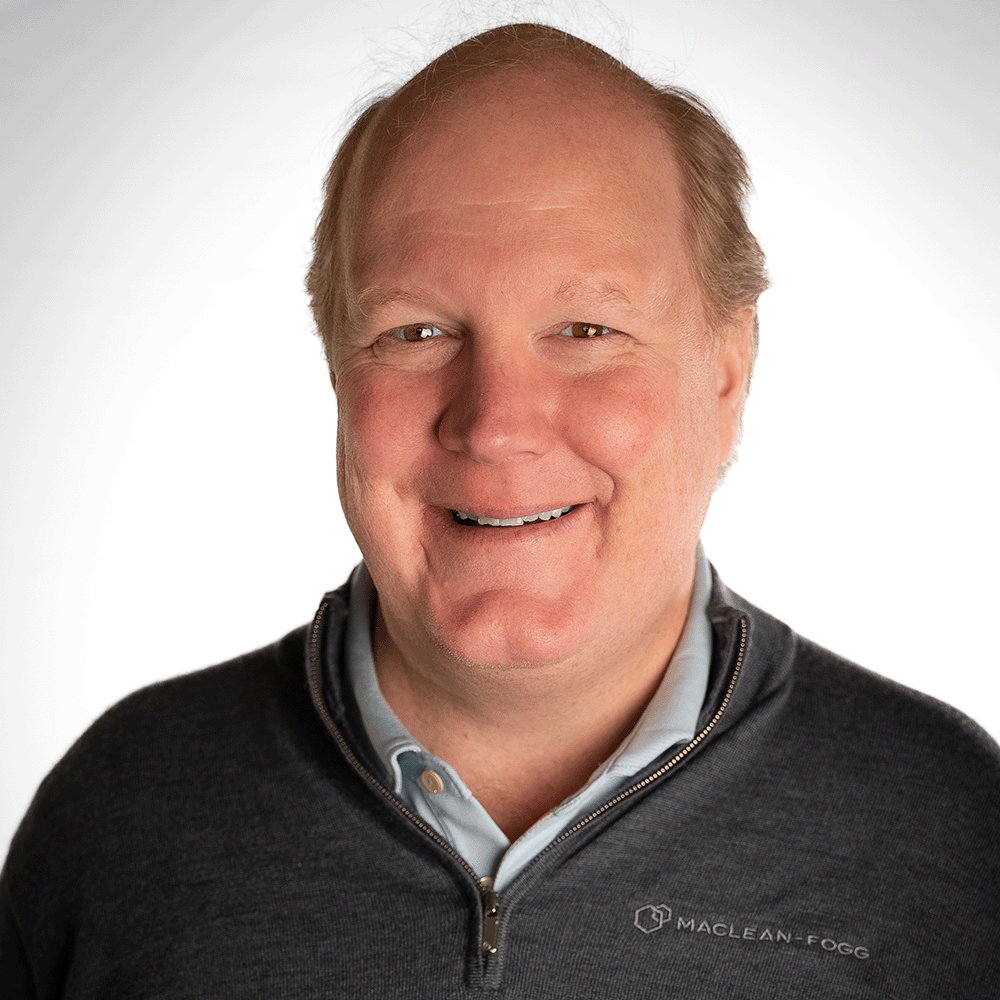
Walk into MacLean-Fogg's Mundelein, Illinois headquarters today and you will find a company that does not look much like the small fastener shop a Scottish-named family opened in 1925. It makes stainless steel wheel nuts and high-voltage power line hardware. It makes injection-molded plastics and precision-machined metal. It even makes 3D-printed tooling for die casting through a unit called MacLean Additive. The thread running through all of it is a man who knows how every one of those things is built, because at one point or another he helped build them.
Duncan MacLean has been President since August 2015 and Chief Executive Officer since November 1, 2017. That title sits on top of a resume most heirs never bother to assemble: seven different business units, a four-and-a-half-year posting in Germany, and a stint running the automotive side of the house straight through the 2008 recession. He did not inherit a desk. He earned a building.
His ambition for the company is unfashionably patient. While much of American manufacturing chases the next quarter, MacLean talks in centuries. The plan is not to flip the business or dress it up for sale. The plan is to hand it to a fifth generation in better shape than he found it.
Role: President & CEO, MacLean-Fogg
Since: President 2015, CEO 2017
Base: Mundelein, Illinois
Sectors: Power transmission, automotive, fasteners, aerospace, plastics, additive
Generation: Fourth, and counting
For the first time in a long time, we're on offense.
Before the engineering degrees and the MBA, before Germany and the board seat, there was a teenager standing at a quality control station inside the family plant, measuring parts and sending the bad ones back. That was Duncan MacLean's introduction to the company that bears his name - not a glass office, but a shift on the floor during high school and college.
From quality control he moved to the maintenance department, then to the machine shop. It was the machine shop that did it. Watching how parts were actually cut and formed convinced him he wanted to be an engineer, and he went off to Dartmouth and stacked up three degrees there in three years: a bachelor's in 1994, a bachelor of engineering in 1995, and a master of engineering management in 1996.
Then he came home and started over at the bottom - as a manufacturing engineer at MacLean Power Systems in 1996. Two years later, at an age when most engineers are still learning the ropes, he was elected to the board of directors.
Two moments, by his own account, shaped the executive he became.
He moved overseas at the start of his career and stayed four and a half years building the European business. Living and working abroad, he calls one of the two pivotal events of his career.
The other was steering the automotive side of the business through the 2008 collapse - and then rebuilding MacLean-Fogg Component Solutions to historic performance.
Most executives collect logos. MacLean collected business units, all under the same roof.
Founded in 1925, MacLean-Fogg has never left the family. The torch has passed exactly three times - and Duncan is holding it now.
"I'm honored to be the fourth generation of the MacLean family to own and operate MacLean-Fogg. I will ensure the long tradition by investing in people and new opportunities."
He worked across seven different business units before running any of them. The CV reads like a tour of the factory: power systems, components, automotive, plastics, machining.
Under his watch MacLean Additive turns 3D printing into real production tooling, and the company pushes deeper into aerospace and exotic materials - a long way from wheel nuts.
When MacLean-Fogg bought Mallard in 2024, he praised its "family-oriented culture" first. Fit with the values, then fit with the spreadsheet.
"Building for the next 100 years" is not a slogan he uses loosely. The whole point of a family company, in his telling, is the timeline only a family can keep.
Three engineering degrees from Dartmouth's Thayer School mean the boss can read a drawing and walk a line. The machine shop never quite left him.
A Kellogg finance MBA on top of the engineering - he can run the numbers too. The recession years taught him which ones matter.
It's like we're a brand-new company with a strong base, building for the next 100 years.
He earned three Dartmouth degrees in a single three-year stretch, 1994 to 1996, then added a Kellogg MBA in 2008.
His first roles at the company were quality control, maintenance, and the machine shop - the floor jobs, during school.
MacLean-Fogg's catalog runs from Decorex stainless wheel nuts and Securex wheel fasteners to 3D-printed die-casting tools.
The company serves wind, solar, mining, aerospace, military defense, and electric utilities - not just one industry, but a dozen.
He spent four and a half years living in Germany - long enough that he counts it as career-defining.
Roughly 2,500 employees and about $1 billion in revenue now sit under a company that began as a single small shop in 1925.