ultra-wideband
(6)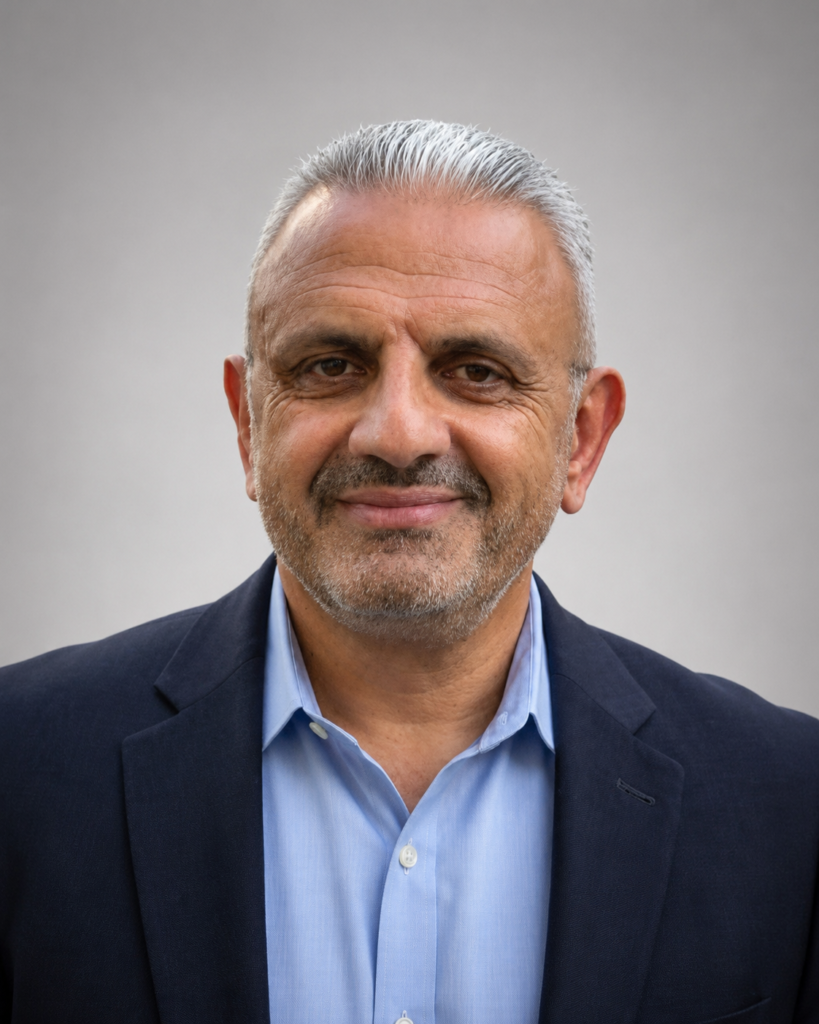
Fares Mubarak Is Making Wireless Sweat the Small Stuff
After three decades inside the chip business, Fares Mubarak is betting that the next computing bottleneck is not thought but conversation - the tiny, power-hungry wireless exchanges between intelligent devices.

Yifeng Zhang
Yifeng Zhang is a Silicon Valley semiconductor entrepreneur and the co-founder, President and CEO of Mauna Kea Semiconductors (MKSemi), a fabless chip company building the industry's lowest-power ultra-wideband (UWB) system-on-chip solutions for wearables, IoT, smartphones and automotive. Before MKSemi he co-founded Quintic, a low-power Bluetooth and wearable SoC maker whose BLE and wearable business was acquired by NXP in 2015. He holds 15 patents in IC design and UWB technology and has spent more than two decades in digital, analog and mixed-signal design across Philips Semiconductors, NXP and ams.

Humatics
Humatics is a Waltham, Massachusetts technology company building microlocation systems - hardware and software that pinpoint the position of people, vehicles, and machines to millimeter and centimeter precision. Combining industrial-grade ultra-wideband radio with inertial sensors, GNSS, and analytics software, its platform serves two markets: industrial automation and robotics through the Milo Microlocation System, and rail and transit through the Humatics Rail Navigation System. Founded in 2015 by MIT professor David Mindell and industry veteran Gary Cohen, the company works with partners including Siemens Mobility and Hitachi Rail on projects such as the New York MTA subway signaling upgrade.

James Kinsey
James Kinsey is the CEO of Humatics, a Waltham, Massachusetts company building microlocation technology that pinpoints the position of vehicles and machines to sub-millimeter precision. An engineer and scientist by training, he holds a PhD from Johns Hopkins and spent years on the scientific staff at Woods Hole Oceanographic Institution developing GPS-denied navigation for deep-sea robots and manned submersibles. He joined Humatics as a founding officer in 2016, led its Milo software and systems work, delivered train-signalling projects for New York City's MTA, and founded the company's Mobility division before taking the top job.

Mauna Kea Semiconductors Corporation
Mauna Kea Semiconductors (MKSemi) is a Silicon Valley fabless chip company building what it calls the world's lowest-power ultra-wideband (UWB) technology - the short-range radio that lets phones, wearables, cars and IoT devices know precisely where they are and which direction they're pointing, down to a few centimeters. Founded in 2019 by semiconductor veterans and headquartered in Cupertino/San Jose with engineering hubs across China, MKSemi sells UWB chips, modules and SDKs, headlined by its highly integrated MK8000 SoC, to device OEMs and ODMs chasing precise location, secure ranging and radar-style sensing on coin-cell batteries.
SPARK Microsystems
SPARK Microsystems is a Montreal-based fabless semiconductor company building ultra-wideband (UWB) wireless transceivers that aim for wire-like performance without the wire. Its patented LE-UWB technology delivers ultra-low latency, high data throughput, and very low power draw, targeting applications where Bluetooth falls short: wireless audio, gaming peripherals, AR/VR and AI wearables, presence detection, and industrial IoT. Founded in 2016 by researchers out of Montreal's engineering community, SPARK has raised roughly CAD $48M+ and is scaling commercial adoption of its second-generation SR1120 transceiver.