kyc
(83)
Shufti wants to make proving you are you less of a production
A frustrating identity check helped inspire Shufti. Now the company is betting that businesses will buy verification, fraud checks and ongoing monitoring from the same place.

GBG wants to let the right people in
The British identity specialist grew by buying the machinery of digital trust. Now it must make those pieces work together - while a fresh setback in America tests its recovery.

Alloy Took 100 Investor Noes. Now It Helps 900 Banks Say Yes.
The founders started with a failed nightlife app, found a sharper problem inside bank payments, and endured 100 investor rejections. Their reward is a quiet piece of infrastructure that helps more than 900 financial institutions approve good customers without giving fraudsters a free pass.

Bureau Raised $50.5 Million to Answer the Internet's Most Expensive Question: Who Can You Trust?
Point solutions can verify a document and still miss the fraud ring holding it. Bureau's bet is that the winning risk product is not another check, but the connective tissue between every check.
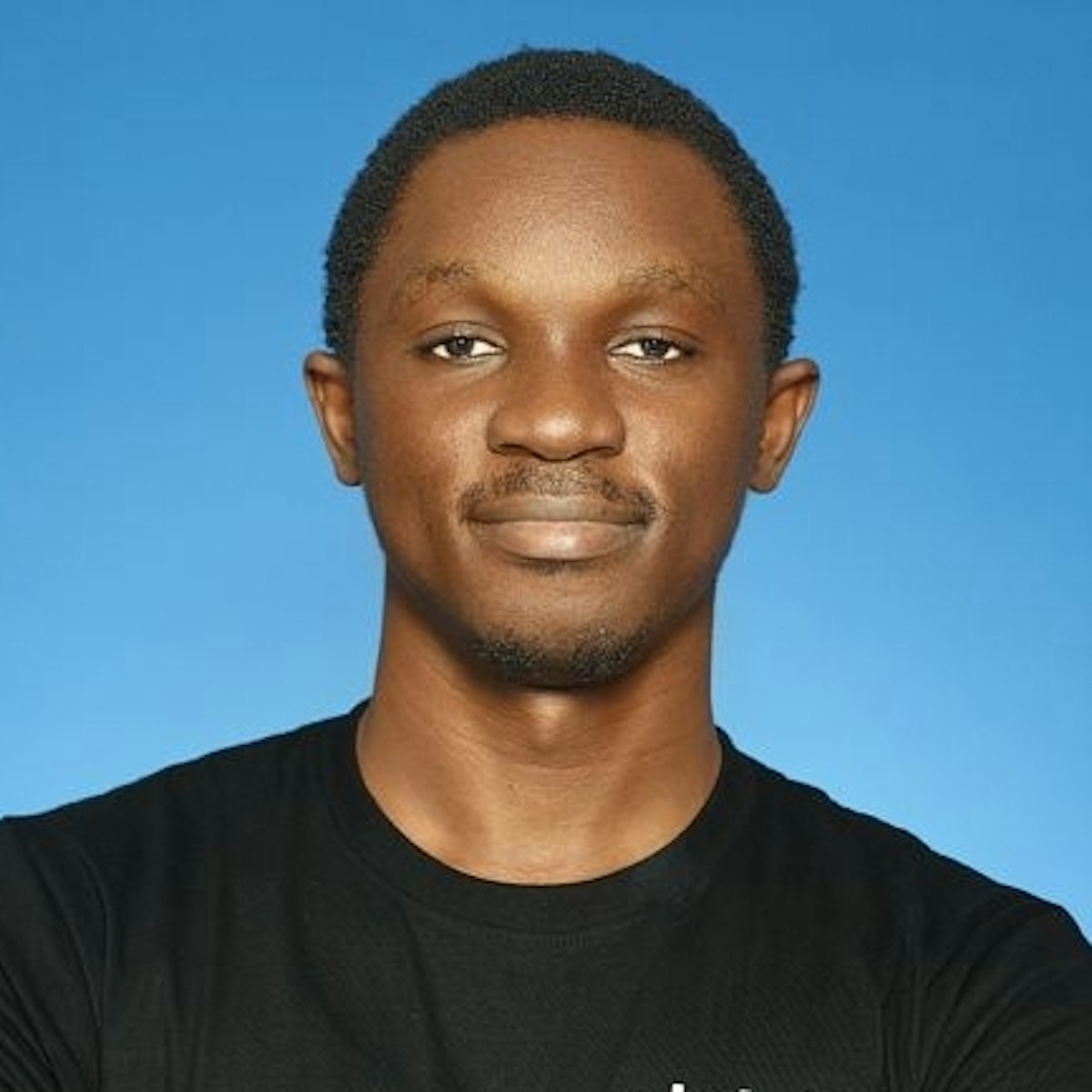
Oluwatobiloba Ololade Is Building the Boring Layer the Internet Cannot Live Without
The Dojah co-founder turned a developer’s recurring nuisance - fragmented access to identity data - into infrastructure for businesses that need to know who is really on the other side of a screen.

Alberto Rosas Is Building Trust for an Internet Full of Doubles
An identical twin who once competed at tennis and trained neural networks now runs live identity checks for a living. His second act is a study in narrowing the problem without shrinking the ambition.

Johnny Ayers Is Still Punting Into the Unknown
He fumbled the snap in his first college game, ran out of startup money four times, and kept moving forward. Fourteen years into Socure, Johnny Ayers is widening his bet on who - and what - the internet can trust.
Socure Built a $4.5 Billion Business Around One Awkward Question: Are You Really You?
Banks once treated identity as a checklist. Socure turned it into a living graph - and now more than 3,000 customers use that graph to decide who gets through the digital front door.
Jelou Wants to Run a Bank Inside Your WhatsApp Chat
In Latin America, hundreds of millions of people run their lives inside a chat window. A Guayaquil-born startup just raised $10 million to make that window verify identity, sign contracts, and approve loans - without anyone leaving the conversation.

Robert Mann Built a Career on the Unbankable
From free cookies in Palo Alto to compliance software for cannabis operators and community banks, the StandardC co-founder has spent a career learning how institutions decide whom to trust.

Chaitanya Sarda Is Turning Compliance Into a Product Problem
After years deciding whether unknown callers could be trusted at Google, the AiPrise co-founder is applying the same systems instinct to a slower, messier question: how businesses decide whom to let in.

The Software That Turns Financial Crime Investigators Into Case-Closing Machines
Anti-money-laundering work is where good design goes to die. Hummingbird bet the opposite - that compliance investigators deserve tools as sharp as the criminals they chase.
Didit
Didit is a San Francisco-based identity and fraud infrastructure company building one API for KYC, KYB, AML, biometrics, liveness and transaction monitoring across 220+ countries and 14,000+ document types. Founded by identical-twin brothers Alberto and Alejandro Rosas, it offers 500 free verifications per month forever and pay-as-you-go pricing from $0.33 per KYC check, aiming to become the identity layer for an internet where telling humans from bots is getting harder.

Dojah
Dojah is a Lagos-based identity verification and anti-fraud infrastructure company that helps digital businesses onboard users, verify identities, and stay compliant through a single API and no-code tools. It aggregates KYC, KYB, AML, biometric, document and address checks across Africa and beyond, letting fintechs, banks, and marketplaces confirm who they are dealing with in seconds. A Y Combinator W22 company, Dojah serves customers including OPay, FCMB, Cowrywise and Fincra.
Fenrock AI
Fenrock AI is a San Francisco startup from Y Combinator's Winter 2026 batch building AI agents for the banking back office, starting with financial crime compliance. Its AI workspace helps compliance analysts investigate AML and fraud alerts at roughly 20x their normal volume while keeping bullet-proof audit logs and human oversight. Founded by repeat entrepreneur Charu Sharma and ex-Apple/Google machine-learning engineer Michael M, the company overlays on a bank's existing stack to automate investigations, loan processing, and complaint resolution.
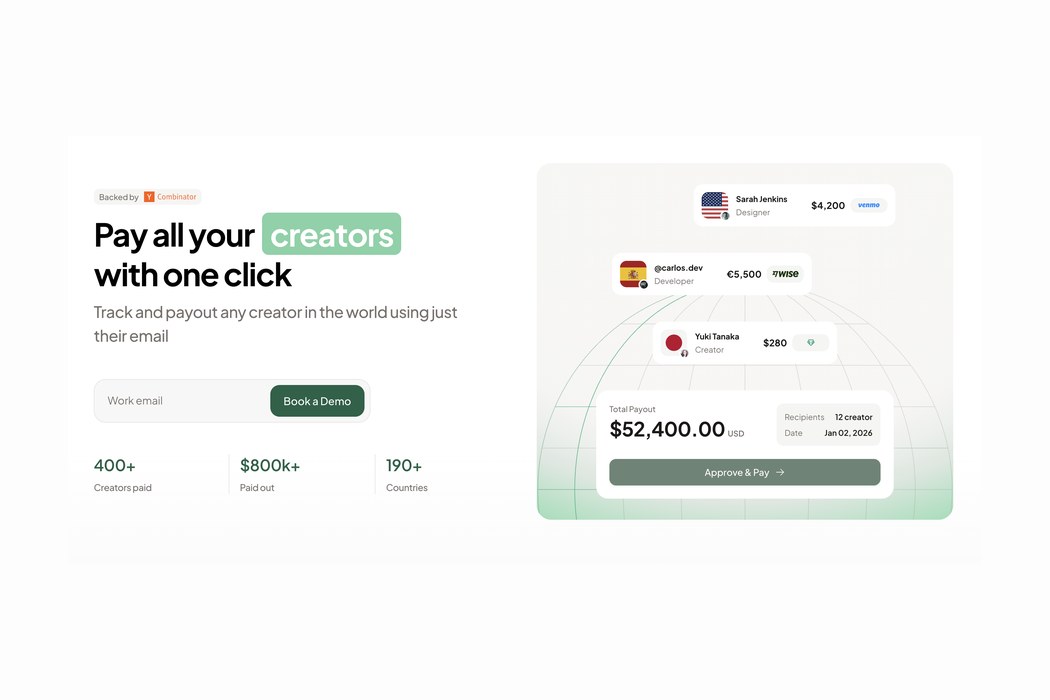
Grade (YC W26)
Grade is a San Francisco fintech (YC Winter 2026) building an API and platform for performance-based payroll. Instead of paying by the hour, companies use Grade to pay creators, contractors, and AI agents based on results - tasks completed, targets hit, work delivered - while Grade automatically tracks performance, calculates payouts, and handles KYC, tax forms (including DAC7), invoicing, and global payments across 190+ countries. Founded by repeat founders Lotanna Ezeike (ex-Barclays, ex-XPO) and James Heaney, the company reports $10M+ paid out and named customers including Astra AI, Valid, and Hayai Learn.
PayCaddy
PayCaddy is a Panama-based Banking-as-a-Service platform that lets Latin American companies launch financial products through an API. Businesses use its stack to open KYC-verified digital wallets, automate online payments, and issue branded Mastercard debit and prepaid cards - without building core banking infrastructure or negotiating directly with legacy banks. A Y Combinator Winter 2022 company, PayCaddy positions itself as embedded-finance infrastructure for emerging markets.

YC World
YC World is a counterparty and corporate network risk investigation platform built by Ukrainian open-data developer YouControl. It consolidates official company records, ownership networks, sanctions lists, politically exposed persons and other risk signals across 80+ jurisdictions into a single searchable, graph-based workspace, helping compliance teams, investigators and law enforcement run AML, KYC and KYB checks and expose hidden ownership and sanctioned connections.

Rushabh Shah
Rushabh Shah is the co-founder and co-CEO of AiPrise, a Y Combinator-backed (S22) global compliance platform that lets companies verify customers and businesses in more than 150 countries through a single interface. A former Meta engineer who worked on developer-focused products and payments, he started AiPrise in 2022 with Chaitanya Sarda after a weekend scramble to make a YC deadline. The company has raised roughly $14.6M, including a $12.5M Series A led by Headline in October 2025, and serves 150+ customers including Bridge (a Stripe company) and dLocal.
Instapay Technologies Sdn Bhd
Instapay Technologies is a Kuala Lumpur-based fintech that gives migrant and foreign workers in Malaysia a regulated digital salary account. Through a mobile e-wallet paired with a prepaid Mastercard, workers receive their pay, send money home to 30+ countries, pay bills, top up mobile plans, shop and withdraw cash at ATMs. Licensed by Bank Negara Malaysia as an e-money issuer and money services business, Instapay also runs payroll disbursement for hundreds of corporate employers, bringing an underbanked workforce into the formal digital economy.
Mozn
Mozn is a Riyadh-based enterprise AI company founded in 2017 that builds AI for high-stakes decisions in the Arabic-speaking world. Its flagship platform, FOCAL, unifies fraud prevention and anti-money-laundering (AML) compliance for banks, fintechs and governments, while its OSOS platform delivers Arabic natural-language understanding and enterprise knowledge intelligence. Backed by a $10M Series A, Mozn has served more than 100 organizations and, in 2025, became one of only ten vendors worldwide named a Category Leader by Chartis Research in both AML transaction monitoring and KYC solutions.
TransFi
TransFi is a Dubai-headquartered payment infrastructure company that moves money across borders on stablecoin rails. Its platform lets businesses and Web3 apps collect, convert and pay out funds across fiat and stablecoins, spanning 100+ markets, 40+ currencies, 250+ local payment methods and 130+ digital assets. Founded in 2022 by former McKinsey payments partner Raj Kamal, TransFi targets high-friction emerging markets across Asia, the Middle East, Latin America and Africa, replacing slow correspondent-banking and SWIFT flows with near-instant settlement.

Will Lawrence
Will Lawrence is the co-founder and CEO of Bretton AI, the San Francisco company formerly known as Greenlite AI that builds AI agents for financial crime and compliance operations. After leading anti-money laundering product work at Facebook/Meta and building compliance infrastructure at Paxos, he started the company in 2023 to automate the slow, manual investigative work behind KYC, AML and sanctions checks. In February 2026 the company rebranded to Bretton AI and raised a $75 million Series B led by Sapphire Ventures, bringing total funding to roughly $90 million, with customers including Robinhood, Mercury, Ramp, Gusto and a set of OCC-, FDIC- and Federal Reserve-regulated banks.
Cape.ai
Cape.ai (formerly Cape Privacy) is a New York-based enterprise AI company building an agentic automation platform purpose-built for financial services. Founded in 2018 by Che Wijesinghe and Gavin Uhma, Cape lets banks, asset managers and insurers automate document-heavy back-office work - enhanced due diligence, SOC-report and third-party risk analysis, KYC/AML onboarding and regulatory reporting - using AI agents that are fully cited, auditable and deployable on-premise or in a private cloud so sensitive data never leaves the customer's environment.
EasySend
EasySend is an Israeli enterprise software company whose no-code, AI-assisted platform turns paper-based forms and PDFs into digital customer journeys. Insurers, banks and other regulated enterprises use it to build onboarding, claims, lending and renewal workflows - complete with data intake, document generation and legally binding eSignatures - without writing code. Founded in 2016 in Tel Aviv, the company serves more than 40 enterprise customers, has raised roughly $77M in total funding, and is used across most of Israel's financial and insurance market as well as clients in the US, Europe and Japan.
Footprint
Footprint is a New York-based identity and risk-operations company that unifies KYC, KYB, fraud detection, authentication, and secure data vaulting into a single platform for banks, fintechs, and marketplaces. Founded in 2022 by Eli Wachs and Alex Grinman, it aims to make verified identity portable across the internet - so a person proves who they are once and reuses that verification everywhere - while using AI agents (its Percy product) to automate manual fraud and compliance review.

Merkle Science
Merkle Science is a blockchain analytics and predictive risk intelligence company that helps crypto exchanges, financial institutions, government agencies and Web3 businesses detect, investigate and prevent illicit cryptocurrency activity. Founded in Singapore in 2018 by Mriganka Pattnaik and Nirmal Ak, it uses behavior-based machine learning rather than static blacklists to power its two core products - Compass for real-time transaction monitoring and compliance (AML/KYC/CFT), and Tracker for cross-chain forensic investigations across 10,000+ assets and 200+ bridges.
NICE Actimize
NICE Actimize is the financial-crime, risk and compliance division of NICE Ltd. and one of the largest providers of anti-money laundering, fraud prevention and trading-surveillance software to banks, regulators and financial institutions worldwide. Its AI-driven X-Sight platform, ActOne case management and SURVEIL-X surveillance suite help more than a thousand institutions detect suspicious activity, screen against sanctions lists, manage regulatory reporting and investigate financial crime - increasingly using agentic AI to cut investigation time.
PactFi
PactFi is a New York-based fintech building the first secure, end-to-end operational platform for private credit. It replaces the fragmented email and spreadsheet workflows that private credit deals still run on with a shared, collaborative system where agents, arrangers and investors coordinate allocations, funds flow, KYC and post-close servicing in one place. Since launching in 2023 the platform has processed more than $300 billion in deal volume across 250-plus counterparties and 2,600-plus users, and in March 2026 it raised a $25M Series A led by 7RIDGE.

Silent Eight
Silent Eight is a Singapore-headquartered regtech company that builds purpose-built artificial intelligence for financial crime compliance. Its Iris platform automates name screening, transaction screening, transaction monitoring, investigation and case documentation for banks, producing decisions with written, auditable narratives instead of black-box scores. The company is used by Tier 1 institutions including HSBC and Standard Chartered, and has raised roughly $55 million to date, including a $40 million Series B in 2022.