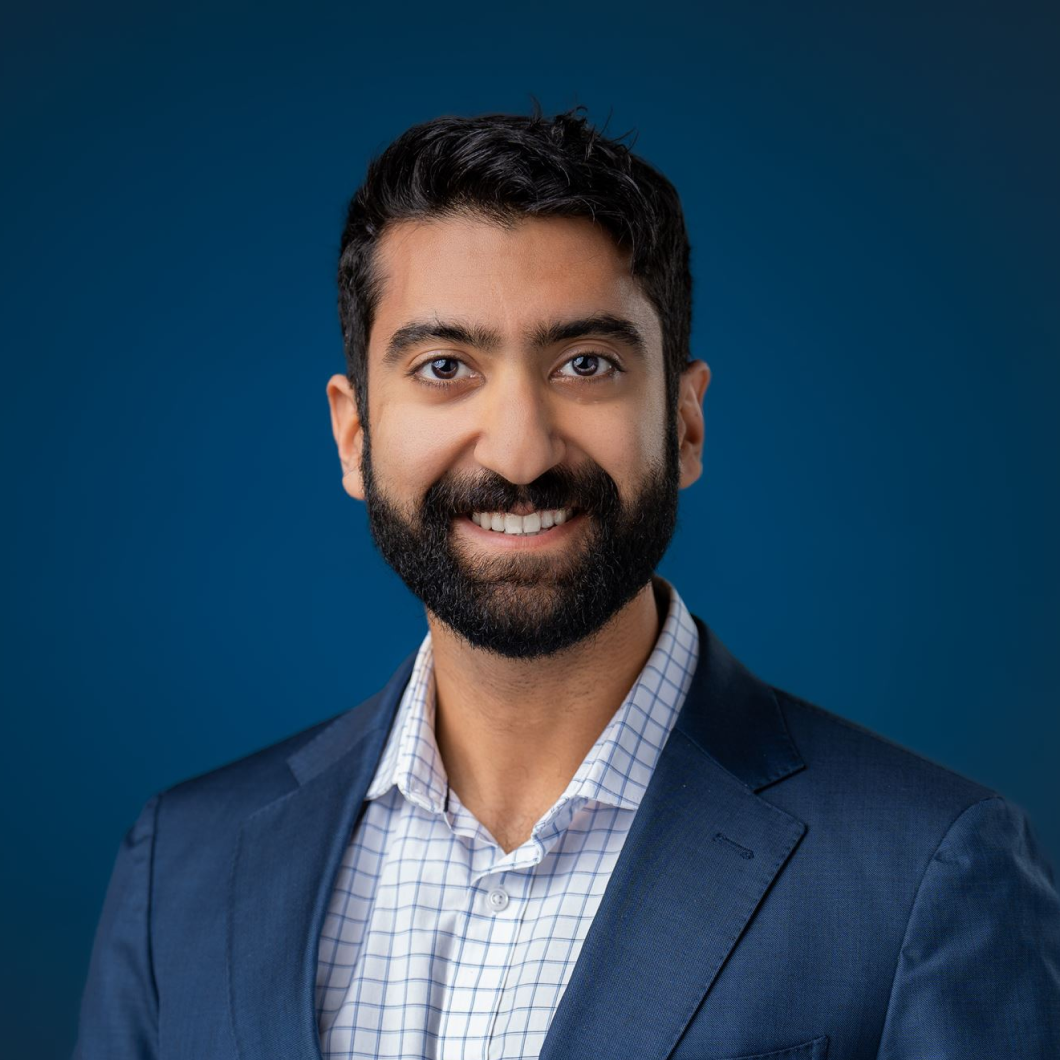
The Blockchain Detective Who Started With a Bad Game
From McKinsey corridors to Mexico City nonprofits to the FBI's preferred blockchain tool - Rahul Raina's path to building the internet's most important crypto crime intelligence platform was anything but direct.
There is a version of history where Rahul Raina ships a blockchain game called Token Drop, collects modest review scores, and disappears into the long tail of failed Web3 experiments. That is not the version that happened. Instead, Raina and his co-founder Esteban Castaño looked at their own creation and reached the same conclusion most players would have: they weren't game developers. What they had, though, was something more durable - a deep understanding of how to translate raw blockchain data into legible intelligence. The game was disposable. The infrastructure underneath it was not.
That recognition, paired with a deliberate nod to Slack's own famous pivot from a failed game to enterprise software, became TRM Labs - the Token Relationship Management company that has quietly become one of the most consequential pieces of financial compliance infrastructure in the world. As Co-Founder and CTO, Raina built the technical foundation for a platform now relied on by over 600 government agencies across more than 75 countries to trace, flag, and freeze illicit cryptocurrency activity.
The Slack playbook, applied to crypto compliance. Consciously.
The story of how Raina arrived at TRM is, in itself, a study in trajectory. He graduated from the University of Michigan with dual degrees - a BS in Computer Science from the engineering school and a BBA from the Ross School of Business - then moved through McKinsey & Company, Amazon, and OpenDoor. Each stop sharpened a different edge: McKinsey gave him frameworks; Amazon gave him engineering discipline at scale; OpenDoor gave him exposure to real-world marketplace complexity. The combination is almost unreasonably useful for someone about to build a compliance platform that has to satisfy both federal agents and venture capitalists.
The meeting that would define the decade happened at Generation.org in Mexico City, a nonprofit focused on youth employment. There, Raina crossed paths with Esteban Castaño, another McKinsey alumnus. Two consultants-turned-technologists building job training programs in Central America is a specific kind of prelude to a blockchain intelligence unicorn - but here they are. They left Mexico City with a friendship, a shared obsession with blockchain data, and an idea for that doomed game.
We want to make crypto safer for everyone.
- Rahul Raina, Co-Founder & CTO, TRM LabsThe actual pivot point came in 2018, when a client approached the early TRM team with a question that changed everything: could their blockchain data tools be used to track criminals? Specifically, bad actors using cryptocurrency to move illicit funds across borders. The answer was yes - and suddenly the product had a market far larger and far more urgent than any mobile game could ever reach. Drug trafficking. Ransomware payments. Sanctions evasion. Terror financing. The blockchain, because every transaction is permanently and publicly recorded, turns out to be an extraordinary forensic surface - if you know how to read it.
Reading it is exactly what TRM Labs does. The company's flagship TRM Threat Graph maps illicit activity across more than 180 blockchains, categorizing more than 40 types of criminal behavior. The Beacon Network - perhaps the most underappreciated thing TRM has built - is a public-private partnership spanning 70+ financial institutions that collectively handle roughly 75% of global cryptocurrency transaction volume. It is, in effect, a shared intelligence layer for the crypto economy. When TRM flags a wallet, most of the crypto world sees it.
In February 2026, TRM Labs raised $70 million in a Series C round that brought its valuation to $1 billion - the formal unicorn milestone. The round was led by Blockchain Capital and included Goldman Sachs, Bessemer Venture Partners, DRW Venture Capital, Thoma Bravo, Citi Ventures, Brevan Howard Digital, and Galaxy Ventures. Y Combinator, which accepted TRM early, remains on the cap table. The investor list is itself a kind of signal: Goldman Sachs is not dabbling in crypto-adjacent software for entertainment. When traditional finance writes a check alongside crypto-native funds, the thesis is durability, not speculation.
TRM Labs joined forces with Tron and Tether to form the T3 Financial Crime Unit - a cross-sector task force that has frozen more than $300 million in tainted cryptocurrency assets. It is one of the most concrete examples of what happens when blockchain intelligence moves from analysis to action.
Raina holds the CTO title, which at most companies means managing an engineering team. At TRM Labs it means building the technical architecture for something resembling a financial crime detection network at global scale. The engineering problems are non-trivial: cross-chain tracing, real-time transaction monitoring, risk scoring at speed, and now AI-powered investigation workflows. In March 2026, TRM launched Co-Case Agent - an AI investigative assistant designed to automate the most repetitive elements of crypto crime investigation, from alert triage to evidence packaging. The implication is that investigators who currently spend hours reconstructing transaction chains manually may, with Co-Case Agent, compress that to minutes.
Raina was recognized on the Forbes 30 Under 30 list in 2022, a marker that arrived mid-stride rather than as a destination. By that point, TRM Labs was already embedded in the workflows of federal law enforcement agencies, international regulatory bodies, and the compliance teams of major crypto exchanges. The recognition landed as confirmation of what was already happening, not a launching pad for something new.
The dual degree from Michigan - engineering and business together - turns out to be an unusually good preparation for what TRM Labs actually is. It is not a technology company that happens to sell to governments. It is not a compliance software vendor that outsources the hard technical problems. The CTO who can read a financial statement and the business strategist who can debug distributed systems architecture are, in Raina's case, the same person. TRM Labs' average revenue growth of 150%+ annually over the last five years suggests the combination is working.
What Raina is building is infrastructure in the oldest sense - the kind of thing nobody notices until it isn't there. The 600+ agencies in 75+ countries that rely on TRM Labs are not using it as a nice-to-have compliance widget. They are using it to prosecute cases, seize assets, and build legal evidence that holds up in court. When a federal agency presents transaction analysis as courtroom evidence, that analysis often runs through TRM's systems. The distance from "failed blockchain game" to "courtroom-grade forensic intelligence platform" is not obvious in advance. In retrospect, it is unmistakable.
TRM Labs Capital Raised
Total Funding: ~$220M · Lead Investors: Blockchain Capital, Goldman Sachs, Bessemer, Y Combinator
What He's Built
- Forbes 30 Under 30 (2022) - recognized as an emerging leader in blockchain intelligence and financial crime technology.
- TRM Labs unicorn status - $1B valuation achieved in February 2026 Series C, backed by Goldman Sachs, Blockchain Capital, and Bessemer Venture Partners.
- TRM Threat Graph - proprietary blockchain intelligence mapping 40+ categories of illicit activity across 180+ blockchains in real time.
- Beacon Network - the largest public-private compliance partnership in crypto, covering 75% of global transaction volume through 70+ member institutions.
- $300M+ in frozen assets - through TRM Labs partnerships including the T3 Financial Crime Unit with Tron and Tether.
- Co-Case Agent - AI-powered investigative assistant launched March 2026, automating crypto crime investigation workflows for law enforcement and compliance teams.
- 150%+ avg. annual revenue growth over the past five years, scaling TRM Labs to 360 employees across a global footprint.
From Consultant to CTO
The aspiration is not subtle. TRM Labs exists to make the cryptocurrency ecosystem safe enough that its worst-case scenarios - ransomware payments, sanctions evasion, financing of violence - become the exception rather than the infrastructure. Raina's bet, placed with the full weight of his technical background and McKinsey training, is that the blockchain's transparency is ultimately its own cure. Every transaction recorded. Every wallet traceable. Every criminal leaving footprints in permanent, public ledgers. The game changed. He changed with it.