autonomy
(19)
Matthew Gregory Learned to Read the Wind. Now He Builds for Machines in Motion
Before Matthew Gregory built security tools and AI-agent infrastructure, he navigated racing yachts by turning noisy signals into decisions. His career keeps returning to the same problem: helping builders move through complicated systems without losing trust.
The Venture Fund Where the Partners Used to Run the Missions
New North Ventures backs founders building for both the Pentagon and the marketplace - a dual-use bet led by former intelligence operators and the entrepreneur who built Dyn.
Alex Fink
He watched his parents tune into Voice of America at 4 a.m. Decades later he is building the software brain for drone swarms - and an app to clean up the news. The through-line is simpler than it looks.

Five Levels of Autonomy That Sort the Bots From the Agents
Everyone in customer service says "agentic" and almost nobody defines it. Here is a five-level scale that separates a scripted bot from software that actually acts on your systems — and where the real products land.
Avea Robotics
Avea Robotics builds Sentinel, ultra-low-latency software that lets a human operator step into a robot from anywhere in the world. When an autonomous robot gets stuck on an edge case, an operator teleoperates it back on track - keeping fleets running and capturing the intervention data that makes the next model better. Founded in 2026 by UIUC engineers Ary Indarapu and Vikram Vadrevu and backed by Y Combinator (P26), the company reports roughly $18K MRR and has helped deploy close to 30 robots.
Surtr Defense Systems
Surtr Defense Systems builds ParallaxOS, a hardware-agnostic operating system for drone defense. It ingests data from any radar, RF detector, camera, or acoustic array, fuses it into a single common operating picture, applies AI threat classification, and passes human-authorized engagement recommendations to any effector. Founded in 2026 by two former Shield AI and Anduril autonomy engineers, the company is a Y Combinator Spring 2026 (P26) startup that raised roughly $4.8M in seed funding and field-tested its system with Ukraine's Brave1 defense cluster.

Marakeb Technologies
Marakeb Technologies is a Sharjah-based UAE company specializing in platform-agnostic autonomy for marine, ground, and aerial vehicles. Its patented MAP Pro conversion kit turns almost any manned vehicle - from boats to cars to drones - into a remotely operated or fully autonomous system. With roots in GRP boat building since 2007, the company now builds unmanned surface vessels, ground control stations, and combat management systems for defense, security, oil and gas, environmental, and transportation customers, and is majority-owned by Tawazun's Strategic Development Fund.

Swarmer
Swarmer builds combat-proven, hardware-agnostic autonomy software that lets a single operator command hundreds of drones - across air, sea and ground - as one coordinated swarm. Born out of the war in Ukraine and founded in 2023, its STYX, MINAS and TRIDENT products translate human objectives into autonomous action while keeping people in control of life-or-death decisions. The company's software has supported more than 100,000 real-world combat missions, raised a record $15M Series A, and went public on the Nasdaq in 2026 under the ticker SWMR.

Roboto AI
Roboto AI is a Seattle-based analytics platform for robotics and Physical AI teams. It ingests multimodal robot logs - ROS bags, PX4/ULog, MCAP, Parquet, video - and uses AI agents plus a Python SDK and CLI to automatically search, analyze, and surface edge cases, anomalies, and failures across entire robot fleets. Founded in 2022 by former Amazon Robotics leaders Benji Barash and Yves Albers-Schoenberg, the company spun out of the Allen Institute for AI and raised a $4.8M seed to help robotics developers stop digging through petabytes of sensor data by hand.
Adarsh Kulkarni
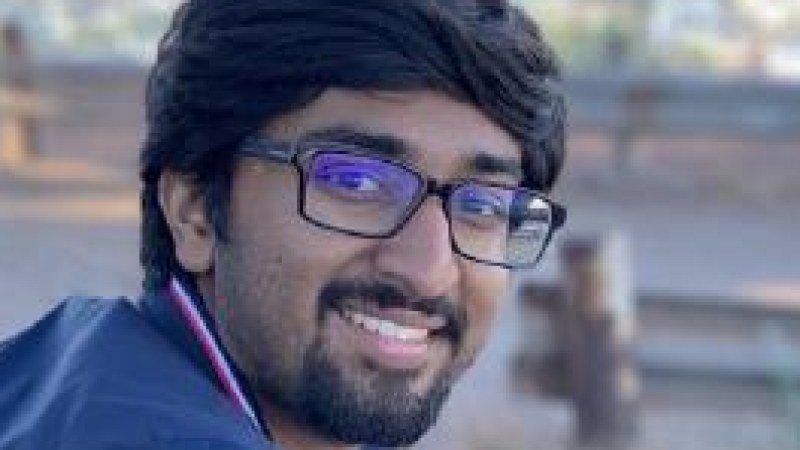
Adarsh Kulkarni is the founder and CEO of Foundry Robotics, a San Francisco startup building what it calls the 'Everything Factory' - an AI-and-robotics-first, assembly-focused, dual-use contract manufacturer aimed at rebuilding American manufacturing capacity. A Penn GRASP Lab robotics engineer, he cut his teeth deploying legged robots underground for the DARPA Subterranean Challenge, was an early autonomy engineer at Ghost Robotics (acquired for $400M), built ML infrastructure at self-driving truck company TuSimple, and rose to Head of Robotics at Scale AI before striking out on his own. Foundry uses Vision-Language-Action foundation models to let a single factory assemble many different products without traditional retooling, and raised a seed round in early 2026 backed by Garuda Ventures and Khosla Ventures.
Benji Barash
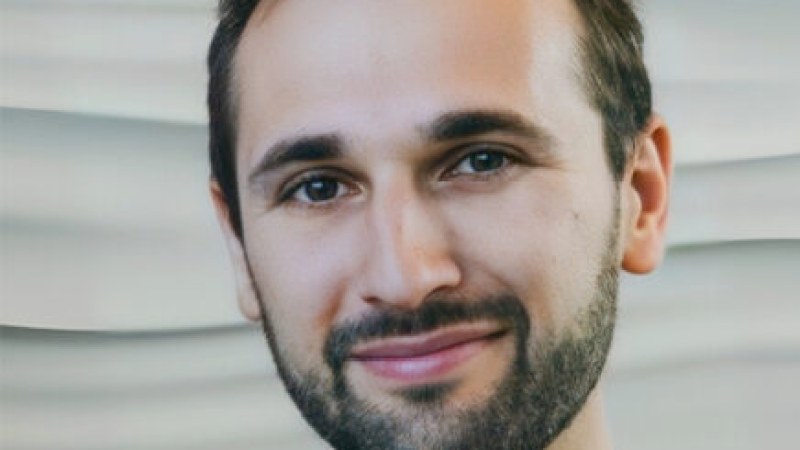
Benji Barash is the co-founder and CEO of Roboto AI, a Seattle startup building an analytics platform for robotics and physical AI. A former engineering leader on Amazon's Prime Air drone delivery program, he spent his Amazon days writing throwaway scripts to wrangle sensor logs - and turned that frustration into a company. After more than six years at Amazon and a year as entrepreneur-in-residence at the Allen Institute for AI, he and CTO Yves Albers-Schoenberg launched Roboto out of stealth in 2023 with a $4.8M seed round, on the conviction that robotics doesn't have an algorithm problem, it has a data problem.
Jacob Rodriguez
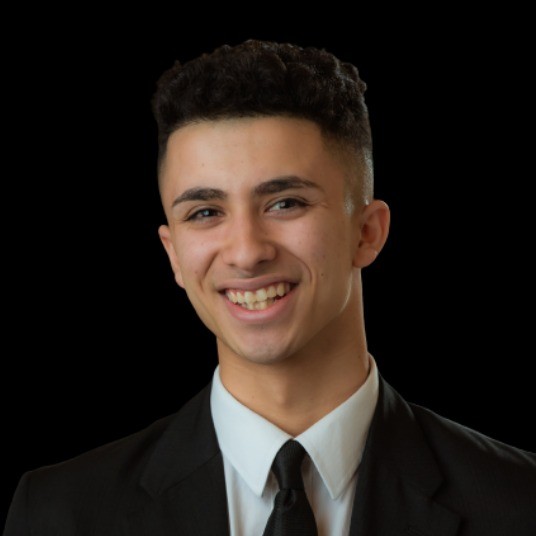
Jacob Rodriguez is the founder and CEO of Oligo Space, a Hawthorne, California aerospace startup automating the design and manufacturing of large multi-orbit satellites. A first-generation college student who won a full scholarship to MIT and interned at NASA's Jet Propulsion Laboratory, he left school early as a 2024 Thiel Fellow to build a manufacturing-in-the-loop foundation model for spacecraft production. Oligo plans to fly its first satellite, Chimera-1, on SpaceX's Transporter-15 mission in 2026.
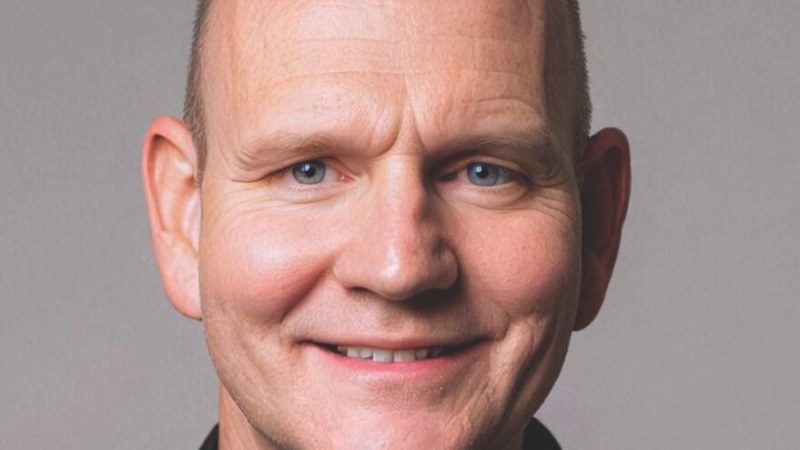
Mike Horton
Mike Horton is an American engineer and serial deep-tech founder who turns physics into products. He co-founded Crossbow Technology in 1995 out of UC Berkeley, commercialized MEMS motion sensors, and sold the company for about $50 million. He later built GEODNET, a blockchain-incentivized network of roughly 21,000 ground stations that has become the world's largest decentralized GNSS reference network, and now leads HYFIX Spatial Intelligence, a Santa Clara startup that raised a $15M seed led by Craft Ventures to build American-made positioning-and-autonomy chips for drones and robots.
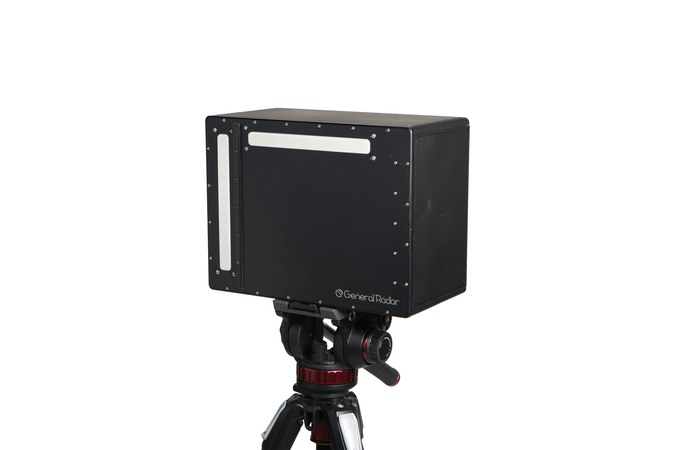
General Radar Corp.
General Radar Corp. is a Menlo Park deep-tech company building high-resolution, software-defined phased-array (AESA) radar systems for aerospace, defense, wind energy, autonomy, and weather markets. Founded in 2016 by former NASA/JPL engineer Dmitry Turbiner, the company pairs a GaN AESA front-end with digital beam-forming and GPU supercomputing to deliver radars it says are dramatically higher resolution and roughly 20x cheaper than legacy aerospace radar - largely from commercial off-the-shelf parts. It raised a $22M Series A in 2022, bringing total funding to roughly $47.5M.
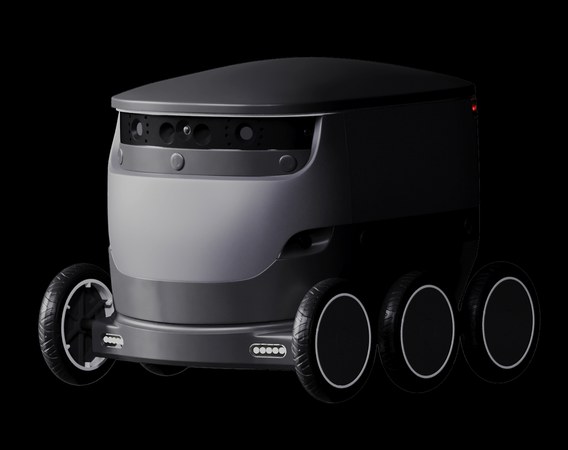
Zeromatter
Zeromatter builds the simulation infrastructure that autonomous-systems companies use to develop, test and validate their products before they ever touch the real world. Founded by former Tesla Autopilot simulation lead Ian Glow, its platform combines high-fidelity sensor simulation, automatic environment generation, multi-agent co-simulation frameworks, execution infrastructure and developer tooling into one system - aimed at making simulation a default tool for autonomy, aerospace, automotive, agriculture, drones and green energy.
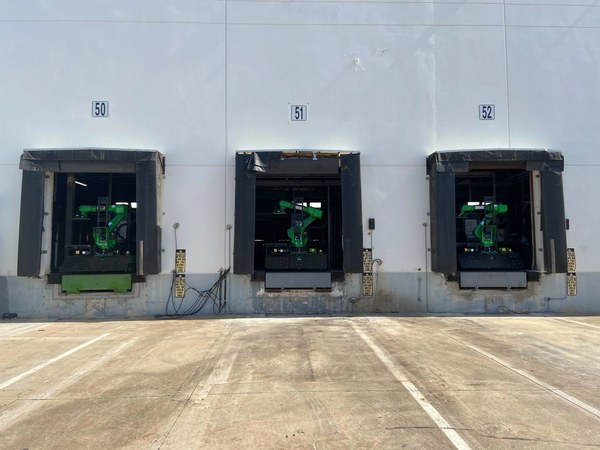
Pickle Robot Company
Pickle Robot Company builds Physical AI systems that autonomously unload trucks, trailers, and import containers of non-palletized goods at human-scale or better. Founded in 2018 and based in Cambridge, Massachusetts, Pickle pairs a multi-camera vision system with generative AI foundation models trained on millions of real warehouse data points, mounting a KUKA arm on a custom mobile base that drives into a trailer and clears it in roughly 90 minutes. The company is on a mission to automate inbound and outbound work at one million warehouse doors over the next decade.

TurbineOne
TurbineOne builds Mission-AI for the frontlines. Its flagship Frontline Perception System (FPS) puts machine learning directly on the sensor at the tactical edge - no cloud, no coding, no connectivity required - so warfighters can detect, identify, and act on threats in real time. Founded in 2021 by Navy veteran Ian Kalin and former Amazon engineer Matt Amacker, the company is deployed across all branches of the U.S. military and reached a roughly $300M valuation with its 2025 Series B.
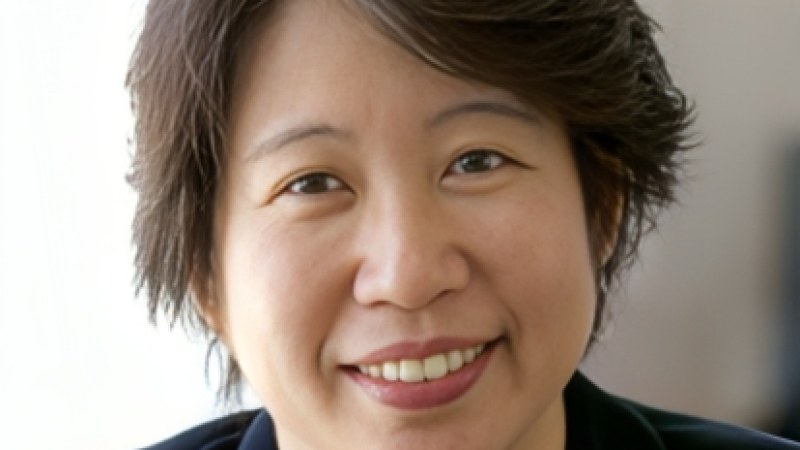
Tessa Lau
Tessa Lau is the founder and CEO of Dusty Robotics, a Mountain View-based company that builds autonomous mobile robots for the construction industry. Her FieldPrinter robot uses building information model (BIM) data to print layout lines directly onto jobsite floors with 1/16-inch accuracy, replacing manual chalk-line methods that have dominated construction for centuries. Lau holds a PhD in machine learning from the University of Washington and spent 11 years at IBM Research before pivoting to robotics at Willow Garage and co-founding hotel-delivery-robot company Savioke. She launched Dusty Robotics in 2018, has raised $69.5 million including a $45 million Series B, and has helped contractors print over 100 million square feet of layout across thousands of buildings.
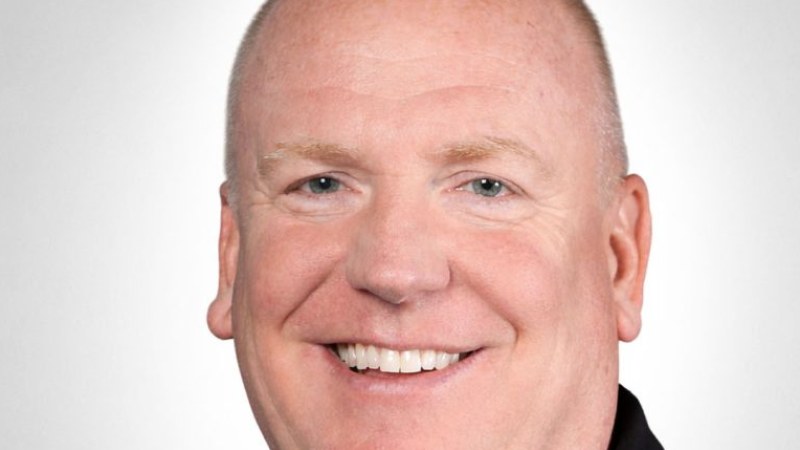
Ross Hangebrauck
Ross Hangebrauck is a General Partner at BVVC (Bravo Victor Venture Capital), a seed-stage fund backing mission-first founders building technologies at the intersection of national security and commercial innovation. A former U.S. Navy SEAL turned entrepreneur, he co-founded Hover Inc. in 2011 — a platform that turns smartphone photos into 3D home models — raising $142M and reaching 12 million homes scanned. After six years as a startup CEO and a stint managing international VC operations at Almaz Capital, he joined BVVC to back companies operating across defense, autonomy, robotics, and advanced manufacturing. He brings a rare operator-to-investor arc: from deploying in operational theaters worldwide to architecting portfolio companies that he says must deliver 'integration, interoperability, and scalability.'