digital-twin
(108)
KBC finds the money hiding in a refinery’s energy bill
The Yokogawa-owned company pairs process simulation with engineering advice to cut waste in energy and chemicals. Its most revealing lesson: even a good digital twin needs someone responsible for acting on it.
GDi Turned the North Sea's Messy Asset Records Into a Working Digital Twin
The clever part is not the 3D model. It is the handoff from a corroded pipe on-screen to an engineered, fabricated repair - without sending another measuring crew offshore.

Palantir Wants to Run the Room Where Decisions Happen
Palantir turns an institution’s scattered data into a working model of the institution itself. For teams with expensive decisions and tangled systems, that can be useful - but this is a serious commitment, not a dashboard you buy on Friday.
Amir Ben-Assa Has Spent 30 Years Teaching Factories to See
Before factories could talk about AI agents, Ben-Assa was helping them locate glass carts, mine equipment and missing minutes. His career is a study in making invisible industrial problems legible - and then useful.
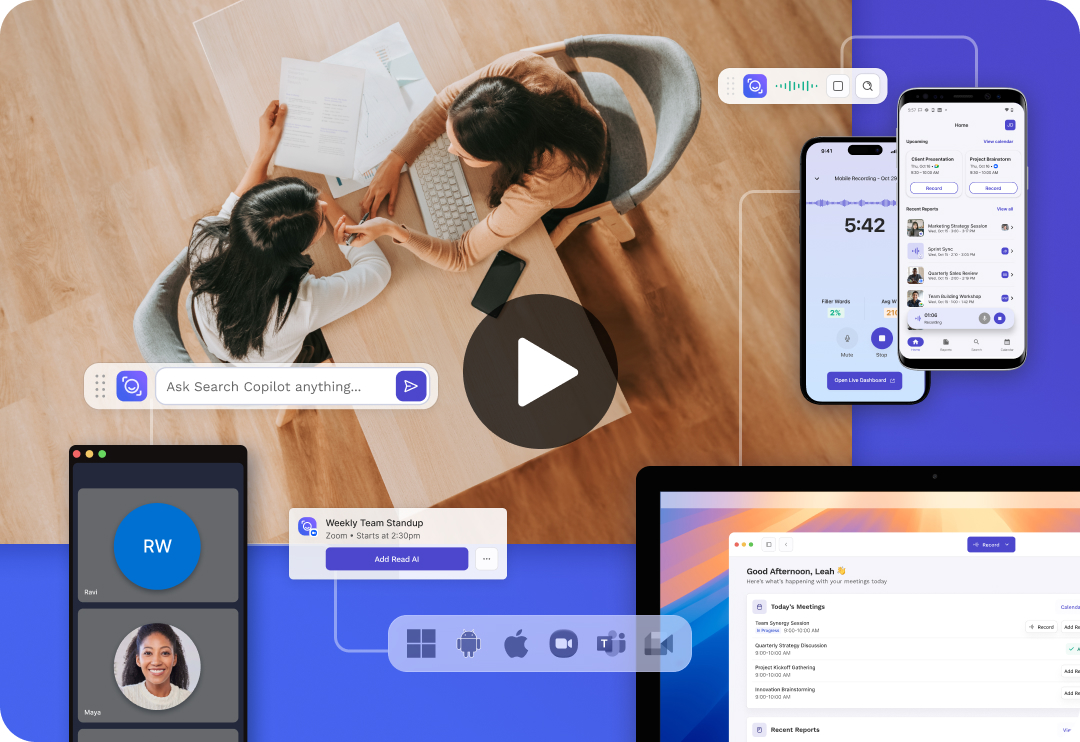
Your Meeting Has a Memory Now
Read AI remembers the call, finds the decision and drafts the follow-up. The useful part starts after the transcript - provided everyone in the room knows the robot is listening.
Aras fired its sales team and made the software free. Airbus came calling.
The Andover software maker spent seven slow years selling PLM the usual way. Its 2007 reset - free software, paid certainty, and customizations that survive upgrades - turned a near-stall into an enterprise foothold.

Slingshot Quit Watching Earth to Build Air Traffic Control for Space
The Austin-born startup cast too wide a net, killed its original geospatial business, then bought the eyes and memory needed to make orbit legible. Now its software helps satellite operators dodge debris and Space Force Guardians rehearse a conflict that has not happened yet.
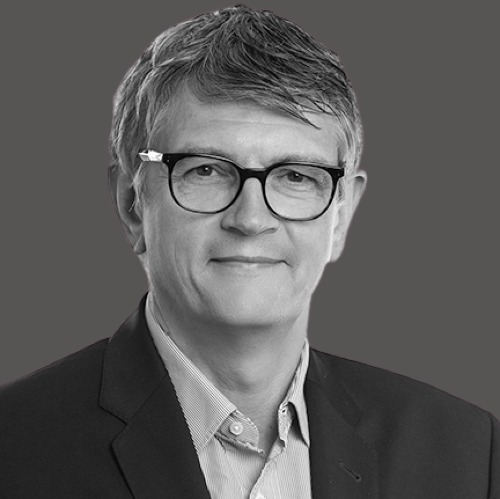
Philippe Adam Wants the Factory to Speak Before It Spends
An engineer by education and a marketer by trade, Philippe Adam has spent his career translating complex software into decisions people can actually use. At aPriori, his argument is simple: cost, carbon and manufacturability belong in the room while a product is still being designed.

The Pentagon-Grade Cyber Range That Lets Security Teams Fail Before the Real Attack
Most companies discover whether their defenses work when someone breaks in. SimSpace built a safer place to find out first - a digital double where teams, tools and AI agents can be attacked on purpose.
SenseHawk Turned a Solar-Site Meltdown Into the Operating System for 200 Gigawatts
The founders started with drones after a construction-cost crisis. Then they discovered the bigger prize: turning every panel, punch item and thermal hotspot into one living map that solar crews can actually use.
The Home-Theater Company That Built Its Best Room Inside a Bank Vault
A former GM operating-systems engineer turned an old Boca Raton bank into a smart-home laboratory - vault theater included - and now sells the finished picture before the first cable is run.
The Danish startup teaching a ceiling sensor to watch grandma - so nurses don't have to
Teton wraps a camera in enough AI that it never has to save a single frame of video - and uses it to cut falls in elder care by up to 82%. Now it is betting American nursing homes will pay for a night nurse that never blinks.

The Company That Put a Sensor on the Mousetrap
Everyone chasing smart-building glory wanted to control the thermostat. Microshare went after the mousetrap, the toilet paper roll, and the mop - and built a business on the parts of a building nobody wants to think about.
When Heavy Machines Break, Elevāt Makes Them Talk Back
The Seattle startup wires up off-highway equipment - tractors, cranes, fire trucks - and hands technicians an AI that reads the machine's mind before anyone opens the panel.

Altizon Gave the Factory Floor a Brain That Talks Back
A Princeton-and-Pune software company spent a decade wiring up shop floors. Now it is betting the most useful worker in the plant will be a piece of software you can talk to.
The Person Selling Certainty in a Business Built on Doubt
A marketing job at a company whose products live or die on trust, sold to buyers who read the footnotes. Here is what that work looks like from the inside.

The $3.7 Billion Bet on Giving Big Business a Better Memory
o9 Solutions wants to replace the monthly spreadsheet séance with a living model of the enterprise. Its wager: the company that remembers why a plan failed can make the next decision faster - and waste less along the way.
Rockwell Automation
It started in 1903 with a $1,000 bet on a better motor controller. A century later, Rockwell Automation runs the machinery behind cars, medicine and microchips - and is quietly wiring the factory floor into the cloud.
BASE4 - Architects, Engineers, Designers
A Boca Raton firm decided architecture should behave more like a factory than an atelier - so it wired together designers on four continents into a 24-hour workday and pointed the whole thing at one goal: build faster and cheaper.
L&T Technology Services
It is not the household name behind your car, your MRI machine, or your factory floor - but the outsourced engineering brain that helped design them just might be.
Siemens
The company Werner von Siemens started with a telegraph in 1847 now wants to be the operating system for the physical world - one factory, train, and power grid at a time.

Hitachi
The 1910 mining-repair shop that quietly became the backbone of the world's power grids and railways is now betting its next century on AI you can touch.
BigchainDB
BigchainDB is a blockchain database offering decentralization, immutability and native assets.

Ambral
Ambral is a New York-based Y Combinator (S25) company building AI Account Managers for post-sale revenue teams. Its product, Cortex, synthesizes signals from product telemetry, support tickets, emails and calls into a live model of every customer account, then detects expansion and churn signals and drafts or executes the outreach - giving mid-market and SMB accounts the kind of attention normally reserved for a company's largest customers.
Sergio Aguirre
Sergio Aguirre is the founder and CEO of EchoPixel, a Silicon Valley medical imaging company that turns standard CT, MRI and ultrasound scans into interactive 3D holograms doctors can grab, rotate and dissect in open space. An electrical engineer from Tecnologico de Monterrey with a graduate focus on stereoscopic imaging, he spent more than 15 years in visualization systems before founding EchoPixel in 2012. His True3D platform earned FDA clearance and has been used in congenital heart defect detection and structural heart procedures, built on his conviction that doctors should not have to solve a 3D problem with a 2D picture.
Intelmatix
Intelmatix is a deep-tech enterprise AI company founded by MIT-trained technologists that builds EDIX, an Enterprise Decision Intelligence Platform designed to act as a 'digital brain' for organizations. Using context-aware AI agents, knowledge graphs and generative AI, EDIX lets companies sense, learn, decide and act across functions like demand forecasting, inventory, workforce planning and site selection - without needing an in-house data science team. Headquartered in Riyadh with offices in London and Boston, Intelmatix focuses on the MENA region, training on local context data that global platforms overlook. It raised a $20M Series A in 2024 - the region's largest AI Series A of its kind - and in 2025 became the first Saudi and MENA AI company named a World Economic Forum Technology Pioneer.
Kite Aero
Kite Aero is an Australian uncrewed-aviation company building a globally deployed drone logistics platform. It pairs the long-range Kite aircraft with AXIOM, a cloud-based flight operating system and digital twin that lets a single pilot supervise up to 30 aircraft. Formed after acquiring the assets of medical-delivery pioneer Swoop Aero in 2025, Kite Aero operates a drone transport network with more than 40,000 autonomous flights and 20,000 flight hours across humanitarian and commercial supply chains, and is opening its AI platform to drone manufacturers, logistics providers, governments and enterprises with last-mile delivery needs.

Mesh Bio
Mesh Bio is a Singapore-based health deep-tech company that uses digital twin technology and predictive analytics to help clinicians detect and manage chronic diseases earlier. Its DARA platform automates health-screening report generation and risk stratification, while HealthVector Diabetes - approved as a Software as a Medical Device by Singapore's Health Sciences Authority - forecasts diabetes complications years before onset. Founded in 2018 by Andrew Wu and Arsen Batagov, the company serves more than 40 healthcare groups across Asia and has assessed over 300,000 patients.
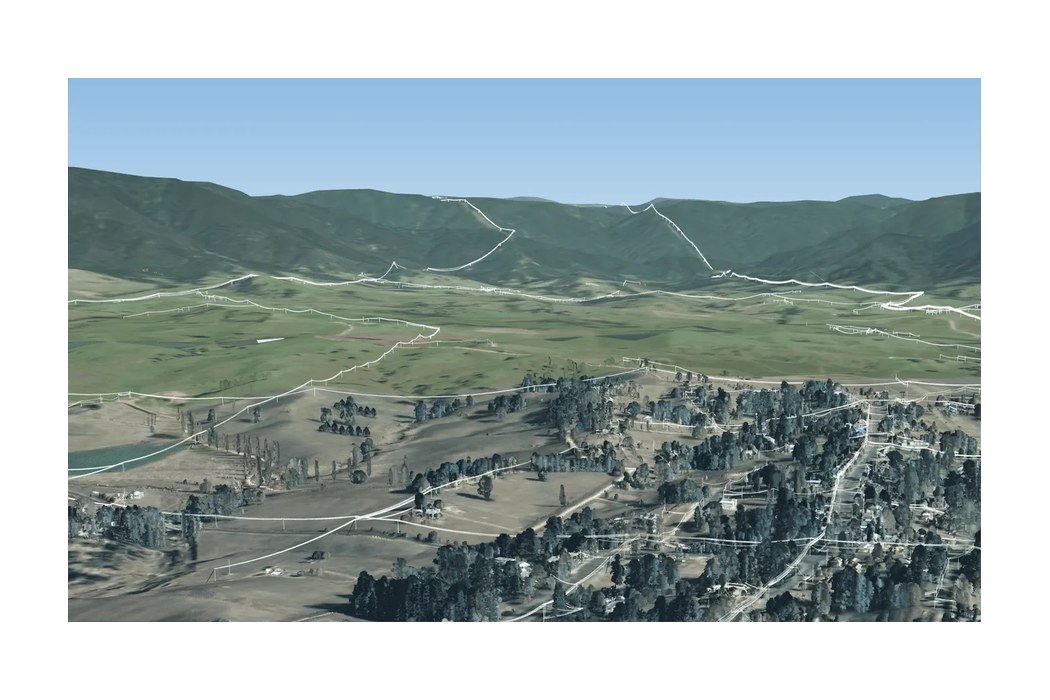
Neara
Neara is a Sydney-founded software company that builds physics-enabled digital twins of utility networks. By combining LiDAR, satellite imagery, sensor data, AI and engineering-grade physics simulation, it creates geometrically accurate 3D replicas of power grids so utilities can model how their assets behave under real-world stress - wildfires, floods, storms, heat and rising demand. The platform lets operators find spare grid capacity, mitigate risk, plan maintenance and connect renewables faster, often replacing months of manual field inspection with analysis that runs in minutes. In February 2026 Neara raised an AUD $90 million Series D, reaching a roughly AUD $1.1 billion valuation to become one of Australia's newest unicorns.

Quantela Inc.
Quantela is a smart-city technology company that helps cities and communities digitize urban infrastructure through an AI- and IoT-powered data platform. Founded in 2015, it evolved from a dashboard tool into a full urban infrastructure platform spanning smart lighting, traffic, public safety, digital advertising and citizen services. Quantela is known for pioneering an 'outcomes-based' business model, funding projects up front in exchange for a share of the resulting revenue or savings, and operates across the Americas, EMEA, India and Asia-Pacific.