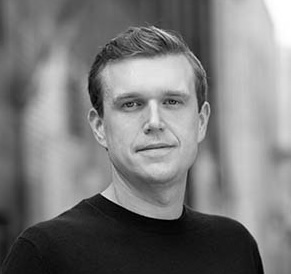
The Man Who Builds Insurers From Scratch
Picture this: It's February 10, 2021. Dan Preston rings the NASDAQ closing bell. His eighth work anniversary at Metromile coincides, almost impossibly, with the exact day the pay-per-mile auto insurer he leads goes public via SPAC merger. The ticker is MILE. He has been at this company longer than most startups survive, and now it's on the exchange. He later described the feeling in a single sentence: "It feels good."
Three years later, that company is owned by Lemonade, and Dan Preston is doing it again - except this time he's not iterating on car insurance pricing. He's simulating wildfires.
Stand Insurance launched in 2024 out of stealth. Its pitch is not subtle: the major carriers have retreated from California's highest-risk wildfire zones and Florida's hurricane coast. Instead of writing the market off, Preston and his co-founders hired scientists from SpaceX and Boeing, paired them with veterans from the biggest insurance companies in the country, and started building digital twins of individual homes. Using computational fluid dynamics - the same physics that models airflow over an aircraft wing - they simulate exactly how fire, wind, and extreme weather would interact with a specific property at a specific address.
The result is not just a risk score. It's a customized plan: replace the mulch with gravel in this zone, swap out this tree species, reinforce this wall segment. Then Stand insures the property - and, crucially, keeps insuring it as homeowners actually implement those upgrades.
"We are able to build a digital twin of properties and use physics to simulate how extreme weather and disasters would impact them - an approach that has never been used before in the insurance industry."- Dan Preston, Co-Founder & CEO, Stand Insurance
Before Insurance: The Long Road to Metromile
Dan Preston graduated Summa Cum Laude from Brandeis University in 2007, winning the Michtom Prize for Outstanding Achievement in Computer Science. His first move was not Silicon Valley - it was academia. He spent time at Harvard's Time Series Center detecting events in astronomical data, then at Tufts University studying Earth surface classification and gene set analysis. The work was published. Machine learning applied to astrophysics. Computer vision in genetics. None of it had anything to do with insurance.
In 2007, he also founded Photrade - an online marketplace for photographers. It folded in 2008. One year, one lesson. He moved on.
His real startup story begins in 2009 with AisleBuyer, a mobile retail platform that brought virtual shopping assistants to physical stores. He ran it as CTO, Intuit acquired it in 2012, and Preston started again. He enrolled at Stanford for a master's in computer science, specializing in AI, machine learning, and computer vision. He graduated in 2012 with the degree that would eventually let him talk credibly to aerospace engineers about wildfire physics.
In 2013, he joined Metromile as CTO. A year later, he was CEO. Pay-per-mile auto insurance was an elegant concept: people who drive less should pay less, and real-time sensor data makes the pricing possible. Preston ran with it for eight years - full-stack carrier conversion in 2016, AVA claims AI in 2018, the Metromile Enterprise B2B division in 2019. By 2020, the company reached profitability during a pandemic that, counterintuitively, accelerated adoption because everyone was driving less and wanted to pay for only what they used.
"Fundamentally, we see ourselves as a data science and technology company. The era of fixed-based pricing is coming to an end."- Dan Preston on Metromile, February 2021
The SPAC, Lemonade, and the Decision to Go Again
Metromile went public February 10, 2021, via SPAC merger on NASDAQ under the ticker MILE. Ryan Graves's Saltwater fund put in $50 million. Preston had been CEO for seven years by then, and he'd built the company into a genuine carrier - not just an MGA, but a company that held its own risk and processed its own claims. Metromile ranked in the top 10 on Glassdoor's Best Places to Work in 2017, in the years when it wasn't yet obvious the company would survive.
Then Lemonade acquired it in 2022. Preston stepped aside, joined the board of Dave Inc. (NASDAQ: DAVE) in January 2022, and started thinking.
The problem he kept returning to was property insurance in climate-exposed regions. The California home insurance crisis was not a pricing problem. It was not a reinsurance problem. It was a physics problem: the underlying risk of wildfire was genuinely increasing, and historical data was an unreliable predictor because the climate conditions producing modern wildfires had no real historical parallel. You couldn't price your way out of that. You had to change the houses.
Preston's insight - the one that separates Stand from every other insurer trying to re-enter California - is that insurance companies and homeowners are actually perfectly aligned: neither wants the house to burn down. The question is who pays for the upgrades. His answer is to make the upgrades the condition of coverage, and to make the economics work by demonstrating that hardened homes actually cost less to insure. It sounds obvious. No one had done it at scale.
In His Own Words
"Insurance companies and the customers that they insure are highly aligned at avoiding the thing they're insuring against."
"The only real way to solve this problem is to physically intervene and work with homeowners to actually change the characteristics."
"We can look forward by actually simulating it - rather than relying on insufficient historical data."
"Insurance can actually be a mechanism for driving resilience - by doing so, you can reduce your insurance costs by 50%."
"Fundamental changes like this require starting from scratch."
"Half our team comes from major insurers. The other side is built from scientists from SpaceX and Boeing."
Stand's First Year: $1 Billion and Into Florida
Stand launched its California homeowners product targeting high-value wildfire-exposed properties - homes above $2-3 million that other carriers had stopped writing. Within the first year, it surpassed $1 billion in insured value. In October 2025, the company closed a $35 million Series B led by Eclipse, with previous investors Inspired Capital, Lowercarbon Capital, and Equal Ventures participating again.
The Florida expansion announced alongside the Series B is the harder play. Florida has experienced 94 billion-dollar weather disasters since 1980. Citizens Property Insurance Corporation - Florida's insurer of last resort - holds $300 billion in exposure. Private carriers have been pulling out for years. Preston described the logic the same way he described California: the scale of risk demands a new model, and that model links coverage to active hardening against wind storms.
The company now operates from offices in both San Francisco and Tallahassee. Its carrier partner has an AM Best A- rating. Preston's stated goal is to demonstrate that resilience investments actually reduce losses - building the dataset that eventually forces the whole industry to reprice in favor of upgraded homes.