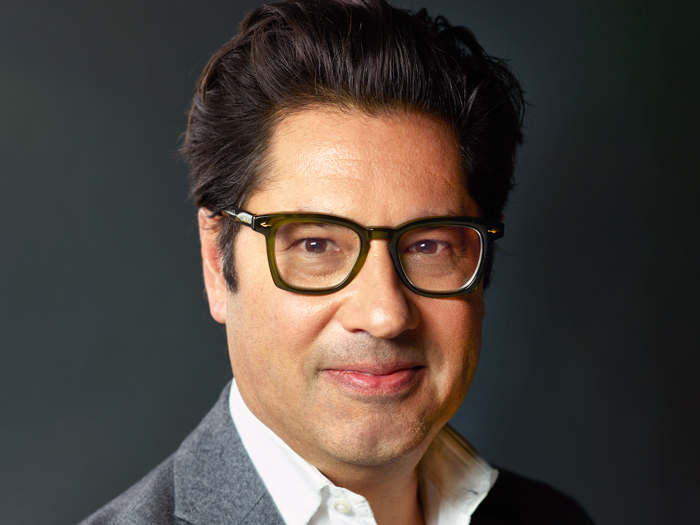
The Man Who Puts a Number on Disaster
The Loma Prieta earthquake hit San Francisco on October 17, 1989. Twenty seconds of shaking. Sixty-three deaths. $6 billion in insured losses. And somewhere in that moment, a Stanford engineering graduate student named Hemant Shah found his life's work confirmed.
He had already started Risk Management Solutions that year - a company built on the idea that catastrophic risk could be modeled, quantified, and sold to the insurance industry as usable intelligence. The earthquake didn't create the idea. It proved it.
What followed was one of the quieter dominances in the history of technology. RMS didn't become famous the way software companies become famous. It became indispensable. By the time Shah finally stepped down as CEO in 2018, the company he'd built as a grad student was the global standard for how insurers priced catastrophe risk - earthquakes, hurricanes, floods, wildfires. Every major natural disaster ran through RMS models before the claims checks were written.
Reinvented myself in the company a couple of times over the past 24 years.
- Hemant Shah, on his tenure at Risk Management SolutionsWhy Would You Start Over?
In 2018, after nearly three decades running one of the most consequential companies in the insurance industry, Hemant Shah did something that doesn't happen much in tech: he voluntarily stepped aside. No acquisition pressure, no board ouster. He just handed the keys to a successor and left.
He had spotted something. The catastrophe modeling he'd spent his career perfecting was still being fed garbage data. Property owners - the people who actually own and manage the buildings being insured - were submitting their risk information in formats that hadn't changed since the fax machine era. Sparse spreadsheets. Missing fields. Numbers pulled from memory or old surveys. The models were sophisticated; the inputs were not.
The insurance industry's data problem wasn't downstream, with the actuaries. It was upstream, with the property owners who had no good tools for managing and communicating their own risk.
Property owners are the "sellers of risk" in the commercial insurance transaction. They know their buildings better than any underwriter. But they were being forced to communicate through spreadsheets, manually keyed into submission forms once a year at renewal.
Shah's bet at Archipelago: give the sellers of risk real tools, and the entire value chain gets smarter. Better data in means better pricing out. Less friction. Less money left on the table. Less catastrophic surprise.
Building the Second Mountain
Archipelago launched in 2018 with four co-founders who had deep roots in the industry. Madhu Tadikonda came from AIG, where he had been Head of Data Science and Chief Underwriting Officer. Roger Bodamer had run Upthere, a cloud storage company. Anthony Siggers had led global broking operations at Willis Towers Watson.
The company spent two years in stealth. This is not how startups typically behave - especially not startups in a hot sector with experienced founders who could raise money easily. But Shah had learned from RMS that the gap between a compelling idea and a working product that changes an industry is often years, not months. Archipelago emerged from stealth in 2020 with a platform already built and customers already using it.
The funding followed. A $13M Series A led by Ignition Partners and Canaan Partners in 2019. A venture extension in 2020. Then in April 2021, a $34M Series B led by Scale Venture Partners, with participation from Stone Point Capital and Prologis Ventures - names that signaled serious institutional appetite for what Archipelago was building.
Curing the property pain chain.
- Hemant Shah, describing Archipelago's mission at InsTech PodcastTwelve Trillion Dollars
The number that defines Archipelago's scale is $12 trillion - the value of commercial properties the platform currently manages. That's not a projection or a total addressable market estimate. It's properties on the system, their data running through Archipelago's AI engines, their risk profiles being surfaced to brokers and underwriters.
For context: the GDP of the United States is roughly $28 trillion. Archipelago manages risk data for properties worth nearly half of that - and it's a private company in San Francisco with around 120 employees.
The platform works by taking the messy, inconsistent data that property owners and their brokers have historically submitted - spreadsheets with missing columns, addresses that don't geocode, construction data that contradicts itself - and running it through AI models that standardize, enrich, and validate it. Brokers get cleaner submission packages. Underwriters get better information to price against. Property owners get a clearer picture of their own risk exposure.
Who Actually Uses It
Archipelago's customers include some of the largest names in commercial real estate and insurance. Prologis - which manages roughly $200 billion in logistics and industrial assets - uses the platform to manage its insurance data. Arthur J. Gallagher, one of the largest insurance brokers in the world, is a client. JLL, Alliant, EPIC Insurance Brokers, and Extra Space Storage are also on the list.
These aren't early-adopter pilot customers. These are companies that manage billions in assets and can't afford to have their insurance submissions fail because of bad data. When they put Archipelago in the workflow, it's because the alternative - manual data management by humans with spreadsheets - was costing them real money and real risk.
Co-founds Risk Management Solutions (RMS) as a Stanford engineering graduate student, days before the Loma Prieta earthquake validates the company's entire premise.
Secures $3M in early venture funding from Sutter Hill Ventures. Expands RMS scope from earthquake modeling to broader catastrophe risk.
Leads RMS as Co-Founder, President, and CEO for nearly 30 years, building it into the global standard for catastrophe modeling - valued at $300M+.
Steps down as CEO of RMS. Co-founds Archipelago with Madhu Tadikonda (AIG), Roger Bodamer (Upthere), and Anthony Siggers (Willis Towers Watson).
Archipelago raises $13M Series A led by Ignition Partners and Canaan Partners, while still operating in stealth.
Archipelago emerges from two years of stealth with a working platform. Raises additional $6M+ venture round.
Archipelago raises $34M Series B led by Scale Venture Partners, surpassing $2T in insured value on platform. RMS is acquired by Moody's Corporation - validating Shah's three decades of work.
Transitions from CEO to Executive Chairman of Archipelago. Alex Lyashok appointed as new CEO in July. Platform now manages $12T+ in insured property value.
Joins FortressFire as Vice Chairman of the Board and Senior Advisor, tackling wildfire risk - the next frontier of climate-driven insurance crisis.
The Second Handoff
In July 2023, Shah stepped back again. Alex Lyashok was named CEO of Archipelago, with Shah moving into an Executive Chairman role. The pattern is deliberate: Shah builds the thesis, recruits the right people, and then creates room for them to execute at scale.
"Alex brings a wonderfully relevant mix of experience and capability to Archipelago, which will take us to the next level of industry standardization and product capability," Shah said at the time. What he didn't say - but the pattern implies - is that he was already thinking about the next problem.
That problem turned out to be wildfires.
The Third Fire
In 2025, Shah joined FortressFire as Vice Chairman of the Board and Senior Advisor. FortressFire is a wildfire risk modeling and mitigation company that takes a different approach from conventional catastrophe models - focusing on ignition-first, structure-specific analysis rather than broad regional probability estimates.
The logic of his involvement is clear in retrospect. Climate change is making wildfire one of the defining insurance crises of the next decade. Parts of California are already effectively uninsurable through conventional markets. The gap between what existing models can do and what the crisis actually requires is exactly the kind of gap Shah has spent his career closing.
Unlike conventional cat models, FortressFire's ignition-first, structure-specific approach is a breakthrough. By focusing on modeling action on the drivers of mitigation and resilience, FortressFire changes the paradigm to restore insurability in places others have abandoned.
- Hemant Shah, on joining FortressFire (2025)Where He Comes From
Shah's father was a pioneering earthquake engineer - which explains something about how a Stanford graduate student in the 1980s ended up thinking deeply about seismic risk as a commercial opportunity rather than an academic pursuit. The domain was inherited; the business model was invented.
His Stanford education in engineering gave him the technical credibility to build models that the insurance industry would trust. But the key insight at RMS wasn't a better algorithm - it was the realization that the insurance industry would pay for risk models it didn't have to build itself. The product was the distribution of expertise, not just the expertise.
The same logic runs through Archipelago. The property risk data exists, spread across millions of buildings and thousands of owners. The models to make sense of it exist, scattered across insurers and brokers. What was missing was the platform to connect them - and Shah spent two years in stealth building exactly that before anyone outside the company knew it existed.
The Pattern Underneath
There's a discipline in Shah's career that's easy to miss because his companies operate in an industry most people never think about. He finds a genuine problem in the flow of risk information - between property owners and insurers, between catastrophe models and pricing desks, between what the industry knows and what it can act on - and builds the infrastructure to fix it.
He doesn't chase trends. RMS was launched before "insurtech" was a word. Archipelago went into stealth the same year everyone was talking about blockchain and crypto. FortressFire focuses on a wildfire problem that insurance companies are currently running away from rather than solving.
What Shah has consistently bet on is the idea that better data, applied at the right point in the risk workflow, creates value that compounds. At RMS, the bet was that actuaries would pay for models they could trust. At Archipelago, the bet is that property owners would pay for tools that make them more credible counterparties in the insurance market. At FortressFire, the bet is that ignition-specific modeling can restore insurability to markets that conventional approaches have abandoned.
All three are, at their core, the same bet. Knowledge about risk, properly structured and distributed, is worth real money to the people who carry it.