Tagged: neurotech
12 results
Nudge
Nudge is a San Francisco neurotechnology company building non-invasive, whole-brain interfaces powered by focused ultrasound. Founded in 2024 by Coinbase co-founder Fred Ehrsam alongside Jeremy Barenholtz and Quintin Frerichs, the company aims to stimulate and image deep brain circuits with millimeter precision - no surgery required. Its first human-ready system, Nudge Zero, is being used in research studies today, with a long-term goal of a headphone-like consumer device that lets people shift their brain state - sleep, focus, mood, habits - at the press of a button. Nudge raised a $100M Series A in July 2025 led by Thrive Capital and Greenoaks.

Elemind Technologies
Elemind Technologies is a Cambridge, Massachusetts neurotech company spun out of MIT that makes a wearable EEG headband which reads your brainwaves and plays phase-locked acoustic pulses through bone conduction to help you fall asleep faster - without drugs. Founded by a group of leading neuroscientists and led by CEO Meredith Perry, the company launched its $399 'sleep on demand' headband in 2024 after raising $12 million in seed funding. Its broader ambition is an 'app store for the brain': one wearable running different neuromodulation protocols for sleep, tremor, memory and beyond.

Roga
Roga is a neurotech company building a non-invasive vagus nerve stimulation wearable paired with an AI-guided meditation app to reduce stress and burnout. Founded by two people who each managed clinical anxiety, the discreet behind-the-ear device sends gentle electrical pulses to calm the nervous system, while the companion app personalizes meditation and tracks progress. Based in Los Angeles and Toronto, Roga sells direct to consumers and to employers running workplace wellness programs.

Ami Lebendiker
Ami Lebendiker is the founder and CEO of Roga, a neurotech company that makes a discreet behind-the-ear wearable for stress relief paired with an on-demand content app. A former product manager at Google, he spent a decade shipping hardware including Pixel phones and Google Home before turning his cost-engineering instincts toward consumer neurotech. Earlier he founded Mango Startups, billed as the first ICO backed by a venture fund in Latin America, and helped coordinate the region's startup accelerator network. Costa Rica-born and multiply credentialed, he is part operator, part investor, and part builder who keeps returning to the same idea: democratize access to things normally locked behind gatekeepers.

Meredith Perry
Meredith Perry is the co-founder and CEO of Elemind, a neurotech company building a wearable headband that reads your brainwaves in real time and nudges them with bursts of sound, marketed as sleep on demand. Before Elemind she was the inventor behind uBeam, the ultrasonic wireless-charging venture she dreamed up as a University of Pennsylvania undergrad and grew into a roughly $40 million, much-debated startup backed by Founders Fund, Andreessen Horowitz, Mark Cuban and Marissa Mayer. A trained paleobiologist and astrobiologist who once did research with NASA, Perry holds dozens of patents and now wants to build what she calls an app store for the brain.
Raphael Certain
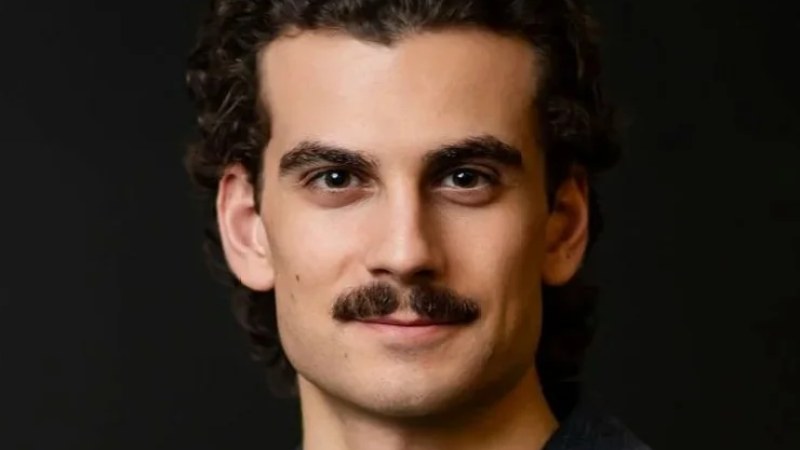
Raphael Certain is the founder and CEO of Clarity, a Franco-American neurotechnology company building a wearable virtual-reality headset that delivers personalized light and sound stimulation at gamma frequencies to support the aging brain. A self-taught entrepreneur who pivoted from marine biology to neurophysiology, he turned a master's thesis at the Neurodegenerative Diseases Institute in Bordeaux into a venture-backed company. By 24 he had raised more than $1.3 million, assembled an international team of 20-plus people across Paris and San Francisco, and built partnerships with leading universities in the US and UK.

Arctop
Arctop is a cognition company building software that decodes the human brain. Its AI platform translates electrical brain-activity signals from everyday wearables - headbands, earbuds, and VR/AR headsets - into real-time, actionable insight about focus, emotion, intention, and memory. Founded in 2016 by neuroscientist Dan Furman and engineer Eitan Kay, Arctop licenses its non-invasive brain-decoding software to developers and enterprises across health, entertainment, education, and government, positioning itself as the intelligence layer between brain-sensing hardware and the applications that use it.

Beacon Biosignals
Beacon Biosignals is a Boston-based neurotechnology company that pairs FDA-cleared wearable EEG hardware with AI to turn brain electrical activity - especially during sleep - into scalable, at-home neurodiagnostics. Its platform powers drug development, clinical trials, and precision medicine across neurology, psychiatry, and sleep medicine.

Jacob Donoghue
Jacob Donoghue is a physician-scientist and the co-founder and CEO of Beacon Biosignals, a Boston company applying machine learning to EEG brain data to build neurobiomarkers for psychiatric, neurological, and sleep disorders. Trained with an MD from Harvard Medical School and a PhD in neuroscience from MIT, he started Beacon in 2019 on the bet that decades of overlooked brainwave recordings could be turned into a precision-medicine engine for drug development and diagnosis. Under his leadership the company has raised over $116M, secured FDA clearance for a wearable EEG headband, acquired home sleep-testing firm CleveMed, and partnered with more than half of the world's top ten biopharma companies.

Paul Le Floch
Paul Le Floch is the co-founder and CEO of Axoft, a Cambridge neurotechnology company building brain implants out of a material so soft it behaves like brain tissue. A Harvard-trained materials scientist and Forbes 30 Under 30 honoree, he bet that the way to read the brain better was not to borrow chips from the semiconductor industry but to invent a new material from scratch. The result, Fleuron, is up to thousands of times softer than conventional probes yet can carry over 1,000 sensors. Axoft has now implanted its device in 11 patients and raised a $55M Series A to push toward FDA trials.

Cayden Pierce
Cayden Pierce is the CEO and co-founder of Mentra, a San Francisco startup building MentraOS - the open-source operating system for AI smart glasses. Described as 'the Android for smart glasses,' MentraOS lets developers write one app and deploy it across any pair of smart glasses. A self-described transhumanist hacker, Pierce built his first DIY smart glasses prototype in his dorm room, worked with smart glasses inventor Steve Mann at the University of Toronto, researched proactive AI wearable agents at MIT Media Lab under Pattie Maes, converted a 40-year-old RV into a mobile hacker lab, and dropped out of MIT in 2024 to launch Mentra. The company raised an $8 million seed round backed by the co-founders of Android, YouTube, and Pebble, plus Y Combinator, Amazon, and Toyota Ventures.

Juan Benet
Juan Benet (born Juan Batiz-Benet) is a Mexican-American computer scientist, founder and CEO of Protocol Labs, and the inventor of IPFS (InterPlanetary File System) and Filecoin. A Stanford-trained distributed systems engineer, he left Yahoo's orbit after a startup acquisition to build open-source protocols that challenge the foundational architecture of the web. His Filecoin ICO raised $257 million in 2017, and the network now holds over 15 EiB of decentralized storage. In 2026 he launched a podcast exploring neurotech and human intelligence augmentation - a signal that the architect of decentralized storage is now thinking about upgrading the human mind itself.