model-evaluation
(19)
Invisible Lost $10,000 on Every Client. Then It Built the AI Assembly Line Enterprises Actually Buy
A failed executive-assistant service taught Invisible Technologies the lesson now haunting corporate AI: the model is rarely the whole problem. Its answer is a five-part platform that cleans the data, maps the work, recruits the experts, tests the model and puts agents into production.
CNTXT AI Is Building the Arabic Layer the Global AI Boom Skipped
The Abu Dhabi company is betting that the next enterprise AI advantage will not come from a bigger model. It will come from cleaner local data, Arabic that sounds like people actually speak, and systems that never have to leave the region.

micro1 Bet the AI Boom Would Run Out of Human Judgment
The young company began with an AI interviewer. It is now selling the scarce ingredient frontier models, workplace agents and robots all need: structured evidence of how capable people think and work.

CueBench
CueBench builds reinforcement-learning environments for frontier AI labs, focused on scientific reasoning and performance engineering - the kinds of hard, specialized tasks where the best models still fail more than 80% of the time. The company's bet is that the next gains in model capability will come less from raw pre-training and more from training agents inside carefully constructed environments that force them to learn the things they are currently bad at. Founded in 2026 by Dillon Mehta, Rishan Hemrajani, and Neel Gadde, CueBench is part of Y Combinator's Summer 2026 batch and is backed by NVIDIA Inception.

Protege
Protege is a New York-based AI data platform that connects owners of private, real-world data - hospitals, media libraries, motion-capture studios and more - with the AI labs and enterprises that need it to train, fine-tune and evaluate models. It licenses and curates proprietary datasets under strict privacy, IP and compliance controls, so data holders get paid and provenance is preserved. Founded in 2024 by Bobby Samuels and Travis May, Protege has assembled access to billions of clinical notes, hundreds of millions of medical images, and hundreds of thousands of hours of video and audio, positioning itself as core infrastructure for the post-web era of AI development.
iMerit Technology
iMerit is a global AI data solutions company that supplies the labeled, enriched and expert-refined data used to train, fine-tune and evaluate machine learning and generative AI models. Founded in 2012 by Radha Basu, it pairs a specialized human workforce with its Ango Hub annotation platform and its Scholars network of domain experts to serve Fortune 500 clients across autonomous vehicles, healthcare, geospatial and financial services. In June 2026, enterprise-AI firm EXL agreed to acquire iMerit for up to $310 million.

Oumi
Oumi (Open Universal Machine Intelligence) is a Kirkland/Bellevue, Washington-based public benefit corporation building a fully open-source, end-to-end platform for foundation models. Founded in 2024 by ex-Google, Apple, Meta and Microsoft engineers, its open software stack lets researchers and enterprises prepare data, pretrain, fine-tune, evaluate and deploy LLMs and vision-language models - from 10M to 405B parameters - anywhere from a laptop to a cloud cluster. Backed by $10M in seed funding and a coalition of 13 top research universities, Oumi pitches itself as the 'Linux of AI': a neutral, collaborative, unconditionally open alternative to closed frontier labs.

Pareto.AI
Pareto.AI is a San Francisco-based, talent-first human data platform that connects AI labs with a deeply vetted network of expert labelers to produce premium training data, RLHF, and evaluation signals. Founded by Thiel Fellow Phoebe Yao, the company started as a bootcamp for women and work-from-home mothers, pivoted into AI data labeling in 2023, and now positions itself as the 'verification layer' for reinforcement learning on real-world expertise, turning specialist judgment into durable reward signals under the banner 'Expert data for AGI.'

Thoth AI
Thoth AI is a Singapore-headquartered global AI data solutions company that builds the high-quality datasets, evaluation frameworks, and human-in-the-loop operations that production AI systems depend on. Spanning 200+ languages and 100+ countries, it handles data collection and annotation across images, video, 3D point cloud, text, and audio, along with RLHF, model evaluation, content moderation, and multilingual customer experience for teams building LLMs, VLMs, multimodal systems, and applied AI like robotics.

Vellum
Vellum is a New York-based AI development platform that helps companies build, evaluate, deploy, and monitor production-grade LLM applications and AI agents. Founded in early 2023 by three engineers who kept hitting the same wall - prototypes that demo well but break in production - Vellum gives teams a workflow builder, an evaluation suite, version-controlled deployments, and live monitoring so they can move AI from proof-of-concept to reliable production systems. The platform works with more than 150 companies including Drata, Redfin, Swisscom, and Headspace, and raised a $20M Series A led by Leaders Fund in July 2025.

Centific
Centific is a Redmond, Washington-based AI and data company that calls itself the hidden infrastructure behind world-class AI models. Its AI Data Foundry combines a global network of 1.8 million-plus domain experts with platforms for data collection, annotation, RLHF, model evaluation, governance and multimodal orchestration, helping enterprises and frontier model labs move AI from experimentation to production. Founded in 2020 out of the former Pactera EDGE business, Centific is a recognized NVIDIA innovation partner and raised a $60M Series A led by Granite Asia in June 2025.

Centaur AI
Centaur AI (Centaur Labs) is a Boston-based healthcare data annotation platform that taps a network of 50,000+ vetted medical and scientific experts to label, evaluate, and monitor the multimodal data that powers medical AI. Born out of MIT's Center for Collective Intelligence, the company uses performance-weighted 'wisdom of the crowd' methods - delivered through its gamified DiagnosUs app - to produce labels that match or beat individual specialists, on a HIPAA-compliant, SOC 2 platform.

Labelbox
Labelbox is a San Francisco-based AI data factory that helps frontier AI labs and enterprises generate, label, and evaluate the high-quality training data their models need. Its platform combines annotation tools, model-assisted automation, and a global expert network (Alignerr) to power post-training, RLHF, and multimodal reasoning workloads.
Rukesh Reddy
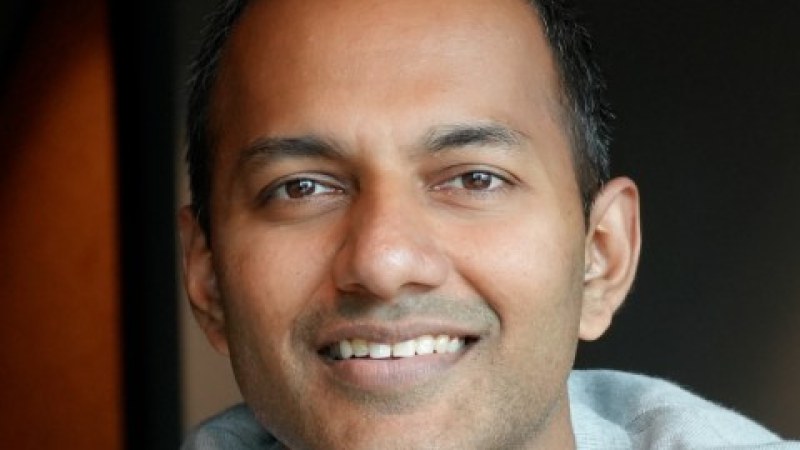
Rukesh Reddy is the Founder and CEO of Deccan AI, a Mountain View-based AI data and post-training company that raised a $25M Series A in March 2026 led by A91 Partners with participation from Susquehanna International Group and Prosus Ventures. Built as a 'born GenAI' company in October 2024, Deccan AI serves frontier AI labs and major tech companies - including Google DeepMind and Snowflake - with high-precision training datasets, reinforcement learning environments, and enterprise evaluation suites. Reddy brings over 15 years of experience spanning finance, strategy consulting, and digital transformation at firms including J.P. Morgan, Monitor Group (now Monitor Deloitte), and Citi, where he led CX and digital transformation for the global retail bank.
Wendy Gonzalez
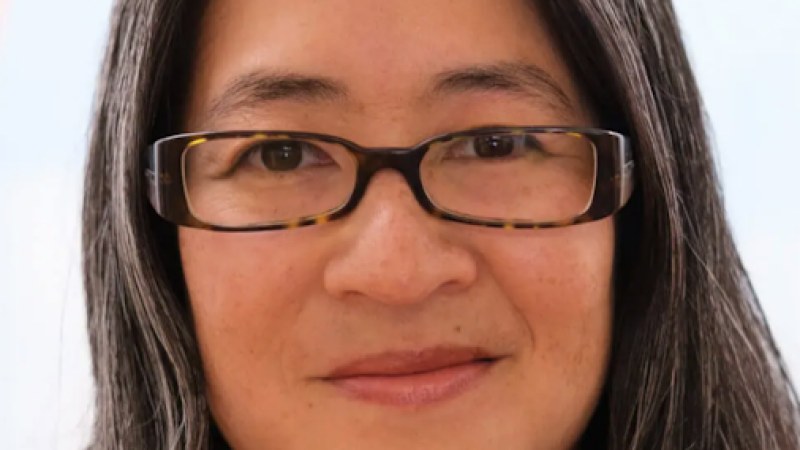
Wendy Gonzalez is the CEO of Sama, a mission-driven AI data annotation and model evaluation company that employs thousands of workers in East Africa. She joined Sama in 2015, rose through the ranks as COO and President, and assumed the CEO role in 2020 following the passing of founder Leila Janah. Under her leadership, Sama closed a $70M Series B - at the time the largest funding round for a woman-led AI infrastructure company - achieved Forbes AI 50 recognition, and scaled to over 3,000 employees while maintaining its B Corp certification and social mission of lifting people out of poverty through dignified work in the AI economy.

Surge AI
Surge AI is a San Francisco data annotation company that produces high-quality human-labeled datasets and RLHF feedback for the world's leading AI labs - OpenAI, Google, Anthropic, Meta and Microsoft among them. Founded in 2020 by ex-Twitter and ex-Facebook ML engineer Edwin Chen, it bootstrapped to roughly $1.2B in annual revenue with around 110 employees and a labeler network reported near one million.

Eric Zhang
Eric Zhang is the Chief Executive Officer of Thoth AI, a Singapore-headquartered global AI data solutions company with R&D operations in Silicon Valley. Under his leadership, Thoth AI powers frontier AI models for some of the world's leading AI labs by providing high-quality training data, RLHF workflows, model evaluation, and multilingual customer experience services across 170+ countries in 200+ languages. Zhang operates at the intersection of AI safety, responsible deployment, and global scale - building the human infrastructure that makes AI smarter, safer, and culturally aware.
Gabriel Kalejaiye
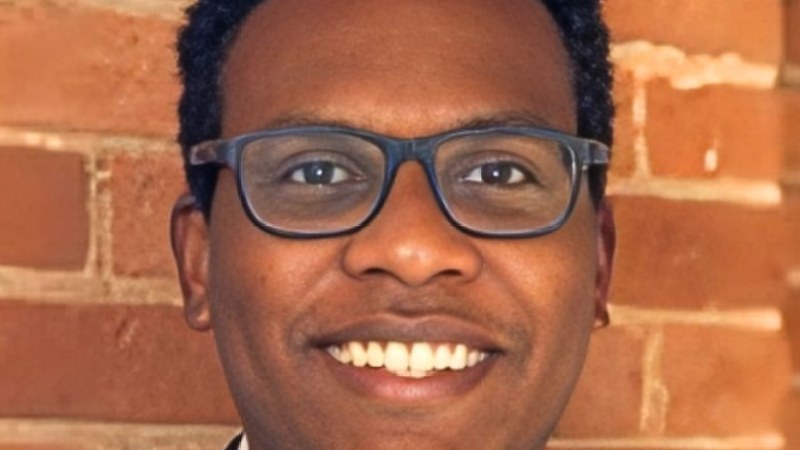
Gabriel Bayomi Tinoco Kalejaiye is a Brazilian-born engineer and entrepreneur who co-founded Openlayer, a San Francisco-based AI governance and observability platform. After earning his MS in Computer Science from Carnegie Mellon and working as a Machine Learning Engineer at Apple - where he contributed to both Siri and the secretive Vision Pro project - he left with two colleagues to solve the problem that haunted every AI team: models that look great in testing but fail in the real world. Openlayer provides enterprises with evaluation, monitoring, and compliance tooling across the full AI lifecycle, from prototype to production. The company raised a $14.5M Series A in May 2025, grew nearly 5x in 2024, and is now a recognized vendor in Gartner's 2026 Market Guide for AI Evaluation and Observability Platforms.
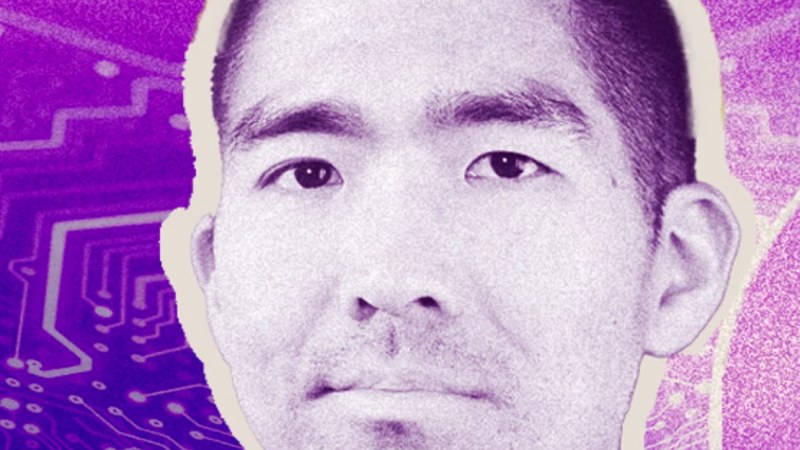
Edwin Chen
Edwin Chen is the Founder & CEO of Surge AI, the AI data infrastructure company that became Anthropic and Google's secret weapon for model training and evaluation. A former ML scientist at Google, Twitter, Dropbox, and Facebook, Chen bootstrapped Surge AI from his San Francisco apartment in 2020 to over $1.2 billion in annual revenue with fewer than 110 employees - no venture capital, no sales team. TIME named him one of the 100 Most Influential People in AI in 2025, and Forbes put him on the 400 list as one of the youngest billionaires. Surge's platform powers RLHF, supervised fine-tuning, and custom evaluations for the world's leading AI labs.