Invisible Technologies did not begin with a foundation model, a research paper or a waiting list of chief information officers. It began in October 2015 with a luxury errand: a $10,000-a-month virtual chief of staff for busy CEOs. Five customers signed up. More waited. The company raised $500,000 and hired more than 20 assistants in San Francisco. Demand looked solved. Then the invoice met reality.
Each account cost roughly $20,000 a month to serve. The service was losing about $10,000 per customer before anyone worried about growth. Supply failed first: humans improvising bespoke work could not keep pace with humans selling it. Founder Francis Pedraza later put the arithmetic with admirable economy: “We were spending $20,000 to make $10,000.”
The customer who changed the job description
What changed Pedraza’s mind was not a more persuasive pitch to executives. It was a customer using the service differently. June, the maker of connected ovens, put Invisible to work finding candidates, screening them and scheduling interviews. The useful unit was not “an assistant.” It was a process - a sequence with inputs, decisions, handoffs and an output someone could judge.
Invisible pulled back. From spring 2016 into summer 2017, it served essentially one client while building more than 50 processes, a distributed labor network and the first version of what it called a Digital Assembly Line. In September 2017, it relaunched as a $10-an-hour “process assistant,” available beyond the C-suite. Pay-as-you-go pricing lowered the door; subscriptions made revenue less erratic. The original idea had found demand but missed the market. The market was repetitive knowledge work scattered throughout a company.
The product wasn’t the assistant. It was the process hiding inside the request.The pivot, in one sentence
That distinction explains today’s Invisible better than the company’s “AI software platform” label. The current business sits between software, a specialist staffing network and technical consulting. It helps AI laboratories generate and evaluate training data. It also embeds engineers with enterprises to clean information, redesign workflows and ship agents into production. Customers are not buying a chatbot in a nicer window. They are buying the machinery around it.
The current assembly line
cleans data
maps work
finds experts
tests quality
runs agents
Five products for the work around the model
Neuron ingests and structures data from mismatched systems. Atomic documents manual workflows so they can be analyzed and automated. Meridial supplies domain experts when the job needs an oncology researcher, a quantum physicist or a particular language specialist rather than a general annotator. Synapse evaluates models and agents for quality, safety and accuracy. Axon builds governed agents that can navigate multi-step work, use tools and write code. Each workflow is versioned and separated by customer, allowing a team to test before promoting it.
The sequence matters. An agent cannot repair a company that does not know which database is authoritative, what “good” looks like or who owns an exception. Invisible’s pitch is that those seemingly boring questions are the product. Its forward-deployed engineers sit close to the client, while the software and expert network make the solution repeatable. That puts the company in competition with several categories at once: Scale AI and Surge AI in model training, Labelbox and Appen in data work, UiPath in automation, Palantir in operational software, and Accenture in implementation.
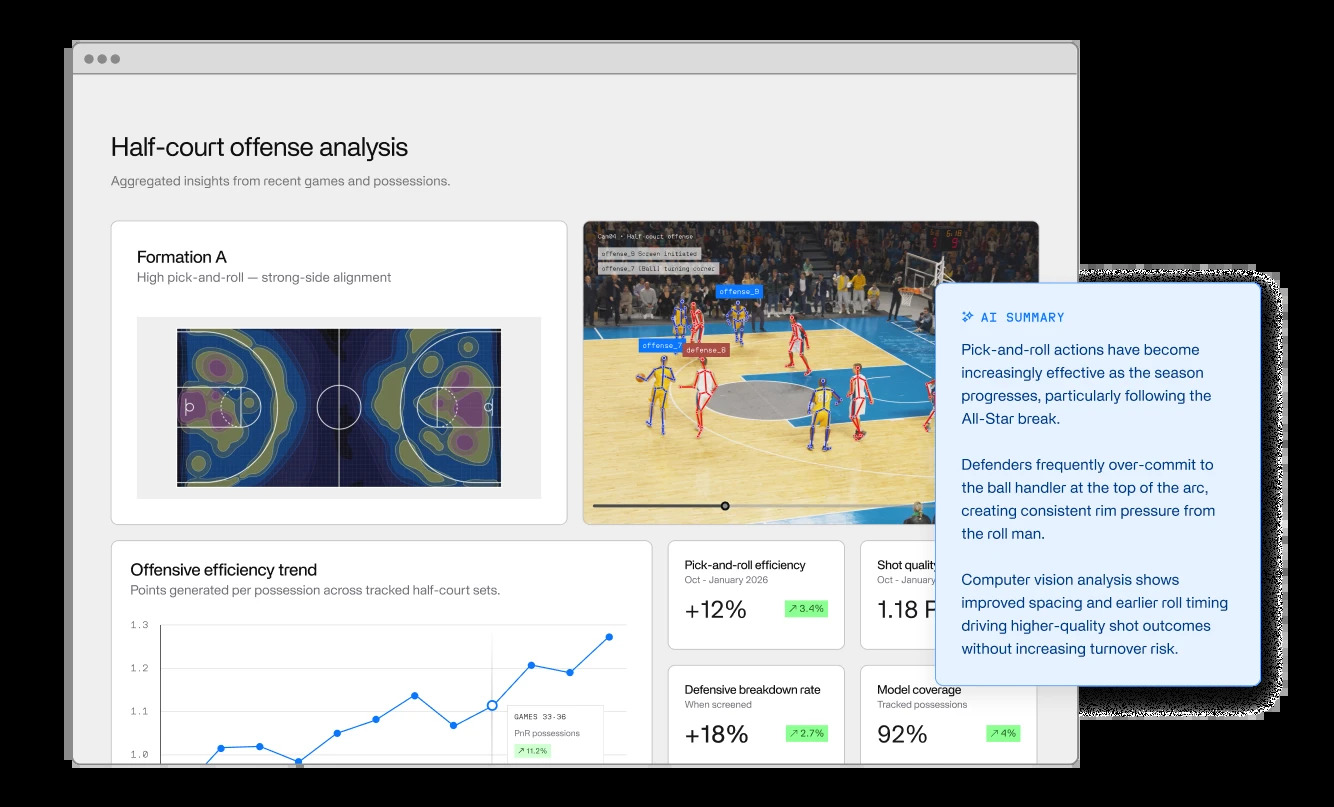
The difference is not that Invisible alone uses humans with software. Nearly every serious data provider does. Its claim is breadth: the same system can prepare data for a frontier model, recruit the expert who grades it, measure performance and carry the resulting automation into an insurer or restaurant marketplace. That breadth is useful, but it complicates the economics. Invisible does not publish a price list. Contracts are tailored bundles of platform access, expert work and engineering. Buyers should expect enterprise sales rather than a credit card and a free weekend.
The scorecard lives in the workflow
The best evidence comes from narrow, unromantic processes. Nasdaq launched a product whose customers brought non-standard data. Onboarding took two months and consumed engineering time. Invisible built an integration layer with quality controls. The company reports that onboarding time fell 63 percent and more than 10,000 developer hours were saved. The important metric was not whether a model topped a benchmark. It was whether customers reached the product sooner.
A menu is a small data nightmare
Grubhub receives menus as URLs, PDFs, photographs and handwriting. Invisible built a pipeline that classifies each submission, routes it to a format-specific extraction tool, and asks a trained person to inspect the output before publication. Grubhub reports 1,000-plus menus processed each month, a 75 to 80 percent reduction in handling time and a 98 percent quality rate.
Other published projects follow the same pattern: Headway says claims processing became eight times faster; a national insurer reported $450,000 in savings and approval responses cut in half; You.com reported a 70 percent lift in relevance after structured rating work. These are company case studies, so they belong in the “promising, verify during procurement” column. Still, they reveal how Invisible wants to be judged: by cycle time, accuracy, cost and adoption, not by the elegance of a demo.
A training-data company tries to become the deployment layer
Model training supplied the acceleration. Invisible says it has worked on more than 80 percent of the world’s leading AI models, mobilizing experts for annotation, reinforcement learning from human feedback, fine-tuning and evaluation. Public materials name Cohere, Microsoft and AWS; reporting has also connected the company to OpenAI. That work generated institutional memory about where models fail - ambiguity, edge cases, stale inputs and answers that sound right while violating a rule.
Revenue was reported at $134 million in 2024, more than double the prior year estimate. In January 2025, Invisible hired Matthew Fitzpatrick, the former head of McKinsey’s QuantumBlack Labs, as CEO while Pedraza remained founder and chairman. Eight months later, Vanara Capital led a $100 million growth round with participation from new and existing investors. Invisible said the deal brought total capital raised to $144 million; the reported valuation was $2 billion.
The management change sharpened the enterprise ambition. Fitzpatrick had spent years trying to move corporate AI from proof of concept to production. Invisible had a platform, an expert supply chain and training relationships. The combination aims at the territory consulting firms have traditionally owned: diagnosing a process, integrating systems and staying until the thing works. The wager is that software and reusable operating components can make that work faster and more profitable than a parade of bespoke slide decks.
By 2026, the catalog had begun to look less like a collection of AI services and more like an operating layer. A demand-forecasting package unifies point-of-sale, e-commerce, inventory, labor and promotion data before selecting and monitoring a model. A contact-center package scores interactions against policy, surfaces compliance risks and suggests next actions. The company won an AI Breakthrough award for predictive analytics in June. Awards make pleasant wall furniture; the more revealing move is packaging. Invisible is converting lessons from custom projects into named, reusable configurations for industries that prefer buying a recognizable product.
That transition will decide whether the $2 billion valuation describes a software platform or an unusually technical services firm. The expert network gives Invisible flexibility and makes difficult projects possible, but people do not scale like code. Forward-deployed engineers shorten the distance between a prototype and a working system, but they are expensive and scarce. The company needs its modules to capture knowledge from each engagement without turning every customer into a fresh consulting assignment. This is the same tension that broke the first assistant service, only with larger contracts and better tooling.
What an operator can copy on Monday
- Choose one frequent workflow with a visible bottleneck.
- Write down every input, decision, handoff and exception.
- Define quality before selecting a model.
- Automate the stable middle; route uncertain edges to people.
- Measure cycle time, correction rate and dollars saved.
Where the assembly line jams
The playbook is not universal. It works best when a task occurs often, touches messy data, has enough economic value to justify integration, and produces an output that can be scored. It is a poor fit for a low-volume chore that standard software already handles. It also struggles when nobody owns the underlying process, permissions block the necessary data, or the business cannot agree on what a correct answer is.
Human review is another condition, not a decorative safety promise. In high-stakes claims, financial analysis or public services, removing every person may be neither possible nor desirable. A hybrid pipeline can be slower and more expensive than a fully automated demo suggests. It can also be the only version an institution will trust. Buyers should ask what percentage of cases require review, who performs it, how those people are trained, where their data travels and how corrections feed back into the system.
Culture deserves similar scrutiny. Invisible describes itself as remote-first, autonomous, curious and humble. Its globally distributed workforce is a genuine operating advantage. Public worker reviews, however, are mixed, with recurring complaints about management, workload and the contractor experience alongside positive accounts of flexibility and ambitious projects. Any company whose product depends on human expertise should treat the conditions of that labor as part of product quality, not a footnote.
Invisible’s most useful idea is also its least futuristic: intelligence needs operations. A model without clean information, explicit decisions, testing and accountability is a very expensive improviser. The company learned that by losing money on human improvisers first. Ten years later, the names have changed from assistants to agents, and the contracts have gained several zeros. The production problem is recognizable.