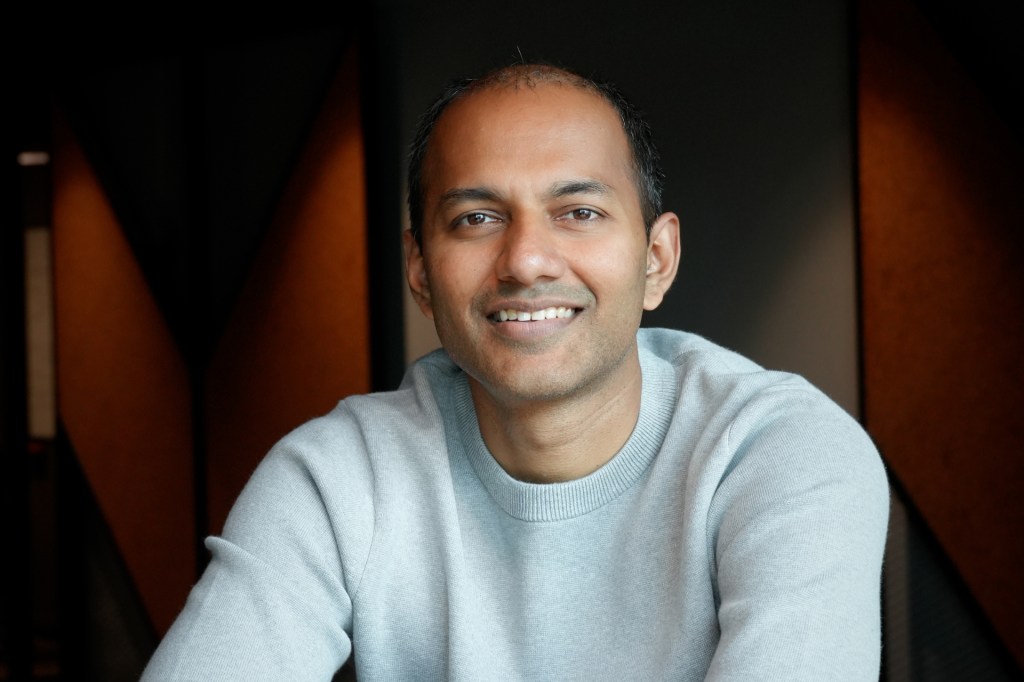
Eighteen months. That's how long it took Rukesh Reddy to go from founding Deccan AI in October 2024 to closing a $25 million Series A backed by A91 Partners, Susquehanna International Group, and Prosus Ventures. The company's customer list at that point already included Google DeepMind, Snowflake, and most of the so-called Magnificent 7 tech companies. The pitch was stubbornly simple: AI models are getting bigger, but they're not getting more reliable - and reliability is what enterprises actually need.
Reddy named it Deccan AI after the Deccan Plateau - one of the oldest geological formations on earth, stable under pressure, unchanged while everything around it shifts. In a market where every competitor is promising to build the future, Reddy is focused on something less glamorous and more valuable: making sure AI does what you tell it to do, correctly, every time.
Quality remains an unsolved problem. Post-training tolerance for errors approaches zero - mistakes directly impact model performance.
- Rukesh Reddy, Founder & CEO, Deccan AIThe Problem Nobody Wanted to Talk About
AI labs spend billions on compute and architecture. The post-training phase - the part where models learn to be helpful, safe, and accurate through human feedback - gets treated like an afterthought. Scale AI built a business on this gap. Surge AI narrowed it further. Reddy came in late, but he came in differently: Deccan AI was designed from day one for the generative AI era, not retrofitted from a computer vision annotation shop.
He calls it being a "born GenAI" company. What that means in practice: the tooling, the contributor selection, the evaluation frameworks - everything was built assuming large language models, multimodal inputs, and the specific failure modes that emerge when you're trying to get an LLM to write enterprise software or handle financial compliance at scale. Older annotation companies can handle images and bounding boxes. Deccan AI's contributors are writing code, debugging reasoning chains, and scoring model outputs in Python, SQL, and natural language - tasks that require graduate-level expertise, not just pattern recognition.
Top contributors on Deccan AI's platform earn up to $700/hour for advanced AI evaluation work - and up to $7,000/month for sustained, high-quality output. Reddy believes premium pay is the only way to get premium data.
One Country, One Standard
Most data annotation businesses operate across dozens of countries. Geographic diversity feels like resilience. Reddy made the opposite call: Deccan AI's operations are concentrated in India, primarily Hyderabad, where the company has its largest workforce hub.
The reasoning is blunt. "Many of our competitors go to 100-plus countries to find the experts," Reddy said. "If you have operations in just one country, it becomes far easier to maintain quality." Managing quality controls across a hundred time zones and regulatory environments adds noise. Deccan AI removes that noise by trading breadth for consistency. The company's 1 million-plus contributors are vetted through a single operational framework. About 10 percent hold master's degrees or PhDs. Five thousand to ten thousand are active in any given month on live projects.
That contributor model generates a specific kind of defensibility. India's graduate-level English-language talent pool is enormous, deeply technical, and still underpriced relative to comparable US labor. Reddy is exploiting that arbitrage not for cost savings per se, but for quality density - the ability to staff a project requiring 500 expert annotators with domain knowledge in financial regulations or drug interactions on very short notice.
From Trading Floors to Training Data
Rukesh Reddy did not arrive at Deccan AI through a straight line. His career before it reads like a tour of institutional sophistication: credit derivatives at J.P. Morgan (where he spent a year pricing risk in instruments that still make most people's eyes glaze over), engagement manager at Monitor Group - the strategy consulting firm that eventually became Monitor Deloitte - then nearly a decade at Citi spanning strategy, business development, and leading digital transformation for the US retail bank.
After Citi, he moved to 360 ONE Wealth, India's largest non-bank wealth management firm, heading growth for their digital wealth division. By 2023 he was building again. He co-founded Soul AI with Vishwas Choudhary in September 2023 - a company focused on RLHF (reinforcement learning from human feedback) and custom AI solutions, incorporated with dual US and India structures and headquartered in Gachibowli, Hyderabad.
Soul AI became the early infrastructure for what Deccan AI would eventually become. Reddy formalized the Deccan AI entity in October 2024, focused the vision, and began scaling. The IIT Bombay engineer and IIM Ahmedabad MBA was building his most technical company yet - and the one he was most personally suited for.
Getting an agent to work in a demo is one thing. Getting it to handle high-stakes business logic is another.
- Rukesh ReddyWhat Deccan AI Actually Sells
Deccan AI operates across three main product lines, each targeting a different phase of the AI development lifecycle where accuracy degrades without human intervention.
STARK RL Environments
Code-based containerized environments for reinforcement learning, with multi-step verification systems. Designed for training models on complex, sequential reasoning tasks where intermediate steps must also be evaluated - not just final outputs.
Helix Evals
A hybrid evaluation suite combining automated scoring with human-led assessments and production monitoring. Used by enterprise clients to benchmark deployed models against domain-specific accuracy requirements continuously, not just at release.
EnterpriseOS Agents
Bespoke agentic solutions for back-office workflows - document processing, KYC, AML, financial operations. Built for environments where errors have compliance consequences and "it mostly works" is not acceptable.
RL Gym
Reinforcement learning training environments for frontier model developers. Provides structured feedback loops and task scaffolding for post-training data generation at scale across code, reasoning, and multimodal tasks.
The Series A and What It Signals
The $25 million Series A, announced March 27, 2026, was led by A91 Partners - one of the more selective growth equity firms investing in India-origin technology companies. Susquehanna International Group and Prosus Ventures joined. The round values Deccan AI at a figure the company hasn't disclosed publicly, but the investor mix is notable: Susquehanna is a quantitative trading giant with deep expertise in data-heavy technology businesses. Prosus, the Dutch technology investment arm of Naspers, has made a pattern of backing AI infrastructure plays in emerging markets.
At the time of the raise, Deccan AI had roughly 125 employees, approximately 10 enterprise customers running dozens of active projects simultaneously, and a revenue run rate in the double-digit millions. Eighty percent of that revenue came from just five customers. That concentration is a risk, and Reddy knows it - but it's also a signal that those five customers are buying deeply and expanding their usage.
Super Accurate, Not Superintelligent
Deccan AI's tagline - "Accuracy is Intelligence" - is a deliberate rebuke. While every AI company is promising AGI, Reddy is selling something considerably less grand and considerably more useful: models that don't hallucinate during a legal contract review. Models that produce valid SQL on the first try. Agents that complete a multi-step financial workflow without inventing a transaction midway through.
"The industry is moving past the 'chatbot' phase," Reddy said. What comes after is harder. Enterprise applications require deterministic outputs in probabilistic systems - a contradiction that the field is still working through. Reddy's position is that human-verified training data, domain-specific reinforcement learning environments, and continuous evaluation are the only credible path to models that enterprises will actually trust with consequential decisions.
He is not alone in believing this. Google DeepMind, one of the most sophisticated AI research organizations in the world, is a Deccan AI customer. So is Snowflake, which is building AI-native data infrastructure for enterprise use cases. These are not companies that outsource critical data work casually. Their presence on Deccan AI's client list is the strongest signal available that Reddy's approach is being taken seriously at the frontier.
Where He's Going
With $25 million in the bank and a team of 125, Reddy's immediate focus is customer expansion - converting the concentration risk of five flagship accounts into a broader enterprise base - and deepening the technical platform. STARK RL Environments and Helix Evals are still relatively early products; each has significant room to grow in sophistication. EnterpriseOS Agents, the agentic workflow product, is the newest and potentially the most strategically significant, because it moves Deccan AI from pure data and evaluation services into direct participation in production AI workflows.
The longer arc is about positioning. The AI data and evaluation market is consolidating fast. Scale AI is much larger. But Scale AI built its core infrastructure for a world of computer vision and clickwork annotation. Deccan AI was built for a world of reasoning, code, and language - the world frontier AI labs are actually operating in today. Reddy is betting that origin matters: a company built for the current era will outmaneuver one retrofitted from the previous one.
Eighteen months in, he is not wrong yet.