data-annotation
(28)
Girl Power Talk Bets the Client Brief on the Person With the Shortest Résumé
The Mohali social enterprise sells serious digital work to global clients, then hands meaningful responsibility to young people whom conventional employers might still be asking to fetch coffee.
Taskeater Outsourced the Clickwork - Then Outsourced Its Own Name
Taskeater made a business of the unglamorous work hiding behind fast-growing internet companies. Its bigger trick was recognizing when cheap hands were no longer a complete strategy.
CapeStart's Real Product Is the Last Mile of Enterprise AI
Most AI projects do not die in the demo. They stall in the unglamorous stretch between a clever model and a system that regulated teams can trust. CapeStart has built a 600-plus-person business around crossing that gap.

Ha Dao Is Building the Less Glamorous Half of AI
Models get the applause. Ha Dao has spent six years working on the data, people and privacy architecture that determine whether those models are useful at all.

The Company Betting That AI Still Needs a Human in the Loop
Label Studio put data labeling in the hands of a million AI practitioners. Now HumanSignal is wagering that the harder generative-AI models get, the more they need human judgment behind them.
CNTXT AI Is Building the Arabic Layer the Global AI Boom Skipped
The Abu Dhabi company is betting that the next enterprise AI advantage will not come from a bigger model. It will come from cleaner local data, Arabic that sounds like people actually speak, and systems that never have to leave the region.
Fusion CX Is Turning the Call Center Into an AI Test Kitchen
The global outsourcer built its reach one delivery center and acquisition at a time. Now it is using millions of real customer interactions to turn contact-center software into an operating advantage.

micro1 Bet the AI Boom Would Run Out of Human Judgment
The young company began with an AI interviewer. It is now selling the scarce ingredient frontier models, workplace agents and robots all need: structured evidence of how capable people think and work.

Mundo AI
Mundo AI (YC W25) builds high-quality multilingual training data for AI models, tackling the shortage of non-English data that leaves most of the world's languages underserved by today's models. The company partners with native speakers and runs end-to-end operations in the countries where target languages are spoken, using proprietary software for data collection, generation, annotation, and quality assurance. Founded in 2024 by four University of British Columbia alumni, its customers are AI labs and companies training or improving non-English and multimodal models.
Kili Technology
Kili Technology is a Paris-based enterprise software company that helps large organizations build high-quality datasets to train, fine-tune, and evaluate AI models. Founded in 2018 by Edouard d'Archimbaud and François-Xavier Leduc, its platform spans image, video, text, PDF, and geospatial annotation, and has increasingly focused on LLM evaluation, RLHF, and expert-driven data curation for generative AI. Backed by a $25M Series A led by Balderton Capital, Kili works with enterprises including SAP, Airbus, Louis Vuitton, Michelin, and Crédit Agricole.
iMerit Technology
iMerit is a global AI data solutions company that supplies the labeled, enriched and expert-refined data used to train, fine-tune and evaluate machine learning and generative AI models. Founded in 2012 by Radha Basu, it pairs a specialized human workforce with its Ango Hub annotation platform and its Scholars network of domain experts to serve Fortune 500 clients across autonomous vehicles, healthcare, geospatial and financial services. In June 2026, enterprise-AI firm EXL agreed to acquire iMerit for up to $310 million.

Stardust AI
Stardust AI is a San Francisco-founded, data-centric AI company that helps enterprises turn raw, messy, multimodal data into the high-quality datasets that machine-learning models actually need. Through its Rosetta auto-labeling platform, its MorningStar data engine and its COSMO dataset offerings, Stardust annotates and manages 2D/3D/4D data spanning images, video, point clouds, audio and text - with heavy expertise in autonomous driving and large language models. The company works with names like SAIC Motor, BYD, Geely, Bosch, ZF, Xiaomi and JD.com, and pitches a simple thesis for the AI era: whoever controls the data controls the model.
Superb AI
Superb AI is a computer vision AI company that builds an end-to-end MLOps and DataOps platform, letting teams label, curate, train, and deploy vision models on images, video, and 3D LiDAR data. Founded in 2018 and a Y Combinator alum, it uses AI-assisted automation to shrink the slow, manual work of preparing training data, and serves enterprise customers across autonomous driving, manufacturing, security, and public sector from offices in San Mateo and Seoul.
Deepen AI
Deepen AI is a Silicon Valley company building the data lifecycle infrastructure for autonomous systems and physical AI. Its platform combines multi-sensor data annotation, sensor calibration (LiDAR, camera, radar, IMU), and validation tools that carmakers, robotics firms, and AV developers use to turn raw sensor data into reliable training data. Founded in 2017, Deepen also co-created Safety Pool, a global scenario-sharing initiative launched with the World Economic Forum and WMG at the University of Warwick.

Pareto.AI
Pareto.AI is a San Francisco-based, talent-first human data platform that connects AI labs with a deeply vetted network of expert labelers to produce premium training data, RLHF, and evaluation signals. Founded by Thiel Fellow Phoebe Yao, the company started as a bootcamp for women and work-from-home mothers, pivoted into AI data labeling in 2023, and now positions itself as the 'verification layer' for reinforcement learning on real-world expertise, turning specialist judgment into durable reward signals under the banner 'Expert data for AGI.'
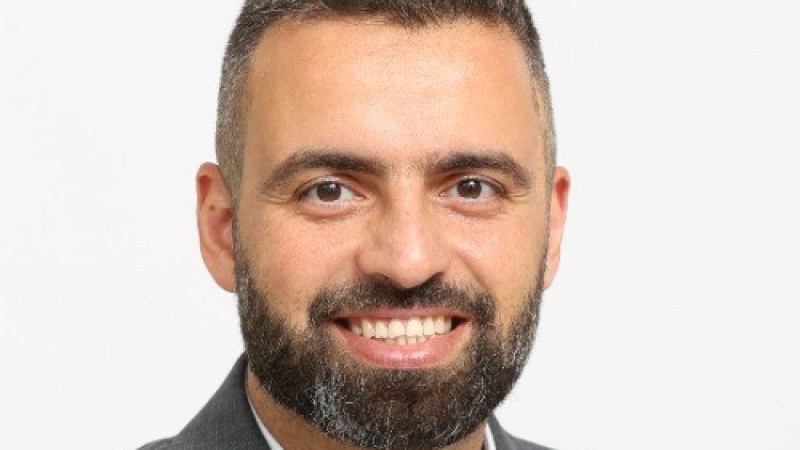
Mohammad Musa
Mohammad Musa is the founder and CEO of Deepen AI, a San Jose company building the data engine for Physical AI - tools and managed services that handle collection, calibration, annotation, validation, and synthetic data for autonomous vehicles and robotics. A Santa Clara University-trained computer engineer who once ran launch readiness for Google Apps, Musa co-founded Deepen in 2017 and has spent nearly a decade arguing that machines, like people, need many senses working together to move safely through the world. He also teaches product management at his alma mater.
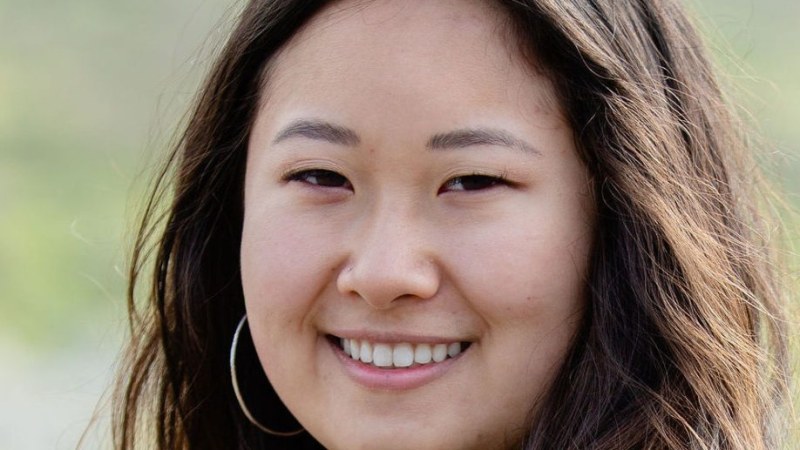
Phoebe Yao
Phoebe Yao is the founder and CEO of Pareto.AI, a talent-first human data platform that recruits and trains the top sliver of expert labelers to produce high-quality training data for the world's leading AI labs. A Chinese-American immigrant, classical violist, 2020 Thiel Fellow and Forbes 30 Under 30 honoree, she dropped out of Stanford during the pandemic to build what began as a bootcamp training women as remote virtual assistants and pivoted in 2023 into the human-data backbone for AI research. Her companies have worked with the likes of Character.AI and Imbue and researchers at Stanford and UPenn, all anchored by a single conviction: the humans behind AI deserve to be treated as experts, not anonymous clickworkers.

Thoth AI
Thoth AI is a Singapore-headquartered global AI data solutions company that builds the high-quality datasets, evaluation frameworks, and human-in-the-loop operations that production AI systems depend on. Spanning 200+ languages and 100+ countries, it handles data collection and annotation across images, video, 3D point cloud, text, and audio, along with RLHF, model evaluation, content moderation, and multilingual customer experience for teams building LLMs, VLMs, multimodal systems, and applied AI like robotics.
Wow AI
Wow AI is a US-registered, end-to-end AI training-data company that supplies high-quality, multilingual datasets and human-in-the-loop services - data collection, transcription, annotation, validation and RLHF - to teams building large language models, voice assistants and computer-vision systems. Its crowdsourcing network spans 170,000+ contributors across 120+ languages, with 100,000+ hours of audio and domain datasets for finance, healthcare and retail. The founding team has since extended the vision into AIxBlock, a decentralized platform for building, training and deploying AI, and WowDAO, a community-owned AI ecosystem.
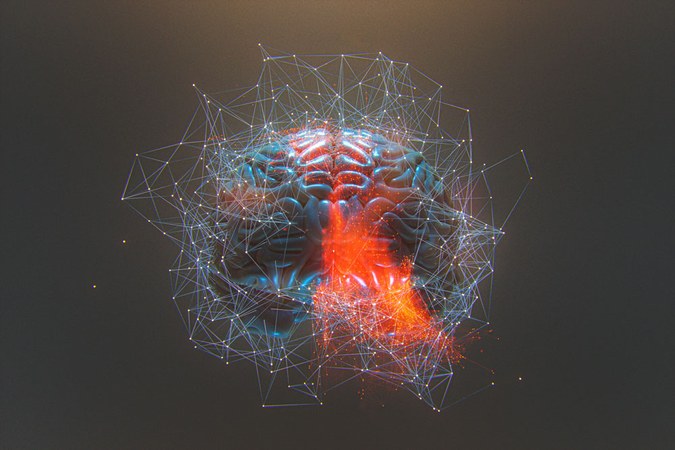
Erik Duhaime
Erik Duhaime is the cofounder and CEO of Centaur.ai (formerly Centaur Labs), a Boston startup that turns the wisdom of crowds into medical-grade training data for AI. His PhD research at the MIT Center for Collective Intelligence showed that ordinary medical students, when their opinions are measured and pooled the right way, can out-diagnose individual experts. He built a company on that insight, raising $35M total to label the world's health and science data.

Deccan AI
Deccan AI is a Mountain View-based GenAI data company that runs the post-training and production layer for frontier labs and enterprises. It builds super-accurate SFT and RLHF datasets, reinforcement learning environments and agentic evaluation pipelines using an elite expert network and a purpose-built quality platform.
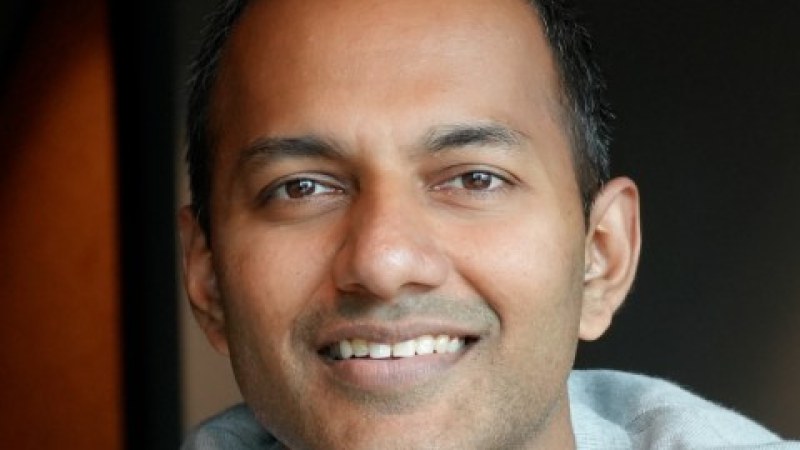
Rukesh Reddy
Rukesh Reddy is the Founder and CEO of Deccan AI, a Mountain View-based AI data and post-training company that raised a $25M Series A in March 2026 led by A91 Partners with participation from Susquehanna International Group and Prosus Ventures. Built as a 'born GenAI' company in October 2024, Deccan AI serves frontier AI labs and major tech companies - including Google DeepMind and Snowflake - with high-precision training datasets, reinforcement learning environments, and enterprise evaluation suites. Reddy brings over 15 years of experience spanning finance, strategy consulting, and digital transformation at firms including J.P. Morgan, Monitor Group (now Monitor Deloitte), and Citi, where he led CX and digital transformation for the global retail bank.
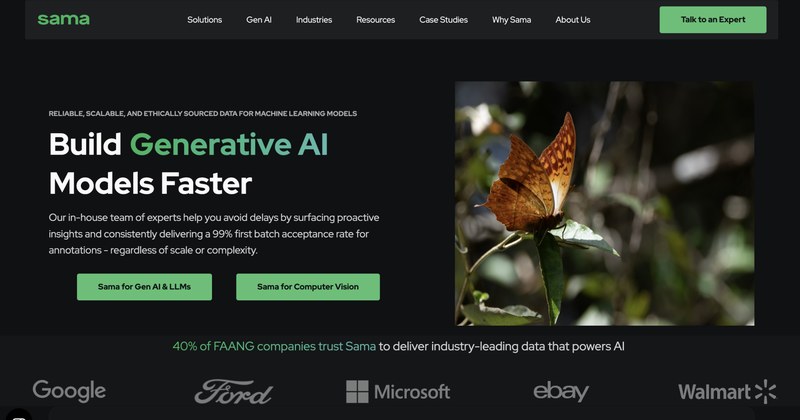
Sama
Sama is a San Francisco-based AI training-data company that combines a 5,000-plus full-time annotation workforce - most based in Kenya, Uganda and India - with proprietary tooling to deliver labeled data, model evaluation and red-teaming for the world's largest AI builders. Founded as the nonprofit Samasource in 2008 by the late Leila Janah, it relaunched as a for-profit B Corp in 2019 and counts Google, Walmart, NVIDIA, Ford and Microsoft among its customers.
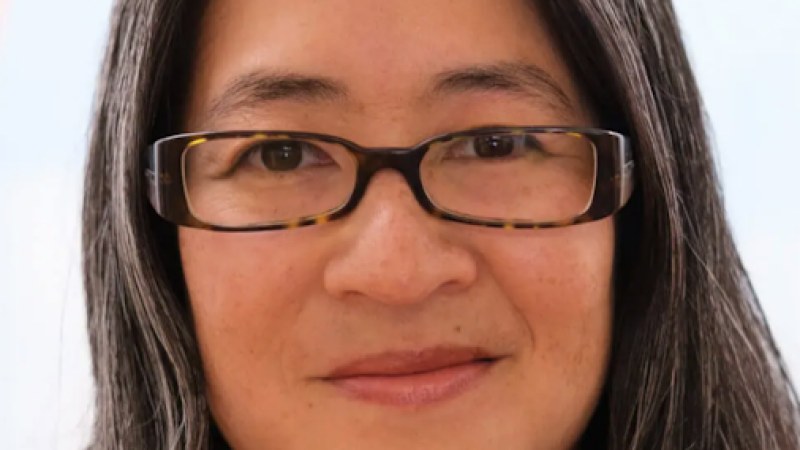
Wendy Gonzalez
Wendy Gonzalez is the CEO of Sama, a mission-driven AI data annotation and model evaluation company that employs thousands of workers in East Africa. She joined Sama in 2015, rose through the ranks as COO and President, and assumed the CEO role in 2020 following the passing of founder Leila Janah. Under her leadership, Sama closed a $70M Series B - at the time the largest funding round for a woman-led AI infrastructure company - achieved Forbes AI 50 recognition, and scaled to over 3,000 employees while maintaining its B Corp certification and social mission of lifting people out of poverty through dignified work in the AI economy.

Surge AI
Surge AI is a San Francisco data annotation company that produces high-quality human-labeled datasets and RLHF feedback for the world's leading AI labs - OpenAI, Google, Anthropic, Meta and Microsoft among them. Founded in 2020 by ex-Twitter and ex-Facebook ML engineer Edwin Chen, it bootstrapped to roughly $1.2B in annual revenue with around 110 employees and a labeler network reported near one million.

Eric Zhang
Eric Zhang is the Chief Executive Officer of Thoth AI, a Singapore-headquartered global AI data solutions company with R&D operations in Silicon Valley. Under his leadership, Thoth AI powers frontier AI models for some of the world's leading AI labs by providing high-quality training data, RLHF workflows, model evaluation, and multilingual customer experience services across 170+ countries in 200+ languages. Zhang operates at the intersection of AI safety, responsible deployment, and global scale - building the human infrastructure that makes AI smarter, safer, and culturally aware.
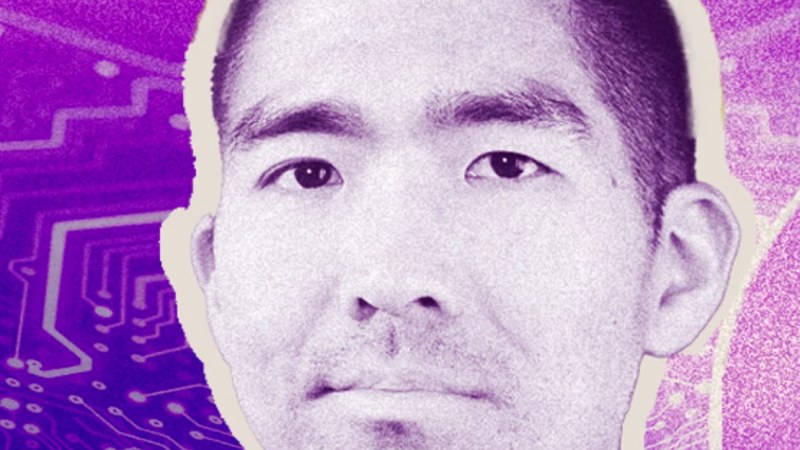
Edwin Chen
Edwin Chen is the Founder & CEO of Surge AI, the AI data infrastructure company that became Anthropic and Google's secret weapon for model training and evaluation. A former ML scientist at Google, Twitter, Dropbox, and Facebook, Chen bootstrapped Surge AI from his San Francisco apartment in 2020 to over $1.2 billion in annual revenue with fewer than 110 employees - no venture capital, no sales team. TIME named him one of the 100 Most Influential People in AI in 2025, and Forbes put him on the 400 list as one of the youngest billionaires. Surge's platform powers RLHF, supervised fine-tuning, and custom evaluations for the world's leading AI labs.

Ivan Lee
Ivan Lee is the Founder and CEO of Datasaur, an NLP data labeling and private LLM development platform based in Silicon Valley. A Stanford-trained engineer and serial entrepreneur, Ivan previously co-founded Loki Studios (acquired by Yahoo in 2013) and worked as a product manager at both Yahoo and Apple before launching Datasaur in 2019. Under his leadership, Datasaur has raised $9.2M across multiple seed rounds backed by Initialized Capital, Y Combinator, and Greg Brockman of OpenAI, serving enterprise clients including Google, Netflix, Spotify, the FBI, and Zoom with tools that improve labeling efficiency by up to 9.6x and enable companies to build their own private AI models.