The Builder Behind the Sensors
Mohammad Musa
He spent a decade on a quiet idea: a machine is only as safe as the data it learns to trust. Deepen AI is what he built around it.
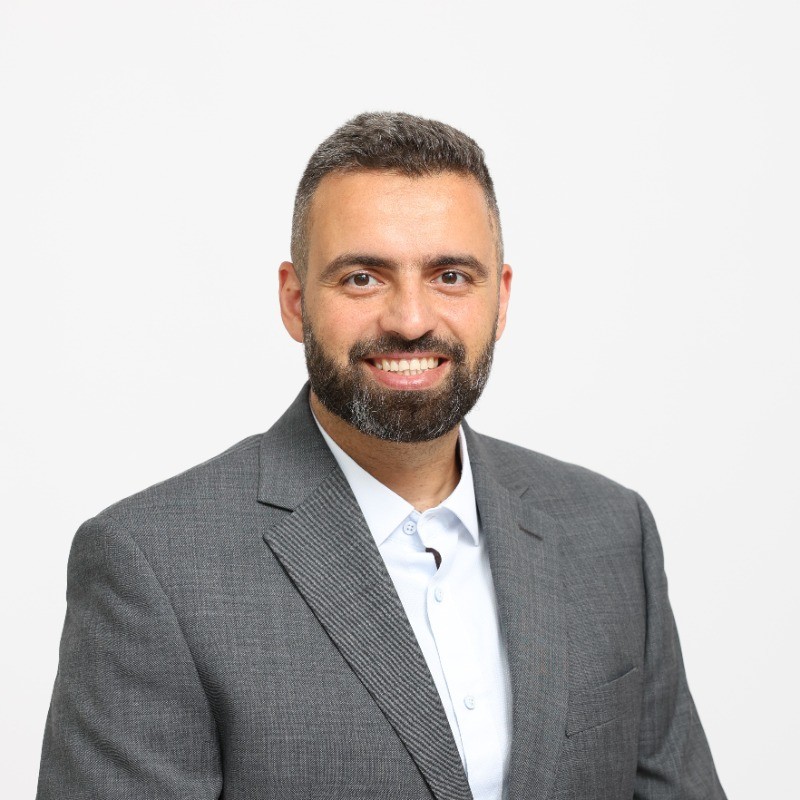
Founder & CEO, Deepen AI — San Jose, California
He spent a decade on a quiet idea: a machine is only as safe as the data it learns to trust. Deepen AI is what he built around it.
Ask Mohammad Musa what Deepen AI does and he will not start with the car. He starts with the data the car never sees - the labeled point clouds, the calibrated cameras, the validated ground truth that decides whether a robot treats a shadow as a pothole or a pedestrian. Deepen AI calls itself the data engine for Physical AI, and Musa has spent nearly a decade making that unglamorous sentence load-bearing.
The company he co-founded in 2017 sits at 4353 North 1st Street in San Jose and handles the full lifecycle of machine perception: collection, calibration, annotation, validation, and synthetic data generation. Autonomous-vehicle teams, robotics operators, and industrial fleets use it to turn raw sensor noise into something a model can be trusted with. It is the difference between a demo and a deployment.
In March 2026, Deepen AI announced a seed round led by Majlis Advisory. The timing was deliberate. "Physical AI has moved from research to production, and that shift changes what teams need," Musa said. Robotaxis were expanding city by city, L2+ and L3 stacks were shipping, and the appetite for clean multimodal data had outgrown the spreadsheets and side-projects of the research era.
His whole argument is that perception is a team sport, and most of the team is invisible.
Musa's favorite analogy is a kitchen one. Asking a self-driving car to navigate on a single sensor, he says, is like being told to bake a cake with your eyes closed and your nose plugged. You might manage once. You will not manage consistently. The point of multiple sensors is not redundancy for its own sake - it is that when one input is disrupted, the others act as a failsafe.
"When one or more inputs are disrupted, the other inputs are able to act as a sort of failsafe."
The road to robotaxis ran through video games. Before he was teaching cars to perceive the real world, Musa wrote software to simulate fake ones. He was an engineer at Havok, the physics-engine company later swallowed by Intel, and at Emergent Game Technology and Sonics. He learned how to model gravity, collision, and motion in code - a useful apprenticeship for someone who would later worry about how a machine reads a moving truck at dusk.
Then came Google. As a product strategy manager on Google Apps, Musa ran launch readiness for the tools millions take for granted - Gmail, Calendar, Drive, Docs, the machinery that became Google Cloud Platform. It was a tour in shipping software at planetary scale, in coordinating the unglamorous work of trusted testers and launch communications and roadmap discipline. He left the comfort of that to start something where the stakes were measured in physical safety, not inbox uptime.
His credentials are stacked across four institutions. Two degrees in computer engineering from Santa Clara University, where he won the Technical Excellence Award in 2003. A product management certificate from UC Berkeley's Haas School. A graduate certificate in management science and engineering from Stanford. He has never stopped collecting the toolkit.
He has not stopped teaching with it, either. Musa lectures at Santa Clara's School of Engineering, running the product management course - returning to the same halls where he earned his own engineering degrees, now on the other side of the lectern.
Multisensor data can provide far more vivid and complete information than those built from just one or two sensory inputs.
Achieving Level 4 and Level 5 AVs will require using not just one or two, but rather multiple sensory inputs.
When one or more inputs are disrupted, the other inputs are able to act as a sort of failsafe.
Physical AI has moved from research to production, and that shift changes what teams need.