She decided the people who train artificial intelligence should be called experts, not clickworkers. Then she built the company that pays them like it.
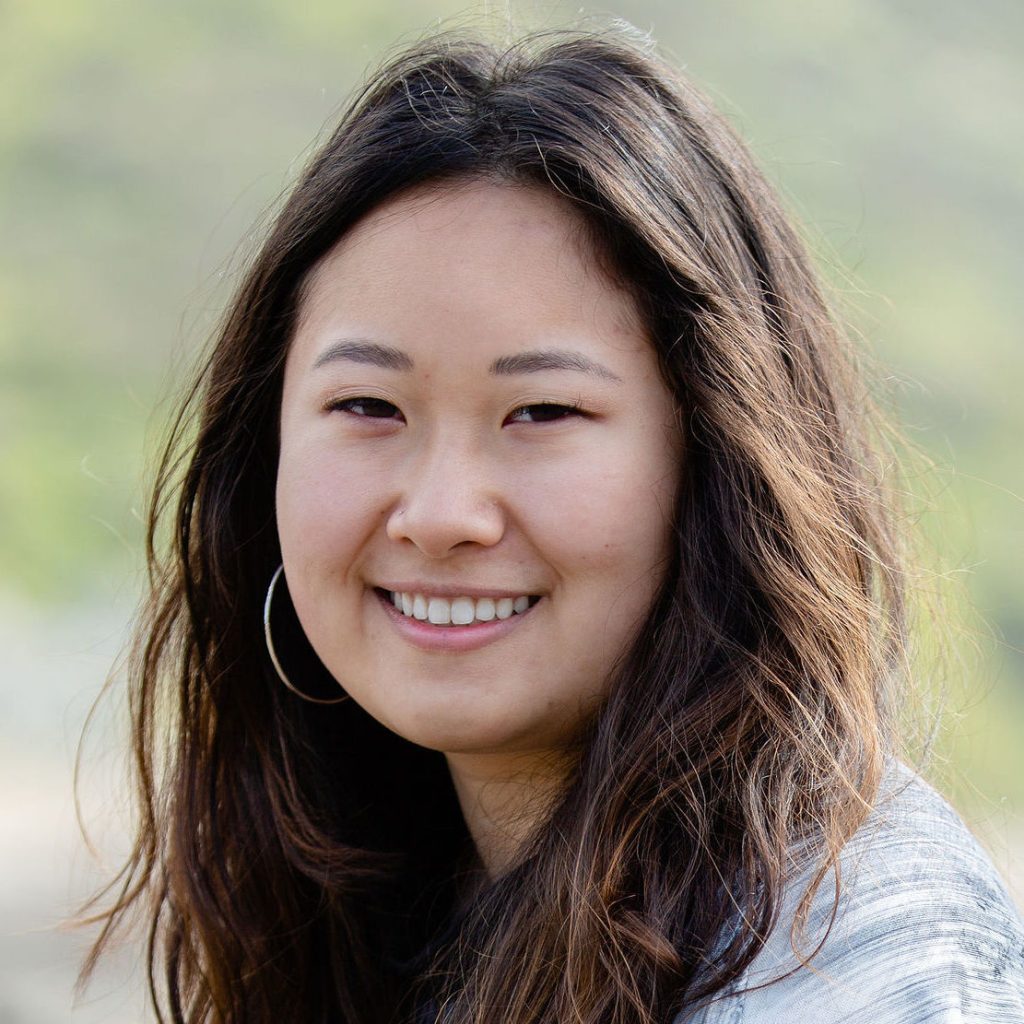
Phoebe Yao. The viola came first. The asteroids came second. The company that feeds frontier AI came after she walked away from a Stanford diploma.
Every dazzling answer a chatbot gives sits on top of a quieter labor: a human, somewhere, who decided this response was good and that one was not. Phoebe Yao runs the company that recruits those humans and treats them as the experts they are. Pareto.AI is a talent-first human data platform, and its pitch is almost stubbornly simple - the quality of an AI model is bounded by the quality of the people who teach it, so go find the best people on Earth and pay them properly.
Pareto hunts for what Yao calls the top sliver of expert labelers: doctors, lawyers, linguists, mathematicians, writers - people who can judge whether a model's answer is not just plausible but correct, kind, and honest. They write prompts, run side-by-side comparisons, grade reasoning, hunt for hallucinations, and stress-test models with adversarial questions. The output is the training data that frontier labs run on. Pareto has worked with the likes of Character.AI and Imbue, and with researchers at Stanford and UPenn.
It is a strange place to plant a flag. The data-labeling industry has a reputation for treating annotation as faceless piecework. Yao's whole thesis is the opposite: the person who can tell you whether an AI response was emotionally helpful is not an outside contractor - it is the person who was actually in the conversation. Put expertise at the center, and everything downstream gets better.
Not crowds. Vetted experts - the people who actually know whether an answer is right. Quality of data is bounded by quality of judgment.
Side-by-side RLHF, chain-of-thought grading, adversarial testing, hallucination hunts. The unglamorous craft of teaching a model what good looks like.
The original mission never left: meaningful, well-paid work for skilled people, wherever they live. The labeler is the product, not the cost.
Phoebe Yao was born in Zhenjiang, China, and arrived in St. Louis, Missouri at five years old in a family that spoke no English. Her father has a doctorate in chemical engineering. In America he drove a truck. Her mother waited tables. That arithmetic - of credentials that do not transfer, of expertise the market refuses to see - is the unspoken engine under everything she would later build. A whole company organized around the idea that skilled people deserve to be recognized as skilled is not an accident when you grow up watching it not happen.
Before software, there was the viola. Yao trained as a classical musician and performed with orchestras internationally. She wanted, at various points, to be a marine biologist. As a teenager she went to the Summer Science Program and published observations of near-Earth asteroids - actual contributions to actual astronomy before she could legally rent a car. The pattern was already there: go deep, do the real thing, ship something that outlives the assignment.
Stanford is where computer science caught her. She saw how a piece of software could hand someone on the other side of the planet an income, and that was the hook. During a 2018 gap year she studied human-computer interaction at the Oxford Internet Institute, built technology for emerging markets - including mental-health chatbots - at Microsoft Research India, and worked as an au pair in Guangzhou for the unglamorous reason that she wanted her Mandarin to be better. Back at Stanford she built tools for crowd work in the HCI Lab, studying the very gig economy she would soon try to reinvent.
In 2020, Yao did not start with a product. She started with people. She ran an online bootcamp training women and work-from-home mothers to become remote virtual assistants - the right hand an overwhelmed founder didn't know they needed. When the pandemic hit, she dropped out of Stanford and went all in. The Thiel Foundation handed her $100,000 to build instead of finish a degree.
What came next is the part that makes investors wince and then nod. For six months, Pareto wrote zero lines of code. The team served paying customers using free Trello boards and Facebook Messenger. It was a deliberate refusal to build before they understood. Yao interviewed more than a hundred startup founders, leaning on Steve Blank's customer-development gospel, learning to tell "superficial knowing" from the deep kind. She asks people to walk her through an entire ordinary workday rather than asking what they do - because the truth hides in the specifics.
The "just figure it out" culture had a cost. A teammate finally admitted the quiet dread of being handed unfamiliar tasks with no training. Yao scrapped the bravado, built a real bootcamp curriculum and mentor pairings, and learned what she calls a "duh" lesson in hindsight: people do their best work when they are actually supported. In 2023 the company made its decisive turn - from human-API-for-startups to the human-data engine for AI research - and renamed itself for the era it had been quietly preparing for.
Gap year: HCI at the Oxford Internet Institute, building tech for emerging markets at Microsoft Research India.
Named a Thiel Fellow. Launches a bootcamp training women as remote VAs. Drops out of Stanford as the pandemic lands.
Pareto grows into a human-in-the-loop "human API" for startups - lead gen, research, operations, on demand.
The pivot. Pareto.AI becomes a talent-first human data platform matching researchers with vetted expert labelers.
Positive Leadership Award. Forbes 30 Under 30. The accolades arrive; she deflects them to the team.
Scales the expert-labeler network, working with Character.AI, Imbue and researchers at Stanford and UPenn.
Fulfillment comes from your relationship with yourself and your relationship to others.
Solve a problem you're passionate about and are uniquely equipped to tackle.
You need the process of learning from trial and error to hone your judgment. Trust in the journey.
You can never have enough appreciation.
The founder's job is just figuring out who to listen to.
Being a founder is about pushing and breaking the personal ceilings you set for yourself.
For someone running infrastructure for the AI industry, Yao's private reading list leans old and human: Taoism, Alan Watts, Walden, Pride and Prejudice, The Diamond Age, Ender's Game. She is drawn to existentialism, self-determination, and the future of work - not as buzzwords but as the actual questions she is trying to answer with a company. When self-doubt creeps in, the founder's occupational hazard, she practices walking meditation. Then she goes back to work.
The through-line of her leadership is gratitude, which sounds soft until you notice she built it into the operations - monthly investor newsletters that share the losses alongside the wins, mentor pairings for employees who were too unsure to decline work outside their scope, a culture rebuilt around support after she learned the hard way what its absence costs. She talks about business as fundamentally relationship-driven. Coming from most founders that is a slogan. Coming from someone whose company is literally a network of human relationships, it is the business model.
Ask what she is ultimately after and the answer is bigger than annotation. Yao wants to use technology to democratize access to meaningful, dignified work - to make expertise legible and well-paid no matter the passport it sits behind. She has been chasing that since the bootcamp for work-from-home mothers. The AI labs are just the customer that finally made the world pay attention.