gdpr
(49)
GRC Solutions wrote the rulebook. Now it does the work.
A business that began with security books now sells the people, software and testing behind compliance. Its next bet puts round-the-clock cyber response on the same shopping list.
The Company That Made Audit Season Boring
Meiran Galis spent years at EY watching startups treat security audits like a fire drill. Scytale is his bet that compliance can run in the background instead of eating a quarter.
Cognism Is ZoomInfo Built for Europe’s Privacy Rules
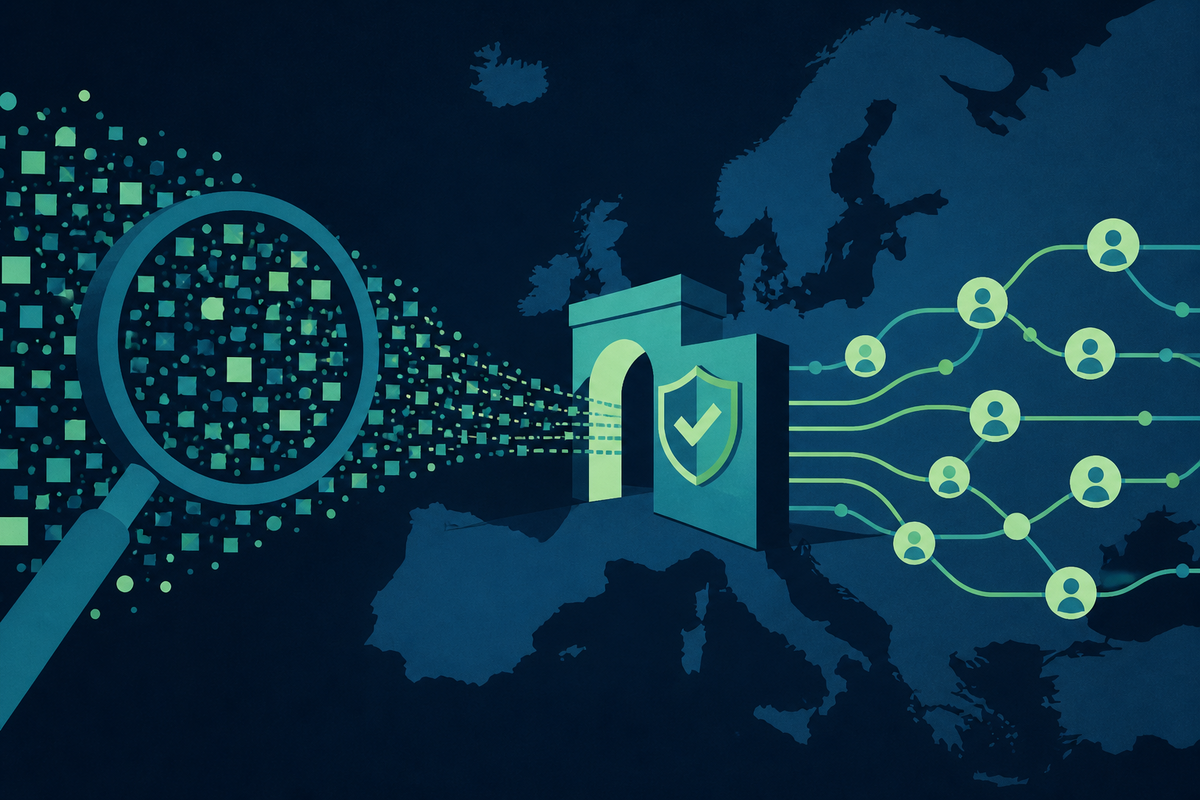
In plain English, Cognism is ZoomInfo rebuilt around Europe’s privacy rules. Its edge is not that ZoomInfo ignores GDPR, but that Cognism makes local compliance, phone verification and European coverage the product.
The Real Reason Cognism Beats ZoomInfo in Europe
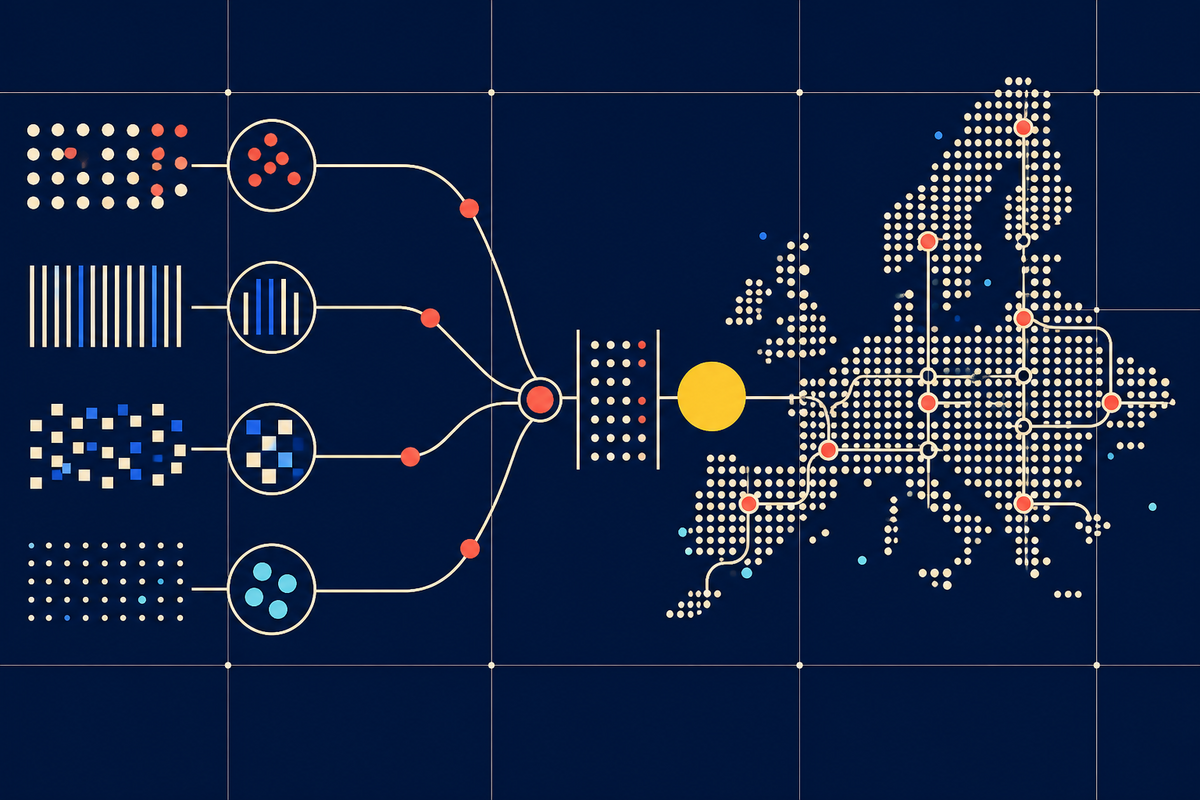
The four sales-data tools solve different problems. For teams prospecting across Europe, Cognism’s deeper compliance workflow - not a longer feature list - is the buying argument that matters.
Userlike
A student side project in Cologne became the live chat behind Toyota, Nivea and Hermes - and then bet its future on AI that answers before a human has to.

SmartSurvey
The British survey company that decided keeping your data on home soil was a feature, not a footnote - and built a 600,000-user business on it.

Four Survey Tools That Refuse to Be SurveyMonkey
Formstack, SmartSurvey, Zonka Feedback and Checkbox each picked a lane the survey giants ignored - workflows, data sovereignty, feedback intelligence and self-hosting. Here is how the quiet corners of the feedback market actually work.
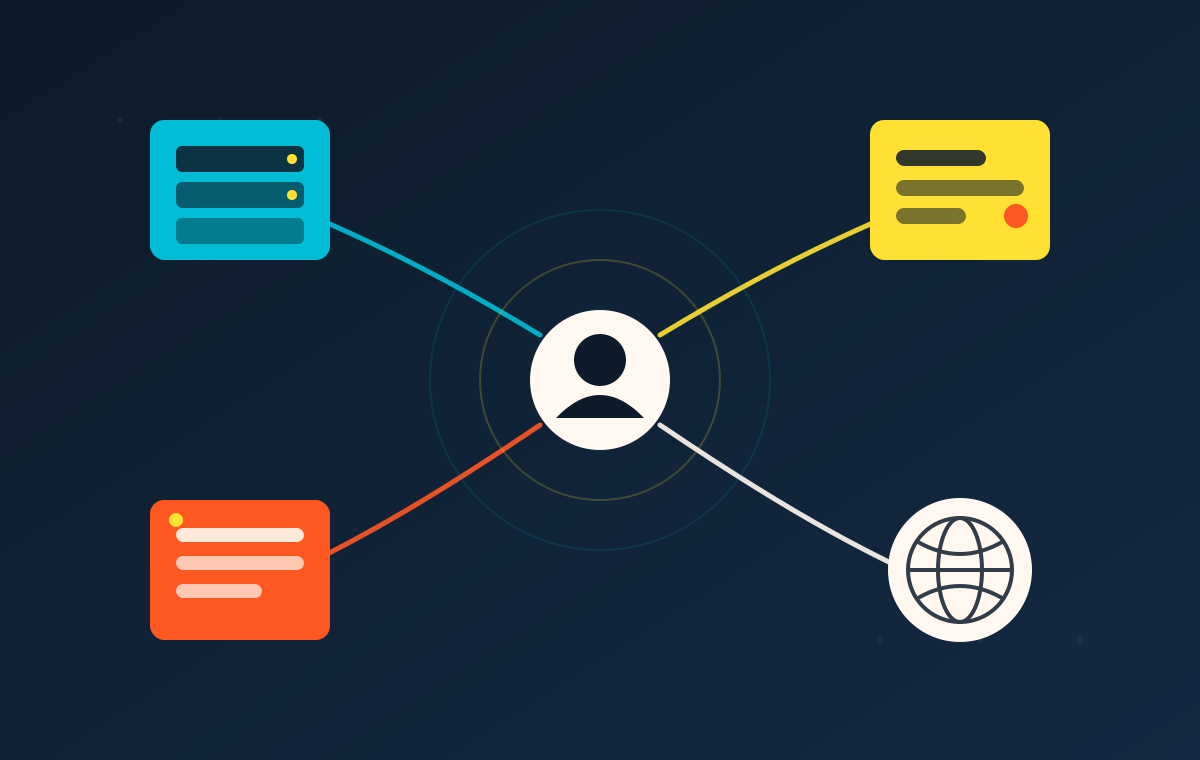
Live Chat Software Can't Agree Where Your Chats Should Live
Userlike, LiveHelpNow, Social Intents and Rocket.Chat all put a chat box on your website. The interesting part is what happens to the conversation after a visitor hits send.

Userlike vs HelpCrunch: Two Bets on the Live Chat Box
One built its whole pitch on German servers and GDPR. The other bet on an all-in-one inbox with honest per-agent pricing. Here is how the two live chat platforms actually differ.
Odigo
Centralize all your channels, automate your journeys with AI and offer your customers an omnichannel, memorable experience.
Netigate
Unify the voice of your customers and employees in one AI-powered platform.
LimeSurvey
The simple, quick and anonymous online survey tool that's bursting with juicy insights.
Doxee
Built for humans. Powered by AI. The Modena software house turning billions of boring bills, invoices and statements into communications customers actually open.
boost.ai
It's not about what AI can do. It's about what you can rely on AI to do.

BlockSurvey
Most survey companies can read your answers. BlockSurvey built one that can't - end-to-end encrypted forms with an AI agent on top, run by two ex-fintech engineers who won a hackathon and never went back.
The Compliance Tax Nobody Reads on the Invoice
Regulated industries buy contact center software differently. A fintech or lender is not comparing feature checklists, it is asking where customer data lives and who is liable when something goes wrong. This story examines the 'compliance tax' that financial services companies pay for cloud contact centers, and how UJET's CRM-first architecture answers it differently than Talkdesk or Five9 by keeping customer data and PII inside the system that already owns it. Capital on Tap, a UK-and-US business credit provider serving 200,000 small businesses, is the published example: after cycling through three CX vendors in two years, it lifted SLA attainment to 92% on UJET.
Compliant LLM
Compliant LLM (formerly FiddleCube, YC W23) is an AI security and compliance toolkit that helps infosec, compliance, and GenAI teams keep their AI agents, prompts, and MCP servers secure. It red-teams AI systems against attacks like prompt injection and jailbreaking, checks them against frameworks such as NIST, ISO, OWASP, GDPR, and HIPAA, and monitors employee use of third-party GenAI tools to catch data leaks and PII exposure across both approved and shadow AI workflows.
Vetnio
Vetnio is a Swedish AI copilot that automates the paperwork of veterinary medicine. It listens to consultations between vets and pet owners, writes structured clinical notes, drafts client communications, and offers science-backed diagnostic prompts - giving clinicians back roughly two hours a day. Founded in 2024 by longtime friends Arman Karegar and Max Henry Xie, it is one of the few European veterinary companies backed by Y Combinator (W25).
Briya
Briya is a healthcare data company that connects hospitals, health systems, and researchers to life sciences organizations through a secure, privacy-preserving data exchange network. Its blockchain-secured infrastructure standardizes electronic health records and keeps data at its source, while its flagship product, Briya AIRE, is a clinical-grade conversational AI research platform that lets scientists query and analyze real-world medical data in plain language. Founded in 2020 by David Lazerson and Guy Tish, Briya spans a global network of more than 120 million patient records and aims to accelerate medical and epidemiological research without the friction of traditional data integration.

Cassidy
Cassidy is a New York-based enterprise AI platform that lets non-technical teams build AI agents and multi-step automations powered by their own internal company data. By connecting large language models to a business's knowledge base, tools, and real-time data, Cassidy automates complex, context-heavy workflows - customer support triage, RFP responses, CRM updates from sales calls, lead qualification and internal knowledge sharing - without writing code. Founded in 2023 by Justin Fineberg and Ian Woodfill, the company raised a $10M Series A in 2025 and is used by more than 20,000 teams.
Castor
Castor is a health-technology company that builds a cloud-based eClinical platform for running clinical trials - from electronic data capture (EDC) and eConsent to eCOA/ePRO and real-world evidence. Founded in 2012 in Amsterdam by physician-researcher Dr. Derk Arts, Castor set out to replace clunky, expensive trial software with a self-service, researcher-friendly system. Today it supports more than 15,000 studies across 90+ countries and is used by leading CROs and biopharma companies, while pushing decentralized trials and practical AI (Castor Catalyst, built with Google Cloud) into mainstream research.
Deskpro
Deskpro is a helpdesk and customer support platform that unifies email, live chat, voice, social media, SMS and WhatsApp into a single ticketing system. Founded in 2001 and bootstrapped for over two decades, it stands out by offering both cloud and on-premise deployment, making it a fit for regulated and privacy-sensitive organizations that need to keep support data in their own environments. In June 2024 it raised a $25M Series A from Elsewhere Partners, appointed Brad Murdoch as CEO, and opened a global headquarters in Austin, Texas.

Integral Privacy Technologies
Integral is a privacy engineering company that turns sensitive real-world data - starting with HIPAA-regulated healthcare records - into compliant, AI-ready datasets. Founded in 2022 by Shubh Sinha and John Kuhn, it pairs automated de-identification and continuous risk assessment with embedded statisticians and privacy engineers (its Forward Deployed Privacy Services) so enterprises and AI labs can use regulated data quickly without violating privacy law. The company positions itself as an independent privacy layer for the real-world data economy and has raised roughly $24.9M to date, including an $18M Series A closed in July 2026.

Kombo
Kombo is a unified API that lets B2B software companies connect to hundreds of HR, payroll, recruiting (ATS), and learning systems through a single integration. Instead of building and maintaining separate connectors to systems like Personio, BambooHR, Workday, Greenhouse, and Paychex, customers integrate Kombo once and gain access to a normalized data model and authentication layer across 300+ HR and ATS tools. Founded in 2022 and based in Berlin and New York, Kombo positions itself as the infrastructure layer for people data - from hire to retire.

Legora
Legora is a Stockholm-founded collaborative AI platform built for legal work. It helps lawyers research, review, and draft across complex matters, running inside familiar tools like Microsoft Word and Outlook. Formerly known as Leya, the company (founded 2023) serves tens of thousands of legal professionals at 1,000+ law firms and in-house teams across more than 50 markets, and crossed $100M in annual recurring revenue before raising a $600M Series D at a $5.6B valuation in 2026.
Thoropass
Thoropass is a New York-based compliance and audit company that pairs compliance-automation software with an in-house, tech-enabled CPA and security audit firm. Founded in 2019 as Laika and rebranded in 2023, it lets companies get and stay certified across 30+ frameworks - SOC 2, ISO 27001, HIPAA, PCI DSS, HITRUST, GDPR, and ISO 42001 for AI - through a single platform where the auditor is assigned on day one. By reusing evidence across frameworks and layering AI features like First Pass AI and Smart Sort AI on top of continuous control monitoring, Thoropass helps growing businesses complete audits meaningfully faster than the traditional consultant-plus-auditor route.
Chorology, Inc.
Chorology, Inc. is a San Jose-based data security and compliance startup that uses a Deep-AI 'knowledge encoding' engine - rather than conventional machine learning - to automatically discover, classify, and map an enterprise's sensitive data across structured and unstructured repositories. Its flagship platform, CAPE (Compliance and Posture Enforcer), aims to give organizations a continuous, mandate-agnostic view of where regulated data lives so they can enforce data security posture and meet frameworks like GDPR, CCPA, and HIPAA. Founded by serial cybersecurity entrepreneur Tarique Mustafa, the company emerged from stealth in July 2024 with $9M in funding and a roster of early Fortune 500 users.
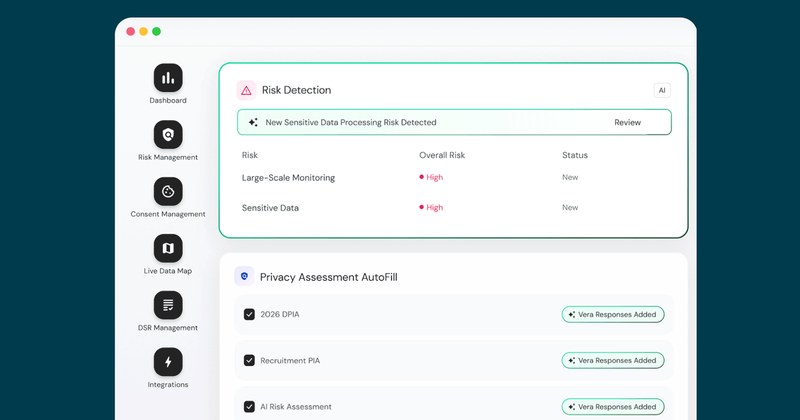
DataGrail
DataGrail is a San Francisco-based data privacy company that helps modern brands automate compliance with regulations like GDPR, CCPA, and CPRA. Its Agentic Data Privacy Platform - powered by an AI privacy agent named Vera and backed by more than 2,500 pre-built integrations - handles the unglamorous plumbing of privacy: mapping where personal data lives, fulfilling data subject requests, managing consent, and running privacy and AI risk assessments. Founded in 2018 by three data and go-to-market veterans, it counts Salesforce, Databricks, Instacart, and Major League Soccer among its customers.

Lightbeam
Lightbeam is a San Jose-based data security and privacy company that converges DSPM, privacy operations, and AI governance into one identity-centric platform. Founded in 2020 by ex-Nutanix engineers, it uses AI to discover, classify, and map sensitive data across cloud, SaaS, and on-prem environments, tying each data fragment back to the human it belongs to. Customers in banking, healthcare, insurance, and tech use Lightbeam to automate compliance with GDPR, CCPA, HIPAA, and PCI while cutting data risk and controlling AI exposure through tools like Microsoft Copilot, ChatGPT Enterprise, and Google Gemini.

Osano
Osano is an Austin-based data privacy platform that helps companies comply with GDPR, CCPA, and 95+ global privacy laws through consent management, cookie banners, subject rights automation, data mapping, vendor risk monitoring, and privacy assessments. Founded in 2018, it is the first data privacy platform certified as a B Corporation and backs its software with an industry-only 'No Fines, No Penalties' guarantee. Osano processes over a billion consents a month for thousands of companies.