transcription
(17)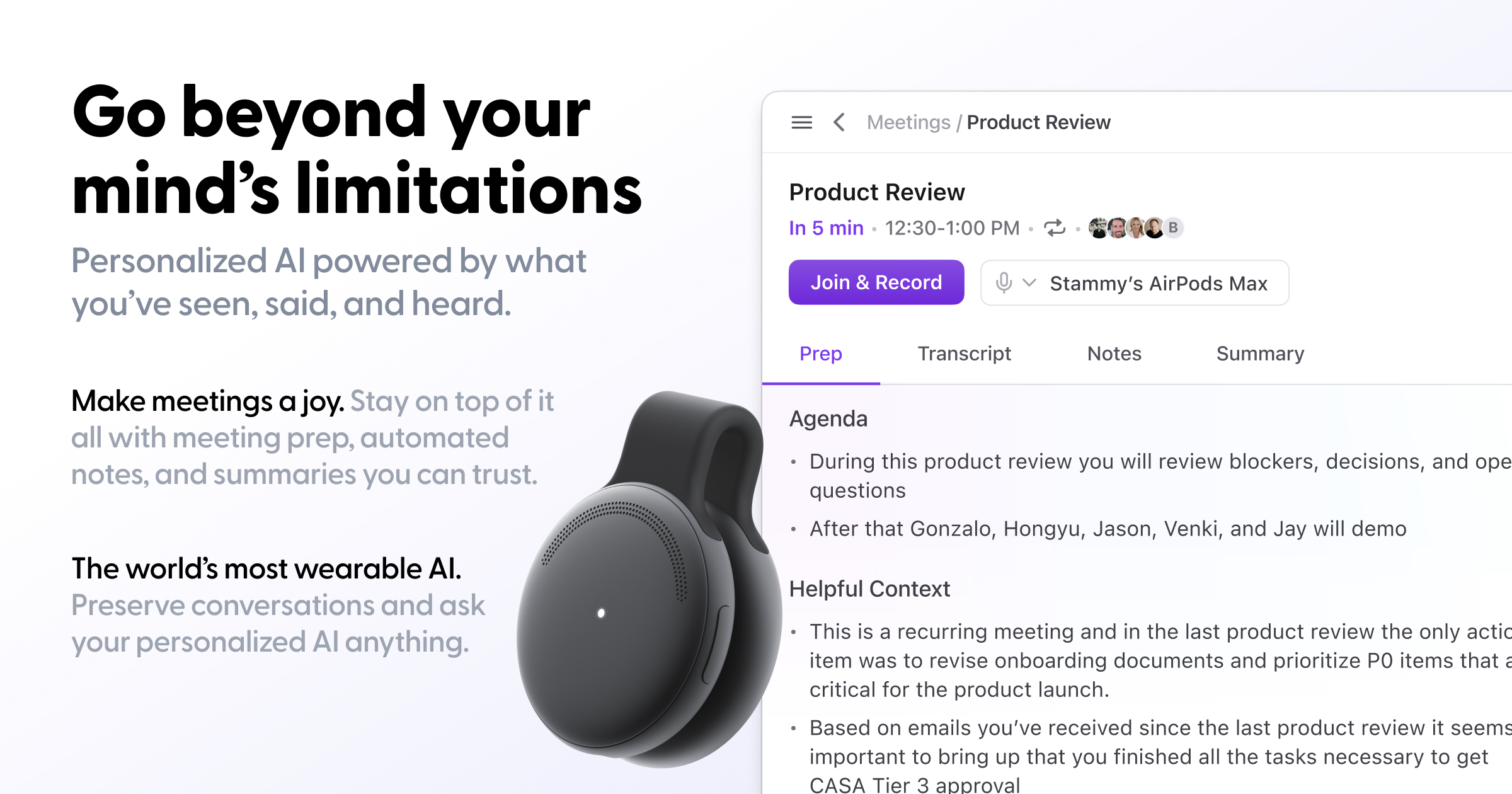
Limitless Pendant Remembered Everything - Until the Future Moved On
This clever little meeting memory made forgetting optional and consent unavoidable. Then Meta bought the company, sales stopped, and a product built to preserve the past acquired a very short future.
Granola Wants Your Meetings to Earn Their Keep
The bot-free AI notepad turns hurried bullets into useful memory. For meeting-heavy people, it may be the first recorder that feels more like stationery than surveillance theatre.
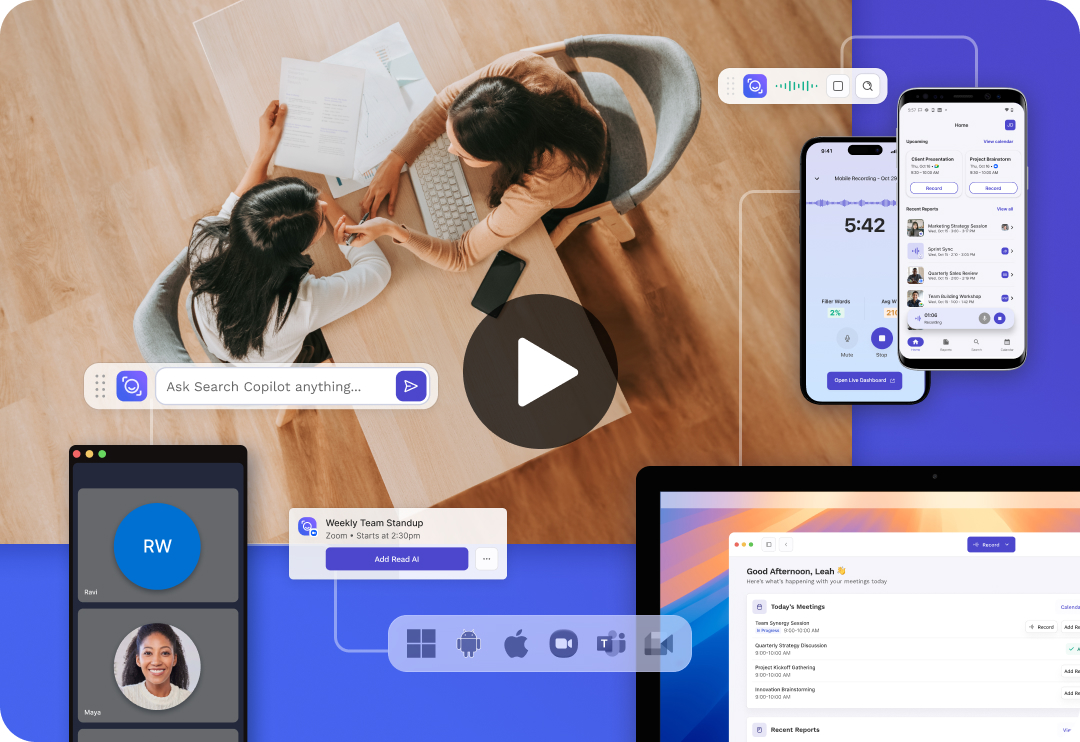
Your Meeting Has a Memory Now
Read AI remembers the call, finds the decision and drafts the follow-up. The useful part starts after the transcript - provided everyone in the room knows the robot is listening.
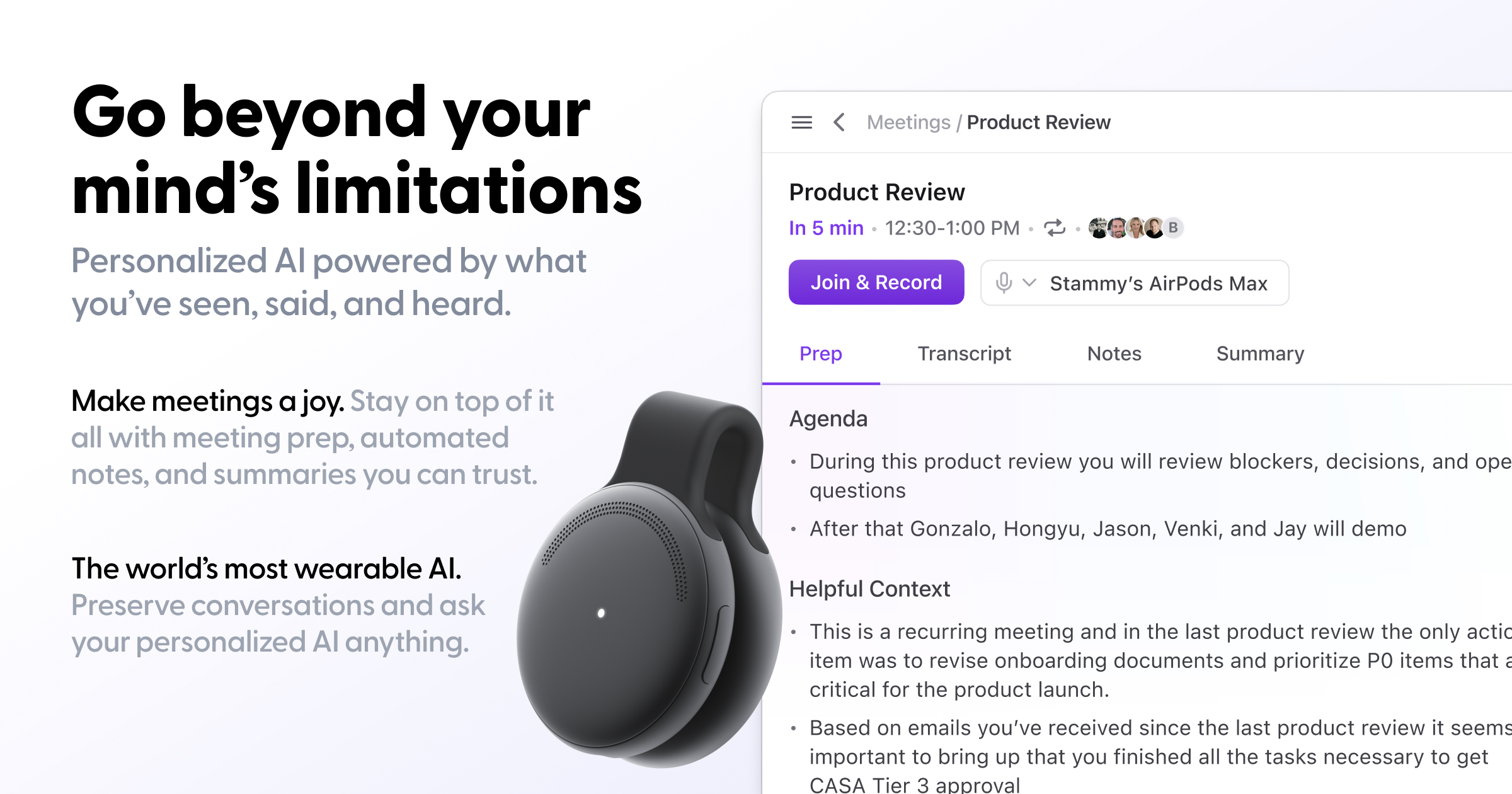
Limitless Remembered Everything. Then Meta Ended the Experiment.
A tiny microphone made a persuasive case for outsourcing your memory. Then an acquisition turned the most important buying question from ‘Does it work?’ into ‘How long will it work?’
Condens
Bring all your customer knowledge together, analyze it fast, and surface evidence-backed insights your team and AI agents can both act on.
Avoma
It began as a fix for the world's most quietly expensive habit: the meeting nobody remembers. Nine years later Avoma runs the whole meeting lifecycle - booking, notes, coaching, forecast - for a thousand-plus companies, on a price list you can actually read.

Cactus
Cactus is a cross-platform, open-source AI inference engine built in C/C++ to run language, speech, and vision models directly on smartphones, laptops, wearables, and other low-power edge hardware. It gives mobile developers Flutter, React Native, Kotlin, and Swift SDKs to deploy quantized models on-device - cutting latency to under 100ms, keeping data private, working offline, and avoiding cloud API bills - with automatic cloud fallback for heavier tasks. A YC Summer 2025 company, Cactus already powers production apps serving 500,000+ weekly inference tasks.

Pocket is a San Francisco hardware-and-software startup (YC W26) building a screen-free AI voice recorder that captures real-world conversations. A credit-card-shaped puck with three microphones snaps to the back of a phone, records in-person talks and phone calls offline, and its app returns transcripts, summaries, mind maps and extracted to-dos across 120+ languages. The company reports over 130,000 units sold and raised $11M led by Accel in June 2026.

AssemblyAI
AssemblyAI is a San Francisco speech-AI company that builds and serves models turning audio and video into accurate text, plus higher-level 'audio intelligence' like summaries, sentiment, speaker labels, and PII redaction. Founded in 2017 by Dylan Fox, it sells a developer-first API used to add transcription, real-time streaming, and voice-agent capabilities to software. The company has raised more than $113M across seed to Series C and reports processing over a million hours of audio a day for customers ranging from startups to large enterprises.
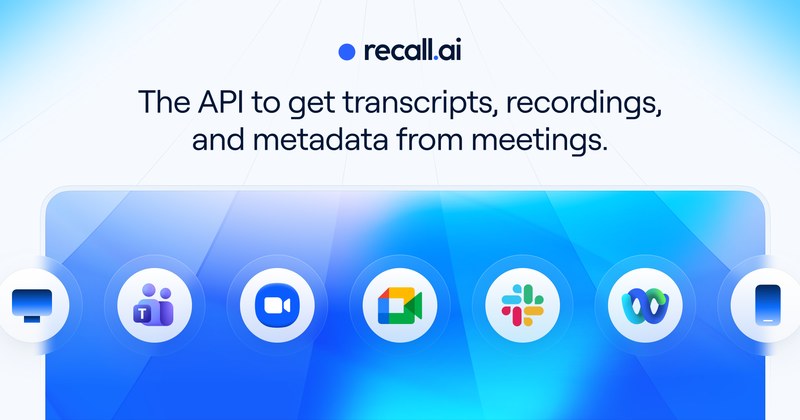
Recall.ai
Recall.ai is a San Francisco developer-infrastructure company that sells a universal API for capturing meetings. Instead of building brittle bots for Zoom, Google Meet, Microsoft Teams, Webex, Slack Huddles and in-person calls, developers make a single API call and get back recordings, transcripts, and rich participant metadata. Founded by University of Waterloo dropouts David Gu and Amanda, the company pivoted from a consumer meeting app into the plumbing beneath a wave of AI notetakers and sales tools, and now powers thousands of companies. Recall.ai is Y Combinator-backed and raised a $38M Series B at a reported ~$250M valuation in September 2025.

Willow
Willow is a San Francisco startup building voice-first interfaces that turn natural speech into polished text across every app on Mac, Windows, and iPhone. Founded in 2024 by Stanford dropouts Allan Guo and Lawrence Liu and backed by Y Combinator, Willow promises roughly 3x the accuracy of built-in dictation with ~200ms response time, automatic filler-word removal, style-matching, and an AI mode that reshapes rough spoken notes into finished messages. The company raised $4.2M in seed funding and has grown roughly 50% month over month, with early enterprise users including Uber, Heidi Health, and Zego.

Jason Chicola
Jason Chicola is the founder and CEO of Rev, the Austin-based speech-to-text company that pairs 50,000 freelance transcriptionists with best-in-class AI to turn spoken words into searchable text. An MIT-trained engineer who became the third employee at oDesk (now Upwork), he built Rev on a simple bet: people will pay for curated quality, and people everywhere want to work from home. Today Rev serves over 100,000 clients including 60% of the Fortune 500, and Chicola is steering the company toward AI tools for the legal system, where accuracy is not optional.
Rev
Rev is an American speech-to-text company that pairs the world's most accurate AI speech recognition with a global network of human transcriptionists to deliver transcription, captions, and subtitles at up to 99% accuracy. Founded in 2010 by six MIT-connected entrepreneurs, Rev serves over 100,000 customers and more than a million users across legal, media, education, and enterprise, and has increasingly focused its AI on the legal market with tools for depositions, evidence, and case prep.

Deepgram
Deepgram builds foundational voice AI - speech-to-text, text-to-speech, and full voice-agent APIs - used by more than 1,300 enterprises including NASA, Spotify, Twilio and Citibank to give machines the ability to listen, understand, and respond in real time.

Marvin
Marvin (legally Equafin Inc., operating as HeyMarvin) is an AI-native customer insights platform that helps product, design, and research teams capture interviews, analyze qualitative data, and turn scattered customer feedback into a searchable, shareable repository.

Otter.ai
Otter.ai builds AI meeting assistants that join your Zoom, Teams, and Google Meet calls, transcribe them in real time, summarize the noise, and pull out action items - so people stop scribbling and start paying attention.
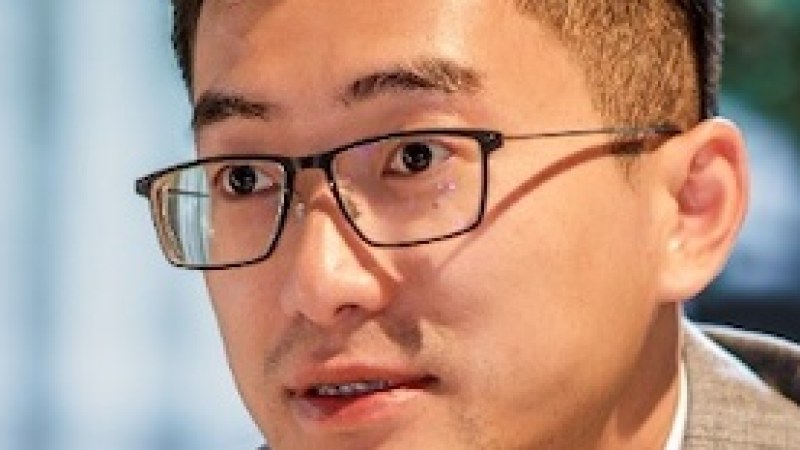
Nathan Xu
Nathan Xu (also known as Xu Gao) is the co-founder and CEO of Plaud AI, the company behind the world's best-selling AI voice recorder and notetaker. A serial entrepreneur who failed three times before hitting gold, Xu bootstrapped Plaud from a Kickstarter campaign in 2023 to $180M+ ARR by 2025 - without a single dollar of venture capital. His credit-card-sized Plaud Note and wearable NotePin devices, which transcribe, summarize, and analyze conversations in 112 languages, have shipped to over 1.5 million users in 170+ countries. Based in San Francisco with roots in Wuhan, China, Xu represents a new breed of transpacific founder betting that the next great hardware platform fits in your pocket - or around your neck.