ai-native
(79)
Build Up Labs learned to ask: who will pay?
The Lisbon venture studio sells its own software businesses and sells guidance to other founders. Its most useful lessons concern customers, small experiments, and knowing when an idea has had enough chances.
Realm Security and the $255,000 case for less noise
A payroll provider cut the firewall logs reaching its security system by 83%. Realm Security’s bigger wager is that teams can spend less on data without leaving their detections hungry.

Kai-Fu Lee Has Spent Four Decades Teaching Machines to Listen. Now He Wants Companies to Listen Back.
From a speech recognition lab in Pittsburgh to the boardrooms of Beijing, Kai-Fu Lee has followed artificial intelligence through several lives. At 01.AI, his latest argument is that the hard part begins when the model is ready.
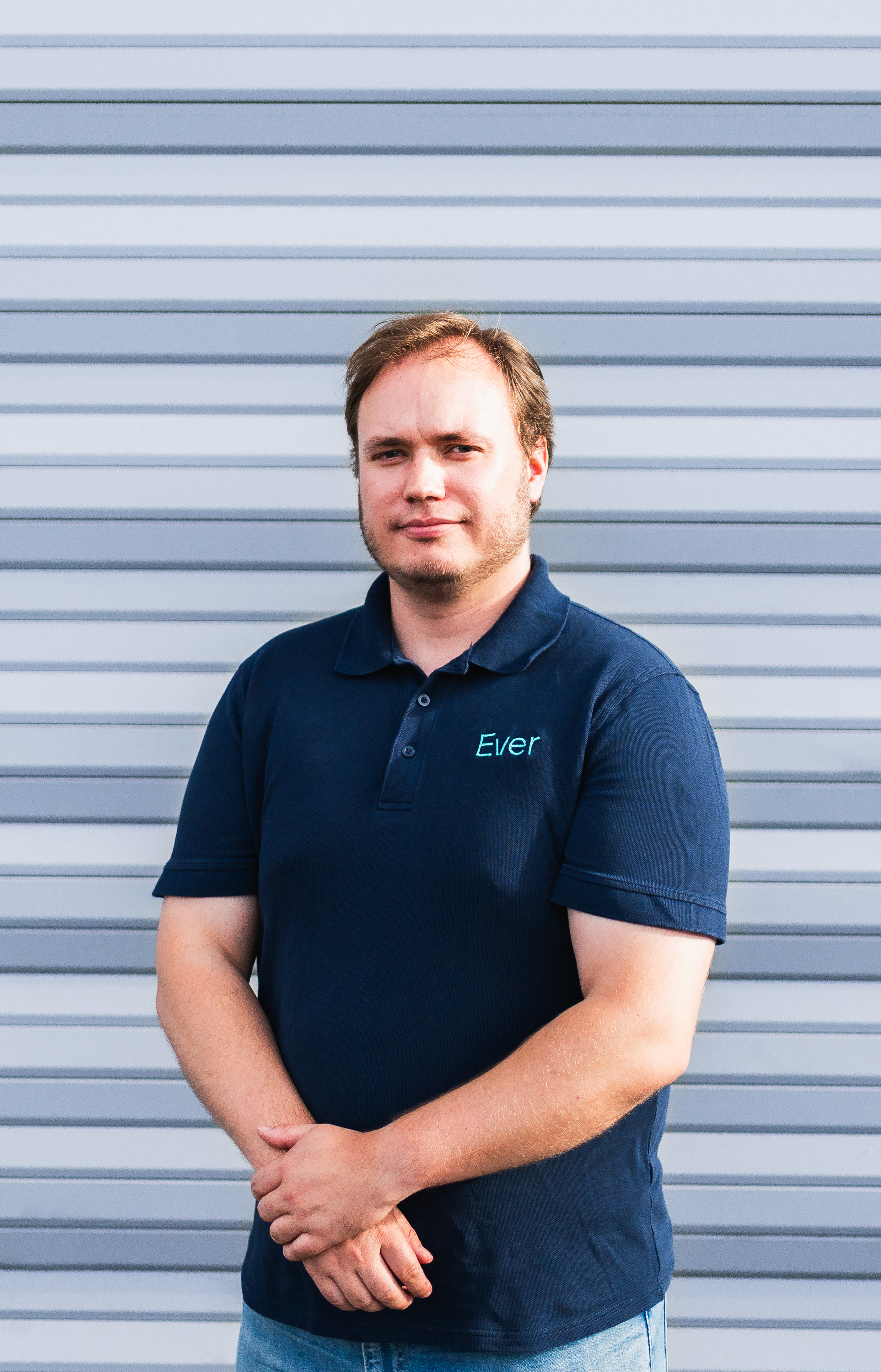
Lasse-Mathias Nyberg Is Teaching AI to Do the Paperwork of Buying a Car
The Stanford MBA and former BCG consultant is betting that the future of used-car retail will be won in the unglamorous space between a customer’s click and a clean title.

Datatruck Wants to Be the Operating System Trucking Runs On
A Chicago-founded startup is betting that trucking's back office - the spreadsheets, the phone tag, the paperwork - is a software problem AI can finally solve. About 500 carriers are already running on it.

Nobody Studios Wants to Make Startups Feel Less Like Lightning Strikes - and More Like a Production Line
The California venture studio is trying to turn company creation into a repeatable discipline. Its wager is that AI, a distributed crowd and ruthless early validation can make the startup lottery a little less random.
The Firm That Writes the First Check Before the Company Has a Name
Flybridge has spent more than two decades writing the earliest checks in tech. Now it is betting the whole firm on founders building the AI-powered version of everything.
Flex
Flex is an AI-native private banking platform for high-net-worth, middle-market business owners. It bundles credit, business and personal banking, payments, AP automation, expense management, and ERP-style tooling into a single super app aimed at owner-operators of $3M-$100M revenue companies.

Neutrinos
The Singapore startup betting that insurers do not need to replace their aging core systems - they need software smart enough to work around them.
SentiSum
AI-native CX intelligence that tells you what's breaking, what it's costing, and what to fix.
Sprinklr
Sprinklr spent fifteen years arguing that the software companies use to talk to customers is broken into too many pieces. Now it is betting the whole business on AI stitching those pieces back together.

Arctic Health
Arctic Health is a New York healthcare startup (YC P26) that automates provider credentialing and payer contracting. It pairs credentialing experts with an AI platform to get healthcare providers in-network across all 50 states and 300+ insurance networks, handling documentation, CAQH profiles, payer submissions, rate negotiation, and ongoing compliance so clinics and health systems can get paid faster.

Aurorin CAD
Aurorin CAD is building professional mechanical design software from scratch, replacing the 1980s-era geometry kernels inside tools like SolidWorks with a purpose-built, AI-native B-Rep kernel. The result: parts that take an experienced SolidWorks user 20 minutes to model can be created in seconds, either through a fast modern interface or by describing them in natural language to an integrated AI agent. Founded in the Y Combinator Winter 2026 batch by Michael Baron, a former 3x SpaceX intern and Apple GPU driver engineer, Aurorin positions itself as 'Claude Code for mechanical engineers.'

AYC Fund
AYC Fund is an AI-native crypto hedge fund out of Y Combinator's W22 batch, founded in 2021 by MJ Kim in Seoul. It builds systematic, rules-based trading engines for digital-asset markets and now runs a private, invite-only program for qualified clients - high-net-worth individuals, family offices, and advisors - where capital stays in the client's own exchange account and the fund trades through read-and-trade API access rather than taking custody.
Donkey
Donkey is an AI-native trading company that buys straight from Chinese factories and sells delivered to US importers at one USD price to their dock, duty paid. By reading public US customs records, Donkey identifies the factory that actually makes a part, quotes it without the traditional 15-30% trading-company markup, runs its own inspections on the factory floor before the factory gets paid, and offers credit-insured net-45 terms. A YC Summer 2026 company based in San Francisco and China.

Flott HQ
Flott HQ is an AI-native operating system for transport and logistics fleets. It pulls a fleet's scattered operational data (planning, GPS, fuel, mileage) and financial data (revenue, orders, invoices) into one control center, then lets AI agents handle the repetitive busywork - dispatch, billing, payment tracking - so operators can see their whole business in one place and run leaner. Founded in 2025 by high school friends Sylvanus Mahe and Kanvaly Fadiga, the company went through Y Combinator's Spring 2025 (X25) batch.

Hedge
Hedge is an AI-native specialty insurance wholesaler that sits between retail brokers and specialty carriers, using AI agents to place hard-to-insure businesses faster and cheaper. Founded in 2026 by Luke Button and Luke Rosa and backed by Y Combinator (P26 batch), Hedge automates the manual quoting workflow - reading submissions, selecting markets, completing carrier applications, negotiating quotes, and issuing documents - so brokers get coverage in minutes instead of days.

HeroUI
HeroUI (formerly NextUI) is an open-source React and React Native component library that pairs the accessibility of React Aria with the utility-first styling of Tailwind CSS. Founded by Junior Garcia and backed by Y Combinator's Summer 2024 batch, it ships 75+ web components plus a native library, and positions itself as a UI framework built for both human developers and AI coding agents.

Insurf
Insurf is an AI-native decision and data layer for U.S. health insurance. Its first product, Inveto, turns denied healthcare claims into source-cited, physician-attested appeals so medical practices recover revenue they would otherwise write off. Each resolved claim feeds a proprietary coverage-decision graph of real payer behavior, which powers a second product, Surely, that prices the true cost of a health plan for employers and brokers. Founded in 2026 by Chang Lu and Bryan Chung, the company is part of Y Combinator's Summer 2026 batch and is based in San Francisco.
Letterbook
Letterbook is an AI-native customer support platform built for startups and lean teams. It connects to a company's inbox, database, and Stripe, then uses AI to triage tickets, draft resolutions, and build a knowledge base - all reviewed by a human before sending. Founded in 2023 by Dawson Chen and Ethan Hou and backed by Y Combinator (S23), it positions itself as the modern alternative to Zendesk, Freshdesk, Intercom, and Front.

Third Chair
Third Chair is an AI-native IP enforcement and licensing platform that helps rightsholders find who is using their content, trademarks, and likeness without permission and turn that unauthorized use into revenue. Backed by Y Combinator (X25) and FundersClub with $2.3M raised, it pairs AI agents that monitor, investigate, and draft demand letters with an on-demand network of lawyers. Customers - including Universal Music Group and much of the recorded-music industry - used the product to generate more than $1M in revenue in the last six months of 2025.

Wealor
Wealor is a San Francisco startup building an AI-native platform for wealth managers. It creates a single source of truth across wealth management, tax, and legal, then runs specialized AI agents that automate back-office work directly inside firms' existing legacy systems using APIs and browser automation. Backed by Y Combinator (Spring 2026 / P26), it targets an industry that oversees roughly $90 trillion on infrastructure built decades ago, where advisors report spending most of their day on administrative work rather than with clients.

Caruso
Caruso is an AI-native fund administration and registry platform for private markets, built to replace the spreadsheets, manual workflows and fragmented tools that fund managers have long relied on. Founded in 2023 and headquartered in Sydney with offices in Dallas and Auckland, Caruso unifies investor onboarding, capital raising, fund accounting, registry operations and investor reporting into a single system, offered as software, outsourced services, or a hybrid of both. More than 80 fund managers running 900+ funds and $55B+ in assets under administration use the platform, including enterprise clients such as Centuria Capital Group.

Cubby
Cubby is an AI-native software platform built specifically for the self-storage industry. Founded in 2022 by Matt Engfer and Adam Fleming and headquartered in New York City, it replaces the sector's aging legacy systems with a single operating platform that unifies facility management, online rentals, revenue management, call handling and autonomous Voice AI. Cubby now serves more than 400 operators managing roughly 450,000 units across North America, and in January 2026 raised a $63 million Series A led by Growth Equity at Goldman Sachs Alternatives.
Daisy
Daisy is an AI-native property management company for condos, co-ops and HOAs, founded in 2020 in New York City. It replaces the manual workflows and patchwork of tools legacy managers rely on with a single platform that unifies building finances, maintenance requests, compliance, board decisions and resident communication. Pairing proactive human managers with automation and AI agents, Daisy manages more than 4,000 units across nearly 200 buildings in NYC and has begun expanding into New Jersey, with a stated goal of national and global reach by the end of the decade.

DiligenceVault
DiligenceVault is a New York-based fintech company that runs a cloud, AI-native platform for investment due diligence. Founded in 2014 by former Citi risk head Monel Amin, it replaces the manual world of PDFs, spreadsheets and email with a connected system where asset allocators and asset managers exchange DDQs, RFPs, operational due diligence reviews, ESG data and Form ADV monitoring. The platform connects a network of more than 20,000 managers and tens of thousands of users across 150-plus countries, and is backed by Goldman Sachs Growth Equity.

Findigs
Findigs is a New York-based proptech company that automates residential tenant screening and leasing decisions. Its AI-native platform verifies applicant identity, income, and documents, detects fraud, and returns instant, data-grounded rent-or-decline decisions with contractual fraud guarantees - helping single-family and multifamily operators fill units faster while cutting evictions and delinquency. Founded in 2018 by Colby College classmates Steve Carroll and Keith Gilvar, Findigs manages screening across 400,000+ residential units and has raised roughly $80 million to date, most recently a $32M Series C in June 2026.

Slice | Global Equity
Slice is an AI-native platform for managing employee equity across borders. It unifies cap tables, grants, exercises and reporting while automatically applying each country's tax rules and compliance requirements, helping finance, legal, HR and payroll teams issue equity to distributed teams without triggering local penalties. Founded in 2022 and backed by Insight Partners, Slice raised a $25M Series A in early 2026 and counts fast-growing tech companies such as Wiz, Aidoc, Silverfort and Wayve among its customers.

Visitt
Visitt is an AI-native commercial real estate property operations platform that consolidates work orders, preventive maintenance, inspections, tenant communications, compliance and finance into a single interface. Founded in 2017 and headquartered in New York, it serves owners, operators and onsite teams managing office, industrial, multifamily, retail and data-center portfolios. In January 2026 the company raised a $22M Series B led by Susquehanna Growth Equity, following a year in which it grew square footage under management by more than 900%.
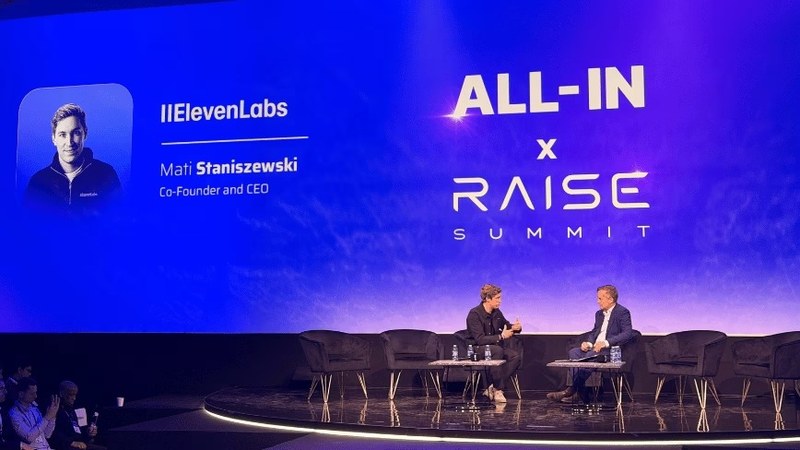
The AI-Native Empire: ElevenLabs and Legora on the All-In Stage
Recorded live at the RAISE Summit inside the Louvre, this two-part All-In Podcast conversation, hosted by Jason Calacanis, features ElevenLabs co-founder and CEO Mati Staniszewski and Legora founder and CEO Max Junestrand. Staniszewski details how ElevenLabs raced from a research project to roughly $600 million in annual revenue in under three years, why the company runs on small engineer-embedded teams with zero product managers, how it protects voices from impersonation while paying creators over $22 million, and how it out-competes frontier labs like OpenAI and Anthropic on voice. Junestrand explains how Legora is compressing the trillion-dollar legal-services market with AI agents, growing 50% quarter-over-quarter for seven straight quarters, deploying 'forward-deployed lawyers,' and disrupting legacy players like LexisNexis and Westlaw.