agritech
(29)
Breedr wants every cow to travel with its résumé
A better steak begins long before the butcher. Breedr connects cattle records, genetics and trading so the people raising an animal can learn what happened after it left their ranch.
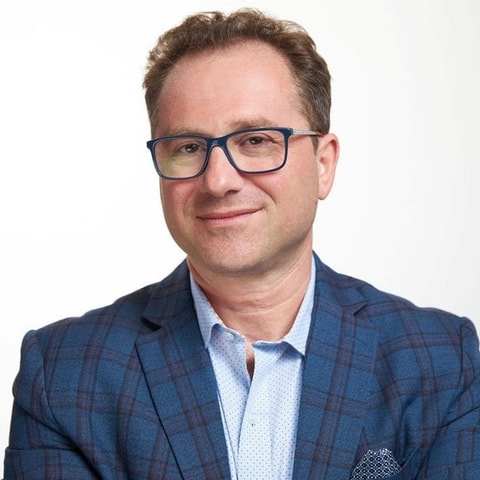
Mike Zelkind Tried to Take the Weather Out of Farming
He built a farm like a factory, betting that software, sensors and stubborn operational discipline could shorten the distance between a seed and a salad. The experiment scaled across America - and ended by exposing the brutal economics beneath agriculture's most controlled environment.
The Israeli Innovation Hub That Starts With Fish Ponds, Olive Pits and Factory Floors
InnoValley is betting that the best place to build the next agricultural technology is beside the farms, factories and fish ponds that will have to use it. Its currency is not hype but access - to grants, operators, researchers and a region willing to test what comes next.
Tech7 Wants the Next Startup Meeting to Happen in the Negev
Born from a shortage of local tech meetups, Tech7 now connects southern Israel’s founders with climate partners, defense customers and international teams. Its proposition is practical: get the right people into the room, then give them something to work on.

AIC-RMP puts the business into grassroots ambition
At this Maharashtra incubator, social impact comes with homework: test the product, find the customer and make the numbers work. Its network has supported more than 100 startups, from agriculture to digital health.

At xHub Addis, the startup homework leaves the classroom
Five young companies. One practical assignment: make agricultural training easier to use. Inside the Ethiopian hub that puts leadership, fieldwork and local problems on the same syllabus.
Wennovation Hub Lost Its Office. The Work Went Home.
The Nigerian venture builder once squeezed into a co-founder’s flat. Today, its work spans farm businesses, founder training and the patient business of making young companies ready for money.
Eatable Adventures wants foodtech to pass the factory test
A clever ingredient is only the beginning. Eatable Adventures combines startup investment, industrial trials and corporate matchmaking to get food innovation out of the lab and into business.
AIC-ISB helps startups face the hardest test: a customer
At the Indian School of Business in Mohali, startup support gets practical: build the prototype, find a pilot, and work out who will pay. The price of that help depends on which door a founder walks through.
AIC-Nalanda gives Odisha’s startup ideas a place to get real
Inside a Bhubaneswar incubator where prototype benches, patent advice and investor introductions share an address - and the next intake of innovators could still be in school.

Tractor Junction put prices online. Then it opened the showroom.
A tractor comparison site from Alwar grew into a business of used machines, physical sales centres and rural credit. Its next move puts the lender inside the company.

The Tiny VC Fund Betting That Health, Food and Climate Are One Problem
Delphi treats a mushroom farm, a digital clinic and a psychedelic drug developer as pieces of the same puzzle: how to finance a healthier relationship between people and the planet.

The Venture Studio Betting That the Best Startups Will Be Hybrids
Walsh Karra Holdings is assembling a portfolio where AI meets farms, finance meets infrastructure, and capital comes with operators attached. Its wager is that the next durable companies will be built between sectors, not inside a single lane.
Agridence
Agridence is a Singapore technology company that helps global agri-commodity supply chains prove where their raw materials come from. Born in 2018 as HeveaConnect, a digital B2B marketplace for physical natural rubber, it rebranded in 2022 and expanded into a modular traceability and compliance platform now spanning rubber, palm oil, cocoa, coffee, coconut and more. Its tools trace commodities from the farm plot to the shipment and file the paperwork regulators such as the EU Deforestation Regulation demand, serving tyre makers, food multinationals, traders and industry associations.

Eratani
Eratani is an Indonesian agritech company that digitizes smallholder rice farming through one integrated platform. It connects previously isolated farmers to affordable financing, high-quality inputs, agronomic advice and buyers for their harvest - covering the full cycle from upstream to downstream. Founded in 2021, Eratani works with more than 34,000 rice farmers across Java and Sulawesi, manages over 13,000 hectares of paddy, and reports lifting yields by roughly 29% and farmer incomes by about 25%.

Glife Technologies Pte Ltd
Glife Technologies is a Singapore-based B2B food and agri-tech company that digitizes the food supply chain across Southeast Asia. It connects farmers and suppliers directly with restaurants, hotels, caterers and retailers through an app-based sourcing marketplace, its own cold-chain distribution network, and an in-house ERP platform called GlifeWare. By cutting out layers of middlemen and aggregating demand, Glife aims to lower costs for buyers, give farmers reliable access to end-buyers, and improve food safety and food security in the region.

Gokomodo
Gokomodo is Indonesia's leading agribusiness supply chain company, blending a digital B2B procurement and e-commerce platform with a physical distribution network to connect large agribusiness corporates, cooperatives, farm stores, and smallholder farmers. Founded in 2019, it sources and delivers agricultural inputs - fertilizers, agrochemicals, equipment and more - at competitive prices, handling roughly 2% of national fertilizer distribution and serving an ecosystem of over 3,000 companies across Indonesia.

JALA
JALA is an Indonesian aquaculture technology company that helps shrimp farmers raise more shrimp with less risk. Founded in 2017 in Yogyakarta, it pairs IoT water-quality sensors with a farm-management app and layers on financing, quality inputs, expert consultation, and a marketplace for harvests. The goal is an end-to-end digital ecosystem that makes shrimp farming more productive, transparent, and sustainable across Indonesia's fragmented supply chain.

Koltiva
Koltiva is a Swiss-Indonesian agritech and climate-tech company that makes agricultural supply chains traceable, inclusive, and climate-smart. Through its KoltiTrace software platform and KoltiSkills field services, it connects smallholder producers to global brands with seed-to-table traceability, farm mapping, deforestation and EUDR compliance, carbon assessments, and digital finance. Founded in 2013 and led by co-founder and CEO Manfred Borer, Koltiva reports work with over 2 million registered producers across dozens of commodities and more than 90 countries.

Vietnam Blockchain Corporation
Vietnam Blockchain Corporation (VBC) is a Ho Chi Minh City-based science and technology company founded in 2016 that builds and deploys practical blockchain solutions for enterprises and government. Its flagship platform, Agridential.vn, brings digital traceability and supply-chain transparency to agriculture, while its Blockchain-as-a-Service offering serves manufacturing, logistics, e-commerce, fintech, and smart-city projects. VBC positions itself as a hub for blockchain expertise in Southeast Asia, with more than 50 projects and 180+ partners and customers.
Satish Vemuri
Satish Vemuri is the CEO of ëko Incorporated, a New York-based venture that stitches urban farms into the real estate that hosts them - matching developers, architects, biologists, and agriculture specialists to grow food for the restaurants and shops downstairs. He studied Finance and Economics at NYU Stern with a math minor, and he tends to reach for spreadsheets and mathematical models before making a call on how the company should move.

HarvestAi
HarvestAi is a Potsdam-based agritech company that builds AI software for high-tech greenhouses. Its web platform combines computer vision, machine learning and plant-physiology modeling to predict crop growth, harvest dates and yields, giving greenhouse operators forecasts that its team says exceed 90% accuracy. Growers use it to negotiate sales earlier, plan labor and logistics, and cut waste and energy costs. Founded in 2020 and led by CEO Dr. Georg Caspary, the company has raised roughly EUR 2.97M in seed funding and won first prize in Food/Agritech at Slush.

James Paterson
James Paterson is the co-founder and CEO of Aerobotics, a Cape Town-based precision agriculture company that turns drone and satellite imagery into AI-powered, tree-by-tree insights for fruit and nut growers. Raised on a family citrus farm and trained as a mechatronics engineer at the University of Cape Town before a masters at MIT, Paterson pairs first-hand farming instinct with aerospace-grade robotics. Since founding Aerobotics with Benji Meltzer in 2014, he has grown it into a global player that now analyzes a large share of the Florida citrus crop and has raised roughly $30 million, insisting the company is 'a farming company, enabled by technology' rather than a tech company that dabbles in farming.
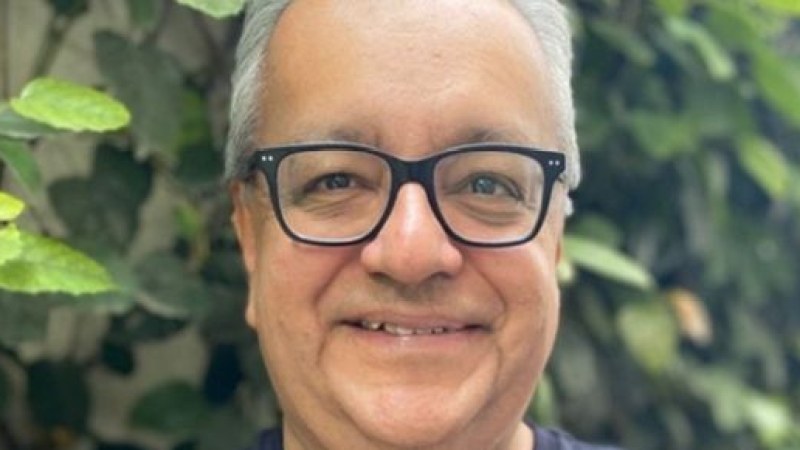
Francisco Mere
Francisco Meré is the founder and CEO of Blooms, a financial-technology company that gives Latin American fruit and vegetable exporters fast working capital, cross-border factoring, and multi-currency payments so their produce can reach North American shelves. A lawyer-turned-banker-turned-builder, he previously co-founded Bankaool, Mexico's first fully digital bank, ran the agricultural development bank FIRA, and chaired Mexico's fintech association. With Blooms he is chasing a multibillion-dollar financing gap that keeps growers cash-poor even as demand for fresh produce booms.

Georg Caspary
Georg Caspary is the founder and CEO of HarvestAi, a Potsdam-based deeptech company that uses machine learning and computer vision to forecast harvest dates and yields in commercial greenhouses growing tomatoes, peppers and strawberries. A former World Bank economist and fundraising lead with degrees from Oxford, the LSE, Sciences-Po Paris and MIT, he spent two decades on environmental and agricultural finance across more than 20 countries before turning his attention to the unglamorous but high-stakes problem of knowing exactly how many tomatoes a greenhouse will produce, and when. HarvestAi has raised over $3 million, won first prize in Food/Agritech at Slush, and runs pilots in Germany, the Netherlands and Canada.
Aerobotics
Aerobotics is a Cape Town-founded agritech company that turns aerial and smartphone imagery into tree-level intelligence for fruit and nut growers. Using drones, satellites and machine-learning algorithms feeding its Aeroview platform, it counts trees, flags missing or sick plants, tracks pests and disease, and forecasts yields with size, color and quality measurements - helping growers across roughly 18 countries protect crop value and make data-driven decisions.

Beewise
Beewise builds the BeeHome - a solar-powered, AI-driven robotic beehive that monitors and treats up to 24 honeybee colonies in real time. Founded in Israel in 2018 and now headquartered in San Ramon, California, the company is using computer vision, machine learning and precision robotics to cut annual colony losses from ~40% to under 10%, protecting the pollinators behind a third of the global food supply.
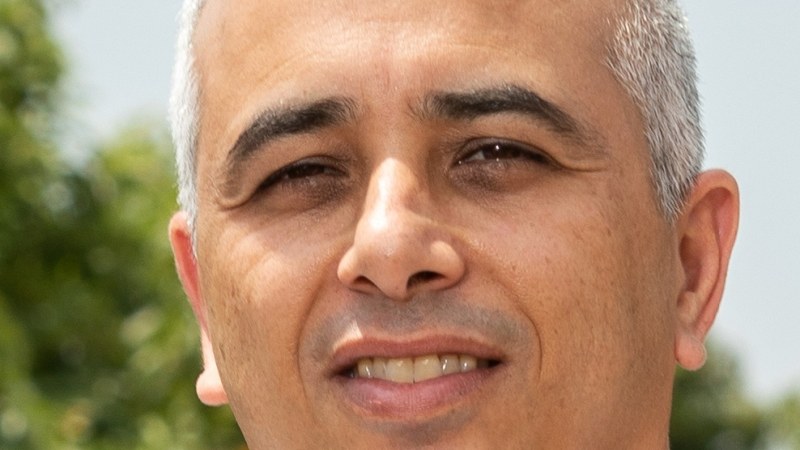
Saar Safra
Saar Safra is the CEO and Co-founder of Beewise, the company behind the BeeHome - the world's first AI-powered autonomous robotic beehive. A serial entrepreneur with three prior exits, Safra pivoted from digital advertising tech to saving the global food supply when he returned to Israel and met a beekeeper who asked a deceptively simple question: could a computer do this better? Since founding Beewise in 2018, the company has deployed 1,240+ robotic beehives pollinating over 300,000 acres annually, raised nearly $170M in total funding including a $50M Series D in June 2025, and earned Safra a spot on Forbes' 2025 Sustainability Leaders list.
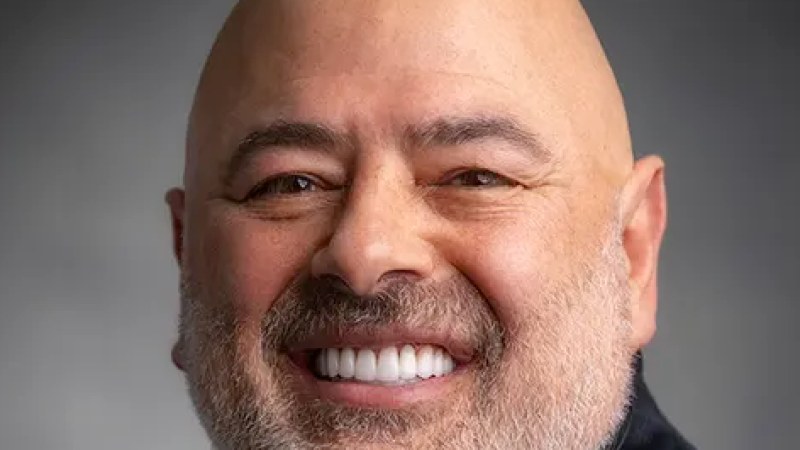
Roger Salameh
Roger Salameh is a General Partner at Swanlaab Venture Factory's AgriFood Fund I, bringing over 30 years of hands-on agribusiness and biotechnology leadership to the venture world. A veteran of Monsanto, Calgene, and Arcadia Biosciences - where he served as interim CEO and then COO - Salameh now deploys capital into early-stage agri-food tech startups from his perch in Napa, California, while simultaneously running DnA Advisory Services, a consultancy helping AgTech and FoodTech companies navigate the path from innovation to commercialization.