BEEWISE
Saar Safra named Forbes 2025 Sustainability Leader •  Beewise closes $50M Series D - total funding ~$170M •  1,240+ robotic beehives deployed globally •  BeeHome 4 eliminates 99% of Varroa mites without chemicals •  300,000+ acres pollinated annually •  62% U.S. colony collapse rate in 2024 •  Beewise: 150+ employees across 4 countries •  "My life's mission is to protect bees and secure global food supplies" - Saar Safra •  Saar Safra named Forbes 2025 Sustainability Leader •  Beewise closes $50M Series D - total funding ~$170M •  1,240+ robotic beehives deployed globally •  BeeHome 4 eliminates 99% of Varroa mites without chemicals •  300,000+ acres pollinated annually •  62% U.S. colony collapse rate in 2024 •  150+ employees across 4 countries •  "My life's mission is to protect bees and secure global food supplies" - Saar Safra

CEO & Co-founder • Beewise • Series D • Climate Tech

Saar
Safra

A software engineer who once scoffed at the idea of a bee startup - and then quietly built one of the most consequential climate tech companies on the planet.

Forbes 2025 Sustainability Leader Climatetech Agritech 6x Founder $170M Raised
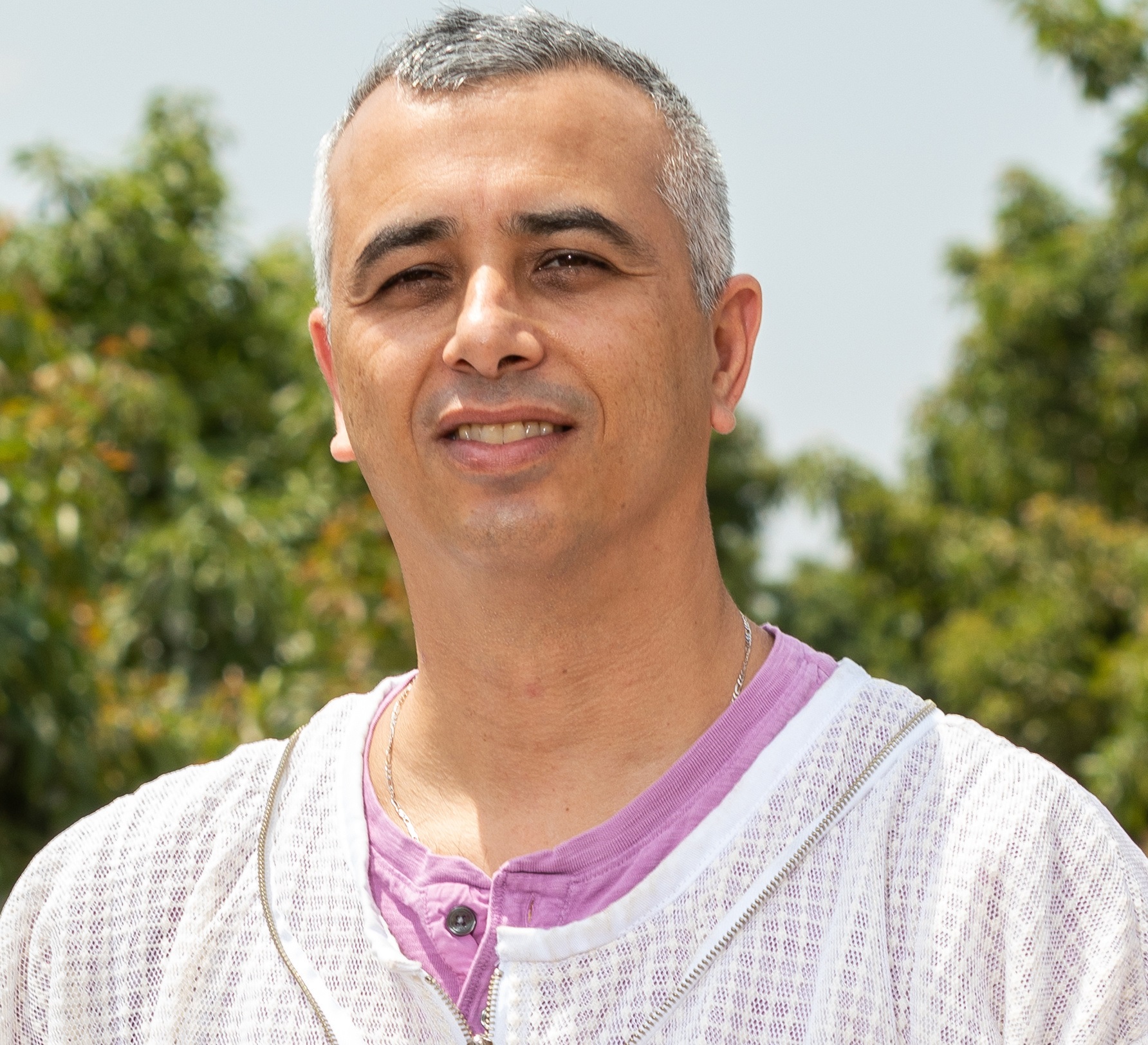
Saar Safra, CEO and Co-founder of Beewise

Saar Safra • CEO & Co-founder, Beewise • San Ramon, California

$170M Total Funding Raised
1,240+ Robotic Beehives Deployed
300K+ Acres Pollinated Annually
6x Companies Founded

He dismissed it.
Then he built it.

When Eliyah Radzyner - a commercial beekeeper turned entrepreneur - first pitched the idea to Saar Safra, the response was blunt: "Who cares about bees? One cannot build a startup around bees."

Safra had seen enough of Silicon Valley's arc to know which swings matter. He was, by any measure, a successful tech executive - CTO at Ad4Ever, then General Manager at aQuantive, then Director at Microsoft after the $6.3 billion acquisition in 2007. He left Redmond in 2008, bootstrapped a property-management software company called ActiveBuilding to $3M in annual revenue without touching venture capital, and watched RealPage acquire it in 2013. Three exits. Five companies. He had a pattern.

What he didn't have was a mission.

In 2018 Safra made a deliberate choice: he moved back to Israel after more than 15 years in the United States, to be near his parents. A few months later, he met Radzyner. He agreed to help pro bono. Within six months he understood that the beehive - unchanged in its fundamental design since the 1850s - was quietly governing the fate of 75% of the crops that feed eight billion people.

"For the last 150 years, the technology that has been used for pollination is a 150-year-old wooden box. And this is what pollinates 75% of the crop for 8 billion people."

Beewise was founded in 2018 with five co-founders: Safra, Radzyner, Boaz Petersil, Hallel Schreier, and Yossi Sorin. Their product - the BeeHome - was not a sensor bolted to an old box. It was an entirely new object: an AI-powered, solar-driven autonomous system capable of housing up to 40 bee colonies, managing climate and humidity, detecting pest intrusions, administering treatments remotely, and sending real-time alerts to growers via smartphone.

The pitch Safra keeps returning to is one of industrial stagnancy: "Crack those areas and you will see a lot of magic." He found his crackable industry in a box of wood and wire in a field in northern Israel.
"Humans can't treat bees in real-time. If there's a problem, you don't know about it until you get to the hives."
- Saar Safra, CEO & Co-founder, Beewise

A crisis hiding in plain sight

When Beewise was founded in 2018, the annual U.S. colony collapse rate was already in the upper 30% range - high enough to alarm entomologists, alarming enough to destabilize crop yield projections. By 2024 that number had reached 62%. Commercial beekeepers were losing more than half their colonies every year.

The Varroa mite - a parasitic arachnid that weakens bees and spreads viral disease - is the primary culprit. Traditional treatment requires physical access to the hive: protective gear, smoke, manual inspection, and direct chemical application. In large commercial operations spread across hundreds of acres, this is logistically impossible to do with the frequency required.

Safra's argument is structural: the problem isn't lazy beekeeping. The problem is a 170-year-old system that generates no data, responds to no signals, and treats automation as a luxury rather than a necessity.

The BeeHome 4 - Beewise's current generation product - addresses Varroa with Heat Chamber Technology: targeted thermal treatment that eliminates 99% of Varroa mites without exposing bees to any chemical residue.

2018
~37%
2020
~43%
2022
~50%
2024
62%

Annual U.S. honey bee colony collapse rates. Source: Beewise / USDA

BeeHome - What it does

Climate Control

Manages internal temperature and humidity for up to 40 colonies simultaneously

Pest Management

Heat Chamber Tech eliminates 99% of Varroa mites - no chemicals required

Remote Intervention

Close hive entrances against pesticide exposure from a smartphone, instantly

Computer Vision

AI-powered hive inspection via cameras and sensors - without opening the hive

Automated Feeding

Precise nutrition delivery and swarm prevention - autonomous, around the clock

Solar Powered

Off-grid operation anywhere agriculture needs pollination services

"Active Solutions are the only viable path forward in a world facing growing labor shortages, worsening colony collapse, and increasingly unpredictable climate conditions."

Saar Safra • 2024 Impact Report

Three exits before the bees

Early Career

Started as a software developer - building the technical instincts that would carry through six companies

2001

Became CTO of Ad4Ever, an online advertising technology company

2001-2007

Ad4Ever acquired by aQuantive; Safra rises to GM & VP of Rich Media

2007

Microsoft acquires aQuantive for $6.3B; Safra becomes Director of Rich Media Solutions at Microsoft

2008

Leaves Microsoft and founds ActiveBuilding - property management SaaS built without external funding

2013

ActiveBuilding acquired by RealPage - exit number three

2018

Returns to Israel; co-founds Beewise with four partners after initially dismissing the idea

2022

Beewise closes Series C financing round; scales BeeHome deployments globally

2025

Closes $50M Series D; named to Forbes Sustainability Leaders list; Beewise approaches profitability

Building toward profitability

Seed
Early stage
2018
Series A
Series A
2020
Series B
Series B
2021
Series C
Series C
2022
Series D
$50M - ~$170M total
2025

Beewise cumulative funding across rounds. Series D investors: Fortissimo Capital, Insight Partners, APG Asset Management, lool Ventures.

Foster School of Business

University of Washington • MBA
The business foundation behind six companies and three successful exits.

"My life's mission is to protect bees and secure global food supplies against modern threats."
- Saar Safra, Forbes Sustainability Leaders 2025

The record so far

Named to Forbes 2025 Sustainability Leaders list
Built Beewise into the world's leading autonomous pollination services provider
1,240+ AI-powered robotic beehives deployed and operating globally
Pollinates 300,000+ acres annually for hundreds of growers including Nuveen Natural Capital and Olam Food Ingredients
Led total capital raise to nearly $170M across four funding rounds
Three successful exits from five companies prior to Beewise
Named to Algemeiner Top 100 People Positively Influencing Jewish Life (2021)
Grew Beewise to 150+ employees across U.S., Israel, Ukraine, and Poland
Launched BeeHome 4 with Heat Chamber Technology - 99% Varroa elimination without chemicals

What drives a six-time founder

Safra's business philosophy is legible in his track record. At ActiveBuilding, he deliberately avoided venture capital - growing to $3M annual revenue with a tiny team before the RealPage acquisition. He describes this as proof of concept: the best companies are built on real demand, not pitched valuations.

At Beewise, the approach is different because the urgency is different. Colony collapse doesn't wait for organic growth curves. With 62% of U.S. colonies lost in a single year, the math is existential: either the industry gets automated tools fast, or it continues to erode the agricultural foundation that supports global food production.

He gravitates toward industries that haven't been touched by software. The 150-year-old wooden beehive wasn't a romantic anachronism - it was a vulnerability. Sensors bolted onto old boxes, he argues, miss the point: data without action is noise. The BeeHome acts.

His framework for founder advice is equally direct: find the stagnant industries. Crack them. Watch what happens.

"Crack those areas and you will see a lot of magic!"

Things worth knowing

🐝

Beewise quantifies its ecological impact with unusual precision: "We save at least two bees for every dollar earned." Not a vague ESG metric - a specific bee-per-dollar commitment.

💡

The Langstroth beehive design Beewise is replacing was patented in 1851 - making it older than the telephone, the light bulb, and the combustion engine, all of which have been updated multiple times since.

🌍

Beewise is Safra's sixth company. His team at Beewise includes beekeepers, roboticists, AI engineers, botanists, and apiology researchers - a combination of disciplines that did not exist as a career category before 2018.

☀️

The BeeHome operates entirely on solar power - making it deployable anywhere agriculture needs pollination, off the grid and without infrastructure.

💬

When Eliyah Radzyner first pitched him, Safra's exact response was: "Who cares about bees? One cannot build a startup around bees!" He then spent six months helping pro bono before changing his mind entirely.

📱

Growers working with Beewise can close hive entrances remotely from a smartphone - protecting colonies from pesticide drift in real time. This was physically impossible with any previous beekeeping technology.