Somewhere over an orchard in California or the Western Cape, a drone climbs to altitude and starts taking pictures. Thousands of them. By the time it lands, an algorithm in Cape Town already knows how many trees are down there, which ones are missing, and which ones are quietly dying. The grower will read it on a phone before lunch.
This is what Aerobotics does on an ordinary Tuesday. The company turns aerial and smartphone imagery into tree-by-tree data for fruit and nut farms - counting plants, spotting pests and disease, measuring fruit, and forecasting yields. The work is unglamorous and enormous. Orchards do not photograph themselves, and farmers, historically, have walked the rows and guessed.
The whole business is a bet that a farm should be measured, not estimated.
01 / THE PROBLEMThe orchard that nobody could count
Why guessing is expensive
A commercial orchard can hold hundreds of thousands of trees. Each one is a small business: it costs money to plant, water and feed, and it pays back in fruit. The problem is that for most of agricultural history, growers had no practical way to know how each individual tree was doing. They sampled. They eyeballed. They found out a tree was sick when it stopped producing - which is to say, too late.
Multiply one bad guess across a thousand hectares and the margin for an entire season can quietly evaporate. Water gets poured on plants that are already failing. A pest outbreak spreads three rows before anyone notices. The fruit comes in a size the buyer didn't order. None of this is dramatic. All of it is costly.
A farmer's worst enemy isn't drought or pests. It's not knowing - until it's too late to do anything about it.
02 / THE FOUNDERS' BETA farm kid and an algorithm guy
Cape Town, 2014
James Paterson grew up on a citrus farm outside Cape Town, where he watched good years and bad years arrive without much warning. He studied aeronautical engineering at the University of Cape Town, then went to MIT, and somewhere along the way decided that the drone hobby and the family-farm problem were the same problem. Around 2014 he met Benji Meltzer, a computer-vision engineer and Imperial College London graduate who could turn raw pixels into something a person could act on.
Paterson brought the dirt-under-the-fingernails understanding of what farmers actually worry about. Meltzer brought the math. Their bet was simple, and at the time slightly unfashionable: that the future of farming wasn't bigger tractors but better data, and that the cheapest place to collect it was from the air.
One of them knew what a sick tree looks like from the ground. The other taught a computer to see it from the sky.
What began as a pairing of drones and AI - the kind of project that sounds like a science fair and usually ends there - turned into a company. It helped that South Africa, with its sprawling citrus and grape estates, was an ideal proving ground. The orchards were big, the stakes were real, and nobody else was counting the trees.
The orchard, in chapters
A short history of counting trees
03 / THE PRODUCTAeroview, and the art of seeing a single tree
From pixels to decisions
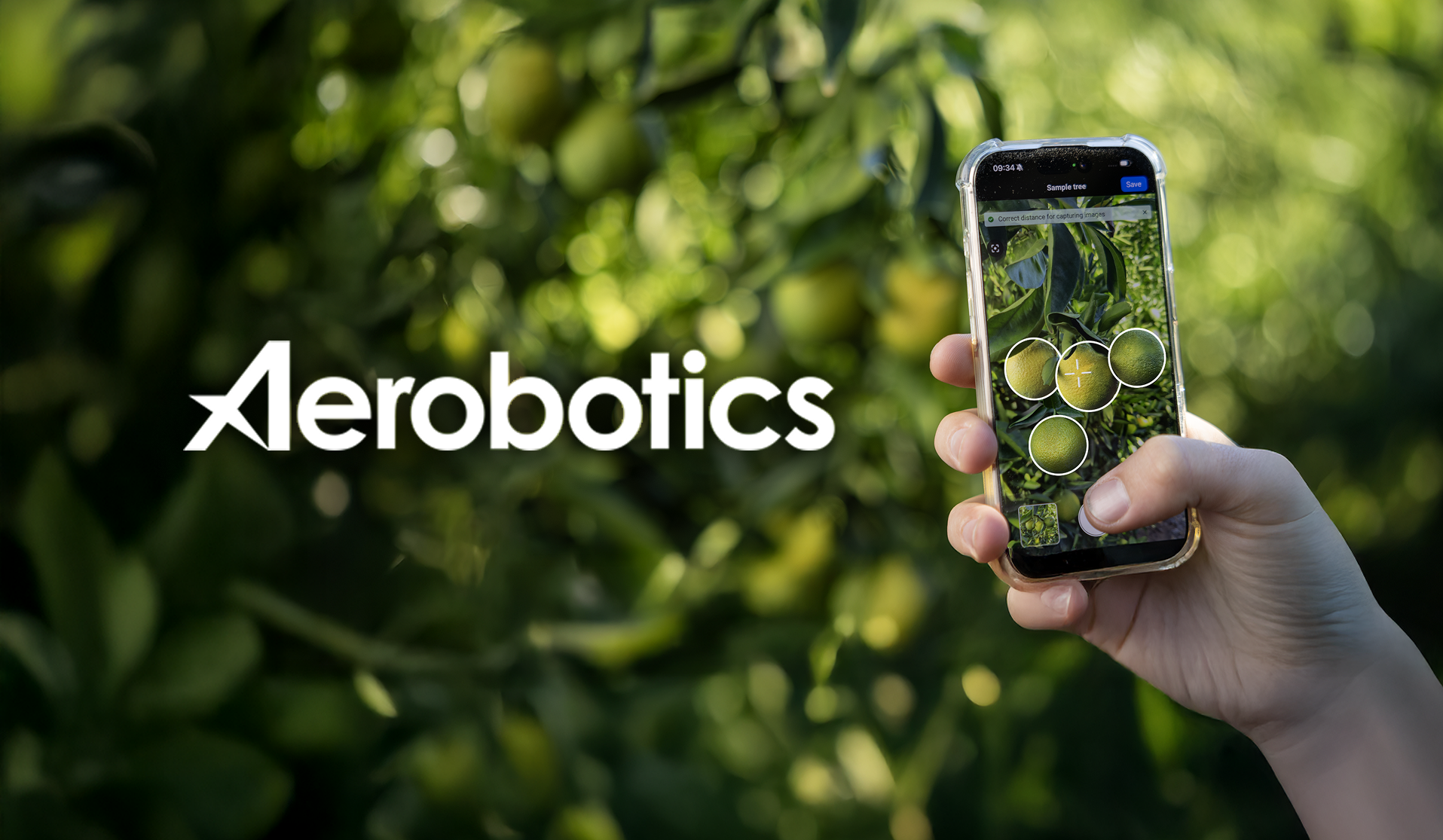
The flagship is Aeroview, a cloud platform that swallows drone, satellite and smartphone imagery and hands back something a grower can use before the coffee gets cold: tree counts, missing-tree detection, per-tree health scores, pest and disease flags, and map layers for scouting. Then there's TrueFruit - a set of tools that measure fruit size, color and quality, and forecast how the harvest will grade out, sometimes from nothing more than a phone held up to a tree.
The platform can find one sick tree in a field of hundreds of thousands. The grower used to find it by accident, in a bad year.
04 / THE PROOFThe numbers that survived the orchard
Customers, capital, coverage
Plenty of agritech ideas die between the pitch deck and the packhouse. Aerobotics didn't. It has reportedly served on the order of a thousand growers across roughly 18 countries, processing millions of tree images and building per-tree health records for crops like citrus, grapes and almonds. Investors noticed: the company has raised more than $27 million, headlined by a $17M Series B that Naspers Foundry led in 2021.
Figures compiled from public reporting and company statements. The tree count is somewhere in the millions - a number that grows every time a drone takes off.
Following the money
Disclosed funding rounds, in US dollars
Bars scaled to the largest single disclosed round. Series A led by Nedbank Capital; Series B led by Naspers Foundry.
The partnerships tell the same story from a different angle. Advexure paired Aerobotics' analytics with DJI multispectral drones for North American farms. Insure.ag acquired the company's AI-powered crop-insurance arm, the one that used drone imagery to tell growers exactly how many insurable acres they had - a wonderfully literal example of data turning into dollars.
05 / THE MISSIONLess walking the rows, more reading the data
Why any of this matters
Underneath the drones and the dashboards is a fairly old-fashioned idea: feeding people is hard, water is scarce, and waste is the enemy. Every tree that fails unnoticed is wasted water, wasted fertiliser, wasted land. Aerobotics' pitch to a skeptical grower is not that technology is exciting - growers are rightly unmoved by exciting - but that knowing beats guessing, and that knowing, finally, is affordable.
You can't manage what you can't measure. Orchards spent a century being unmeasurable. That century is over.
It's worth being honest about the limits, too. Aerobotics doesn't grow the fruit, it doesn't fix the weather, and a dashboard has never picked a single orange. What it does is shrink the gap between a problem starting and a human noticing - which, on a farm, is often the whole game.
06 / TOMORROWWhy the next harvest needs this
The case for measured farms
Climate volatility makes every input more precious and every mistake more expensive. The growers who thrive in that world will be the ones who can see their farms clearly - tree by tree, fruit by fruit - and adjust before the season turns. That's the world Aerobotics is quietly building toward, one orchard scan at a time, from an office a long way from Silicon Valley.
So return to that drone over the orchard. It climbs, it photographs, it lands. A decade ago, the grower below it would have closed the season half-blind, hoping the trees they couldn't inspect were fine. Today the report is already on the phone: this many trees, these ones sick, this much fruit coming, this size. The guessing is gone. What's left is a decision - which is the only thing a farmer ever really wanted.