passwordless-authentication
(27)
TJ Jermoluk and the lightbulb that needed a password
After helping build 3D graphics and cable broadband, Thomas (TJ) Jermoluk returned to a smaller problem with a long reach: proving who you are online. His next company began with the absurdity of logging in to turn on a light.

The Key Was Already in Your Pocket
Glide.id wants to replace the six-digit text with a cryptographic fact your phone can prove. Its biggest challenge may be persuading the networks to make that fact available everywhere.
The Password Was the Easy Part. The Office Was Harder.
Veridium began by teaching a phone camera to read four fingers. Its larger invention was persuading the messy corporate login - VPN, Windows, virtual desktop and all - to accept a better answer than a password.
The Password Disappeared. The Identity Problem Got Bigger.
TruU set out to kill the office password. Then it discovered that the more interesting question begins after login: who - or what - is really acting inside the system?
Laura Marx Makes the Invisible Business of Identity Impossible to Ignore
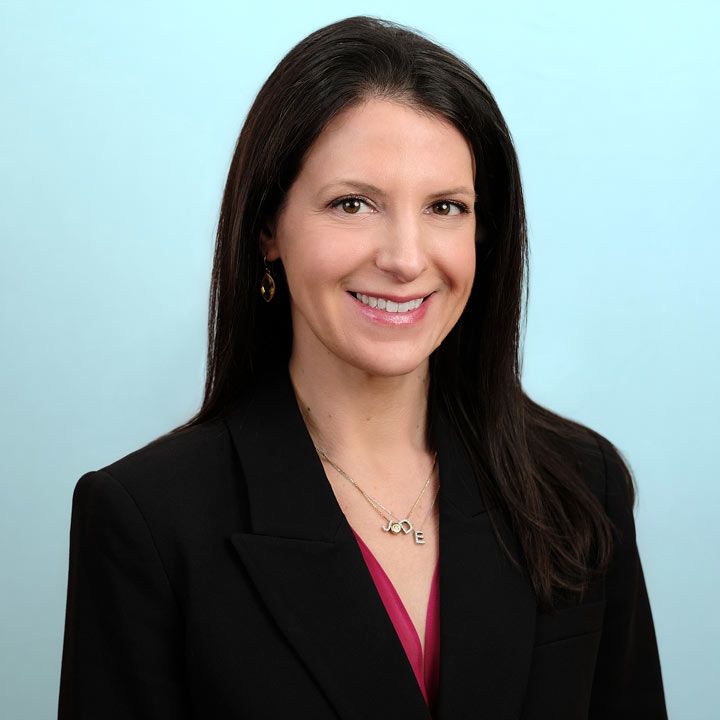
She started by teaching tennis, built a global marketing career from outside the office, and now gives RSA's identity-security ambitions a human vocabulary. Laura Marx's subject is access; her method is connection.
Wink Wanted to Kill the Password. Then It Found the Payment Rails.
Wink began with a clever premise: any ordinary camera could become a checkout credential. Its 2025 merger with Phoenix Managed Networks turned that identity layer into a payments business with real rails, real distribution and a much harder question about trust.
Imprivata Found a $3.6 Million Tax Hiding in Hospital Logins
A badge tap looks trivial. Across 19 hospitals, it helped give clinicians back 49,057 hours a year - and turned a login utility into the wedge for a much larger identity business.
RSA Wants to Kill the Password - Without Killing the Systems That Still Depend on It
The company that put six-digit codes on key fobs is rebuilding itself for passkeys, AI agents and help-desk deepfakes. Its bet is that the future of identity will still have to work with the stubborn machinery of the past.

Prove's Quiet Trick: Catch More Fraud by Asking Good Customers to Do Less
The New York identity company built a business around an awkward truth: every extra fraud check can also chase away a real customer. Its answer is to make the phone do more of the proving - quietly, continuously and before another form gets in the way.

The Bank Security Company That Wants You to Notice Almost Nothing
Entersekt built a global financial-authentication business around a stubborn idea: the best security step is often the one a legitimate customer never sees. Now its bet is moving from a protected phone to one context-aware layer across banking and payments.
Raz Rafaeli Has Spent 30 Years Making Passwords Look Old
Long before passwordless became a category, Raz Rafaeli was building network tools and running infrastructure companies. His latest act is a ten-year campaign against the credential that refuses to retire.
Chirag Bakshi Built a Career on the Signals Hiding in Plain Sight
From telephone switches and Apple printers to mobile identity, the Zumigo founder has spent four decades turning quiet infrastructure into practical trust.
Aware, Inc.
Aware spent decades teaching machines to recognize a person. Now the small, public biometrics company is betting that the bigger business lies in deciding which identity system to trust - and when.
Sixscape Communications
Sixscape Communications is a Singapore-based cybersecurity vendor specializing in Public Key Infrastructure (PKI) automation and post-quantum readiness. Founded in 2014 by cryptography veteran Lawrence Hughes, the company builds digital certificate-based products for secure email (S/MIME), password-less authentication, IoT device identity and unified communications. Its patented Identity Registration Protocol (IRP), assigned IANA port 4604, automates the request, issuance and management of X.509 certificates so enterprises can deploy trusted digital identities in seconds rather than weeks. Sixscape sells through a 100% partner-centric model spanning system integrators, resellers and certificate authorities, and positions its IDcentral platform for certificate lifecycle management and cryptographic posture management in a market bracing for shorter TLS certificate lifespans and the migration to quantum-safe algorithms.
Beyond Identity
Beyond Identity is a New York-based identity security company that eliminates passwords and identity-based attacks by binding authentication to cryptographic, device-resident credentials. Its Identity Defense Platform delivers phishing-resistant MFA, continuous device trust, and deepfake protection for meetings, giving enterprises deterministic proof of who - and what device - is accessing their systems. Founded in 2019 by Silicon Valley veterans, the company has raised $205M and reached a $1.1B valuation.

Portnox
Portnox is a cloud-native access control company that unifies Network Access Control (NAC), RADIUS, TACACS+, and passwordless conditional access for applications into a single zero-trust platform. Founded in 2007 by a team from the Israeli Air Force and now headquartered in Austin, Texas, Portnox removes the appliances, VMs, and specialized staff that traditional NAC requires, letting organizations authenticate users and devices, assess endpoint risk, and enforce compliance across wired, wireless, and remote networks from the cloud. It serves more than 1,000 organizations across healthcare, finance, manufacturing, and technology.
LastPass
LastPass is a cloud-based password and identity management company that lets people, families and businesses store, generate and share credentials from an encrypted vault protected by zero-knowledge, AES-256 encryption. Founded in 2008 and now an independent company again after spinning off from GoTo in 2024, LastPass serves more than 100,000 businesses and tens of millions of users worldwide. Under CEO Karim Toubba, the company is expanding beyond password management into a broader 'Secure Access Essentials' platform that adds SaaS/AI app discovery, access control and single sign-on directly through the browser.

Secret Double Octopus
Secret Double Octopus is an enterprise cybersecurity company that helps organizations eliminate passwords. Its Octopus / ZeroPassword platform delivers phishing-resistant, passwordless multi-factor authentication across workstations, cloud apps, legacy systems and on-prem infrastructure. Founded in 2015 in Israel, the company's technology traces back to secret-sharing cryptography once used to protect nuclear launch codes, and it now processes hundreds of millions of authentications a year for mid-market to Fortune 50 customers in regulated industries.

Zumigo
Zumigo is a San Jose-based digital identity company that turns real-time mobile signals into fraud-fighting intelligence. By tapping data from 800+ mobile network operators, credit bureaus, and financial institutions, its Assure platform verifies who is on the other end of a transaction - catching synthetic identities, SIM swaps, and account takeovers while enabling passwordless sign-in. It counts top-10 global banks, fintechs, and e-commerce platforms among 250+ enterprise clients.
SecureAuth
SecureAuth is an Irvine, California identity security company that has spent two decades trying to answer one stubborn question: is the person (or machine, or AI agent) on the other end of a login really who they claim to be? Founded in 2005, it built a name on risk-based and passwordless authentication, then doubled down on AI with its Arculix platform, continuous facial assurance, and a 'microperimeter' that extends Zero Trust controls to AI agents. Today it serves both workforce (IAM) and customer (CIAM) use cases for 250+ enterprises across regulated industries, protecting more than 250 million identities.

OLOID
OLOID is a Sunnyvale, California software company building passwordless, biometric identity and access for the 1.8 billion deskless and frontline workers who rarely sit at a desk or carry a company laptop. Its cloud platform lets factory, hospital, retail and pharmaceutical workers authenticate with their face, an NFC or RFID badge, or a QR code on shared devices and doors, without new hardware, while plugging into existing HRIS, SSO and physical access control systems. In 2025 OLOID extended into agentic identity with AURA, an AI identity-assurance agent that verifies employees in real time during help-desk requests like password resets and account unlocks.
Yaser Masoudnia
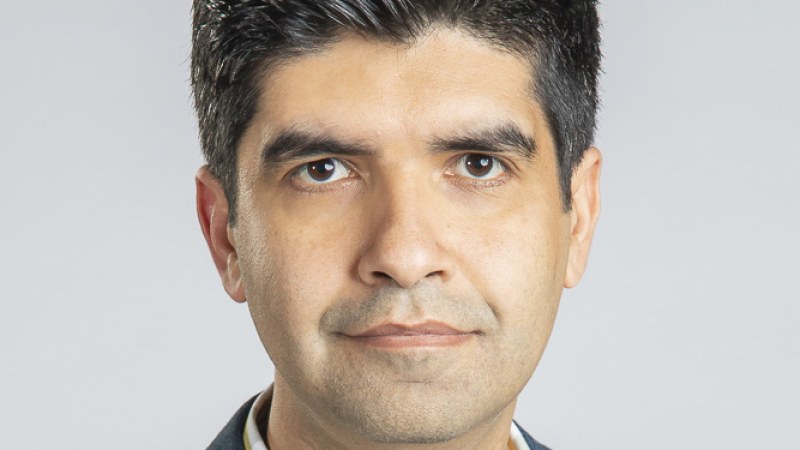
Yaser Masoudnia is the co-founder and CEO of BlueTape, a fintech company that gives the construction industry's suppliers, contractors and distributors the payment tools and working capital they have long been denied. A serial entrepreneur and a licensed general contractor with over a decade swinging a hammer, he previously built and exited the cybersecurity startup NoPassword (acquired by LogMeIn), then ran the LastPass product team. He started coding games on a Commodore 64 at 13 in Iran and now splits his identity between two worlds most people keep apart: software and construction sites.

Mohit Garg
Mohit Garg is the co-founder and CEO of OLOID, a Sunnyvale-based company building passwordless authentication and identity tools for the 1.8 billion frontline and deskless workers who clock in on shared devices rather than personal laptops. A serial entrepreneur out of Silicon Valley, he earlier co-founded Mindtickle, the AI-driven sales-readiness platform that grew into a unicorn, and trained at the Stanford StartX accelerator on a computer-vision product for the enterprise. He was named to Thinkers50's Leaders50 list in 2024.
TypingDNA
TypingDNA is a behavioral biometrics company that verifies people by the unique way they type. Its AI analyzes keystroke dynamics - the rhythm, timing, and pressure of how someone hits a keyboard - to authenticate users passively, on any device, with no extra hardware. Founded in Romania in 2016 and now headquartered in New York, the company turns an everyday habit into a security layer used for two-factor authentication, continuous endpoint protection, and fraud prevention across banking, education, healthcare, and enterprise.
Raul Popa
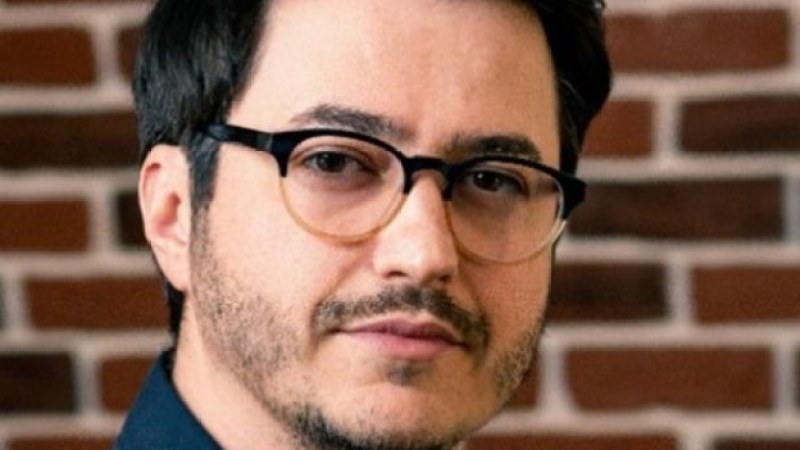
Raul Popa is the co-founder and CEO of TypingDNA, a behavioral biometrics company that recognizes people by the rhythm of how they type. A self-taught coder turned sociology-and-statistics graduate, he turned keystroke dynamics into a commercial authentication API used in banking, finance, and online education. He started the company alone in 2016 in Romania, brought it through Techstars and a Google-AI-backed Series A, and relocated it to New York just before the pandemic. Beyond enterprise security, he shipped TypingDNA Focus, a free app that predicts your mood from your typing.
Incognia
Incognia is a location identity and fraud prevention company that uses device intelligence, location behavioral analytics, and AI to help platform businesses — from food delivery to financial services — detect fraud without compromising the user experience. By processing signals from GPS, Wi-Fi, and Bluetooth without capturing PII, Incognia identifies legitimate users from fraudsters across multiple devices with 99.999999% accuracy, a 0.0001% false-positive rate, and no friction for genuine users. Deployed on over 200 million smartphones and protecting nearly 1 billion devices, Incognia has become the go-to fraud layer for platforms like Grubhub, Delivery Hero, and Upwork.
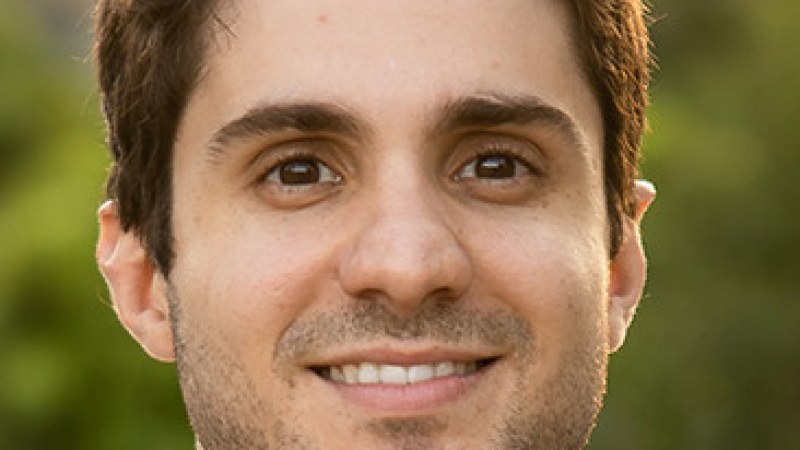
Andre Ferraz
Andre Ferraz is the co-founder and CEO of Incognia, a Palo Alto-based privacy-first location identity company that uses passive behavioral signals - where your phone goes, how it moves, what Wi-Fi networks it trusts - to verify users without passwords or biometric friction. Before Incognia, Ferraz co-founded In Loco Media in 2011 at the Federal University of Pernambuco in Brazil, building it into a company that mapped 6 million indoor venues and captured 250 billion location data points monthly, before selling it to Brazilian retail giant Magazine Luiza in 2020. With Incognia, he pivoted that location intelligence from advertising into fraud prevention, raising $46.5M total (including a $31M Series B led by Bessemer Venture Partners in 2024), deploying technology on over 200 million smartphones, and pioneering what he calls zero-factor authentication - security that works without the user doing anything at all.