tms
(21)
The AI Dispatcher Price Tag Small Carriers Keep Missing
A free load-board helper can save clicks, but it will not run your back office. Here is what AI dispatch tools actually automate, what stays on your desk, and what five or 20 trucks will cost.

The Clinic That Wants to End the Mental Health Referral Maze
Salma Health is betting that patients with complex brain conditions need fewer handoffs and a longer view. Its California clinics combine deep assessment, interventional treatments and follow-up care while building a research engine alongside them.

Burt
Burt (YC W26) builds AI teammates for logistics. The San Francisco company helps freight brokers and forwarders deploy AI coworkers that handle repetitive, manual work end-to-end - check calls, document processing, covering loads, invoicing - by reading emails, making calls, logging into portals, and updating the customer's TMS, following each team's own processes. Founded by Bobby Zhong and Kurt Sharma, both of whom grew up in logistics families, Burt started by training specialized models that beat frontier models on cost and latency, then focused those models on freight operations.

Hemut
Hemut is an AI-native operating system for trucking companies. It replaces the fragmented, legacy back-office software that carriers and brokers rely on with a single platform that automates dispatch, load booking, quoting, tracking, accounting, and inbound/outbound phone calls using AI agents. Founded in 2024 and part of Y Combinator's Spring 2025 batch, Hemut targets mid-sized fleets in the roughly $875B American trucking market.

Pango
Pango is an agentic operating system for e-commerce back-office operations. Founded in Stockholm in 2025 by Steve Rahimi and Lukasz Reszczynski, it connects a merchant's store, warehouse and carriers, then runs deliveries, tracking, returns, refunds and claims on autopilot. The company says it automates roughly 99% of returns and shipping operations and cuts operating costs by about 20%, and is part of Y Combinator's Summer 2026 batch.
GoComet
GoComet is an AI-native logistics platform that helps global manufacturers and shippers run their end-to-end supply chains - from freight procurement and shipment tracking to invoice reconciliation - on a single cloud-based system. Founded in 2018 by four IIT Delhi graduates and headquartered in Singapore, it is used by 500+ enterprise shippers, including several Fortune 500 companies, across 35+ countries to cut freight costs, gain real-time visibility, and automate manual logistics workflows.

McEasy
McEasy is an Indonesian IoT-and-SaaS company that helps logistics, transportation and supply-chain operators digitize their fleets. Founded in Surabaya in 2017 and now headquartered in Jakarta, it combines GPS/telematics hardware with a cloud platform for fleet management, a transportation management system (TMS), AI dashcams, fuel and driver management, and analytics. More than 1,500 companies - including JNE, DAMRI, Cleo and Pertamina - use McEasy to cut operational costs, improve delivery efficiency and bring visibility to fleets that were previously run on pen and paper.
oTMS Transport Technologies Pte. Ltd.
oTMS Transport Technologies is an enterprise SaaS transport management system (TMS) that connects every party in the road-freight chain - shippers, third-party logistics providers, carriers, drivers and consignees - on a single, shared workflow. Founded in China in 2013 and now headquartered in Singapore, the platform delivers real-time shipment visibility, transport planning, freight audit and settlement, dock scheduling and emissions tracking. It has processed more than 700 million shipments across Asia Pacific and connects roughly 9,000 carriers and 600,000 drivers, positioning itself as one of the region's most established cloud TMS providers.

VersaFleet
VersaFleet is a Singapore-based transport management software (TMS) company that helps businesses automate and optimise last-mile delivery. Its cloud SaaS handles route planning, dispatch, driver and vehicle assignment, electronic proof-of-delivery, real-time job tracking and automated customer notifications. Founded in 2012 by Shamir Rahim, the platform serves FMCG distributors, third-party logistics providers, waste-management operators and staff-transport companies across ASEAN, powering thousands of drivers for firms that deliver on behalf of Fortune 500 brands.
The Freight Back Office Is Up for Grabs — And Everyone Wants Pallet's Lunch
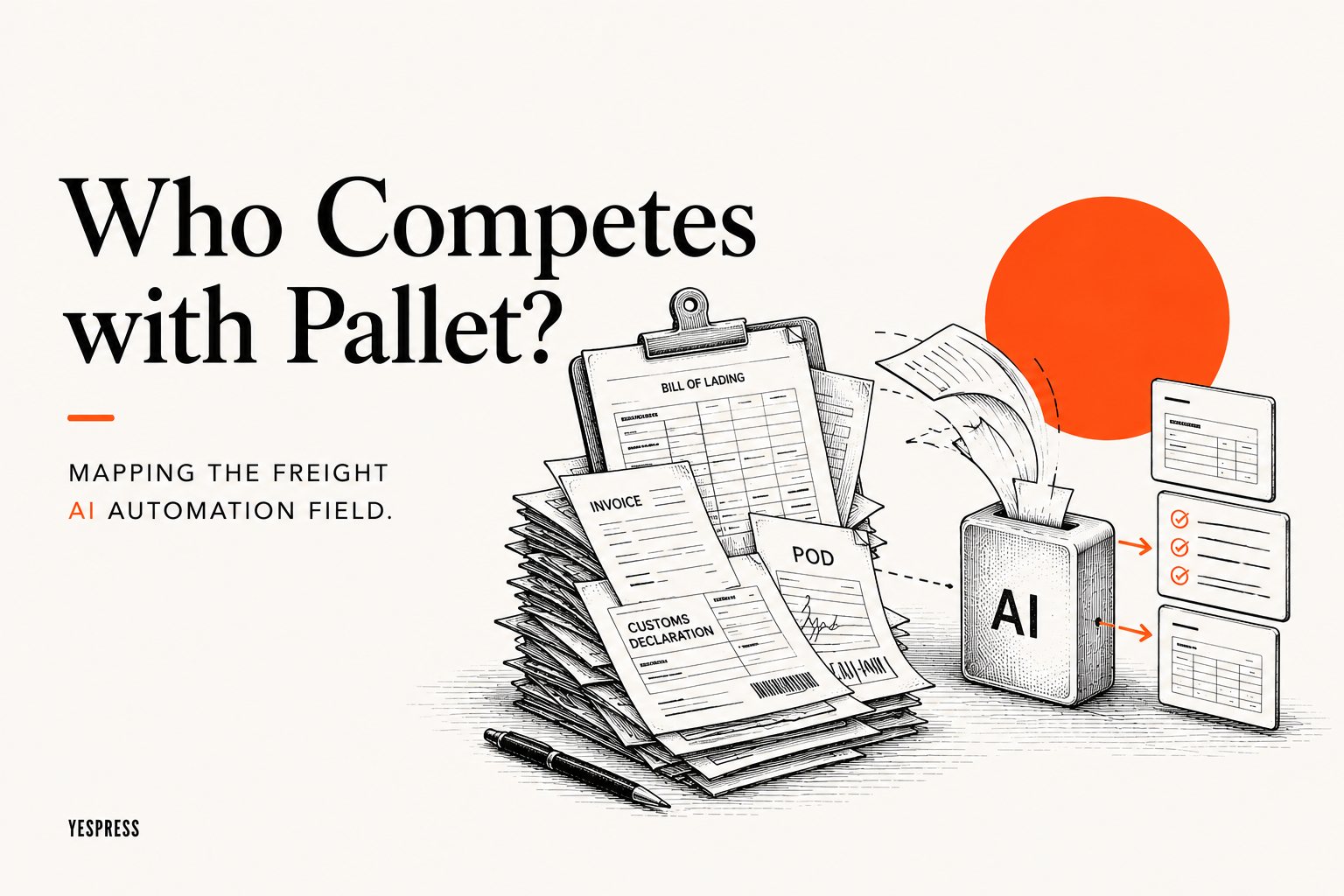
A competitive map of the freight-AI automation field, positioning Pallet against the venture-backed newcomers HappyRobot and Vooma, the entrenched TMS software vendors, and the offshore BPO shops that have long run the logistics back office. Pallet, a San Francisco startup that raised $27M Series B (bringing total funding to $50M), sells CoPallet, an 'AI workforce' that completes end-to-end logistics workflows inside TMS, WMS and ERP systems 10x faster and at roughly half the cost of human staffing. The story surveys how each rival attacks the same back-office spend and where Pallet's end-to-end, system-of-record approach differs.

Smartcat
Smartcat is an AI-powered global content platform that lets enterprises create, translate, and localize content in 280+ languages. It combines a translation management system, computer-assisted translation editor, and a matching engine that routes work to the best AI models, with an integrated marketplace of 500,000+ professional linguists for human review. More than 1,000 companies - including roughly 20% of the Fortune 500 - use Smartcat to scale multilingual content while cutting cost and turnaround time.
The Freight Data You Already Owned, Finally Talking Back
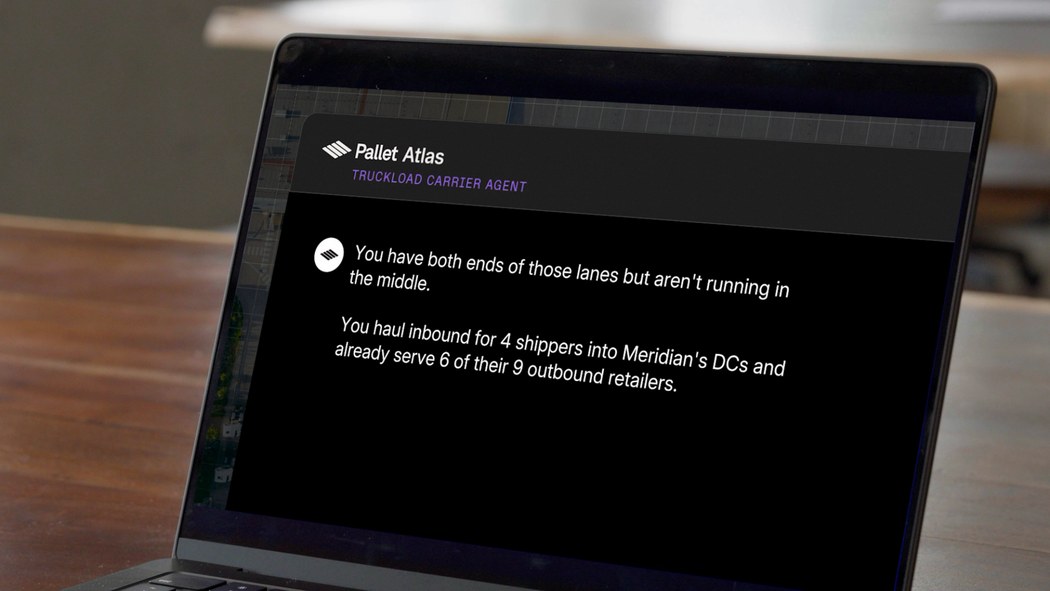
Pallet Atlas is a data intelligence platform for logistics that ingests operational data from TMS, WMS, ERP systems, email, and documents, then normalizes and connects customers, subsidiaries, facilities, lanes, and contracts into a single network model. It enriches that model with outside signals like spot rates, lane density, distribution center locations, and weather, and lets operators ask plain-English questions to surface hidden revenue opportunities in seconds instead of days.

Michael Mecca
Michael Mecca is the founder and CEO of PortPro, a Kearny, New Jersey based software company building a TMS purpose-built for drayage carriers and brokers. He grew up in his family's intermodal trucking business, Mecca & Son Trucking, then co-founded Axle Technologies before launching PortPro in 2019. Under his leadership PortPro raised a $12M Series A in 2023 and now serves 550+ drayage companies, layering AI agents (Jerry, Helen) on top of its operating platform.

Gregory Price
Gregory (Greg) Price is the CEO and co-founder of Shipwell, an Austin-based logistics technology company building a connected, AI-driven transportation management platform. A blue-collar Houston kid turned MIT-trained engineer, he spent seven years building hardware and algorithms for the U.S. Department of Defense at MIT Lincoln Laboratory, then applied machine learning to Fortune 100 supply chains at McKinsey before founding Shipwell in 2016 to bring automation, visibility, and intelligence to the notoriously opaque freight industry.

Foresight Mental Health
Foresight Mental Health is a Berkeley, California-based outpatient mental health provider that pairs clinicians - psychiatrists, therapists and prescribers - with software, data and wearables to deliver personalized, insurance-covered care. Founded by two UC Berkeley computer-science students, the company offers therapy, psychiatry, child and adolescent services, ADHD testing, intensive outpatient programs and TMS across in-person clinics and telehealth, with the stated mission of improving access to high-quality mental health care.
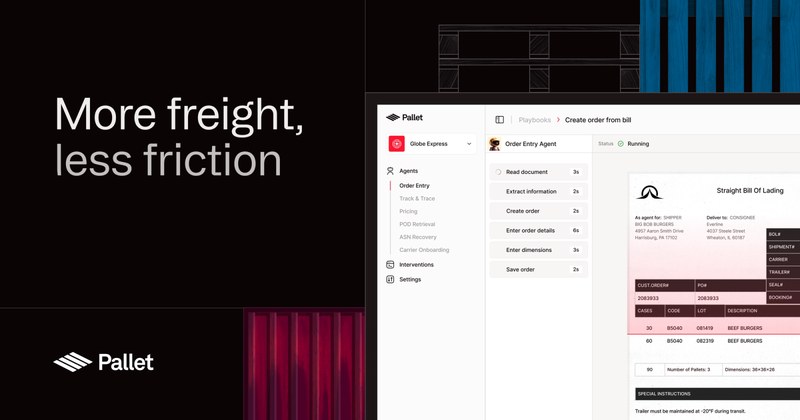
The Agent Factory: How Pallet Forge Turned Six Months Into Six Weeks
On May 14, 2026, logistics AI company Pallet launched Pallet Forge, an 'agent factory' that compresses the build-and-deploy cycle for production-grade logistics AI agents from roughly six months to six weeks. Authored by co-founder and CEO Sushanth Raman, the announcement frames Forge as Pallet's answer to the industry's pilot-to-production gap — citing the MIT finding that only 5% of enterprise GenAI pilots generate measurable P&L impact. Forge works by connecting to a customer's systems (TMS, WMS, ERP, EDI, email, and legacy AS400), encoding operational rules and carrier preferences inferred from historical data instead of hand-written SOPs, and running thousands of simulations to tune agent accuracy automatically. Early proof points include Everest Transportation running on 20,000+ customer-specific encoded memories and Eassons Transport Group hitting 98% touchless processing after going live in 40 days — with subsequent customers onboarded in as little as 48 hours.

Neural Galaxy
Neural Galaxy (also operating as Galaxy Brain Scientific) is a Beijing-based brain science company building a precision, non-invasive neuromodulation platform. Its proprietary personalized Brain Functional Sectors (pBFS) technology maps over 200 functional regions of an individual brain, then guides targeted transcranial magnetic stimulation with millimeter accuracy. Founded in 2019 by Harvard and MIT neuroscientists with serial entrepreneur Coach Wei, the company is running clinical and registration trials across depression, Parkinson's, Alzheimer's, autism and aphasia, and has raised roughly $93M to date.

Shipwell
Shipwell is an Austin-based software company building an AI-integrated transportation management system (TMS) that unifies shipment planning, real-time visibility, automation, and settlement in one cloud platform. Founded in 2016 by Greg Price and Jason Traff, it helps shippers and logistics teams across food & beverage, manufacturing, and distribution move freight with less manual work. After selling its brokerage arm to CloudTrucks in 2024, Shipwell now operates as a pure-play SaaS provider and has been named a Visionary in the Gartner Magic Quadrant for TMS for five consecutive years.
Augment
Augment builds Augie, an AI teammate purpose-built for logistics. The San Francisco company automates the phone calls, emails, portal logins, and back-office workflows that bog down freight brokers, shippers, and carriers - and has raised $110M in under a year to scale it.

Pallet
Pallet is a San Francisco AI startup building an 'AI workforce' for the physical economy. Its flagship product, CoPallet, automates back-office freight workflows - order entry, quoting, document parsing, portal updates - that have historically required armies of human operators, working inside systems like McLeod, Revenova, Turvo and even legacy AS400 stacks. In 2026 it added Atlas, a data-intelligence layer that surfaces hidden revenue opportunities across a supply chain network.

Don Vaughn
Don Vaughn, Ph.D. is the Co-Founder and CEO of Ampa Health, a Palo Alto-based neurotechnology company building FDA-cleared portable TMS (transcranial magnetic stimulation) devices that compress 36 days of depression treatment into a single day. A Stanford-educated physicist turned UCLA neuroscientist, Vaughn has built a career at the intersection of brain science, machine learning, and accessibility - detoured, notably, through a DJ career that landed him a #28 iTunes Dance chart hit featuring Nick Lachey. His TEDx talk on neurohacking has surpassed one million views. Ampa raised an oversubscribed $8.5M pre-A round in October 2025, achieved FDA clearance for its Ampa One device in February 2025, and is targeting 5,000 patient remissions by end of 2026 - with a long-term audacious goal of a billion remissions in ten years.