A person can make a perfectly reasonable decision to seek help for depression and still find that the hardest work begins afterward. One clinician takes a history. Another evaluates medication. A third clinic offers magnetic stimulation. Insurance asks for records of what failed before. The patient carries the story from room to room, often while feeling least able to tell it. Salma Health has built its business around this awkward interval: the space between knowing something is wrong and knowing what, exactly, to try next.
The short version
- Salma coordinates assessment, treatment and follow-up for brain and mental health conditions.
- Its options include conventional TMS, accelerated SAINT, supervised esketamine, medication management and a virtual intensive outpatient program.
- It announced an $80 million Series A in February 2026, with a plan to expand clinics, clinical research and technology.
The company calls itself a brain health provider, a useful phrase because its work crosses the usual borders. Depression and PTSD belong to psychiatry, but memory problems, headaches and injuries can send a person toward neurology. Salma’s pitch is that these conditions deserve a connected plan rather than a collection of appointment slips. Its affiliated clinical practices see patients in California, with virtual services extending the reach of some programs. The company itself supplies administrative and technology services to those practices, an important distinction in the way it is organized.
The first treatment is an unusually long conversation
Salma’s comprehensive intake starts with records and questionnaires and moves into a clinician-led evaluation of symptoms, medical history, previous treatments and daily function. The company describes a 90-minute assessment. That duration is almost comic in a system where patients have learned to rehearse their life story at double speed. Yet it also reveals the firm’s core idea: a decision about treatment is only as good as the diagnosis, context and account of what has already been tried.
The resulting plan can be ordinary, specialized or a mixture. It may include therapy or medication management. It may point toward a virtual intensive outpatient program, with structured care several times a week. For patients who qualify, it can include transcranial magnetic stimulation, or TMS, and its accelerated cousin SAINT. Salma also offers supervised Spravato, the esketamine nasal spray used for certain forms of depression. A person considering one of these options does not have to decide from a menu on a web page; a clinician is meant to evaluate fit, safety, treatment history and insurance.
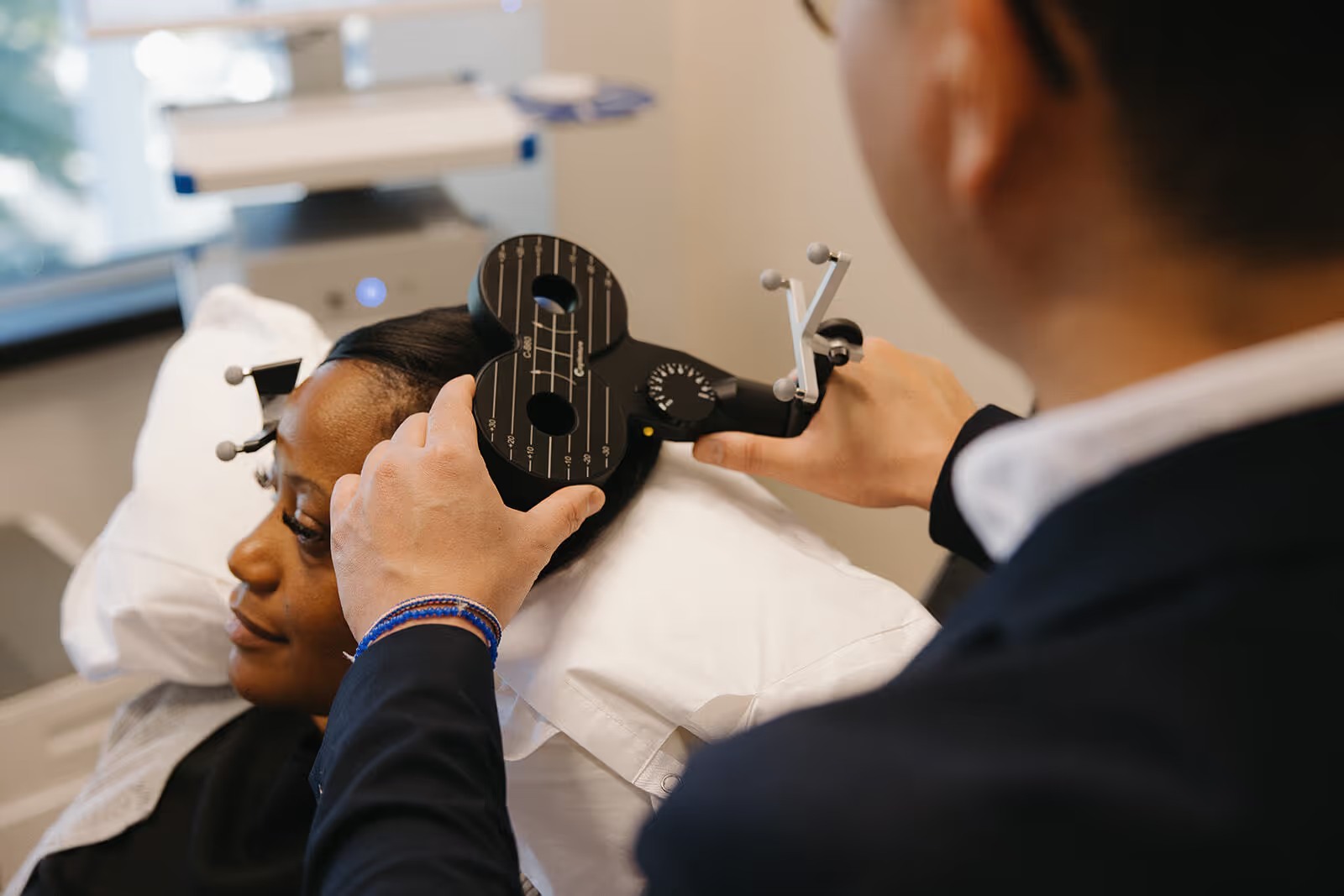
This sequence is the product as much as any machine or medication. Salma says it checks benefits early, then steers a new patient toward either a brief options call or a fuller assessment. It says appointments are typically available within a week and advertises a $199 out-of-pocket price for the comprehensive evaluation. The treatment bill is another matter: coverage for TMS, Spravato and SAINT depends on the plan, diagnosis, prior treatment and authorization. Even a beautifully designed care pathway still has to pass through a payer’s paperwork.
Fifty sessions, five days
SAINT gives the story its striking number. Salma describes a protocol of ten magnetic stimulation sessions a day over five days, with MRI-guided targeting and breaks between sessions. It is an option for eligible adults with treatment-resistant depression. Standard TMS usually unfolds over a longer course; Spravato requires supervised clinic visits and monitoring. They differ in mechanism, schedule and who may receive them. Putting all three on the same clinical map makes Salma less like a single-treatment storefront and more like a practice built to select among treatments.
There is a temptation to turn that timetable into a promise. Salma cites strong clinical trial results for SAINT, but individual response cannot be guaranteed, and the treatment is not right for everyone. Eligibility, safety, travel, time away from work and insurance matter as much as the intriguing number. The company’s more durable claim is therefore less theatrical: it can place advanced treatments inside a plan that begins before the procedure and continues after it.
A clinic that wants to learn from itself
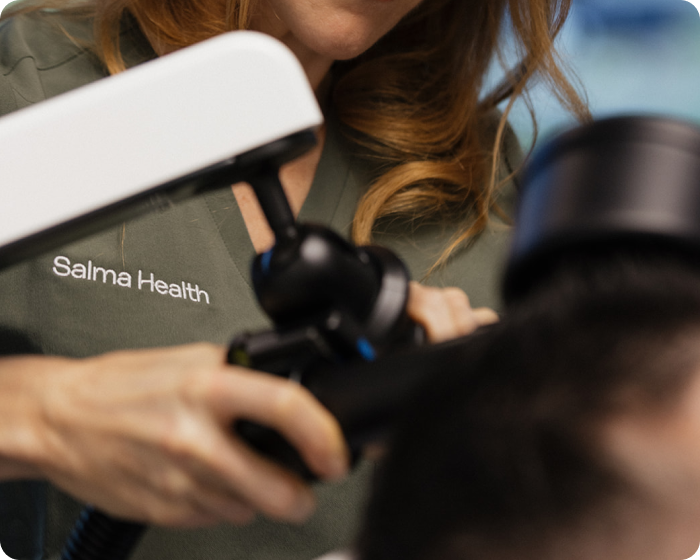
Salma publicly launched in February 2026 with an $80 million Series A co-led by Mubadala Capital and ARCH Venture Partners. Lingotto Horizon and Averin Capital also participated. That is considerable money for a chain of appointments, and the company’s ambition explains why. It is building clinical research capacity and a proprietary technology platform it calls Brain Health OS. The stated aim is to combine clinical data, coordination and decision support so treatment selection grows more precise. The platform and a planned research sandbox are still being built; the available public record does not establish that an algorithm already chooses patients’ treatments.
Its clinics enroll for neurology and psychiatry studies, giving some patients access to research participation at no cost. For pharmaceutical and medical device companies, sites that can recruit and follow patients may be useful research partners. For Salma, clinical work and research could create a feedback loop: practice generates questions, studies test them, and results inform practice. That logic is plausible. Whether it produces better published outcomes than conventional care remains a question the company will have to answer with data, not branding.
“Diagnostics are an essential part of treatment selection, not optional.”Brandon Bentzley, co-founder and chief medical officer
The people behind the company help explain its particular mix. CEO Alaa Halawa brings healthcare investment and operating experience; chief medical officer Brandon Bentzley is a psychiatrist and scientist involved in the development of SAINT. The founding team also includes Ayman AlAbdallah, Emily Philips-Bru, Zeena Ojjeh and neuropsychiatrist Nolan Williams. Williams helped develop SAINT and died in 2025. Salma named its Orange County clinic for him. Bentzley’s later tribute argued that excellent brain treatments mean little if patients cannot reach them, a sharper statement of the company’s purpose than any slogan could be.
The business case for staying together
Salma competes with several kinds of provider at once: a psychiatrist’s office, a hospital program, a TMS clinic, an esketamine practice and virtual mental health services. Each can be appropriate. Salma’s wager is that a patient with a complicated history gains something when the evaluation, advanced options and follow-up are coordinated by one team. Referring clinicians gain a destination for patients who need more than another routine appointment. The company says its care teams work across psychiatry, therapy and diagnostics, although local availability can vary by service and location.
The model has costs. Long assessments take clinician time. SAINT needs equipment, imaging and a patient able to attend an intense week of visits. Supervised esketamine occupies clinical space and staff time after dosing. Coordinators must navigate benefits and authorizations. These are precisely the details a standalone app can avoid and a real clinic cannot. They also explain why $80 million may vanish faster than its round number suggests. Salma has not disclosed revenue, valuation or patient volume, so the economics of the model cannot yet be judged from public figures.
For patients, the practical instruction is simple: bring the chronology. Prior diagnoses, medications, therapy, hospitalizations, scans and symptom changes all help a clinician decide what comes next. Ask which therapies are actually available at the specific clinic, what a recommended course requires in time and travel, and which part of the bill your plan covers. For providers, the lesson is broader: the handoff is itself a piece of care. A referral only works when someone knows what happens after it is sent.
Salma Health is young in public view, whatever its listed founding year may suggest. Its February launch set out a large agenda: California clinics, eventual national expansion, clinical trials, and software meant to sharpen treatment selection. The visible achievement so far is more concrete. It has assembled a place where an assessment can lead to several different forms of care, and where the team is supposed to stay with the patient after choosing one. In brain health, that modest sounding continuity may be the most difficult technology to build.