The founding document of Lindus is, in spirit, an error report. The browser was obsolete. The registration website was unsecured. Forms that ought to have moved invisibly through a modern system instead made themselves known at every turn. Meri Beckwith had volunteered for clinical trials in 2020, including a large vaccine study, and found himself staring at the sort of software archaeology that would embarrass a provincial car-rental desk. He had to download Internet Explorer just to sign up.
By then Beckwith already knew the complaint from another angle. As an investor he had met technology and life-sciences companies whose ambitions eventually collided with the same slow, expensive apparatus. Their products differed. Their lament did not: trials ran late, costs wandered and small mistakes grew expensive. From a boardroom, this looked like an investment problem. From the participant's chair, it looked faintly absurd.
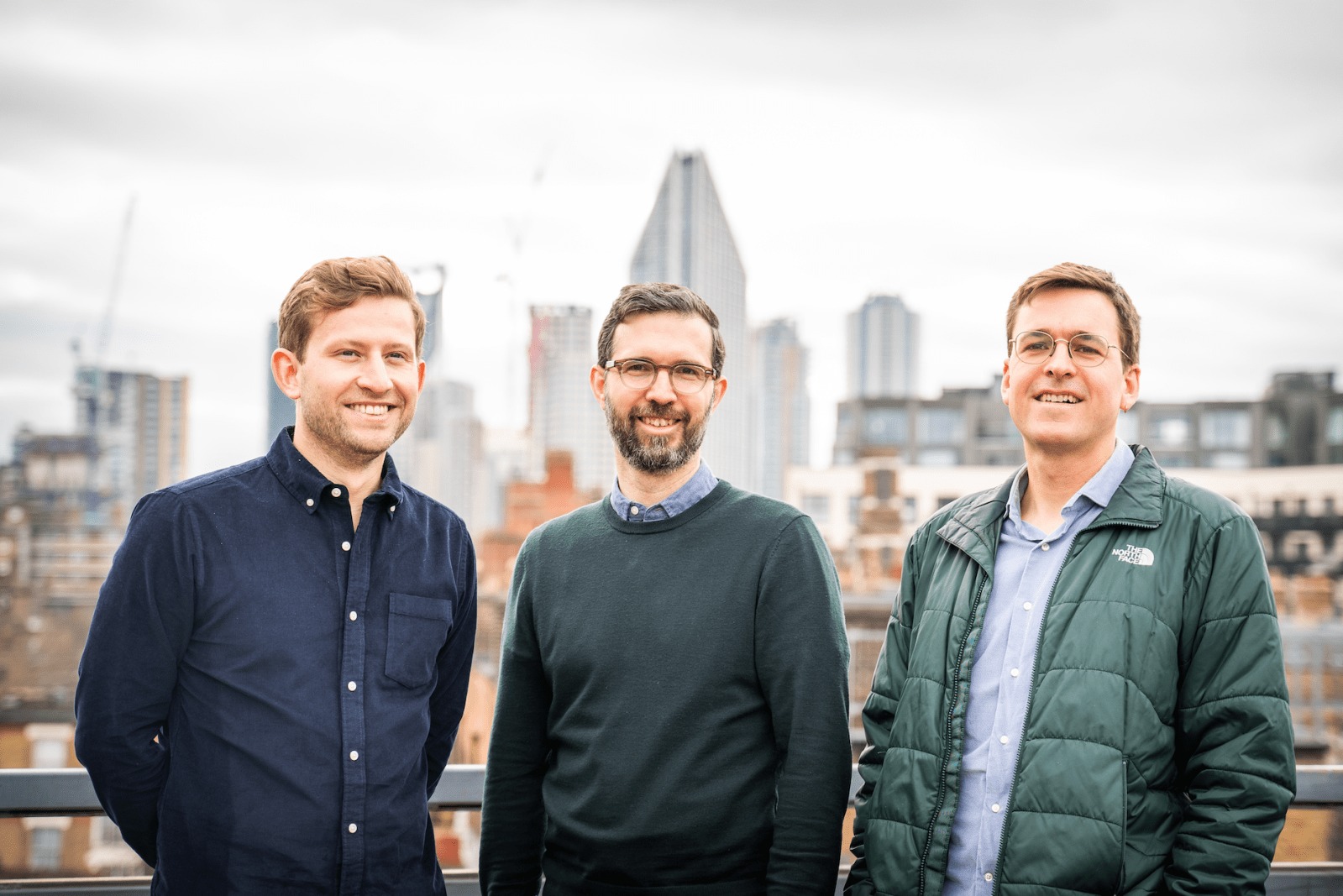
The combination proved combustible. In 2021, Beckwith joined Michael Young and Nik Haldimann to found Lindus Health. The premise was not that clinical research needed a prettier dashboard, though it certainly could use one. It was that the people, software and commercial incentives responsible for a trial should be designed as one system. Lindus called itself the “anti-CRO,” a jaunty bit of provocation aimed at the contract research organizations hired by drug, device and biotechnology companies to run studies.
A critic crosses the glass
Beckwith's route to that provocation began with biology at Oxford. He emerged with a master's degree and, by his own later account, very little idea of how lucky he was to land a summer internship at Oxford Capital. The firm asked him to stay. He started in 2014, learned the work at an early-stage fund and, over roughly five years, met more than 900 founders. He led investments in the market-research platform Attest, the digital service HelloSelf and autonomous-driving software company Latent Logic, which became part of Waymo.
His recollections of venture capital resist the industry habit of polishing every accident into destiny. In a 2020 essay he said he had known “NOTHING” when he began. The same piece recalled a flat-earth-themed paddling-pool party for investors and founders in central London, which is at least more memorable than another panel about network effects. He concluded that venture capital was a customer-service business, with the entrepreneur as customer. Speed, humility and a decent human relationship mattered.
He moved to OMERS Ventures in 2020, focusing more closely on technology, biology and digital health. This was the useful vantage point before the leap. Investors see dozens of operating models without having to live inside most of them. Beckwith saw the recurring trial bottleneck, then chose to cross the glass and take responsibility for it. The man paid to assess bets was about to make one in which the dull details - contracts, recruitment, monitoring, data capture - were the product.
Begins at Oxford Capital after a summer internship.
Joins OMERS Ventures and experiences clinical trials as a participant.
Co-founds Lindus with Michael Young and Nik Haldimann.
Lindus raises a $55 million Series B.
Lindus evolves toward in-licensing and advancing drug assets.
The invoice is part of the invention
The traditional outsourcing model can pay a research contractor for time and inputs. More hours, more change orders, more invoices. Lindus chose fixed prices and milestone payments. A sponsor pays when the work reaches agreed points of progress. The change sounds financial because it is financial, but its intended effect is behavioral: delay should hurt the company running the trial, not reward it.
That idea became one half of Lindus. The other was Citrus, an in-house platform spanning trial design, participant recruitment, data capture and monitoring. Instead of stitching together vendors and handing problems across organizational seams, the company assembled clinical operators, medical staff, regulatory specialists and technologists under one roof. Beckwith has been careful not to reduce this to an app. In 2025 he emphasized that Lindus supplies the people required to conduct a study as well as the software beneath them.
The distinction also explains Beckwith's pragmatic view of fashionable techniques. Lindus can run remote studies, site-based studies or mixtures of the two. He has said the company is agnostic about the label; what matters is whether the design makes a particular trial work efficiently. Technology is a tool, not a catechism. The company has used artificial intelligence to help draft protocols, inspect patient-facing text and monitor data, while leaving judgment and delivery with the operating team.
That sentence contains the founder's more difficult job. It is easy to be the opposite of an incumbent while small. Scale brings large clients, attractive contracts and the temptation to recreate every committee one once mocked. Beckwith has said Lindus turned down lucrative deals for fear that they would change the business too much. An “anti” identity only survives if there are things one refuses.
Forty-two trials, then a wider bet
By January 2025, Lindus said it had completed 42 end-to-end trials and directly enrolled or treated more than 35,000 participants. That month it announced a $55 million Series B led by Balderton Capital, following an $18 million Series A in 2023. The new capital was assigned to the Citrus platform, artificial-intelligence tools, clinical operations and expansion. The company's center of gravity was also moving from Britain toward the United States.
Those numbers are not a verdict, but they are evidence that the experiment escaped the whiteboard. Lindus now reports more than 45 completed Phase I-IV studies and a team of about 80 across the United States and Europe. For the 28 trials that completed enrollment in the measured three-year window and for which Lindus controlled enrollment, the company says 82 percent finished enrollment on or ahead of the timeline presented in the proposal. The unusually precise denominator is welcome. Corporate statistics improve when they admit what they count.
Then the experiment widened. The current company, Lindus Therapeutics, describes itself not merely as the contractor running someone else's study but as a developer that can in-license, co-develop or acquire assets and advance them using its own trial infrastructure. It plans to identify programs with data and artificial-intelligence models, execute the trials internally and then decide whether to partner, sell, continue development or commercialize.
This is a logical extension with a new class of risk. A service company can argue that its machinery is better; a drug developer eventually has to place specific scientific bets into that machinery. Beckwith's old investing instincts return, but now the selection and execution sit much closer together. Lindus is aiming to fund initial deals and trial launches from its balance sheet, with first trials under the new model targeted for the first half of 2027.
Closer to the consequence
There is a neat geometry to Beckwith's career. At Oxford Capital he selected founders. At OMERS he studied companies where technology met biology. As a participant he encountered the system's friction. With Lindus Health he built infrastructure for other companies' bets. At Lindus Therapeutics he is moving one step closer to choosing the assets themselves. Each turn reduces the distance between judgment and consequence.
His public manner helps make the severity bearable. This is a chief executive who has written about a six-finger prosthetic hand as a metaphor for venture-capital differentiation, teased his own early uselessness and hoped to recreate the volleyball scene from Top Gun at a company offsite. The humor is not decoration. Industries organized around compliance can start mistaking solemnity for rigor. Beckwith's better jokes usually smuggle in an operating point.
Lindus itself is named for James Lind, the naval surgeon associated with an early controlled trial in 1747. The homage is less to a sepia portrait than to a method: ask a clear question, compare results and remain accountable for reaching an answer. Beckwith has noted the darker coda. Decades passed before the institution around Lind acted consistently on what the experiment had shown. Evidence can be correct and still lose to machinery.
That is why the obsolete browser matters. It was ridiculous, but not trivial. A missed security certificate or broken enrollment page is the smallest visible part of a chain that can end in a delayed answer. Beckwith's project has been to join those links - the protocol, participant, software, operator and invoice - until no one can plausibly point elsewhere when the work slips.
The anti-CRO slogan got the conversation started. The next chapter will be less forgiving. Lindus now has to show that the operating discipline built for clients can improve the assets it chooses for itself, and that a company founded against fragmentation will not fragment as it grows. Beckwith once sat outside companies and asked whether their model could work. He is inside this one now. The machine finally has his name on the service ticket.