A promising drug can spend years accumulating evidence, advocates, and ambition, then vanish into a corporate portfolio like a good umbrella in a crowded restaurant. The science may not have changed. The owner did. A budget tightened, a strategy shifted, a larger market beckoned, or the people with authority simply moved on. Joshua Grass has built a three-decade career around the point where scientific merit meets institutional appetite. With Mendra, he is turning that junction into the company itself.
Mendra arrived publicly in January 2026 with nine people, no disclosed pipeline, and an oversubscribed $82 million Series A. OrbiMed, 8VC, and 5AM Ventures co-led the round; Lux Capital and Wing VC joined them. The money is meant to acquire rare-disease programs and move them through development and commercialization. The early product, in other words, is judgment. Investors bought the team's ability to tell an overlooked medicine from one wisely left alone.
Grass is a plausible person on whom to place that peculiar bet. He has worked at the bench, watched biotechnology through the lens of equity research, spent 15 years doing deals inside BioMarin, built a company from a venture firm, and led two biotechs to acquisitions. His résumé reads less like a ladder than a circuit board. Each role connects science, capital, and execution to the next.
Chapter oneThe useful detour
Grass began in biotechnology as a scientist at Cerus Corporation in 1993. He stayed until 1998, then did something that would define the rest of his career: he changed the instrument, but not the subject. He earned an MBA in finance and entrepreneurship from the University of Rochester's Simon School after completing a biology degree at Cal Poly San Luis Obispo. Finance and equity-research roles at boutique investment banks followed.
The combination gave him two vocabularies that biotechnology often keeps in separate buildings. One describes mechanisms, experiments, and uncertainty. The other describes capital, incentives, and price. Neither is sufficient by itself. A molecule can be elegant and commercially stranded. A deal can be clever and scientifically hollow. Grass learned to stand in the middle, a position with excellent visibility and terrible weather.
The long apprenticeshipFifteen years inside the machine
In 2002, Grass joined BioMarin, then a young company trying to build medicines and an enduring business around small patient populations. During most of his 15 years there, he led Business and Corporate Development while reporting to the chief executive. His remit included acquisitions, divestitures, licensing, and the less glamorous labor of making a portfolio cohere.
He was also present while BioMarin built global commercial and manufacturing infrastructure. When F-Prime later announced him as an entrepreneur-in-residence, it credited the senior team with raising more than $2 billion and launching five products. This was not a seminar in company building. It was an extended shift on the factory floor while the factory was still being designed.
An early public glimpse of Grass came in 2004, when he handled investor and financial relations around a long-awaited regulatory filing. His assessment was gloriously economical: “It's been years in the making.” The sentence contains no trumpet. It does contain an operator's understanding that the final announcement is merely the visible tip of an exhausting accumulation.
“It's been years in the making.”Joshua Grass, 2004
A career built in layers
The bars show role depth, not company performance. Grass's advantage is cumulative fluency across disciplines.
Company creationThe first compact experiment
Grass left BioMarin in 2017 for F-Prime Capital, joining as an entrepreneur-in-residence. The title can sound pleasantly abstract, as though one resides near entrepreneurship and occasionally waters it. In practice, Grass focused on creating life-sciences companies. He led a $30 million Series A for Modis Therapeutics in March 2018 and served as its CEO.
Modis was built around a rare-disease program and moved quickly. Zogenix acquired it in 2019 for $250 million upfront and up to $400 million in total consideration. Speed is seductive in retrospect; it makes the preceding uncertainty disappear. Yet the more durable lesson was structural. A focused team, sufficient capital, and an asset selected with care could create meaningful strategic value in less than two years.
His next CEO role tested the same muscles over a longer arc. Grass joined Escient Pharmaceuticals in late 2021. The company was developing small-molecule programs based on years of research into a family of receptors. In announcing his appointment, co-founder Marcus Boehm pointed to Grass's scientific and business background, track record, and “dynamic leadership style.” It is one of the few public descriptions of the man rather than the milestones.
By May 2024, Incyte had acquired Escient for $750 million plus the cash remaining at closing. Grass credited the employees and scientific collaborators whose work had advanced two candidates into clinical development. Again, the transaction was the headline. The accumulation was the story.
Search for programs whose scientific promise outlasted their original owner's priorities.
Separate the merely neglected from the genuinely developable.
Use data and AI across selection, enrollment, and execution.
Create the commercial capacity to take programs farther than an early exit.
The Mendra thesisA company for the work between discovery and arrival
Mendra does not present AI as a digital chemist dreaming up molecules at impossible speed. Its announced plan is more operational. The company wants to use AI in asset selection, patient identification, data curation, clinical enrollment, and access to global markets. These are the connective tissues of drug development, the places where useful information tends to arrive late, live in incompatible systems, or fail to reach the person making the decision.
The leadership team reflects that plan. Co-founder and CTO Lalarukh Haris Shaikh previously led life sciences and aerospace work at Palantir. Chief Commercial Officer Jeff Ajer spent more than 25 years in global commercialization, including as BioMarin's CCO. Grass contributes the scientific, transaction, and company-building thread. This is not a room full of identical prodigies. It is a deliberately mixed table.
The company's economic observation is equally important. Grass has argued that private capital increasingly favors early acquisitions, even though rare-disease products often reveal more of their value at commercialization. That leaves a gap. Academics may lack capital, small biotechs may change course, and large companies may rank another opportunity higher. A good program can become an orphan twice: first by market size, then by ownership.
“We are building Mendra to deliver high-potential rare disease medicines more effectively to patients on a global scale.”Joshua Grass, Mendra launch
The hard partPattern recognition needs receipts
There is a pleasing circularity to Grass's new job. At BioMarin, he helped decide what entered and left a portfolio. At Modis and Escient, he ran companies that eventually entered someone else's. At 5AM Ventures, where he became a venture partner in 2025, he helps create and shape life-sciences companies. Mendra gathers all three perspectives under one roof: buyer, builder, and investor.
The risk is also easy to state. Every abandoned asset comes with a story about why it deserves revival. Stories are cheap; late-stage trials are not. If Mendra's selection method is systematically wrong, technology may only help the company make expensive mistakes faster. The first acquisition will therefore be more than a pipeline update. It will be a specimen of the team's judgment, pinned beneath glass for everyone to inspect.
Grass does not offer much public autobiography. There are few anecdotes about childhood chemistry sets, heroic mentors, or epiphanies on delayed flights. What exists is a career made legible through repeated choices. He left the laboratory to learn finance. He stayed 15 years to learn scale. He left scale to create smaller companies. He returned to venture, then launched a company that needs all of those experiences at once.
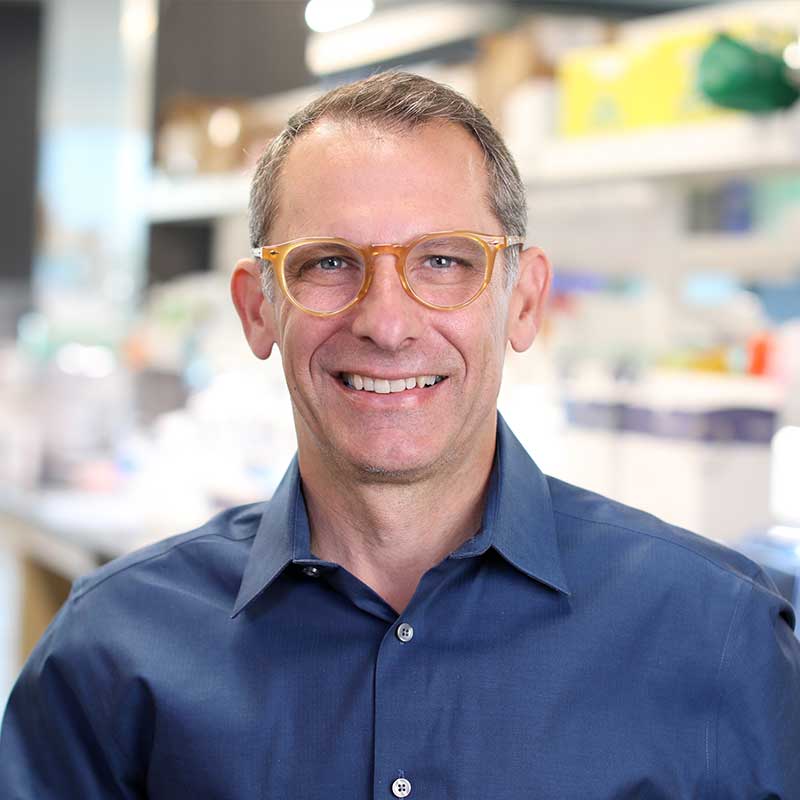
That sequence carries a useful lesson beyond biotechnology. Careers compound sideways. The apparent detour can become the operating system. Grass's biology degree matters because Mendra must judge science. The MBA matters because it must buy assets. The BioMarin years matter because it must develop and commercialize them. The two exits matter because other owners must trust his assessment. Even the yellow glasses have done their bit, making a succession of corporate headshots unusually easy to recognize.
What comes nextThe first choice will say everything
Mendra says it will use the Series A to acquire its initial programs. Until those choices are public, the company remains a thesis with a formidable syndicate. That is not a criticism. It is simply the honest shape of an acquisition-led biotech at launch. Grass and his colleagues have raised enough money to make consequential decisions. Now they must make unusually good ones.
The name Mendra suggests mending, and its logo resembles something folded that may yet open. The metaphor is almost too neat. Science is rarely rescued by sentiment alone. It needs evidence, capital, patient execution, and the institutional stubbornness to survive several more budget meetings. Grass has spent 30 years learning how those elements fit together. His newest company is an attempt to make that fit repeatable.
Perhaps the best description of his aspiration is also the plainest: carry good work farther. Not every shelved program deserves a second life. The entire business depends on knowing the difference. Joshua Grass has built the career for that question. Mendra is where he finally has to answer it.