Pallet Memory Keeps Logistics Expertise From Walking Out
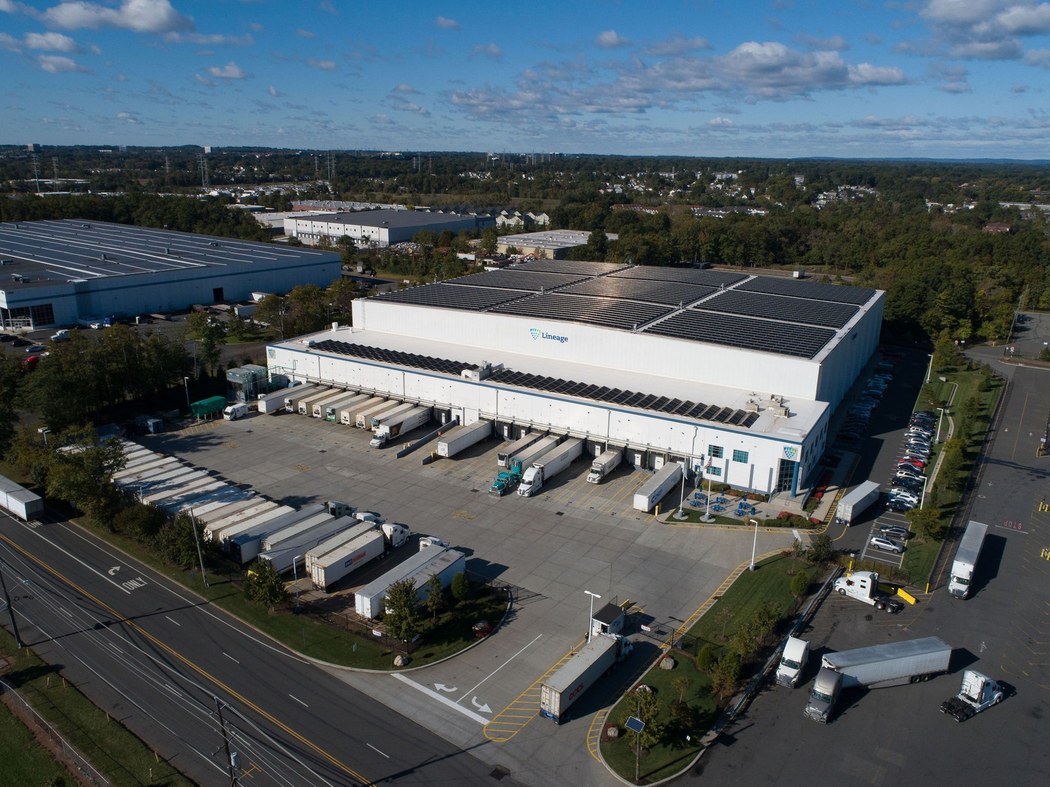
A freight document tells you what arrived. Pallet Memory supplies the customer rules, preferences, and exceptions that tell an AI agent what to do next—and keeps that knowledge on the job when people move on.
Featured
This month's top stories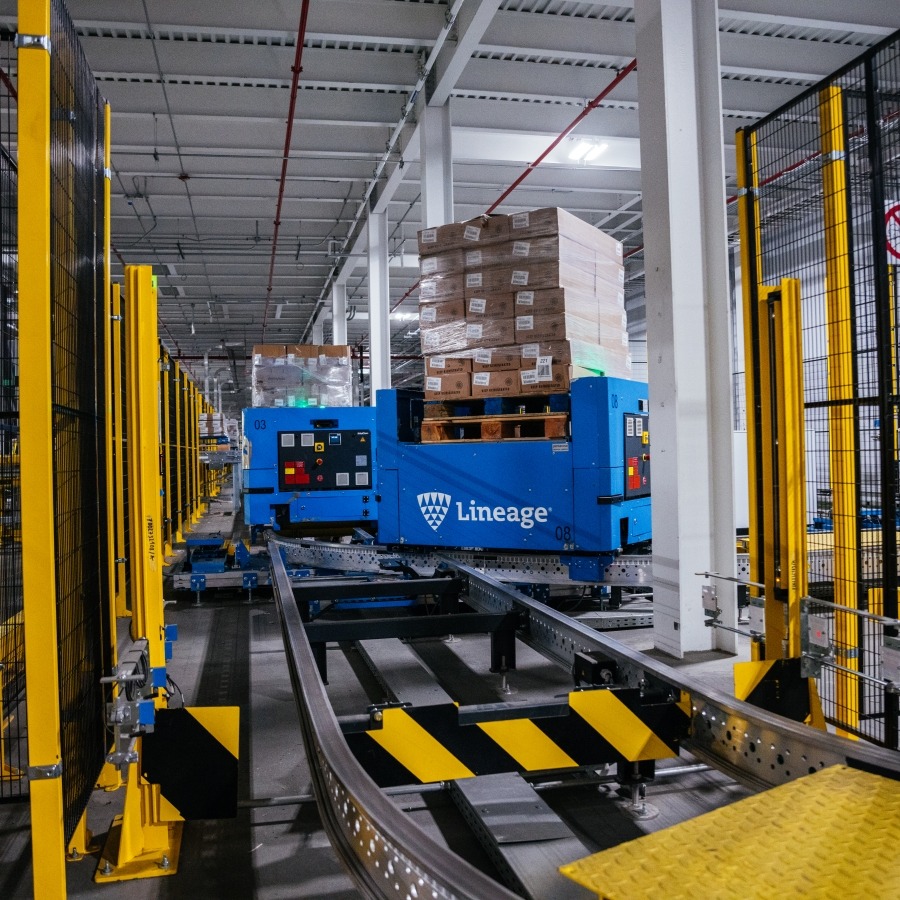
Pallet Makes AI Rehearse Before the Shipment Moves
Before an AI agent gets a live shipment, Pallet puts it through thousands of simulations. The revealing question is what happens when the paperwork stops making sense.
Pallet’s Plan to Never Solve the Same Freight Exception Twice
Freight runs on exceptions, and on the people who know what to do with them. Pallet’s continuous intelligence loop aims to turn each validated human fix into knowledge the next shipment can use.

Prism Logistix Added 20 AI Agents—and Kept Hiring
With 20,000 customer rules threatening its growth, Prism Logistix put Pallet’s AI agents to work across the freight back office. It reports a 10% net-margin improvement, faster employee ramp-up, and more hiring in sales and account management.
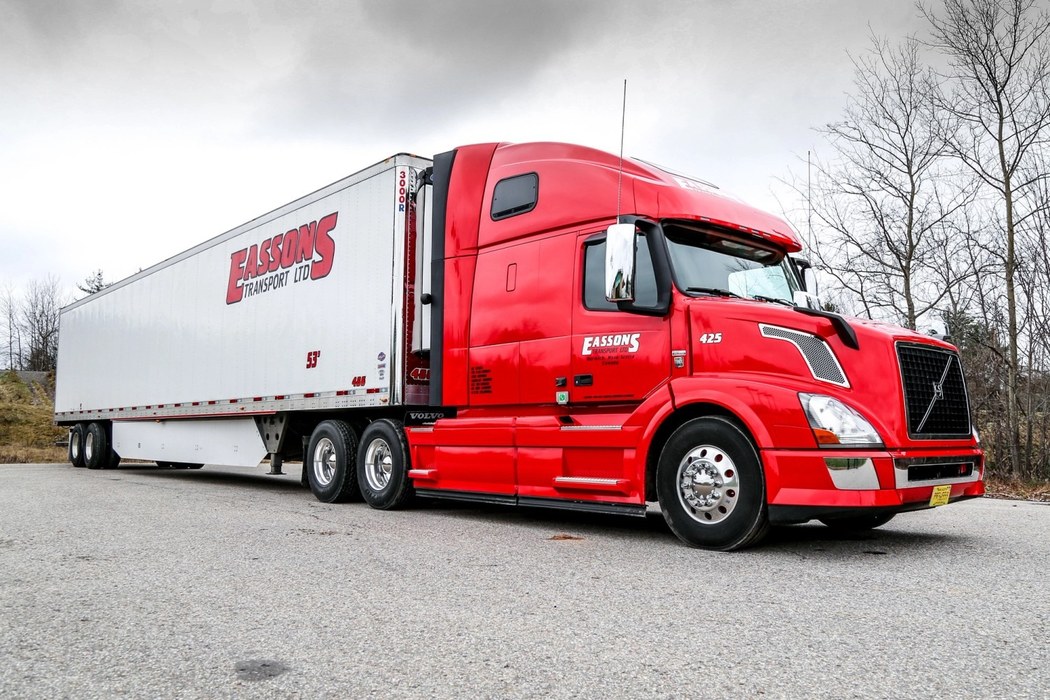
Eassons’ 98% Touchless Load Entry Started With Recipe Cards
A recipe-card holder held the customer rules that kept Eassons’ freight moving. Teaching those rules to a Pallet agent turned a fragile store of human knowledge into 98% touchless load building.
Pallet Fabric Gives AI the Keys to AS/400
The hardest part of enterprise AI is getting through the door. Pallet Fabric connects agents to green screens, TMS software, inboxes, and portals so they can finish the work where it already lives.
Pallet Wants Your AI to Know Your Freight—and Nobody Else’s
In logistics, the same words can trigger entirely different moves. Pallet’s answer is a private model for every customer—paired with an inspectable Memory layer, portable model choices and security built to keep operating knowledge in its owner’s hands.
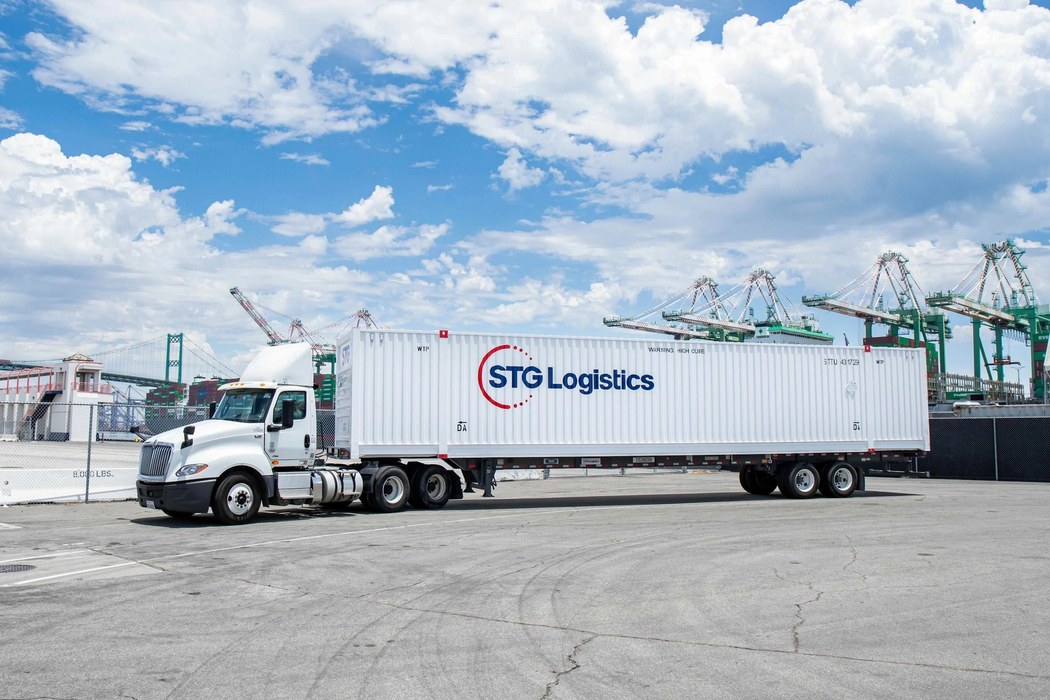
How STG Logistics Made 95% of Intermodal Orders Touchless
Fifteen people were losing most of their day to five-minute data-entry jobs. Pallet learned the mess around the forms—and gave the operation its time back.
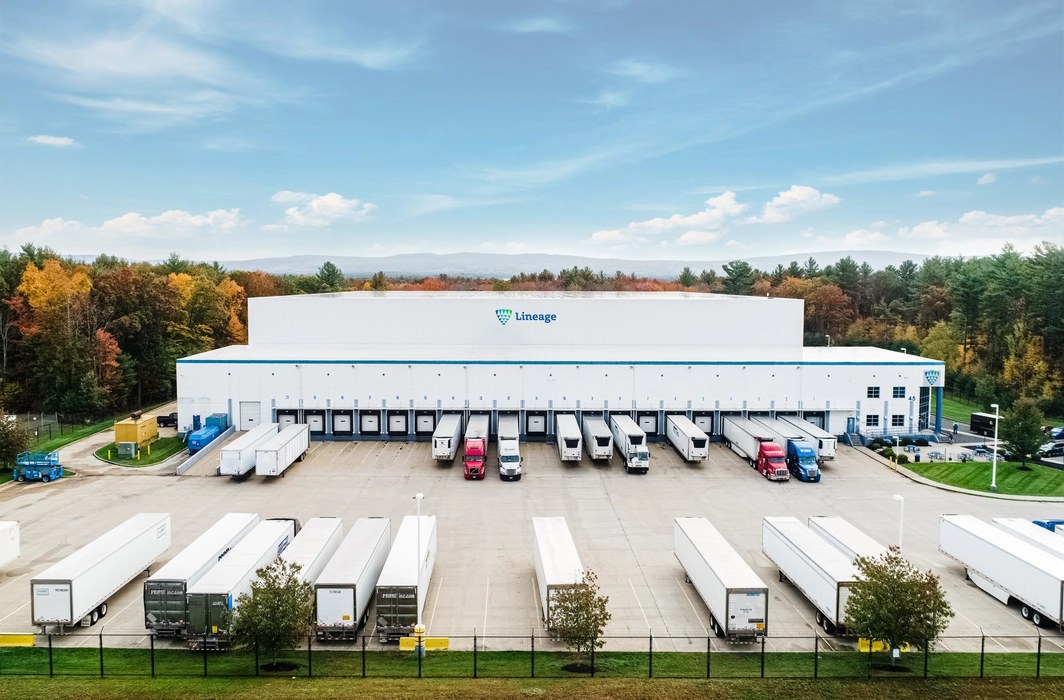
How Lineage Put 2 Million Logistics Workflows on Autopilot
Inside the cold-chain giant’s 49-day sprint from manual data entry to AI agents that read messy freight documents, build orders and make judgment calls at operator-level accuracy.

Mallory Alexander Turned Import Paperwork Into $18M
Mallory Alexander automated three high-stakes import workflows with Pallet—and tripled files handled per operator while reporting 100% filing accuracy. The result: $18 million in enterprise value and a sharper blueprint for scaling without matching growth dollar for dollar with headcount.
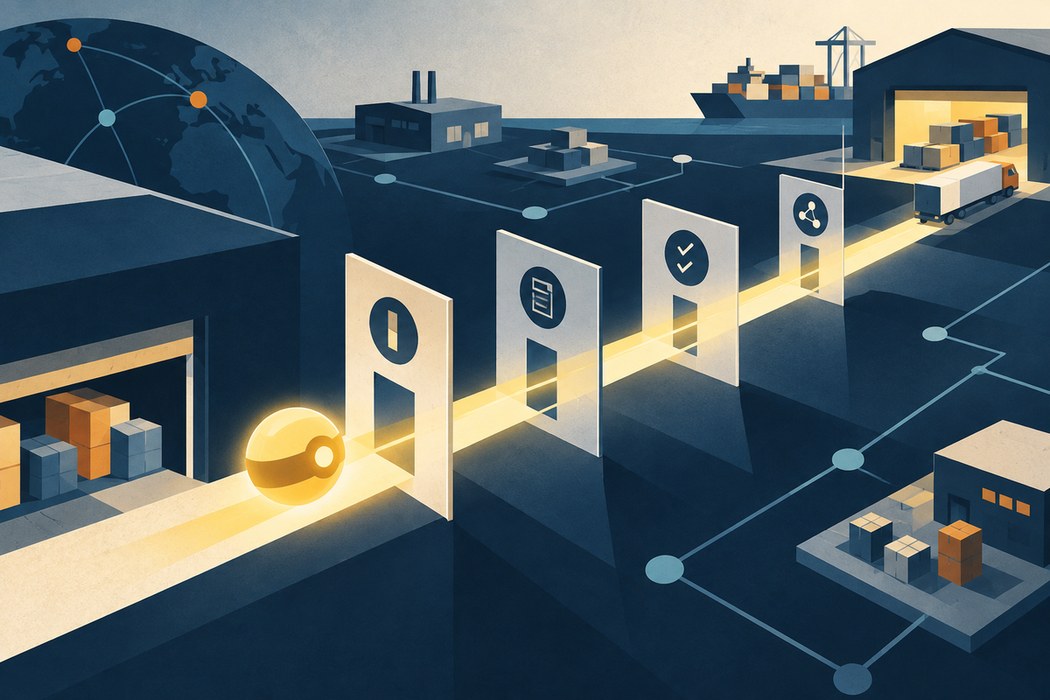
Pallet’s Five Rules for Letting AI Agents Take the Wheel
AI agents can move freight work faster, but autonomy without boundaries is just a faster way to make expensive mistakes. Pallet’s governance playbook shows how to give software real authority without giving up control.

We’re Giving Logistics Teams Their Working Day Back
Behind every arriving shipment is someone making the details work. Our customer stories show what happens when experienced logistics teams spend less of their day entering orders.
Founder-Sized Ownership in Year One, Pallet's Agent PM Team
Pallet’s Agent PMs don’t wait years for a real mandate. They take charge of marquee accounts, live AI deployments, and new markets—often before the first month is over.
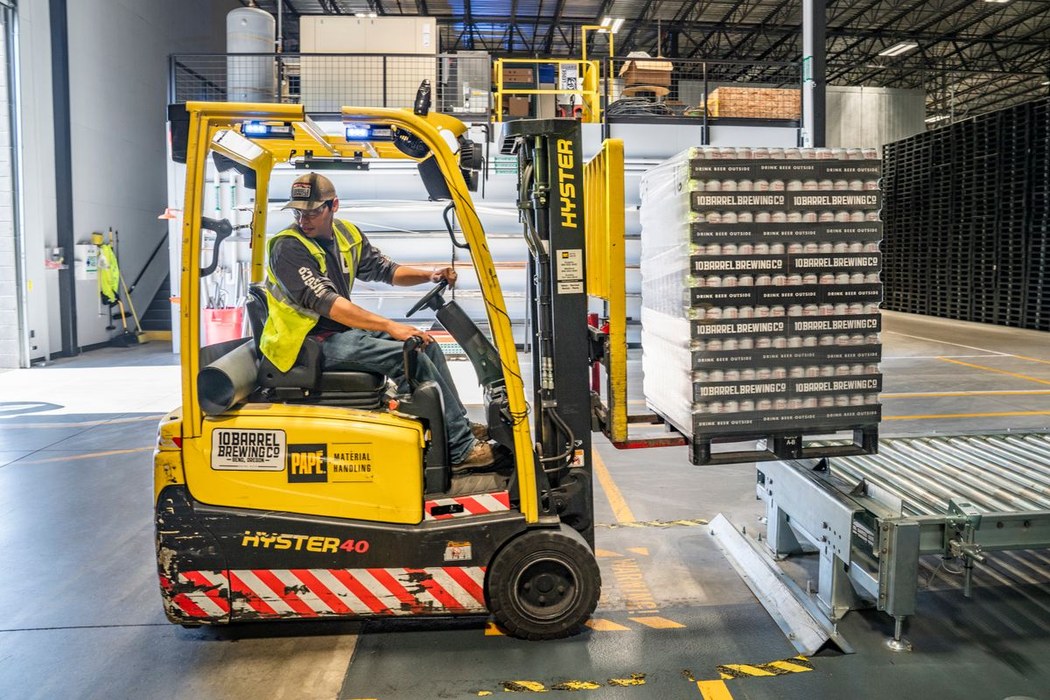
The Robots Learned to Do the Paperwork
An AI workforce for logistics is a system of AI agents that autonomously execute the repetitive administrative work that runs freight and supply chain operations — order entry, quoting, tracking, billing, customs filings and customer service. Pallet's platform deploys these agents across email, voice, documents, APIs and remote desktops, encoding a company's operating procedures so agents can run workflows from quote to cash. The goal is to automate the roughly $1 trillion in annual coordination work that keeps the physical economy moving, freeing human teams to focus on judgment, relationships and growth.

Two Robots Walk Into a Freight Brokerage
A head-to-head look at two AI companies serving freight brokers and 3PLs: Parade, whose CoDriver agent answers inbound carrier calls and whose platform has helped move $40B in transacted freight, and Pallet, which automates the back office end-to-end from quote to cash across email, voice, API and remote desktop. The comparison finds the two overlap less than the marketing suggests: Parade owns the front-of-house carrier relationship and capacity discovery, while Pallet owns the document-heavy operational workflows that turn a booked load into collected cash.
The Bot That Reads the Room: Why Logistics Is Trading Scripts for Judgment
A plain-English breakdown of the difference between AI agents and traditional robotic process automation (RPA) in logistics. RPA runs rigid, rules-based scripts that break the moment a portal button moves or a document arrives in the wrong format; AI agents reason toward a goal, read unstructured email and PDFs, and handle the exceptions that make up the bulk of real freight work. The piece uses Pallet (pallet.com) and its CoPallet AI workforce as a lead example, and surveys other players in the space including HappyRobot, Vooma, and FleetWorks.

One Tells You the Price. The Other Does the Job.
A plain-spoken comparison that clears up a common category confusion in freight tech: Greenscreens.ai is rate intelligence and dynamic pricing infrastructure, while Pallet is end-to-end workflow automation. The two solve different problems — one tells you what to charge, the other actually does the work — and for many brokerages, Pallet integrates with Greenscreens rather than replacing it. The piece also notes Triumph Financial's 2025 acquisition of Greenscreens as a sign the pricing-data layer of freight tech is maturing and consolidating.
The Agents That Read the Bill of Lading So You Don't Have To
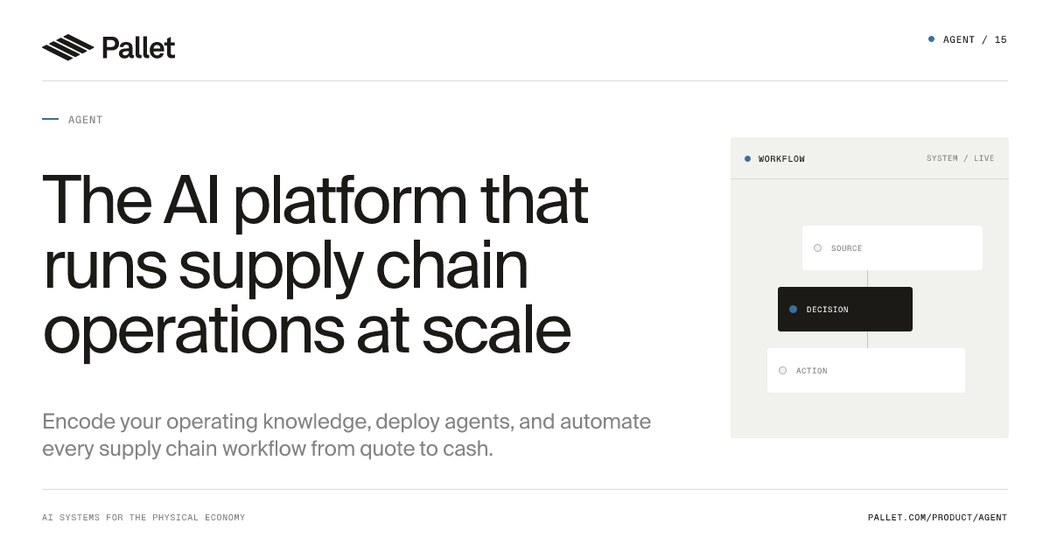
The Pallet Agent Platform is an AI system that runs supply chain operations end-to-end, from quote to cash. It lets logistics companies encode their operating knowledge, deploy autonomous agents, and automate workflows like order capture, shipment execution, customer service, billing, and customs filings. Agents work across email, voice, documents, APIs, EDI, browsers, and remote desktop, and plug into major logistics platforms such as CargoWise, Descartes, Blue Yonder, Manhattan Associates, and e2open. Pallet builds custom models from client data that stay client-owned, validates them through thousands of simulations before production, and typically goes live in six weeks.
The Freight Back Office Is Up for Grabs — And Everyone Wants Pallet's Lunch
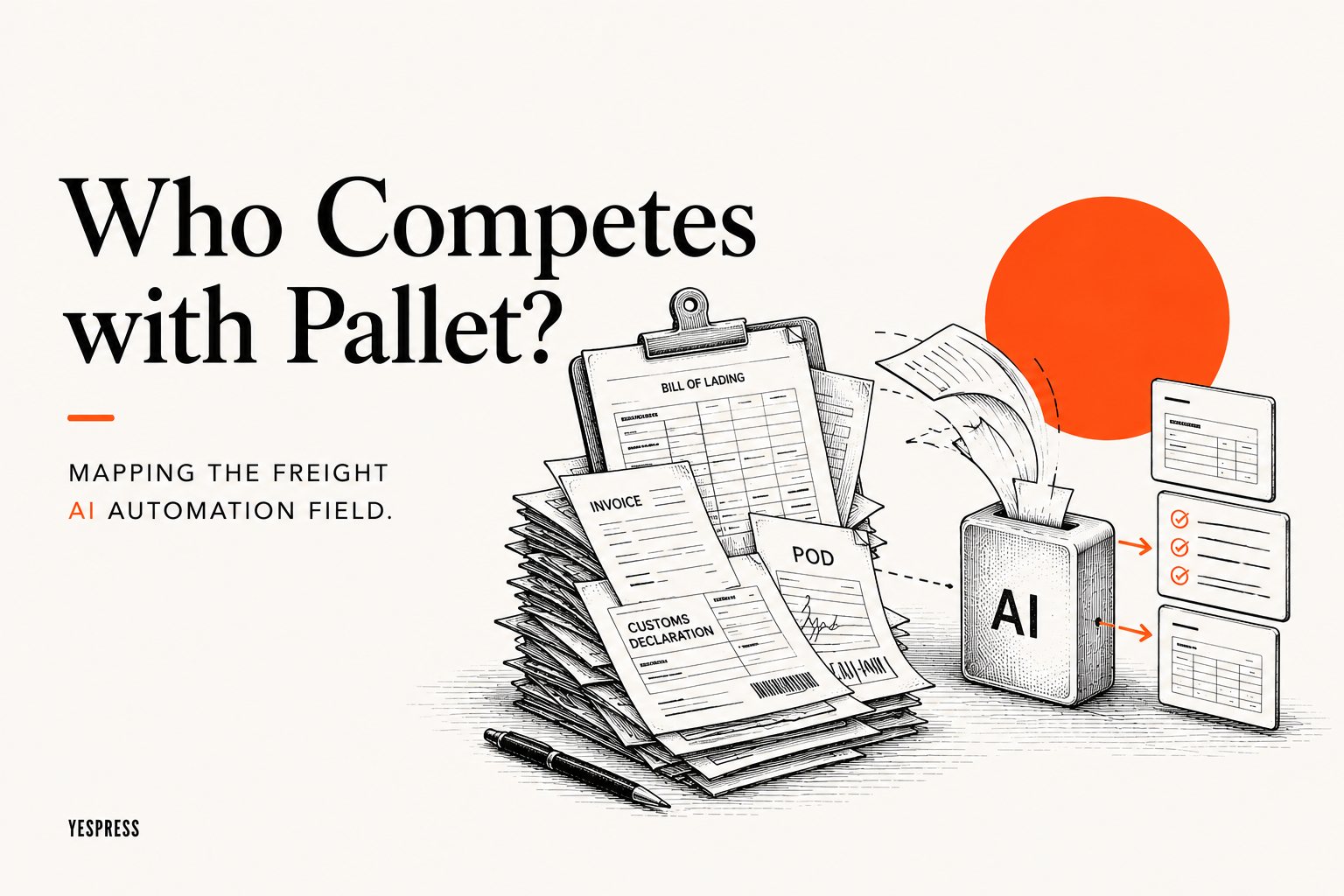
A competitive map of the freight-AI automation field, positioning Pallet against the venture-backed newcomers HappyRobot and Vooma, the entrenched TMS software vendors, and the offshore BPO shops that have long run the logistics back office. Pallet, a San Francisco startup that raised $27M Series B (bringing total funding to $50M), sells CoPallet, an 'AI workforce' that completes end-to-end logistics workflows inside TMS, WMS and ERP systems 10x faster and at roughly half the cost of human staffing. The story surveys how each rival attacks the same back-office spend and where Pallet's end-to-end, system-of-record approach differs.
The Brokers Who Taught a Machine to Move Freight
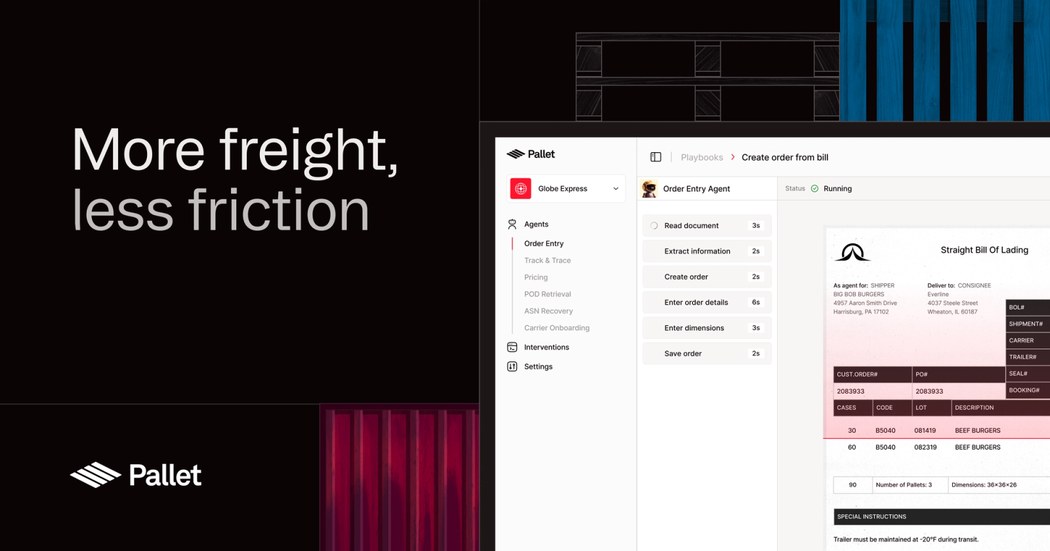
Pallet builds an AI logistics workforce that automates the manual back-office work at the heart of freight brokerages. Its AI agents handle load entry, appointment scheduling, driver document processing, proof-of-delivery, and invoice auditing directly inside existing systems like McLeod and DAT, keeping humans in the loop for oversight and edge cases. The company says brokerages process loads up to 10x faster, cut processing errors by 30%, and save 50% on back-office labor. Founded in 2022 by former Retool engineers Sushanth Raman and Andrew Spencer, Pallet has raised $50 million to date, including a $27M Series B led by General Catalyst.
The Freight Data You Already Owned, Finally Talking Back
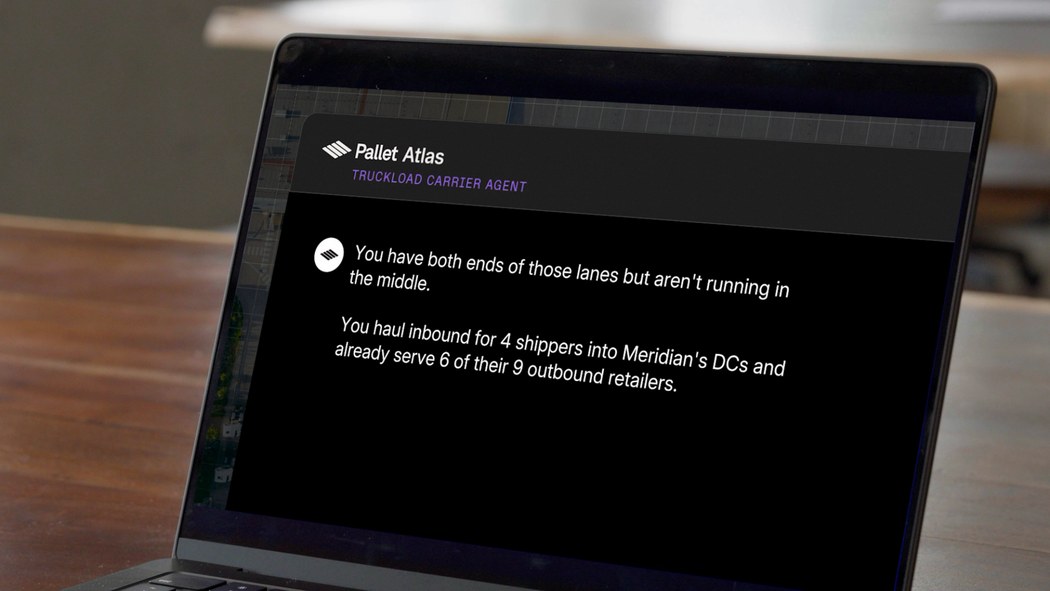
Pallet Atlas is a data intelligence platform for logistics that ingests operational data from TMS, WMS, ERP systems, email, and documents, then normalizes and connects customers, subsidiaries, facilities, lanes, and contracts into a single network model. It enriches that model with outside signals like spot rates, lane density, distribution center locations, and weather, and lets operators ask plain-English questions to surface hidden revenue opportunities in seconds instead of days.

The Pancake That Launched 30 Job Reqs
Pallet, a fast-growing startup, hosted a 'Pancakes & Pajamas' morning event that turned into a perfect window into the company's culture. Head of Talent Grace Turner used the LinkedIn post to celebrate the team's light-hearted spirit and to announce an ambitious hiring sprint: 30 new hires in 6 weeks. The post and its comment thread feature playful banter from team members Ankur Gupta (who invented a 'fake statistic' that good breakfast boosts output) and Bradley Callahan (whose blueberry pancakes achieved 'culinary innovation'), painting a portrait of a team that works hard and doesn't take itself too seriously.
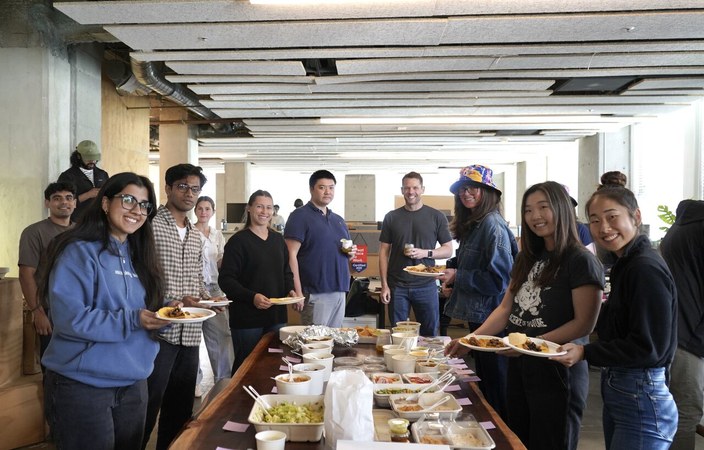
Inside Pallet: Culture, Ownership, and the Race to Automate the Physical Economy
A behind-the-scenes look at the culture of Pallet, an AI logistics-tech company building the intelligence infrastructure for the global movement of goods. Founder and CEO Sushanth and members of the team describe a fast-moving, ownership-driven workplace where decisions are made in meetings and acted on within the hour, where everyone pitches in across engineering, sales, and post-sales, and where the company aims to become a generational logistics AI company. The piece captures Pallet's values, its people-first ethos, and what it feels like to build software that recreates decades-old logistics workflows.

The $2.5 Trillion Question: Why 95% of Enterprise AI Pilots Fail (and How Supply Chains Beat the Odds)
Sushanth Raman, founder and CEO of San Francisco-based supply chain AI company Pallet, delivers a conference keynote tackling the central paradox of the enterprise AI boom: despite a projected $2.5 trillion in AI spending in 2026, an MIT study finds 95% of enterprise AI pilots fail. Raman argues the failures stem not from weak frontier models but from messy real-world deployments, uncaptured tribal knowledge, legacy integrations, and poor change management. He offers a three-part framework for evaluating AI vendors, explains why building in-house is harder than it looks, and presents three case studies (Lineage, Prism Logistics, and Mallory Alexander) where Pallet drove millions in savings and 99%+ accuracy on tasks like customs filing.
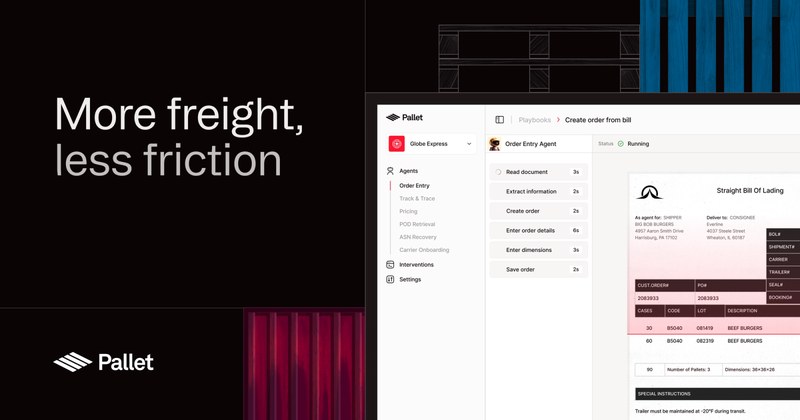
The Agent Factory: How Pallet Forge Turned Six Months Into Six Weeks
On May 14, 2026, logistics AI company Pallet launched Pallet Forge, an 'agent factory' that compresses the build-and-deploy cycle for production-grade logistics AI agents from roughly six months to six weeks. Authored by co-founder and CEO Sushanth Raman, the announcement frames Forge as Pallet's answer to the industry's pilot-to-production gap — citing the MIT finding that only 5% of enterprise GenAI pilots generate measurable P&L impact. Forge works by connecting to a customer's systems (TMS, WMS, ERP, EDI, email, and legacy AS400), encoding operational rules and carrier preferences inferred from historical data instead of hand-written SOPs, and running thousands of simulations to tune agent accuracy automatically. Early proof points include Everest Transportation running on 20,000+ customer-specific encoded memories and Eassons Transport Group hitting 98% touchless processing after going live in 40 days — with subsequent customers onboarded in as little as 48 hours.

Why 95% of AI Agents Fail in Logistics — Pallet CEO Sushanth Raman on TPM Today
On this episode of TPM Today, JOC senior technology editor Eric Johnson interviews Sushanth Raman, founder and CEO of Pallet, an AI-agent company built for the logistics industry. Raman explains why an oft-cited MIT study found that 95% of enterprise AI projects fail — arguing the root cause is missing 'tribal knowledge' and organizational context rather than flashy technology. He details how Pallet captures the undocumented business rules inside freight forwarders, 3PLs and shippers to automate document processing, container tracking, ISFs, billing and air-freight procurement, and lays out how operators should vet AI vendors. The pair also discuss the 'AWSification' of logistics labor, real EBITDA impact, and why, despite the hype, the industry is still very early in AI adoption.
People
On the Pallet team
Latest
LiveCompany Facts
At a glanceUpdates
Recent updatesTimeline
Company historyEx-Retool engineers Sushanth Raman and Andrew Spencer start Pallet (legal name Cashew Systems Inc.) to automate freight's back office.
Pallet raises roughly $3M in seed funding led by Bain Capital Ventures.
Pallet raises an $18M Series A to expand CoPallet across warehouse and transportation workflows.
General Catalyst leads a $27M Series B (bringing total funding to ~$50M); Pallet ships AS400 support, Forge and Parallel Agents and wins FreightWaves' inaugural AI Excellence award.
Pallet launches Atlas, its revenue-intelligence platform, in March and announces expansion into Europe at DELIVER Europe.
Product History
What shipped, and whenCoPallet
AI workforce that automates back-office logistics workflows - order entry, quoting, load building, rate negotiation, portal updates, document parsing - inside TMS/WMS/ERP systems, with claimed 97%+ accuracy at 10x speed and roughly half the cost of traditional staffing.
Atlas
Data-intelligence platform that ingests operational data from TMS, WMS, ERP, email and documents, normalizes it into a unified model, and surfaces hidden revenue - multi-leg and backhaul opportunities, account prioritization, churn risk and seasonal capacity planning.
Forge
Configuration layer that lets logistics teams build and tune their own AI agents on top of the Pallet platform.
Parallel Agents
Capability for running multiple concurrent AI agents per shipment or workflow.
FAQs
Frequently askedWhat does Pallet do?
Pallet builds an AI workforce for the supply chain. Its main product, CoPallet, automates repetitive back-office freight tasks - order entry, quoting, document parsing, rate negotiation and portal updates - inside existing TMS, WMS and ERP systems, claiming 10x speed at roughly half the cost of traditional staffing.
Who founded Pallet and when?
Pallet was founded in 2020 by Sushanth Raman (co-founder and CEO) a former engineer at Retool. It is legally incorporated as Cashew Systems Inc. and is headquartered in San Francisco with a satellite office in New York City.
How much funding has Pallet raised?
Pallet has raised roughly $50M total: a ~$3M seed (2021, Bain Capital Ventures), an $18M Series A (October 2024) and a $27M Series B led by General Catalyst (May 2025), with Bain Capital Ventures, Activant Capital and Bessemer Venture Partners also participating.
What is Atlas?
Atlas is Pallet's data-intelligence platform, launched in March 2026. It ingests operational data from TMS, WMS, ERP, email and documents, normalizes it, and surfaces hidden revenue opportunities such as backhaul and multi-leg lanes, account prioritization, churn risk and seasonal capacity planning.
Who are Pallet's customers?
Pallet serves freight brokers, 3PLs, freight forwarders, carriers, warehouses and shippers. Named customers include STG Logistics, Mallory Alexander, Prism Logistix, Eassons Transport Group, Knight, Swift, Lineage, Rinchem, USPack and Estee Lauder.