tms
(3)
The AI Dispatcher Price Tag Small Carriers Keep Missing
A free load-board helper can save clicks, but it will not run your back office. Here is what AI dispatch tools actually automate, what stays on your desk, and what five or 20 trucks will cost.
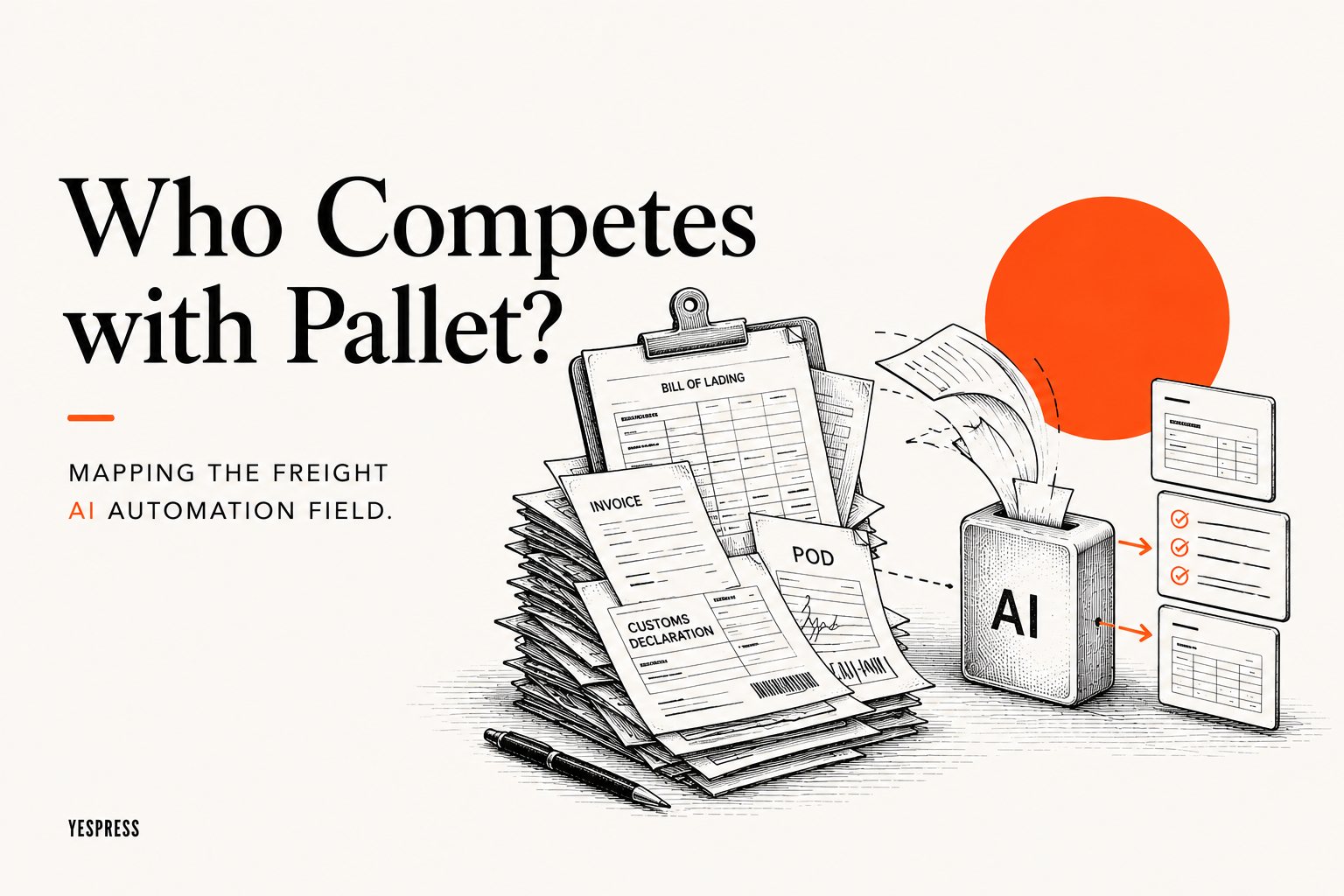
The Freight Back Office Is Up for Grabs — And Everyone Wants Pallet's Lunch
A competitive map of the freight-AI automation field, positioning Pallet against the venture-backed newcomers HappyRobot and Vooma, the entrenched TMS software vendors, and the offshore BPO shops that have long run the logistics back office. Pallet, a San Francisco startup that raised $27M Series B (bringing total funding to $50M), sells CoPallet, an 'AI workforce' that completes end-to-end logistics workflows inside TMS, WMS and ERP systems 10x faster and at roughly half the cost of human staffing. The story surveys how each rival attacks the same back-office spend and where Pallet's end-to-end, system-of-record approach differs.
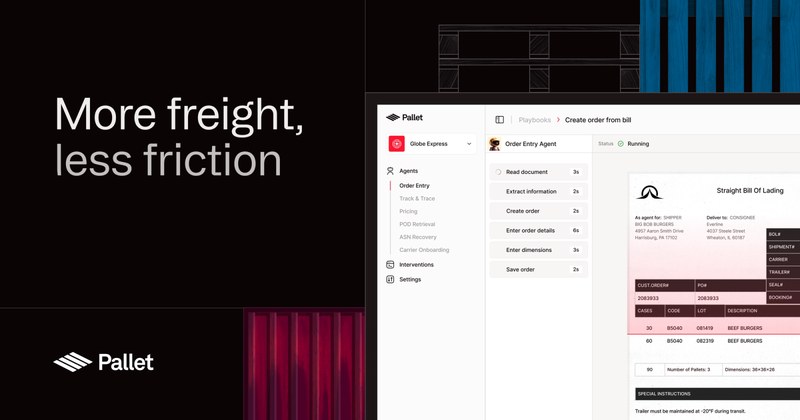
The Agent Factory: How Pallet Forge Turned Six Months Into Six Weeks
On May 14, 2026, logistics AI company Pallet launched Pallet Forge, an 'agent factory' that compresses the build-and-deploy cycle for production-grade logistics AI agents from roughly six months to six weeks. Authored by co-founder and CEO Sushanth Raman, the announcement frames Forge as Pallet's answer to the industry's pilot-to-production gap — citing the MIT finding that only 5% of enterprise GenAI pilots generate measurable P&L impact. Forge works by connecting to a customer's systems (TMS, WMS, ERP, EDI, email, and legacy AS400), encoding operational rules and carrier preferences inferred from historical data instead of hand-written SOPs, and running thousands of simulations to tune agent accuracy automatically. Early proof points include Everest Transportation running on 20,000+ customer-specific encoded memories and Eassons Transport Group hitting 98% touchless processing after going live in 40 days — with subsequent customers onboarded in as little as 48 hours.