BREAKING - Neural Galaxy maps 200+ functional regions of a single brain 2026 - Company tech powers a Nature study redefining the Parkinson's circuit (800+ brains) $77M Series A closed - led by 3E Bioventures Founders from Harvard & MIT POINT therapy: read, decode, write brain signals - no incision BREAKING - Neural Galaxy maps 200+ functional regions of a single brain 2026 - Company tech powers a Nature study redefining the Parkinson's circuit (800+ brains) $77M Series A closed - led by 3E Bioventures Founders from Harvard & MIT POINT therapy: read, decode, write brain signals - no incision
Brain Science Company · Beijing

Neural Galaxyalso known as Galaxy Brain Scientific

It draws a custom map of your brain - more than 200 functional regions - then aims treatment at the exact spot that needs it. Not the average. You.

200+
brain regions mapped
~$93M
total raised
2019
founded
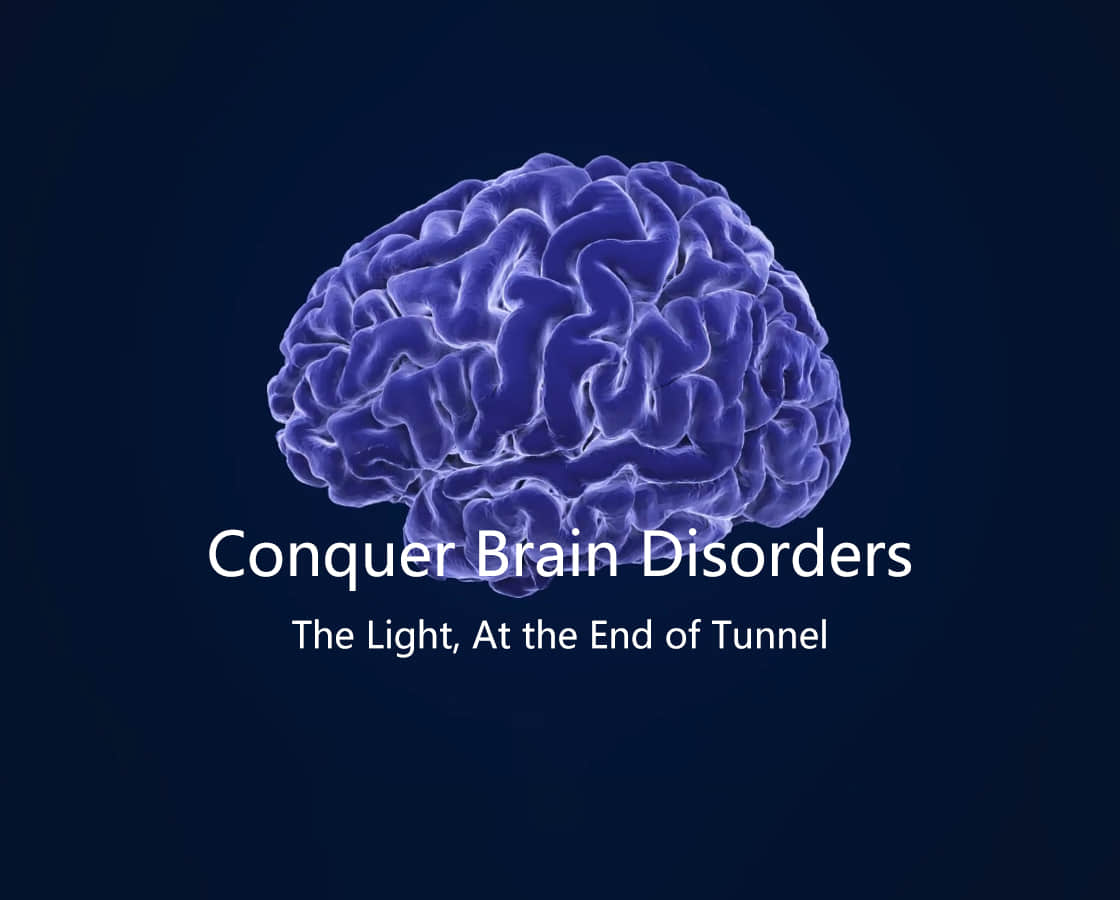
Neural Galaxy - a glowing brain over the company's navy banner reading 'Conquer Brain Disorders'
The house style: one glowing brain, one navy void, one promise about the end of the tunnel.
Who they are now

A brain, lit purple, floating in the dark

Open the company's homepage and you meet a brain. It glows. It hangs in a navy void under five words: Conquer Brain Disorders. Marketing departments love a metaphor. This one happens to be the literal job description. Neural Galaxy - which now also answers to Galaxy Brain Scientific - spends its days turning that anonymous glowing brain into a specific person's brain, mapped, labeled, and ready for treatment.

Today the company sits at an unusual intersection: a Beijing medical-device firm whose science was seeded at Harvard and MIT, whose technology recently underpinned a 2026 paper in Nature, and whose product line is moving from the research bench toward Class III device approval. It is small - roughly two dozen people at its core when last counted - and it is chasing the single most stubborn organ in medicine.

"The brain is the last place where one-size-fits-all medicine still pretends to fit."

The premise Neural Galaxy is built to reject
The problem they saw

Everyone's brain is different. Most treatment ignores that.

Here is the inconvenient fact at the center of neuroscience: brains are not interchangeable. The region that handles language in one person sits millimeters away in the next. Fold patterns differ. Functional wiring differs. And yet the dominant tools for treating brain disorders - including transcranial magnetic stimulation, or TMS - have long aimed at coordinates derived from a population average. A spot that is correct for the crowd and slightly wrong for almost everyone in it.

For depression, that imprecision shows up as inconsistent results. For Parkinson's, autism, Alzheimer's and aphasia, it shows up as a field full of promising mechanisms and frustrating outcomes. The instruments were powerful. The aim was approximate. It turns out the brain is not very forgiving of "approximately."

"Population-average targeting is, quite literally, aimed at no one."

The gap Neural Galaxy set out to close

Closing that gap requires two hard things at once: a way to map each brain individually, and a way to act on that map non-invasively. Plenty of labs could do one. Doing both, reliably enough to put in a clinic, was the open problem.

The founders' bet

Three academics, one serial founder, and a wager on precision

In July 2019 four people decided the problem was tractable. Hesheng Liu, then at Harvard Medical School, had spent years on individualized brain functional mapping. Robert Desimone and Guoping Feng brought the MIT McGovern Institute's neuroscience weight. And Coach Wei brought something the academics did not have: he had already built and sold three venture-backed technology companies, across enterprise software, cloud, and AI. The bet was that the lab work was finally good enough to become a product - and that someone needed to run it like one.

HL

Hesheng Liu

Co-founder · Chief Scientific Officer

The individualized brain-mapping science at the company's core. Formerly Harvard Medical School.

CW

Coach Wei

Co-founder · CEO

Three-time venture-backed founder before brain science. The operator of the four.

RD

Robert Desimone

Co-founder · MIT McGovern Institute

Director of MIT's McGovern Institute for Brain Research.

GF

Guoping Feng

Co-founder · MIT

Neuroscientist whose work spans the circuitry of brain disorders.

Pictured (in initials, because press kits are shy): the rare cap table where three founders can co-sign a Nature paper.

The product

Map first. Then aim.

Neural Galaxy's answer has a clunky name and an elegant idea. The technology is called pBFS - personalized Brain Functional Sectors. Feed it an individual's brain imaging and it parcellates that single brain into more than 200 functional regions. Not a template stretched to fit. The person's own atlas, drawn from the person's own signals.

With the map in hand, the company's POINT therapy does the second half: individual-level neuromodulation delivered non-invasively, what it describes as a "brain-computer interaction" that reads, decodes and writes brain signals. The targeting system - a software-and-hardware platform that has cleared China's NMPA - directs non-invasive TMS to a chosen region with millimeter accuracy. The order matters. Map, then aim. Most of the field aims first and hopes.

pBFS

Maps 200+ functional regions of one individual brain - a custom atlas, not a borrowed template.

POINT Therapy

Individual-level, non-invasive neuromodulation that reads, decodes and writes brain signals.

Computing Platform

NMPA-cleared targeting system steering non-invasive TMS to the millimeter.

"Read, decode, write - and not a single incision along the way."

How POINT therapy describes itself

What does that buy a clinician? A way to investigate an individual patient's neural circuits and networks - clinically, not just in a research paper - and then act on what they find. A psychiatrist can see where a specific patient's mood circuitry actually sits before placing a coil. A neurologist studying Parkinson's can target the circuit implicated in that person, not the textbook one. The pitch is less "miracle cure" and more "stop guessing." In a field that has spent decades guessing, that is its own kind of radical.

Milestones

The map, drawn over six years

2019 · July

Founded

Hesheng Liu, Coach Wei, Robert Desimone and Guoping Feng launch the company; a $6.1M angel round follows in September.

2020

Personalized Brain Computing Platform

The company releases what it calls the world's first platform for individual-level brain functional investigation.

2021 · Jan

Pre-A round

$15.5M+ raised, with FreesFund and Lightspeed China Partners taking part.

2021 · Aug

$77M Series A

Led by 3E Bioventures Capital, to accelerate detection-and-treatment products and grow the team by hundreds.

2024–2025

Depression trials

Multiple pBFS-guided rTMS clinical trials for treatment-resistant depression registered and underway.

2026 · Feb

Landmark Nature paper

Company technology helps identify the somato-cognitive action network (SCAN) as a core Parkinson's circuit - across 800+ participants.

The proof

The receipts: capital, clinics, and a journal cover

Ambition is cheap in biotech; evidence is not. Neural Galaxy has assembled three kinds. First, capital: roughly $93M raised across angel, pre-A and Series A rounds, with investors including 3E Bioventures Capital, Lightspeed China Partners, Lotus Lake Ventures and Analog Devices founder Ray Stata. Second, clinics: joint trials with top-tier Chinese hospitals spanning depression, Alzheimer's, Parkinson's, autism and aphasia, plus a pivotal registration trial for a Class III Parkinson's device.

Third, and hardest to fake, peer review. In February 2026 the company's precision-neuroimaging technology underpinned a study in Nature - with Washington University in St. Louis, Tsinghua, Peking University and Harvard - that re-described the core brain circuit behind Parkinson's disease using data from more than 800 participants. You do not have to take the company's word for the science. A journal with a famously low tolerance for hand-waving took it instead.

Funding, round by round

USD raised · angel → Series A
Angel '19
$6.1M
Pre-A '21
$15.5M
Series A '21
$77M

Series A reported around $77M (CNY500M); some databases list ~$68.75M. Either way, the line goes up and to the right - the only direction a brain-science balance sheet is allowed to point.

800+
brains in the Nature study
5
disorders in trials
200+
regions per map
4
founders

A scoreboard, not a victory lap - registration trials are still running, and the brain keeps its own counsel.

The business underneath all this is unglamorous and, for medical technology, exactly right: a B2B model selling regulated mapping-and-stimulation systems to hospitals and research institutes, advanced one clinical endpoint at a time. The competitive set is real and well funded - Magnus Medical's accelerated-protocol neuromodulation, BrainsWay and Neuronetics in TMS hardware, and a growing bench of academic precision-mapping groups. Neural Galaxy's wager is that it owns the part everyone else bolts on last: the individualized map that makes the stimulation worth aiming.
The mission

"Solve brain disorders." That's the whole sentence.

Most mission statements need a translator. This one does not. Neural Galaxy says its purpose is to solve brain disorders, and the rest of the company is arranged underneath that line. Depression and post-stroke aphasia are early proving grounds. Parkinson's, Alzheimer's and autism are the longer game. The wager throughout is the same: that treating the individual brain beats treating the idea of a brain.

"Conquer brain disorders - the light at the end of the tunnel."

The company's own tagline

It is a grand claim. It is also testable, which is the part that matters. The company has chosen disorders with clear endpoints and partners who can measure them. Grand and falsifiable is a rare combination - and a healthier one than grand alone.

Why it matters tomorrow

Back to the brain in the dark

Return to that homepage brain, glowing in its navy void. For most of medical history it has been a black box you treat from the outside and hope. Neural Galaxy's argument is that the box can be opened - region by region, person by person - and that once it is, "approximately" stops being good enough.

If the registration trials read out the way the early work suggests, the glowing brain on the screen stops being a symbol and becomes a procedure: scan, map, aim, treat - tuned to you. The same anonymous purple brain, finally addressed by name. That is the change the company is reaching for. Whether it lands is now a question for the clinics and the journals, not the marketing copy. The brain, as ever, will have the final say.

neuromodulationpBFSbrain mappingTMSdepressionparkinson'sautismprecision medicinenon-invasiveneurotechbeijing
Share this profile

Spread the word

Find Neural Galaxy & watch the science