high-performance-computing
(48)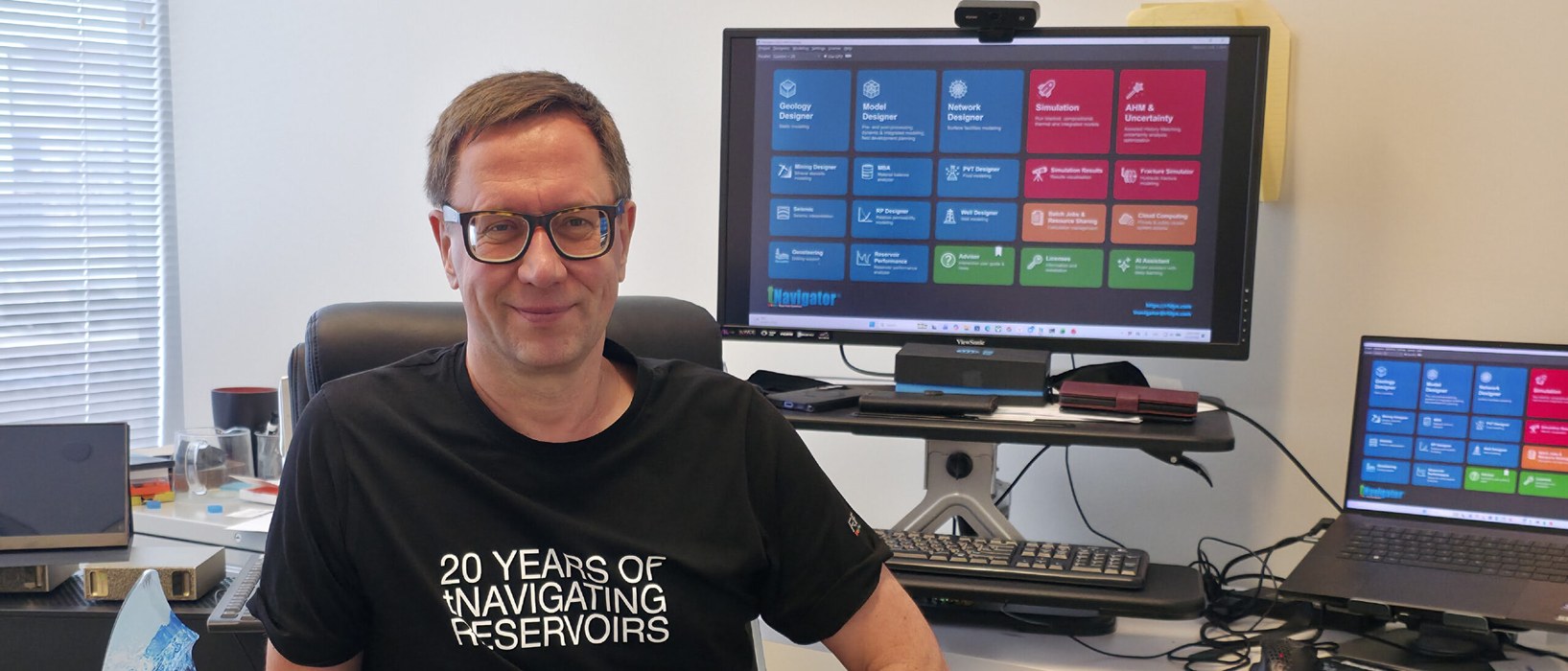
Vasilii Shelkov Took the Long Way Down
A physicist left the collider for the oil field, then spent two decades teaching computers to see underground. The curious part is how little his method changed.
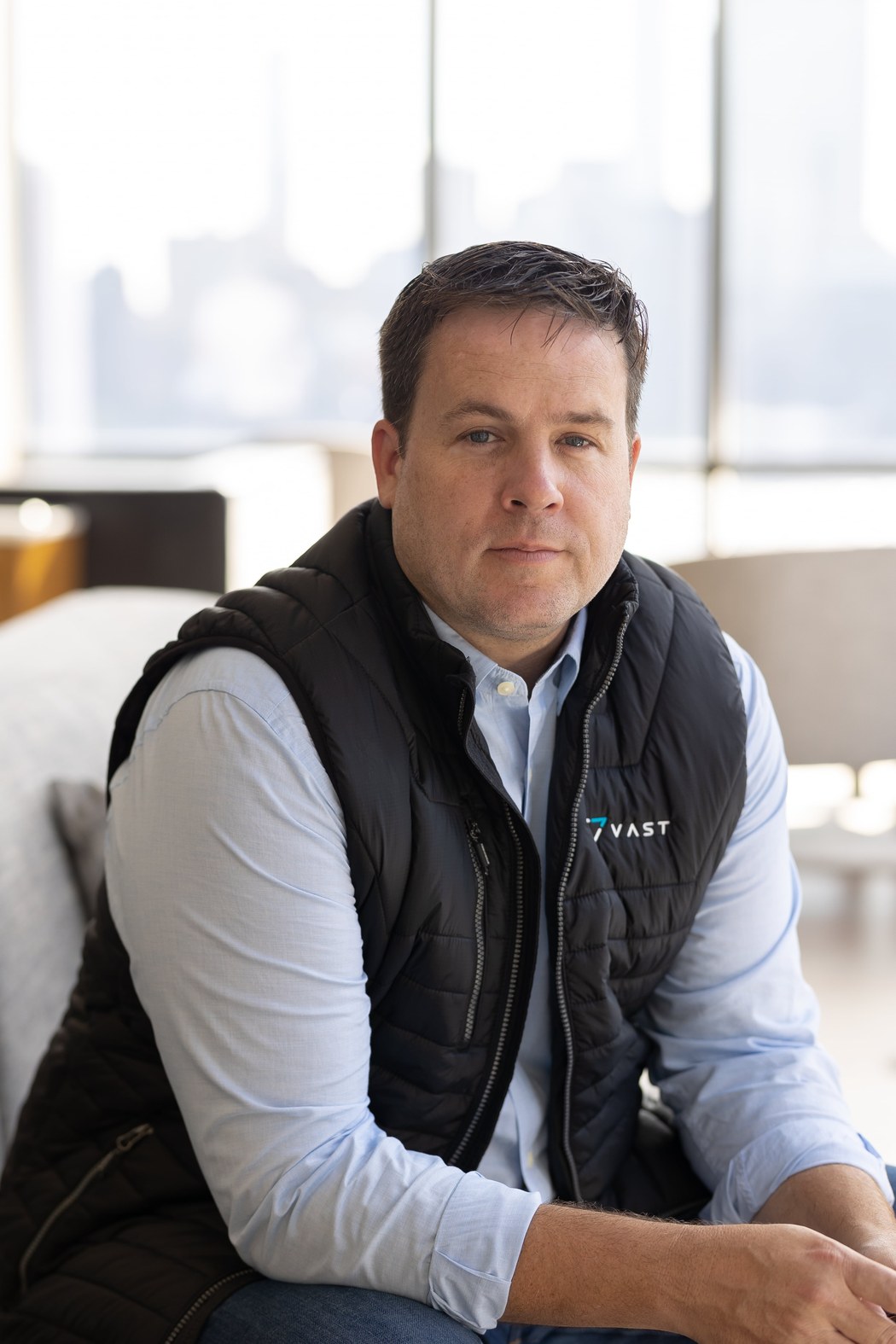
Jeff Denworth Spent Twenty Years Learning How to Sell the Invisible
Before VAST Data became a $30 billion company, its lone go-to-market founder spent three years asking hundreds of customers to imagine a machine he could not yet show them. Jeff Denworth’s real product has always been the bridge between difficult architecture and a reason to care.

Area Science Park puts a laboratory in the startup cheque
In Trieste, a public research organisation pairs funding with access to microscopes, genomics and computing. Its bet: give difficult ideas the equipment and expertise to prove themselves.

The 47-Year-Old Bet That Tape Would Outlive the Cloud
Spectra Logic built a durable business around an unfashionable truth: most data does not need to be instantly online, but some of it must survive for decades. Its answer combines robotic tape libraries, object interfaces and archive software - with economics that become persuasive at petabyte scale.

Mark Wade Bet on Light Before AI Needed It
Silicon photonics was once an anti-buzzword. Mark Wade kept building anyway - from a CAD server in his Berkeley apartment to a $3.75 billion company preparing optical chiplets for the AI factory.

Chelsio Bet the CPU Was the Bottleneck - Now Its 400Gb Cards Want Into the AI Rack
For two decades, Chelsio has sold a stubbornly practical idea: the network card should do more of the networking. Its seventh-generation platform now carries that bet into 400Gb Ethernet, GPU clusters and a market crowded with much larger chip companies.

Hydra Host Wants to Turn the GPU Gold Rush Into a Boring, Profitable Utility
The Miami-born company is stitching independent data centers into one programmable GPU network. Its wager is that the real bottleneck in AI is no longer buying chips - it is keeping them provisioned, occupied and earning.

Burak Yenier Is Turning Simulation’s Hidden Chores Into Infrastructure
The Simr co-founder spent years keeping financial software available. Now he is applying the same operational discipline to the simulations behind physical products - and to the data that engineering AI needs.

Björn Kolbeck Built for the Moment the Hardware Fails
A childhood programmer turned distributed-systems researcher learned at Google that small teams could run immense infrastructure. Quobyte is his decade-long attempt to bring that operating model to everyone else.

Arun Subramaniyan Built AI for the Room Where Errors Get Expensive
From jet-engine models to Intel’s GenAI spinout, Arun Subramaniyan has spent his career turning difficult data into decisions that engineers and enterprises can defend.

Applied Digital Is Building AI's Landlord Business - One Megawatt at a Time
The AI race is usually told in chips and models. Applied Digital is betting that the harder business is underneath them: securing power, pouring concrete and keeping densely packed machines cool for decades.

Galaxy Built Wall Street for Crypto. Then It Went Hunting for Megawatts.
Galaxy spent years building institutional rails for digital assets. Its second act is more physical: turning Texas land and power into AI infrastructure, while bringing the same machinery to banks, funds and individual investors.

The Bitcoin Miner That Learned to Rent Power to AI
Core Scientific spent years turning electricity into Bitcoin. Now it is converting the same hard-won sites, substations and operating know-how into something AI companies need even more: rooms where extremely dense computers can run on schedule.
Keel Infrastructure Is Betting the AI Boom Will Be Won Before the Servers Arrive
The company formerly known as Bitfarms has traded Bitcoin mines for a 2.2-gigawatt pipeline of powered sites. Now it has to turn scarce megawatts into long-term tenants.

Viridien Built a Supercomputer Business by Learning to See Through Rock
The company once known mainly for seismic surveys has become an asset-light seller of Earth data, algorithms, sensors and computing power. Its wager is simple: the machinery built to understand reservoirs can also help industry understand almost anything difficult, hidden or computationally expensive.

The AI Chip Company Betting the Future Won't Fit Inside One GPU
Tenstorrent is building AI computers from small, networked pieces - then opening the software so developers can see how the machine works. The wager is simple: in a market organized around one dominant GPU stack, flexibility can be a product.
AMD Is Building the Everything Chip Company
The old Intel understudy now sells CPUs, GPUs, adaptive chips, networking and software as one connected system. Its next test is whether an open stack can win the most expensive race in computing.

Global Unichip Corporation (GUC)
The Taiwanese design house that quietly builds other people's AI chips - and reserved 60,000 CoWoS wafers to keep doing it.
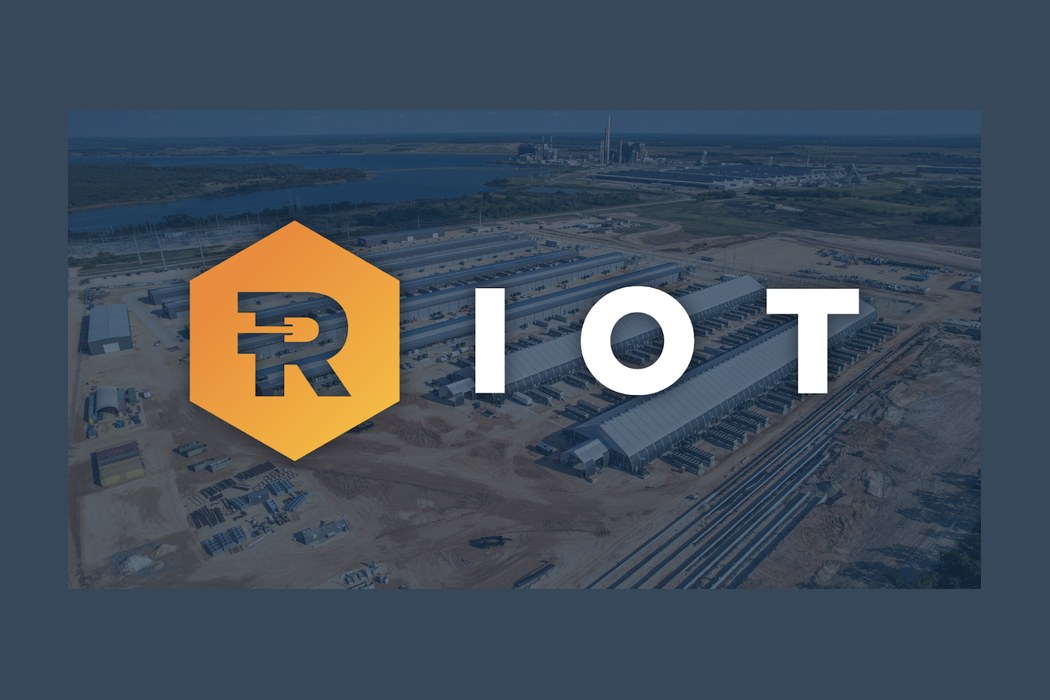
Riot Platforms, Inc.
Riot spent years turning cheap electricity into Bitcoin. Now the same land, substations and cooling know-how are being repackaged for AI - a pivot that could make the power connection more valuable than the mine.
Baya Systems
AI chips are getting better at arithmetic and worse at waiting. Baya Systems is building the configurable on-chip roads - and the software map - meant to keep data moving before a costly design becomes silicon.

Bitfury
For over a decade Bitfury built the picks and shovels of the Bitcoin economy - the chips, the cooling, the code. Now it is spending its winnings on the next wave of computing.
SkyeChip
SkyeChip is a Penang-based fabless semiconductor company that designs silicon intellectual property (IP) and custom application-specific integrated circuits (ASICs) for artificial intelligence and high-performance computing. Founded in 2019 by former Intel, Altera and Broadcom engineers, it specialises in advanced memory-interface IP (HBM3E, DDR5, LPDDR5/5x), UCIe die-to-die interconnect, network-on-chip fabrics and RISC-V CPU IP built on 6nm/7nm process nodes. Recognised as Malaysia's first homegrown AI chip designer, SkyeChip listed on Bursa Malaysia's Main Market in May 2026 in the country's largest IPO in 16 years.

Syenta
Syenta is an Australian deep-tech semiconductor company building next-generation chip-to-chip interconnects for the AI era. Spun out of the Australian National University, it has developed a proprietary process called Localized Electrochemical Manufacturing (LEM) that deposits and patterns metal in a single step, producing micron-scale interconnects across large packages with fewer process steps. The technology targets the 'memory wall' that limits AI and high-performance computing, aiming to raise interconnect density and bandwidth while cutting manufacturing cost and waste. Headquartered in Sydney with a new development facility in Tempe, Arizona, Syenta has raised more than A$37 million, with former Intel CEO Pat Gelsinger joining its board.

Ayar Labs
Ayar Labs is a San Jose-based semiconductor company building optical input/output (I/O) technology that moves data between chips using light instead of copper. Its silicon-photonics chiplets - the TeraPHY optical engine and the SuperNova multi-wavelength light source - are designed to be co-packaged directly with GPUs and other processors, letting AI and high-performance-computing systems scale across thousands of accelerators with far higher bandwidth and far lower power than electrical interconnects. Spun out of a DARPA-funded university research effort, the company raised a $500M Series E in 2026 with backing from NVIDIA and AMD.

Gilad Shainer
Gilad Shainer is Senior Vice President of Networking at NVIDIA, where he leads the strategy, marketing, and ecosystem development for the company's networking portfolio — including InfiniBand, Ethernet, DPUs, and interconnect technologies that power more than half the world's top 500 supercomputers. A Technion-trained electrical engineer who graduated Cum Laude at both B.Sc. and M.Sc. levels, Shainer spent nearly two decades at Mellanox Technologies before joining NVIDIA via the $6.9 billion acquisition in 2020. He founded the HPC-AI Advisory Council in 2008, which now spans 400+ organizations globally, co-founded the ISC Student Cluster Competition, holds two R&D 100 Awards (2015 and 2019), and has authored or co-authored dozens of papers across IEEE, ACM, and Springer venues. At a moment when AI factories are rewriting the rules of data center design, Shainer is the person making sure the wires — and the protocols running through them — are ready.
eTopus Technology
eTopus Technology is a San Jose-based semiconductor IP company that designs ultra-high-speed, ADC/DSP-based SerDes and die-to-die interconnect IP for data centers, high-performance computing, AI, 5G and storage. Founded in 2012 by Harry Chan and Peter Kou, the company licenses silicon-proven PHY IP - spanning 112G on advanced 6/7nm nodes down to 22nm - plus chiplet interfaces supporting UCIe, Bunch of Wires, PCIe Gen 5/6 and CXL. eTopus positions itself on low latency and low power, and has built collaborative chiplet platforms with partners including QuickLogic, OpenFive and CoMira.

The San Francisco Compute Company
The San Francisco Compute Company (SF Compute) runs a real-time marketplace for AI compute. It buys and operates large-scale, vetted GPU clusters - primarily Nvidia H100s wired with 3.2Tb/s InfiniBand - and sells them on flexible contracts, from a single hour to multiple years, that buyers can also resell. By turning long-term GPU capacity into a liquid spot market with transparent pricing, SF Compute lets startups, researchers, and enterprises buy exactly the compute they need without the multi-year commitments that dominate the industry, while pointing toward a future of cash-settled GPU futures.

Simr (formerly UberCloud)
Simr, formerly UberCloud, is a Los Altos, California company that automates engineering simulation in the cloud. Its SimOps (Simulation Operations Automation) platform lets design engineers run compute-heavy simulations - CFD, FEA and multi-physics workloads - on any cloud or on-premise hardware with leading tools like Ansys, Siemens and Dassault, without wrestling with the underlying HPC infrastructure. Founded in 2014 by Burak Yenier and Wolfgang Gentzsch, the company raised a $20M Series A in 2024 and counts major manufacturers and tech giants among its users.
AheadComputing
AheadComputing is a Beaverton, Oregon semiconductor startup founded in 2024 by four former Intel CPU architects who left to build high-performance 64-bit RISC-V processor cores from a clean slate. Betting that the future bottleneck in AI and data-center computing is the CPU rather than the GPU, the company is designing a 'Big Core' out-of-order engine that maximizes per-core performance without the legacy baggage of x86. Backed by roughly $53M in seed funding from Eclipse, Toyota Ventures, Cambium and legendary chip designer Jim Keller, AheadComputing wants to prove that an open instruction set can deliver top-tier performance.
Parallel Works
Parallel Works is a Chicago-based software company, spun out of Argonne National Laboratory in 2015, that builds ACTIVATE - a hybrid multi-cloud control plane for high-performance computing and AI. The platform gives researchers, engineers and defense teams a single interface to provision, orchestrate and share compute across on-premises clusters and the major clouds (AWS, Azure, Google Cloud, Oracle), with built-in cost governance, role-based access and security controls. In 2025 ACTIVATE's High Security Platform became the first hybrid multi-cloud solution to earn a U.S. Department of Defense IL5 Authority to Operate.