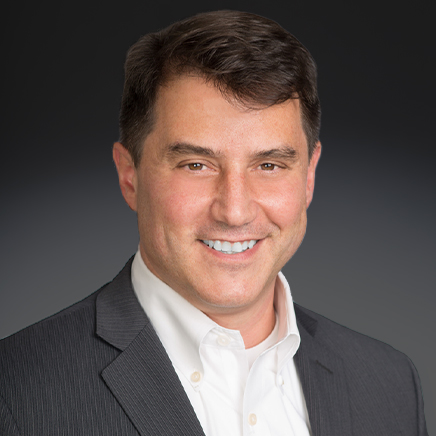
Chips for the Fight That Matters
Frank Ferrante spent his first career year helping the U.S. Navy keep its satellites talking to each other. That was 1987. Nearly four decades later, he runs ForwardEdge ASIC - a Lockheed Martin subsidiary focused on one audacious premise: that the most important semiconductor company in America shouldn't be in Taiwan or South Korea. It should be in Saint Paul, Minnesota.
Ferrante took the CEO chair on March 17, 2025, succeeding founder Brian Sutterfield. The transition was not a pivot - it was an escalation. ForwardEdge ASIC designs and manufactures application-specific integrated circuits (ASICs) for defense, aerospace, and national security markets, with an emphasis on supply chain provenance that the industry rarely demands and almost never achieves.
His path to that chair runs through some of the most consequential corridors in semiconductor history. He graduated from Manhattan University with a BS in Electrical Engineering in 1987, moved into sales engineering supporting Navy satellite programs, then - in 1996 - made the leap into commercial business development at Microtel. What followed was an almost implausibly varied tour of the chip industry's most interesting corners.
"I am honored to join ForwardEdge ASIC at such an exciting time in the company's growth. I look forward to building on the strong foundation laid by Brian and working with our talented team to propel the company into its next phase of success."
- Frank Ferrante, on joining ForwardEdge ASIC, March 2025At Intel, Ferrante ran divisions that most of the company's consumer-facing observers never thought about: Military, Aerospace and Government. He held the title of Senior Director for that segment, then moved into Intel Foundry Services as the company began its foundry ambitions. These were not glamorous assignments by Silicon Valley metrics, but they were load-bearing ones - the kind of work that ends up on the manifest of a fighter jet, a surveillance satellite, or a secure communications node.
In 2022, Ferrante shifted to Wolfspeed as Vice President of Worldwide Automotive Sales and Marketing. Wolfspeed makes silicon carbide semiconductors - the material of choice for high-efficiency power conversion in electric vehicles. This was a very different frequency than defense ASICs: faster commercial cycles, consumer-adjacent markets, a customer base driven by emissions targets rather than threat assessments. Ferrante navigated both worlds fluently, which is part of what made him credible to ForwardEdge ASIC's board when Sutterfield stepped down.
ForwardEdge ASIC is not a startup in the casual sense. It is a wholly owned subsidiary of Lockheed Martin, which means it carries the pedigree of a Fortune 100 defense contractor alongside the operational urgency of a 70-person team trying to change how America sources its most sensitive chips. The company calls this combination "startup agility with Fortune 100 stability." Ferrante's job is to make that phrase true rather than aspirational.
ForwardEdge ASIC earned formal U.S. Government Trusted IC Vendor Status from the Defense Microelectronics Activity (DMEA) - one of the most demanding accreditations in the semiconductor industry, requiring demonstrated security, integrity, and 100% domestic traceability in ASIC design and manufacture.
Ferrante's most public role before taking the ForwardEdge job was not building chips. It was persuading policymakers to care about them. He spent years advising Washington on supply chain resilience - contributing perspective to the CHIPS Act, the SHIP program, and the RAMP-C initiative. These are not household acronyms, but they represent hundreds of billions of dollars in federal industrial policy, aimed at rebuilding a domestic semiconductor ecosystem that offshored itself over three decades of free-trade optimism.
It is a particular kind of irony: Ferrante helped design the policy environment that would make ForwardEdge ASIC viable, then became the CEO of a company positioned to benefit from it. He doesn't appear to find the irony uncomfortable.
In January 2026, ForwardEdge ASIC announced it had selected the MIPS S8200 RISC-V neural processing unit for an upcoming high-performance ASIC targeting autonomous platforms. Ferrante's statement on the decision was characteristically direct: "Our mission to build high-performance solutions for autonomous platforms requires class-leading performance and area density when running the latest AI models. MIPS S8200 delivers the superior performance and efficiency we need for our advanced mission-critical platforms."
That quote contains the phrase "mission-critical" - overused across the tech industry to the point of meaninglessness. In ForwardEdge ASIC's case, it is literal. The company's chips have been embedded in F-35 fighter jet systems. They designed the FPGAs that enable onboard data collection for the aircraft's sensors. When Lockheed Martin needed someone to quickly resolve FPGA hardware and software challenges for the F-35's TR-3 configuration, ForwardEdge's team was the call they made.
"Our mission to build high-performance solutions for autonomous platforms requires class-leading performance and area density when running the latest AI models."
- Frank Ferrante, January 2026, on selecting MIPS S8200 for autonomous platform ASICsRelocating from Pleasanton, California to Saint Paul, Minnesota for the role was not a minor commitment. Pleasanton is in the East Bay, 35 minutes from San Jose, embedded in a geography where semiconductor careers have natural gravity. Saint Paul is a different kind of city - one with deep industrial roots, a competitive cost structure, and a government funding ecosystem that increasingly rewards domestic manufacturing credibility. Ferrante made the move, which communicates something about where he thinks the opportunity actually is.
The company he now leads is built on a portfolio of 300+ patents, a team with 25 years of collective history working together, and a market position that is genuinely hard to replicate. Domestic traceability for microelectronics is not just a compliance checkbox for defense contracts - it is a competitive moat, given how difficult and expensive it is to build. GlobalFoundries, Intel, and Lynx Software Technologies are among ForwardEdge ASIC's partners, a roster that signals the company is operating at the serious end of the supply chain.
ForwardEdge's product lineup - including the SPD5 DDR5 memory controller with integrated security features and the UCIe IP for chiplet interconnect - reflects a company betting on the intersection of performance and trust. These are not consumer parts. They are the kind of components that end up in data centers handling classified workloads, satellites navigating contested orbital environments, and the autonomous platforms that are redefining how militaries operate.
Ferrante's career has a consistent thread running through it, even as the sectors changed from Navy satellites to commercial FPGAs to EV silicon carbide to defense ASICs: the conviction that the physical layer of computing - the silicon itself, the place where physics becomes function - is where strategic leverage actually lives. In an era when software is often called the most important layer, Frank Ferrante has spent 30 years betting on hardware. The bet is looking more correct with every policy report that lands in Washington about supply chain fragility.