Breaking
PARALLEL WORKS — bootstrapped, cash-flow positive, IL5-authorized /// Founded out of Argonne National Laboratory, 2015 /// One platform for AI, ML & simulation across cloud and on-prem /// Customers: NOAA, Albert Einstein College of Medicine, Orion Space Solutions /// From Chicago skyscrapers to hypersonic missile detection /// Named a Top Cloud Platform by HPCwire, 2024 ///
Profile
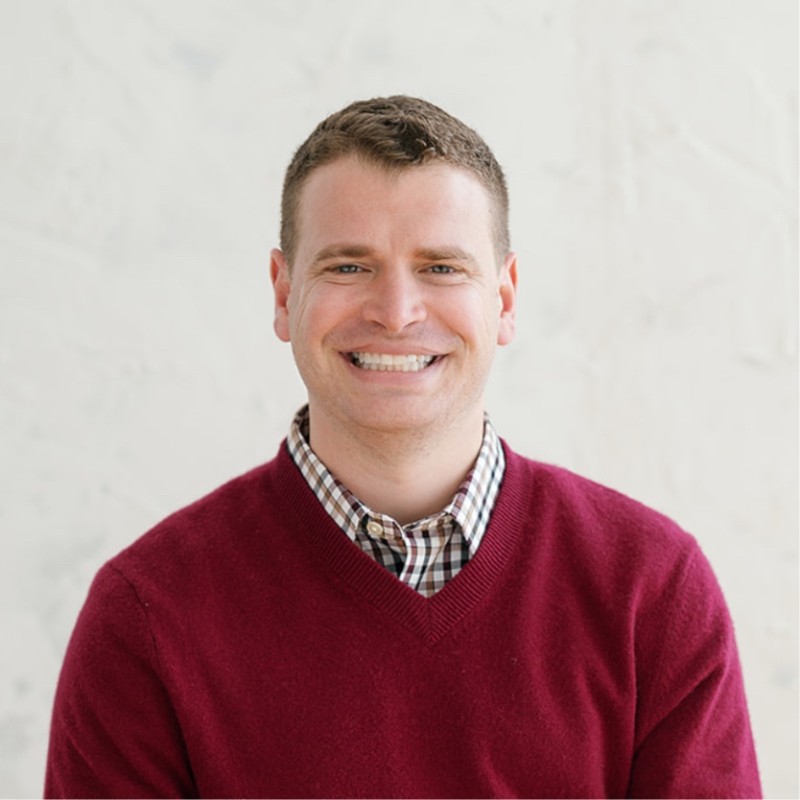
Matthew Shaxted, founder and CEO of Parallel Works
Matthew Shaxted, Chicago. The civil engineer who decided to build systems instead of buildings.
Founder & CEO · Parallel Works

Matthew Shaxted

He took the messy reality of running heavy compute across a dozen clouds and gave it a single control plane. The same one now models hurricanes, cancer, and missile defense.

High-Performance Computing AI Infrastructure Bootstrapped
The Pitch

Most founders chase a problem. Matthew Shaxted chained 30 Linux desktops together in a back room and chased the heat coming off them.

Today he runs Parallel Works, a Chicago company whose software does something quietly radical: it makes a supercomputer feel like a single button. Scientists, engineers, and defense teams used to need PhDs in cluster scheduling just to launch a job. Shaxted's platform turns AI, machine learning, and simulation workloads - scattered across AWS, Google Cloud, Azure, and on-premises hardware - into one orchestrated, governable system. The company calls the category an enterprise computing control plane. Customers just call it the thing that finally works.

The strange part is where it came from. Not a Stanford dorm or a hyperscaler's R&D lab, but a civil engineer's frustration with a render queue, a national laboratory in Illinois, and a stubborn refusal to take venture money for years.

There is a version of this story that gets told a lot in technology - the lone genius, the overnight unicorn, the round that changed everything. This is not that story. Parallel Works grew slowly and on its own cash, the way a building goes up: foundation first, load-bearing walls next, the glass curtain last. Shaxted's whole career taught him that the visible part is never the hard part. The hard part is what holds it up.

We decided to start the company with a mission to democratize HPC - making it accessible to organizations and individuals who needed serious computing power but lacked the infrastructure. - Matthew Shaxted
2015
Founded at Argonne
30
Desktops in his first cluster
3
Clouds, one control plane
IL5
Defense-authorized
The origin story

A render farm built from spare office computers. That was the prototype for a platform now trusted with hurricane risk, cancer research, and missile detection.

Before the Cloud

An architect's grandson who chose the math

Shaxted's grandfather was an architect, and the pull toward design showed up early. He studied civil engineering at Northwestern University with an architectural concentration, learning to see a building not as a facade but as a system - loads, airflow, sunlight, stress.

Out of school he landed at Skidmore, Owings & Merrill and other top architecture and engineering firms, working as a computational designer. His days were energy models, solar studies, structural analysis, and fluid dynamics for Chicago skyscrapers and sprawling campuses. The simulations kept getting bigger. His workstation kept choking.

So he did what engineers do. He wired together everything he could find - 30 Linux desktops, networked into a homemade render farm. That cluster was the doorway. It pulled him toward serious high-performance computing, and eventually toward a national lab.

It is worth sitting with that image for a second. A young engineer at a firm known for some of the tallest buildings in the world, quietly turning a roomful of ordinary office machines into a parallel computer because the official tools couldn't keep up with his curiosity. That is the whole personality in one scene: practical, impatient with friction, allergic to the idea that serious computing should be reserved for people with the right credentials and the right budget. The democratization pitch he would later build a company around wasn't a marketing line. It started as a personal grievance.

My background is in engineering - I studied civil engineering and began my career working at architecture and engineering firms. - Matthew Shaxted
THE LEAP

Buildings to clusters

Energy, solar, structural, and fluid-dynamics work for large commercial buildings gave way to a question that wouldn't leave him alone: why is serious compute so hard to access?

Argonne National Laboratory
THE CO-FOUNDER

Meeting Mike Wilde

At Argonne, Shaxted crossed paths with Michael Wilde, the mind behind Swift - a parallel scripting language born at the University of Chicago's Computation Institute to help scientists scale their code. Wilde took entrepreneurial leave from the lab. Together with Michela Wilde and Mihael Hategan-Mrandiuc, they turned lab technology into a company.

Where the workflow got its wings

Argonne is one of the U.S. Department of Energy's crown-jewel research labs, and it was the place where Shaxted's homemade-cluster instincts met decades of serious parallel-computing science. The open-source workflow automation that powers Parallel Works was developed at the lab alongside the University of Chicago and the University of Illinois.

In June 2015, they incorporated Parallel Works to commercialize it. The bet: the hardest part of big compute was never the hardware. It was the orchestration - getting a workload to run, repeatably, anywhere, without a specialist babysitting it. Years later, Argonne and Parallel Works would win the Federal Laboratory Consortium's highest honor for excellence in technology transfer.

The early money matched the modest, methodical tone. An innovation grant from the University of Chicago helped get things moving. Support arrived from the Department of Energy's technology commercialization programs, including direct funding tied to work performed at Argonne. There was no eight-figure announcement, no blitz-scaling. Just enough fuel to keep proving the thesis, one customer at a time, until the platform was undeniable.

The Climb

A decade, told in milestones

2015
Parallel Works co-founded out of Argonne. No institutional financing - bootstrapped from day one.
2017
Launches an “app store” for HPC workflows. Early seed backing arrives.
2020
Product-market fit. The platform finally clicks for real customers.
2021
First federal customer: NOAA, for weather and water research.
2022
Multi-cloud expansion across AWS, GCP, and Azure. A major government contract lands.
2023
A high-security Department of Defense platform takes shape - IL5, DISA provisional authorization.
2024
Commercial product ACTIVATE relaunches. HPCwire names it a Top Cloud Platform.
2026
Featured in Authority Magazine and citybiz on the next era of AI control planes.
What Rides On It

One platform. Wildly different cargo.

SCIENCE

Cancer & weather

Albert Einstein College of Medicine runs biomedical research. NOAA models weather and water. Jacobs Engineering built a flood-warning platform on top.

SPACE

Digital twins of the sky

Orion Space Solutions models Earth's thermosphere and ionosphere - space weather simulated as a living digital twin.

DEFENSE

Hypersonics & hurricanes

From hurricane risk modeling to hypersonic missile detection, the secure platform carries CUI/ITAR-grade workloads for government.

The Long Game
THE DISCIPLINE

Profitable on purpose

Parallel Works runs cash-flow positive. Leadership has talked openly about exploring strategic funding to ride the surge in enterprise AI demand - but on its own terms, from a position of strength rather than need.

He built for the wave before it broke

When Parallel Works started in 2015, “AI infrastructure” was not a headline. The pitch was high-performance computing for scientists and engineers - useful, unglamorous, hard to sell. Then the world changed. GPUs became the most fought-over resource on earth, every enterprise wanted to run models, and suddenly the problem Shaxted had been chipping away at for years - orchestrating heavy compute across clouds and on-premises hardware - was the problem everyone had.

The platform that emerged, branded ACTIVATE, behaves like a control plane for the whole mess: scheduling workloads, enforcing budgets automatically, applying role-based access control, moving jobs between AWS, Google Cloud, Azure, neocloud GPU providers, and on-prem racks without rewriting anything. It is Kubernetes-native, security-hardened, and - crucially for its government customers - authorized at IL5 with a DISA provisional authorization. Few startups carry both a hurricane model and a Pentagon clearance on the same code.

Shaxted didn't pivot into the AI moment. He waited for it to arrive at a door he'd already built.

The Operating System (His Own)

Persistence, optimism, and people who care

Ask Shaxted what carried the company through its unfunded years and you get three plain answers: persistence when nothing was certain, an almost stubborn optimism in the work before any market validated it, and a habit of surrounding himself with people genuinely committed to the mission.

He keeps a line from the writer Vida D. Scudder close, the kind of quote a builder underlines twice. It explains why a man who could have chased acquisition headlines instead spent a decade making compute easier for strangers.

If he could pick one breakfast guest, it would be Microsoft's Satya Nadella - to talk leadership, platform thinking, and what it means to deploy AI responsibly at real scale. Tells you where his head is.

There's a through-line from the kid who liked building things, to the engineer who modeled how skyscrapers breathe, to the founder who decided the real structure worth building was invisible - a layer of software that lets anyone aim enormous computing power at a hard problem without first becoming an expert in the plumbing. The buildings he once helped design will outlast most software. But the platform he's building may end up touching more lives: the researcher chasing a tumor, the forecaster watching a storm, the analyst tracking a threat, all standing on the same quiet foundation. Foundations, again. He never really left engineering. He just changed what he was holding up.

Creation is a better means of self-expression than possession; it is through creating, not possessing, that life is revealed. - Vida D. Scudder, a line Shaxted lives by
Field Notes

Things that don't fit the bio

On why it matters

“Seeing AI software move from concept to real-world impact reinforced why we do this work in the first place.”

Watch

Matthew Shaxted, in his own words

A conversation on hybrid computing, control planes, and the next era of AI infrastructure.

The Rolodex

Follow the thread

Share This
in · LinkedIn X · Twitter f · Facebook Instagram