pharma
(47)
UsefulBI and the art of making data useful
A pharmaceutical batch, a stalled dashboard, a clinical document: UsefulBI works where information gets stuck. Its business is making the next decision easier to reach.
Veeva Systems made the paperwork the product.
Medicines need evidence, approvals, and a paper trail. Veeva built a business around that work - then began replacing the platform that helped it get started.

Aily Labs wants the boardroom in your pocket
A former finance executive found that AI could compress months of planning into weeks. Now Aily Labs is selling large companies a more ambitious idea: connect their data, then help them decide what to do.
The Medical Meeting That Refuses to End
Impact Communication Partners has spent more than four decades translating complicated science for healthcare professionals. Its sharpest idea is also its simplest: the best answer may arrive after the meeting is over.

Twist Medical and the patient in the byline
A medical communications agency is helping patients enter the scientific conversation as contributors. Its publication credits show what that work looks like - and why listening is only the beginning.

The Doctor Who Built a Research Machine Because He Never Had Time to Do Research
Dr Matt Wilson spent 14-hour shifts in emergency medicine with no time to eat, let alone run a study. So he built a platform that makes the research happen without the clinician lifting a finger - and pharma is paying to plug in.

The AI that reads every medical paper so pharma's scientists don't have to
Medical teams at drug companies read maybe 10% of the evidence that matters. Sorcero built AI agents to read the other 90% - and about a third of the top 30 global pharma companies are now paying for it.
The Birmingham startup that made pharma pay for trust it never earned
Del Smith and Tiffany Whitlow built a 200,000-member community first and an AI second - and got seven of the ten biggest drug makers to buy the trust they earned.

Seismic Won Regulated Sales, Then Merged With Its Rival
For years the choice between Highspot and Seismic split along one fault line: who could survive a compliance audit. Then, in February 2026, the two rivals stopped competing and agreed to become one company.
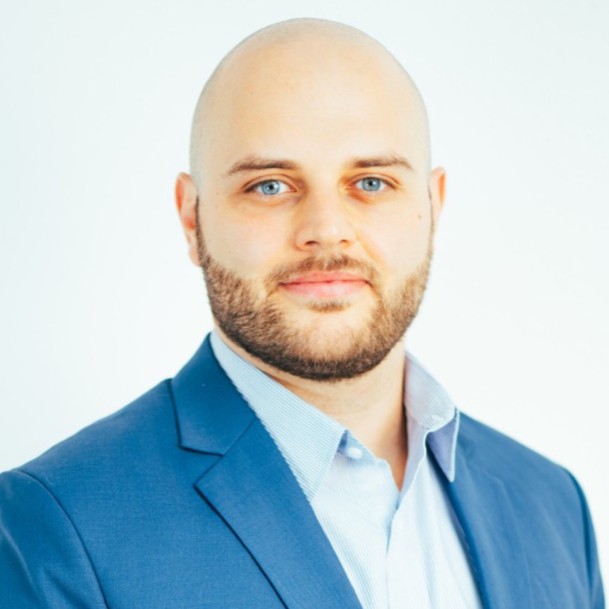
Zlatko Jončev
Zlatko Jončev is the co-founder and CEO of b-12 (b12 Labs), a Y Combinator S25 startup building AI agents that plan and run chemical synthesis for pharma and biotech. A former national chemistry olympiad champion turned organic chemist, he earned a PhD in Basel, trained as a medicinal chemist at Roche, and did his postdoc in EPFL's Lab of Artificial Chemical Intelligence, where he met co-founder Andres Bran. b-12 aims to shrink early-stage drug discovery from years to months by making molecules that are otherwise hard to make.
Astraea
Astraea is a San Francisco startup building an AI-native operating system for clinical trial biometrics. Its agentic platform turns raw study data and a protocol into FDA-ready outputs - SDTM and ADaM datasets, TFLs, and submission packages - compressing work that normally takes months into days while keeping humans in the loop for review and regulatory sign-off. Founded in 2026 by Stanford's Joshua Wang and Sanmay Sarada, the company is part of Y Combinator's Spring 2026 (P26) batch.
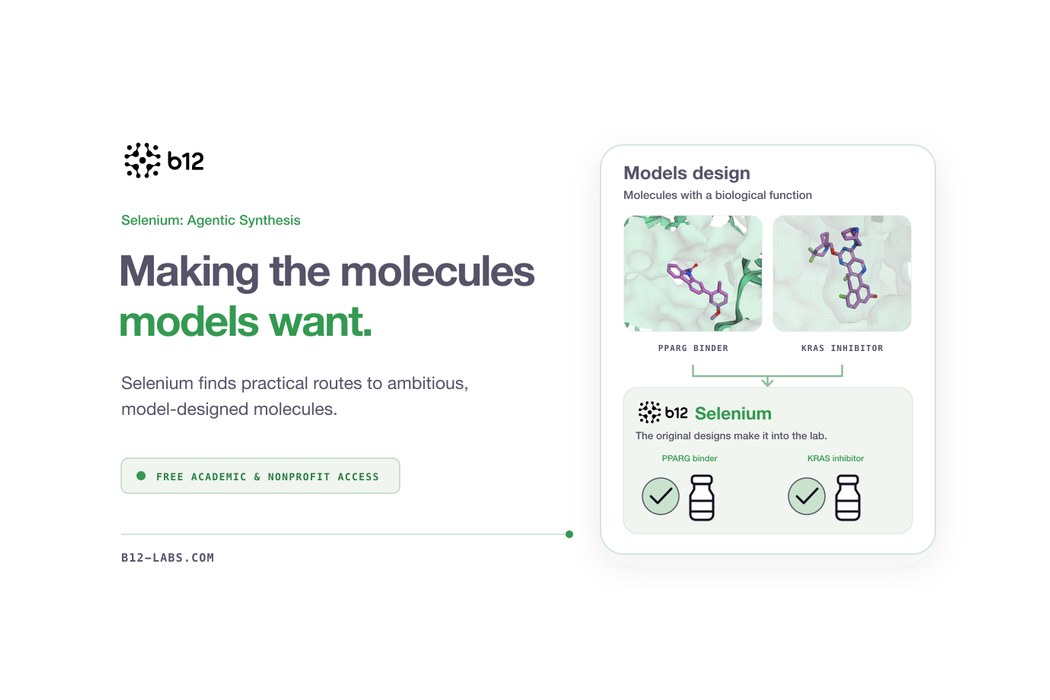
b12 Labs
b12 Labs is a San Francisco startup (Y Combinator S25) building AI agents for pharmaceutical and biotech chemistry. Its platform designs synthesis routes, plans and optimizes reactions, and turns those plans into robot-ready code for automated labs, aiming to compress early-stage drug discovery from years to months. The company was founded in 2025 by chemists Zlatko Joncev and Andres Bran, who met at EPFL's Lab of Artificial Chemical Intelligence.
Frekil
Frekil is an AI-powered real-world evidence (RWE) platform for life sciences that turns raw clinical data - EHR, claims, and registries - into regulatory-grade evidence in minutes instead of months. Its agentic pipeline runs the full study lifecycle, from literature review and cohort building through statistical analysis plan generation and final reports, while keeping clinical data isolated from AI models. Founded in 2025 by IIT Bombay alumni Nikhil Tiwari and Shivesh Gupta, Frekil is a Y Combinator (X25/P25) company serving pharma, biotech, CROs, and academic researchers.

G LNK
G LNK is a New York-based healthcare commercial intelligence platform (Y Combinator W25) that helps pharma, biotech, and medtech teams find the right medical experts, benchmark fair-market compensation, and stay compliant. Its AI search sits on a searchable clinician database - 9.2M+ HCP profiles at last count - and automates the full lifecycle of engaging healthcare professionals, from identification and tiering to compliant payment and regulatory oversight across 150+ countries.
Code Ocean
Code Ocean is a New York-based B2B SaaS platform that makes computational research reproducible, traceable and collaborative. Its flagship Compute Capsule bundles code, data and the exact software environment together so an analysis runs identically today or years from now. Used by pharma, biotech and leading research institutes, and integrated with journals like Nature and IEEE, Code Ocean is building a trusted virtual lab where both scientists and AI agents can run real analyses with full version control, lineage and compliance.
DeepHow
DeepHow is a Detroit-based enterprise AI company that turns the hands-on know-how of experienced industrial workers into structured, searchable training. Founded in 2018 by former Siemens innovation leaders, its platform uses vision AI and machine learning to capture expert workflows on video, automatically segment and transcribe them into step-by-step guides, and - in its newer 'physical AI' products - verify that frontline operators are performing tasks correctly in real time. Used by manufacturers, pharma companies and field-service organizations to close skills gaps as veteran workers retire.

Forus
Forus is a New York-based healthtech company (formerly Tandem Technology, Inc.) that runs an AI-powered network connecting doctors, pharmacies, payers, and biopharma to get prescribed medications to patients faster. Its software embeds in physician workflows and automates the administrative steps between a clinical decision and a patient starting treatment - prior authorization, benefit verification, financial assistance, and pharmacy routing. Free for doctors and patients, Forus earns revenue through pharmaceutical partnerships. Founded in 2023 by former Oscar Health product leader Sahir Jaggi, the company reached a reported $1 billion valuation in May 2026 with backing from Thrive Capital, General Catalyst, and Accel.

Lyfegen
Lyfegen is a Swiss health-tech company that builds software to manage value-based drug pricing and rebate agreements. Its platform helps health insurers, governments, hospital payers, pharmaceutical firms and medical device makers automate complex rebate contracts, run pricing simulations and tap the world's largest library of value-based agreements - reducing administrative burden while helping patients access innovative therapies.
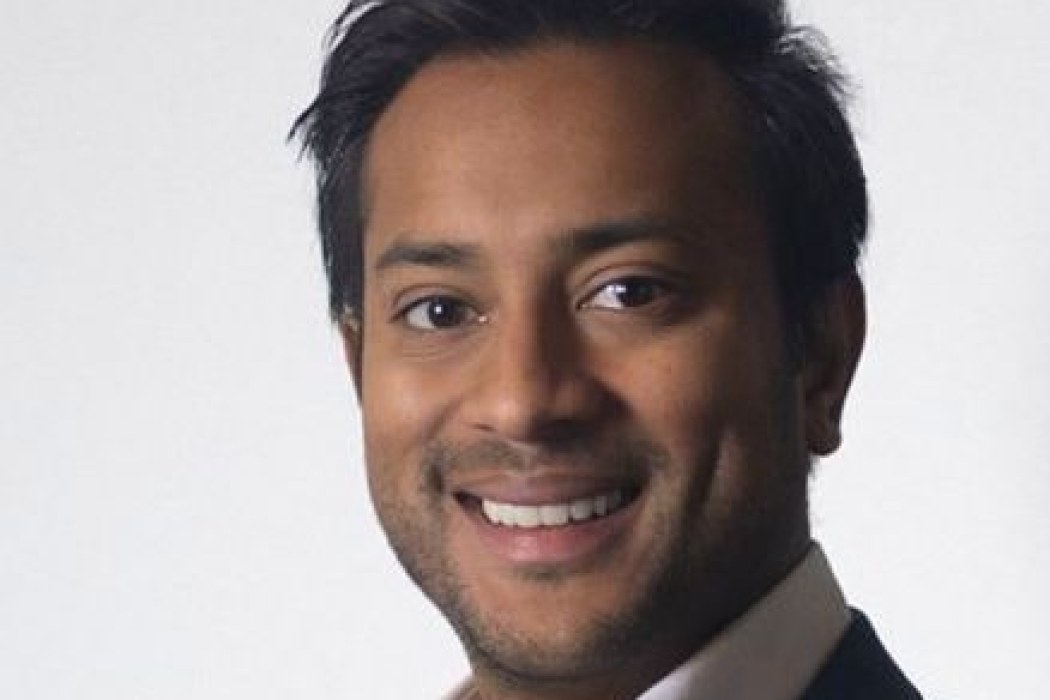
Girisha Fernando
Girisha Fernando is the CEO and co-founder of Lyfegen, a Basel- and Boston-based healthtech company building software that helps payers, hospitals, pharma companies and medical device makers manage value-based drug pricing, access and rebate agreements. After nearly a decade at Roche in market access, pricing and IT, he left in 2018 to build technology that ties the price of medicine to how well it actually works for patients. He splits his time between Switzerland and New York as Lyfegen pushes into the US market.

Paul Eccles
Paul Eccles is a molecular biologist turned healthcare strategy consultant who leads Basis Health, the New York-based life sciences division of London-headquartered insight consultancy Basis Global. He joined Basis in September 2022 as Managing Partner after a career spanning Trinity Life Sciences, BluePrint Research Group, Cello Health, and Opinion Health, and has spent more than fifteen years advising pharma, biotech, and clinical incubators on commercialization, licensing, forecasting, and portfolio positioning.
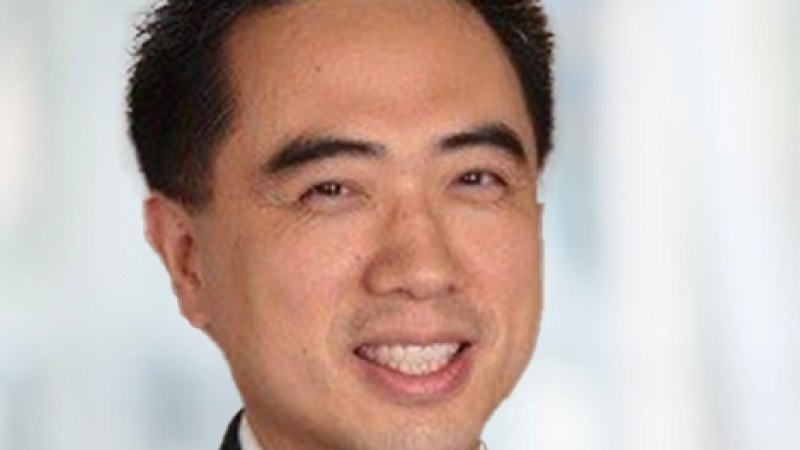
Sean X. Hu
Sean X. Hu is the President and CEO of Rapafusyn Pharmaceuticals, a Baltimore-based biotech spun out of Johns Hopkins that is building a library of natural-product-like macrocycles it calls RapaGlues. He is a genomics PhD turned Wharton MBA turned management consultant turned operator, with prior stops at Bristol Myers Squibb, CuraGen, Illumina, AT Kearney, IMS, Bionest, BioStrat, GlobalData, and Avotres. In September 2025 he closed an oversubscribed $44M Series A led by BioTrack Capital and Yonjin Capital to push RapaGlues into difficult-to-drug targets.

Cromatic
Cromatic is an AI-native platform for life-science R&D outsourcing and revenue operations. It runs a curated marketplace connecting biotech and pharma companies with vetted Contract Research Organizations (CROs) and Contract Development and Manufacturing Organizations (CDMOs), then layers on vendor discovery, project tracking, data storage, collaboration, contracting, and milestone payments so scientists can outsource complex research without stitching together spreadsheets, email threads, and word-of-mouth referrals. Founded in 2022 by Stanford geneticist Ann Lin and former Meta engineer Anne Chen, the company raised a $5.3M oversubscribed seed round in November 2023 and manages tens of millions of dollars in research budgets.

Delineate
Delineate is a Cambridge, Massachusetts AI company building agents that accelerate clinical trial design for pharmaceutical and biotech companies. Its custom large language models and computer vision systems extract and structure data from thousands of research papers and patents - including numbers buried inside figures and plots - turning months of manual evidence aggregation into weeks. A Y Combinator Winter 2025 company founded in 2024 by an MIT PhD and an ex-Lockheed Skunkworks AI lead, Delineate works with two top-10 pharmaceutical companies and holds an NIH STTR grant with MIT.
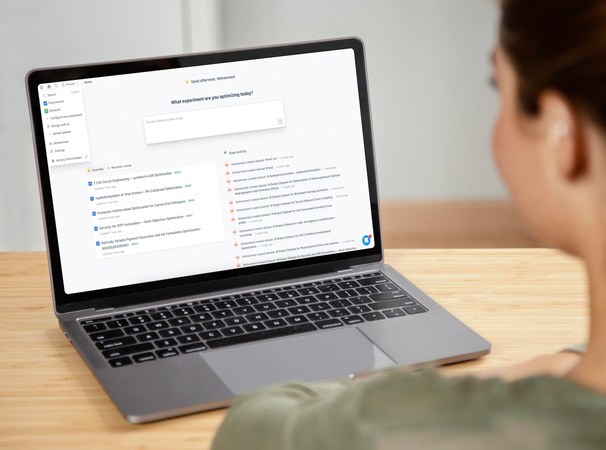
Atinary Technologies
Atinary Technologies is a Swiss-American deeptech startup whose no-code SDLabs platform pairs machine learning with lab robotics to run Self-Driving Labs - closed-loop experiments that learn and adapt on the fly, accelerating R&D in chemistry, materials, pharma and climate tech by orders of magnitude.

Synthio Labs
Synthio Labs builds clinical-grade voice and agentic AI for life sciences customer engagement. Its platform helps pharma field teams, medical affairs, and patient-support orgs run compliant, continuous conversations across HCPs and patients, powered by a clinical reasoning engine that ingests FDA labels and real-world evidence.

Dan Cornwell
Dan Cornwell is the founder and CEO of PrescriberPoint, a Boston-based, AI-enabled medication access platform that helps clinicians cut through the paperwork between writing a prescription and a patient actually getting their medicine. Spun out of Eli Lilly in partnership with BCG Digital Ventures, the company raised seed backing from an unusual coalition of would-be rivals - Lilly, Pfizer, Adobe and Mastercard. Before PrescriberPoint, Cornwell ran the nurse-staffing marketplace IntelyCare and advised companies on building disruptive businesses at BCG Digital Ventures. A Yale historian turned Wharton-trained operator, he keeps returning to the same problem: the messy gap between a good intention and a completed transaction.
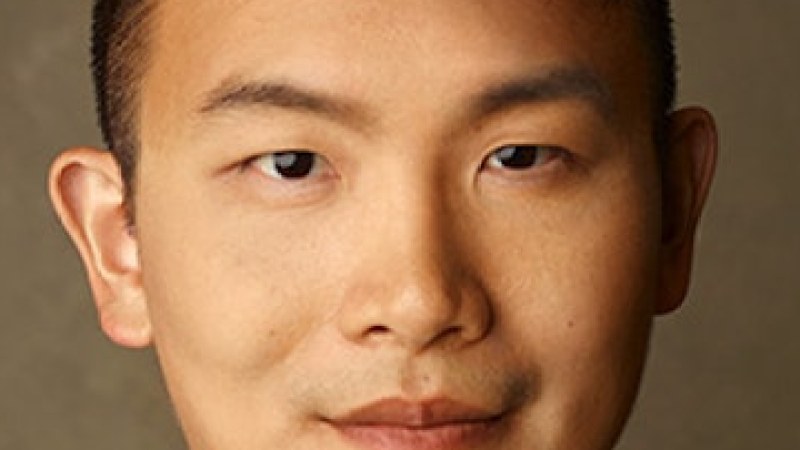
Dennis X. Hu
Dennis X. Hu is the founder and CEO of Drug Hunter, a subscription knowledge platform that distills the science behind new medicines for more than 200 R&D institutions, including most of the world's top pharma and biotech companies. A medicinal chemist by training, he led small-molecule teams at Genentech and the biotech RAPT Therapeutics (where he helped invent the Phase II oncology candidate tivumecirnon) before turning a side project into a fully remote company of 20+ employees that reaches millions of searches a year and runs entirely on subscription revenue.

PointCross Life Sciences
PointCross Life Sciences is a Foster City, California software and services company that turns the messy data of drug development into FDA-ready submissions. Through its XBIOM platform and eDataValidator, it standardizes nonclinical and clinical study data to CDISC SEND, SDTM and ADaM formats, runs a Hadoop-based data repository for sponsors, and supplies the U.S. FDA itself with the software reviewers use to read nonclinical submissions. The company quietly powers roughly a quarter of all FDA SEND submissions.
Unlearn.AI
Unlearn.AI is a San Francisco biotech-AI company that builds disease-specific machine learning models to generate digital twins of clinical trial participants - longitudinal predictions of how each patient would have fared on placebo. Folded into a statistical method called PROCOVA and a trial design called TwinRCT, the approach lets sponsors shrink control arms by up to a third, so more patients receive the experimental drug while trials reach answers faster. Founded in 2017 by physicists Charles Fisher, Aaron Smith and Jon Walsh, the company has raised about $130M and earned a first-of-its-kind EMA qualification for an AI-based method to reduce sample size in pivotal trials.

Biorce
Biorce is a Barcelona-based healthtech company building AI-native infrastructure for clinical trials. Its core product, Aika, helps pharmaceutical companies, biotechs and CROs design regulator-ready trial protocols in roughly 90 seconds, drawing on a corpus of more than one million clinical studies and 260,000+ protocols. By cutting protocol design time by at least 50% and flagging regulatory and feasibility risks early, Biorce aims to compress the years and billions of dollars it takes to bring a drug to market - so treatments reach patients sooner. In February 2026 it closed a USD $52.5M Series A led by DST Global, the largest Series A to date in the Iberian healthtech and AI ecosystem.