fashion-tech
(57)
Myntra wants to dress you before you know what to wear
The Indian fashion marketplace once shut its website to force a mobile future. Now it is chasing a more human problem: finding the right outfit, then getting it to you while the occasion still matters.

Sandra Lifshits Is Teaching AI to Hunt for Vintage
After weekends in vintage markets and shifts inside New York shops, the product leader saw the real problem: secondhand shopping had plenty of inventory and precious little editing.

Ella Zhang Built the Back Room - Then Went Looking for the Next Frontier
From Tencent’s founding e-commerce team to a garage-born fashion platform, Zhang learned to prize the infrastructure nobody sees. Now she is carrying that operator’s instinct back into venture investing at YZi Labs.

Lamoda Built a Fashion Store. Then It Built the Road to Your Door.
The Moscow retailer’s real product is not a dress, a sneaker or even an app. It is the machinery that makes buying fashion online feel less like a wager on size, taste and delivery.

The Fund Betting That Fashion Gets Fixed in the Factory, Not the Storefront
Karla Mora and Leslie Harwell don't fund T-shirts. They fund the recycling plants, the potato-waste cotton, and the software that reroutes a supply chain - the plumbing every brand quietly runs on.

When Brazil's Two Premium Fashion Rivals Decided to Share a Closet
Icomm Group merged OQVestir and Shop2gether into one company - then kept them competing on the same runway. Here is how Brazil's leading premium fashion e-commerce operator runs two storefronts, one warehouse, and a marketplace for the brands nobody else stocks.

True Fit
The internet made every wardrobe available and every size chart arguable. True Fit has spent nearly two decades turning what shoppers bought, kept and sent back into a translation layer for fashion - and now it wants AI shopping agents to stop guessing, too.

Davide Mattucci
Davide Mattucci is the Chief Marketing Officer of BYLT Basics, the Irvine, California premium essentials label known for its structured tees and loyalty-driven direct-to-consumer model. He has spent more than 20 years across global apparel brands - prAna, Brixton, adidas, Under Armour and Fanatics - moving fluidly from design and product creation into brand marketing and digital commerce. At BYLT he is helping steer the company's shift from an online seller of product into a full lifestyle brand with physical stores, bringing a 360-degree view of how product, storytelling and marketplace strategy connect with real customers.
Bezel
Bezel is a Y Combinator (W25) startup that generates studio-quality photos and videos of apparel on photorealistic AI human models. Fashion and e-commerce brands upload a clothing image, pick a preset model, and get shoot-ready stills and video in seconds - replacing shoots that cost thousands of dollars and take days. Founded in 2025 in New York by Kashyap Achar, the company positions itself as an on-demand content engine for brands that need constant creative variety for ad testing.

Retrofit
Retrofit is an AI-curated vintage marketplace that uses AI agents to sift through hundreds of thousands of secondhand listings, analyzing social media trends, sales data and personal style to surface pieces matched to a shopper's taste, size and budget. Founded in 2024 by Sandra Lifshits and Maddy Yip and backed by Y Combinator (W25), it standardizes photography and descriptions from partner vintage stores so shoppers get a clean, personalized feed instead of endless digging.

Adore Me
Adore Me is a New York-based intimates brand that set out in 2011 to sell well-made bras and lingerie at prices a student could afford, and ended up rewriting how the category is merchandised. Founded by Harvard MBA Morgan Hermand-Waiche, the company paired a wide size range (30-46 bands, A-I cups) with a monthly membership, an at-home try-on box, and an unusually large in-house engineering group in New York and Bucharest that built roughly 15 internal tools for planning, sourcing, and personalization. It reached an estimated $250 million in sales and more than 1.2 million active customers before Victoria's Secret & Co. acquired it in a deal announced November 2022 at $400 million cash upfront plus earnouts, closing January 2023. Adore Me became the only US lingerie brand certified as a B Corporation in 2022. Under its parent it has since narrowed: the founder departed in August 2025, the VIP subscription that defined the model ended in February 2026, and Victoria's Secret recorded a $120 million impairment on the business that same quarter.

Rebag
Rebag is a New York-based online and retail marketplace for buying and selling pre-owned luxury handbags, watches, jewelry and accessories. Founded in 2014 by Charles Gorra, the company built proprietary technology - most notably Clair, an appraisal index, and Clair AI image recognition - to standardize resale pricing and pay sellers upfront. It aims to bring transparency and liquidity to what it calls an opaque secondary luxury market.

Taylor Capuano
Taylor Capuano is the co-founder and chief creative officer of CAKES body, a viral direct-to-consumer apparel brand she launched in 2022 with her twin sister, Casey Sarai. Starting with $5,000 each in personal savings and no marketing budget, the sisters bootstrapped the company from a side hustle into a business that reported roughly $95 million in net sales in its fiscal year ending June 2025. A December 2023 appearance on ABC's Shark Tank, where they landed a deal with Emma Grede, accelerated the brand's rise. Capuano leads creative and marketing, and has become a public voice for bootstrapped, digital-first growth and family-friendly workplace policies.

Kintra Fibers
Kintra Fibers is a Brooklyn-based materials science company developing a bio-based, biodegradable alternative to conventional polyester. Built on polybutylene succinate (PBS) derived from plant sugars rather than fossil fuels, Kintra's yarn performs like standard polyester and runs on existing melt-spinning equipment, but composts in controlled conditions and sheds far less persistent microplastic. Founded in 2018 by Billy McCall and Alissa Baier-Lentz, the H&M Group-backed company has raised roughly $10M total and is piloting its fiber with brands including Inditex, BESTSELLER, Reformation and PANGAIA.

Simplifyber
Simplifyber is a North Carolina biomaterials company reinventing how soft goods are made. Its proprietary natural-fiber liquid, Fybron, is injected into 3D molds to form fabric directly, skipping the spinning, weaving, cutting, and sewing steps of conventional textile production. Founded in 2021 by fashion veteran Maria Intscher-Owrang and Phil Cohen, the company targets fashion, footwear, bags, automotive and aviation interiors, and consumer packaging with a cellulose-based, largely biodegradable alternative to fossil-derived materials. It closed a $12M Series A led by Suzano Ventures in April 2025.

Stylitics
Stylitics is a New York-based retail AI company that helps brands and retailers turn their product catalogs into inspiring, shoppable styling experiences. Its platform combines algorithms, trend data, and human stylist expertise to generate personalized outfit recommendations, bundles, and generative on-model imagery across e-commerce, email, advertising, and stores. Founded in 2011 by Rohan Deuskar and Zach Davis, Stylitics powers styling for more than 100 retailers - including Macy's, Walmart, Kohl's, Puma, and Revolve - reaching over 100 million shoppers.

unspun
unspun is a San Francisco-based fashion-technology company that built Vega, the world's first 3D weaving system for apparel. Vega weaves garments directly from yarn in minutes, skipping cut-and-sew steps to enable on-demand, near-zero-waste, locally produced clothing. A certified B Corp founded in 2015, unspun sells custom-fit jeans direct to consumers while licensing its hardware and software to brands and retailers aiming to decarbonize their supply chains. Its stated mission is to reduce global human carbon emissions by 1%.
Michaela Wessels
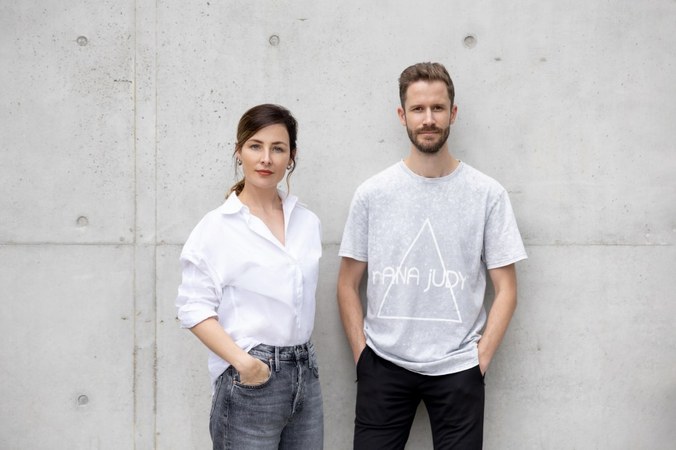
Michaela Wessels is the CEO and co-founder of Style Arcade, a Sydney-born retail analytics platform that has become the intelligence layer behind fashion brands including The Iconic, Princess Polly, White Fox, Aje, Christopher Esber and Dion Lee. A former merchandise planner at Truworths, Lacoste and The Iconic, she built the product she had wanted while buried under Excel; the company raised an $8M Series A led by Acadian Software in late 2022 and has since expanded to New York and London.

Olga Dogadkina
Olga Dogadkina is the co-founder and CEO of Emperia, a London-based immersive commerce platform that builds virtual stores and 3D brand experiences for the world's biggest luxury and retail names, including Dior, Burberry, Bloomingdale's, Tommy Hilfiger, Harrods, Lacoste, Christie's and Dom Pérignon. Named to the Forbes 30 Under 30 Retail & Ecommerce list in 2025, she started Emperia in 2018 after trying VR for the first time on a Microsoft fashion project and deciding it would change the way people shop.

Rohan Deuskar
Rohan Deuskar is the co-founder and CEO of Stylitics, a New York-based visual merchandising and outfitting platform that dresses catalogs for retailers like Macy's, Walmart, Kohl's, Puma and Revolve. Launched in 2011 out of Wharton, Stylitics started as a consumer closet app, pivoted to B2B AI-powered outfit bundling, and raised roughly $105 million in total funding, with an $80 million Series C from PSG in 2022.

Doji
Doji is a New York-based AI fashion startup building an app that turns a handful of selfies into a photo-realistic personal avatar, then lets people try on real clothing from anywhere on the web. Founded in 2024 by Dorian Dargan and Jim Winkens - the name is a mash-up of their first names - Doji uses its own diffusion models to make virtual try-ons feel less like a gimmick and more like a fun, social way to shop. The company raised a $14M seed round led by Thrive Capital with participation from Seven Seven Six in May 2025, days after launching on the App Store in more than 80 countries.

Indyx
Indyx is a San Francisco digital wardrobe app that lets people catalog everything they own, plan outfits, work with personal stylists, and eventually resell their clothes - all in one place. Founded by two former retail-industry insiders, it makes the opposite bet of most fashion businesses: instead of selling you the next thing, it helps you actually use what you already own. Users get a searchable digital closet with automatic background removal, cost-per-wear tracking, packing lists, and social sharing, framed around a simple idea - know what you own, love what you wear.

Tailored Industry
Tailored Industry is a Brooklyn-based on-demand knitwear manufacturer that pairs industrial 3D 'wholegarment' knitting machines with a proprietary software platform. It lets fashion brands of any size produce seamless sweaters and knit staples with zero minimums and near-zero waste, matching supply to actual demand instead of guessing seasons in advance.

Swipecast
Swipecast is a New York-based fashion-tech marketplace that lets brands, designers, photographers and stylists discover and book models and creative talent directly, bypassing traditional agencies. Founded in 2015 by former hedge-fund manager and modeling-agency owner Peter Fitzpatrick with developer Matthias Wickenburg, the platform pays talent 90% of their fee (versus the ~67% left after agency commissions) and settles payments within one to two days. It has served clients like Estee Lauder, Tommy Hilfiger, Ralph Lauren, Victoria's Secret, Nike and Vogue across cities including New York, LA, London, Paris and Milan.

Taelor
Taelor is an AI-powered menswear rental subscription that pairs machine-curated outfits with human stylists so busy men can dress well without thinking about it. For a flat monthly fee, members take a short style quiz, receive boxes of real clothes to wear for weeks, return what they don't want in a prepaid bag, and buy favorites at a steep discount. Founded in 2021 by Anya Cheng and Phoebe Tan, the company positions itself as the 'Rent the Runway for men' and runs on a circular, lower-waste model.

Trendsi
Trendsi is a San Francisco-based B2B fashion supply chain platform that lets anyone start and run a clothing business with no upfront inventory. Through a free Shopify app and mobile apps, sellers dropship, buy open-pack wholesale, or create private-label apparel while Trendsi handles sourcing, quality control, warehousing, and shipping. Often described as a 'B2B version of Shein,' it gives independent sellers, stay-at-home entrepreneurs, and TikTok creators access to manufacturer-grade supply chain capability at minimal risk.
Dorian Dargan
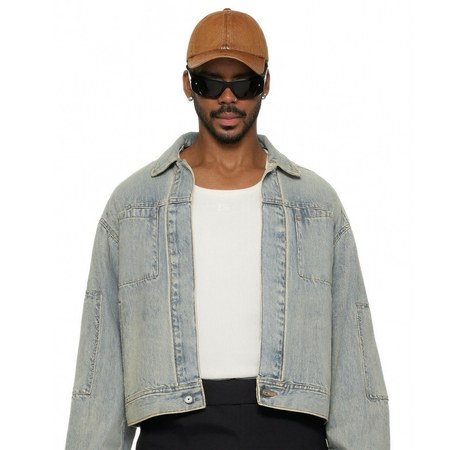
Dorian Dargan is the co-founder and CEO of Doji, an AI fashion app that turns selfies into a photorealistic digital likeness so people can try on real clothes from across the web and actually have fun doing it. An MIT-trained designer-engineer who built avatars at Meta on Oculus Quest and shaped visionOS at Apple, he teamed up with former DeepMind researcher Jim Winkens - the name Doji is literally Dorian plus Jim - and within days of the app's 2025 App Store debut raised a $14M seed round led by Thrive Capital with Alexis Ohanian's Seven Seven Six. He treats the creative process as something close to sacred, and is betting that the most personal way to shop online is to first fall a little in love with the image of yourself.
Peter Fitzpatrick
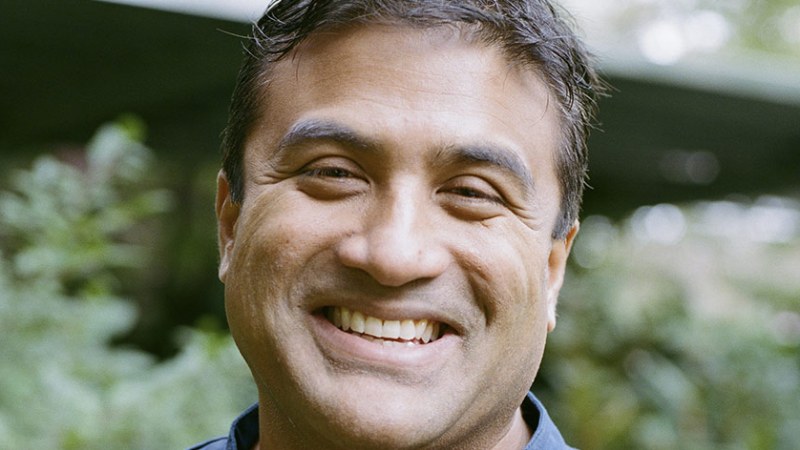
Peter Fitzpatrick is the founder and CEO of Swipecast, a New York based marketplace that lets brands, magazines and agencies book models, photographers, stylists, makeup artists and entire creative crews through a single app. A former Wall Street investor who spent roughly a decade at JPMorgan Chase and the hedge fund BlueMountain Capital, he switched lanes to run a top-ranked modeling agency, then built Swipecast in 2015 to fix the cash-flow delays, opacity and friction he watched models and creatives endure. Clients have ranged from Tommy Hilfiger, Ralph Lauren and Estee Lauder to Vogue, V Magazine and W Magazine.

Yidi Campbell
Yidi Campbell is the founder and CEO of Indyx, a San Francisco connected-wardrobe platform that lets people catalog, style, and resell the clothes they already own. A Georgetown business graduate, she moved from investment banking at Credit Suisse to corporate development at Gap Inc. and strategy at Athleta before launching Indyx in 2021 to fight fashion overconsumption from the closet outward.
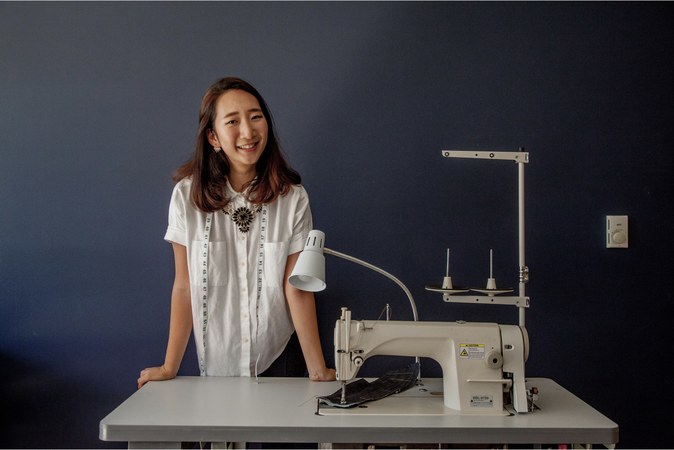
Allison Lee
Allison Lee is the co-founder and CEO of Revive, a New York fashion-tech company that helps brands recover value from returned and unsellable inventory through AI-driven inspection, refurbishment, and resale. A Korean immigrant who arrived in the U.S. at 13 and studied psychology at UC Berkeley, she first built Hemster, a SaaS tailoring platform, in 2017. When the pandemic stalled in-store tailoring, she pivoted the underlying fit-data infrastructure into Revive, which she has grown 46x in under a year and which has processed roughly $23M in merchandise. She is a 2019 Forbes 30 Under 30 honoree.