Company Profile / Biotech
Vivodyne
It grows human organs in a lab, lets robots run thousands of drug tests on them, and trains AI on the results - so medicine fails in a dish instead of in you.
It grows human organs in a lab, lets robots run thousands of drug tests on them, and trains AI on the results - so medicine fails in a dish instead of in you.
Not a person's lung - a lung grown from human cells, one of thousands sitting in trays inside a 23,000-square-foot lab that runs largely without people in it. A robotic arm pipettes an experimental compound onto the tissue. A camera watches what happens next. Multiply that by ten thousand, every day, and you have Vivodyne: a biotech company that decided the cheapest place to learn a drug is dangerous is a dish, not a patient.
Vivodyne grows more than twenty kinds of human organ tissue, tests drugs on them at industrial scale, and feeds the resulting mountain of data to AI models that predict how those drugs will behave in actual humans. The company is roughly forty people, has raised about $80 million, and counts a majority of the world's ten largest pharmaceutical companies among the partners knocking on its door. The idea is almost rude in its simplicity: stop guessing about humans by studying mice.
Here is the tension the whole company hangs on. A therapy can sail through years of animal testing, look brilliant in a mouse, and then fail the moment it meets a human body. Close to 95% of drugs that succeed in preclinical animal models go on to fail in human clinical trials. Every one of those failures costs years and, often, hundreds of millions of dollars. Patients wait. Promising science dies in the gap between species.
The reason is not that scientists are careless. It's that a mouse is not a small person. Its liver metabolizes differently, its immune system reacts differently, its tissues are simply not ours. For decades the industry accepted this as the cost of doing business - the polite fiction that an animal stands in for a human. Vivodyne's founders looked at that fiction and decided it was the most expensive assumption in medicine.
Vivodyne is a University of Pennsylvania spinout, founded in 2020 by Andrei Georgescu, who earned his Bioengineering PhD at Penn, and Dan Huh, an associate professor there and one of the field's pioneers of organ-on-a-chip technology. Their bet had a twist. The biotech world had spent years arguing over two rival approaches to growing tissue - organoids (self-organizing clumps of cells) and organs-on-chips (engineered tissues on tiny scaffolds). Vivodyne refused to pick a side. It combined both.
That blend produced organ models lifelike enough to capture a drug's effect at the tissue, cellular, organ, and whole-system scale. But a single beautiful lung-on-a-chip proves nothing to a statistician. To beat 95%, you need data - oceans of it. So the founders made a second, less glamorous bet: that the real breakthrough was not biology but throughput. Build the robots. Run ten thousand tissues at a time. Turn human biology into a dataset.
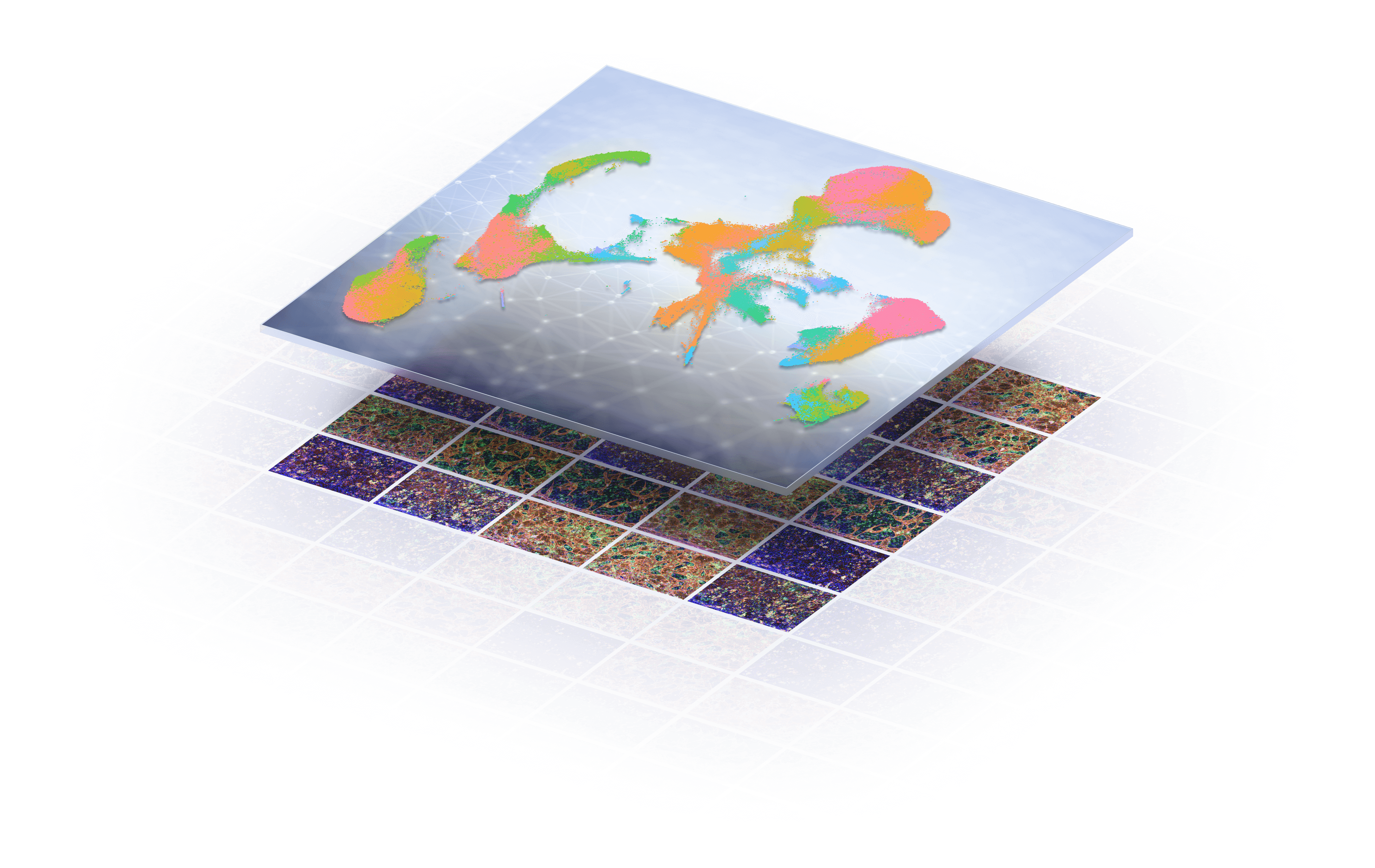
Strip away the marketing and Vivodyne is a pipeline. At the bottom are the human organ models - the lab-grown tissues that act like the real thing. In the middle is the robotic platform that can dose, cultivate, and analyze more than 10,000 individual tissues at once, generating human datasets larger than any single clinical trial could produce. At the top sits the AI: multimodal models trained on all that tissue data to predict a drug's safety, toxicity, efficacy, and likely effect on patients.
For a pharmaceutical client, the appeal is practical, not philosophical. They can run high-throughput screens, ADME-Tox studies, efficacy testing, and biologics-delivery work against real human tissue - and get a prediction before committing to a trial. The fun part, the part that amuses anyone who's spent time in a lab: the slowest, most artisanal step in biology has been handed to robots that don't sleep, don't get bored, and don't introduce the kind of variability that wrecks reproducibility.
20+ bio-engineered tissue types blending organoids and organs-on-chips, mimicking native human physiology.
A near-autonomous lab that doses, grows, and reads out 10,000+ tissues at a time - reproducible human data at scale.
Multimodal models trained on the tissue data to forecast safety, toxicity, and efficacy before the clinic.
Andrei Georgescu and Dan Huh spin Vivodyne out of the University of Pennsylvania, fusing organoid and organ-on-a-chip approaches.
The company emerges publicly with $38M led by Khosla Ventures to build lab-grown human organs for drug testing.
Collaborations form with a majority of the top-10 pharmaceutical companies as the FDA and NIH signal a move away from animal models.
Khosla Ventures leads again, joined by Lingotto, Helena Capital, Fortius, and existing backers - bringing the total to roughly $80M.
Vivodyne announces a 23,000 sq ft fully robotic facility at Genesis Marina, South San Francisco, to scale preclinical human testing.
Numbers are the whole pitch here, so look at them directly. The chart below frames the gap Vivodyne is selling against: how often a drug that works in animal preclinical models survives a human trial, versus the failure rate the industry has lived with for decades. The company's claim is that human-tissue data narrows that distance - and the demand from big pharma suggests buyers are at least willing to test the idea.
Industry-wide stat for the first two bars; the third reflects Vivodyne's stated reach across a majority of the ten largest drug companies. Bars are illustrative, not audited.
Vivodyne's stated mission is to change how scientists study human biology and develop therapies by achieving more preclinical certainty - producing predictive human data before a drug ever reaches a person. The timing helps. Both the FDA and NIH have signaled a willingness to move away from mandatory animal testing toward more predictive models, which turns a contrarian idea from 2020 into something closer to regulatory tailwind.
There's a quieter ethical thread too, though the company sells on accuracy rather than sentiment: fewer animals, fewer failed human trials, fewer patients exposed to drugs that were never going to work. The team - drawn from Harvard, Penn, AWS, and a scatter of biotech startups - is betting that "more predictive" and "more humane" happen to point the same direction.
Return to the opening scene. The robotic arm finishes its dose. The camera logs what the tissue does. On its own, that single test changes nothing. But it is one of ten thousand running in parallel, and tomorrow there will be ten thousand more, and the model that learns from all of them gets a little sharper each time at one specific job: telling a drugmaker, early, whether a molecule is worth a human life's worth of risk.
If Vivodyne is right, the lab in South San Francisco is not really a lab. It's a filter - the place where bad drugs are supposed to fail cheaply, in a dish, before they ever fail expensively, in people. The mouse had a good run. Vivodyne is betting its future was always borrowed.