Faster. Always Faster.
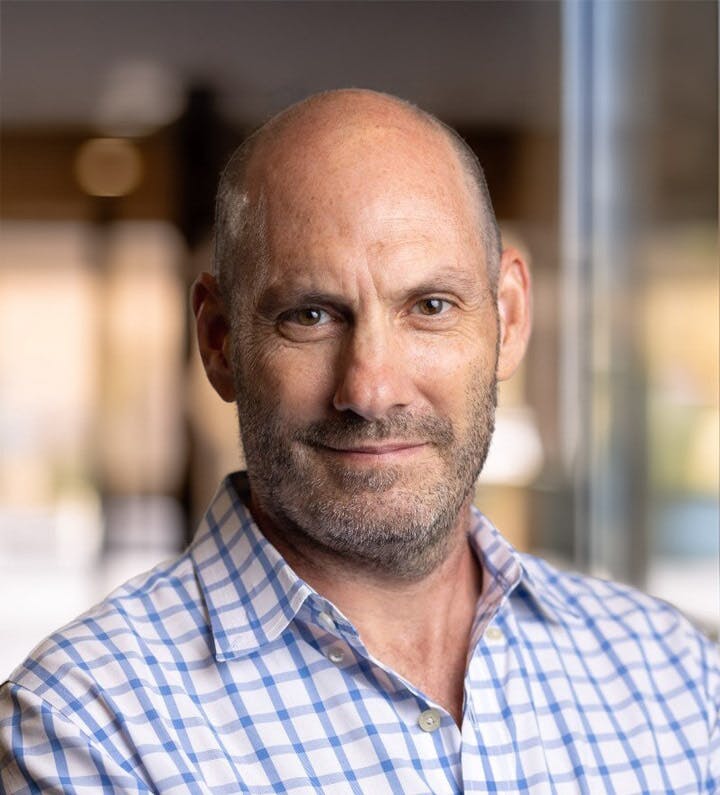
Anthony Costello arrived at his title - Chief Executive Officer of one of the world's most important clinical research platforms - by a route most executives would not recognize. He started in data management. Spreadsheets and oncology databases at Genentech in the early 1990s, when digital data capture in clinical trials was a novelty rather than a standard. His job, at first, was keeping trial records clean. He ended up spending three decades redesigning the entire pipeline.
The thing that drove him then - and still does - is frustration with slowness. Clinical trials take too long. They cost too much. They reach too few patients. For Costello, those were not systemic facts to accept but specific engineering problems to solve. That attitude took him from a Genentech data manager's desk to Herceptin and Avastin Phase III breast cancer trials, to two company co-foundings, to a White House forum on clinical research reform, to the CEO chair at Medidata.
The chair fits. Medidata runs more than 8,000 active clinical studies per year globally. Its platform sits at the center of the pharmaceutical industry's research infrastructure, and the industry's pressure to move faster - to get treatments to patients while they are still patients - is exactly the pressure Costello has spent his career learning to relieve.
Built Two Companies. Sold One. Ran the Buyer.
Before Medidata, there was Nextrials. Costello co-founded the company to pioneer digital data collection for clinical trials at a time when the phrase "electronic data capture" was still in need of an elevator pitch. As VP of Product Development, he was deep in the architecture of how trial data could be gathered, validated, and moved - work that would become table stakes for the entire industry within a decade.
Then came Mytrus. Co-founded to build the next layer - patient-centered trial innovations, decentralized and remote participation models, tools that removed geography as a barrier to enrollment. By 2012, Costello was serving as CEO of Mytrus. By the time Medidata acquired the company, Costello had already sketched most of what decentralized clinical trials would look like when the industry caught up.
Sociology B.A. from UC Berkeley. Clinical data manager at Genentech. Co-founder of two health tech startups. CEO of the company that acquired the second one. Career paths in life sciences don't get stranger, or more effective, than that.
The acquisition folded Mytrus into Medidata's Patient Cloud business unit, and Costello ran that unit for the better part of a decade before being elevated to CEO in March 2024. The promotion was less a pivot than a continuation - same problems, larger scale, more tools to work with.
I want everything to go faster.- Anthony Costello, CEO, Medidata Solutions
AI, Patients, and the White House
When Costello became CEO, Medidata was already in a strong position - part of Dassault Systèmes, the French industrial software giant known for 3D design and simulation across aerospace and manufacturing. Medidata's integration brought clinical research into a broader technology ecosystem, and Costello's mandate was to accelerate the company's move into AI, modernize the patient experience, and continue scaling the platform.
His approach to AI is characteristically practical. Medidata has access to what it describes as the world's largest database of anonymized clinical trial data - 25-plus years of deep industry data that, with the right intelligence layer on top, becomes a remarkably powerful asset. Costello's framing: "We have converted over 25 years of deep industry knowledge and technical know-how into a powerful new intelligence layer for the industry." The AI companions Medidata launched in 2025 are not chatbots bolted onto an existing product - they're purpose-built tools for the specific workflows of clinical trial professionals and patients.
Medidata's Intelligent Trials platform combines AI-powered virtual companions, real-world data integration, and decentralized trial tools. The goal: reduce the cost and complexity of drug development while expanding patient access and diversity in trial populations.
Outside the company, Costello has made the case for trial reform at a national level. His participation in the White House Clinical Trials Forum in 2024 put him in conversation with heads of government agencies and major academic medical centers - all asking the same question about how to bring down trial costs and accelerate timelines. His answer involved two things he has been working on for 30 years: better data and better patient access.
His priorities are specific: decentralize trials to remove geographic barriers, reduce burden on sites and patients, cut costs, and expand diversity in trial populations. "These are lofty goals and decades-old challenges for the industry," he told Healthcare Brew in late 2024, "but solving them collectively will bring down the cost and complexity of running these studies." His frustration with those gaps is the same frustration he had at Genentech. What has changed is his leverage.
By deploying AI-powered virtual companions, we are moving from bold vision to practical deployments that deliver real value today.- Anthony Costello, Medidata NEXT 2025
Transparency, Empowerment, Forward Pressure
Costello describes his leadership philosophy as centered on transparency, empowerment, and innovation. The shorthand for how it shows up inside Medidata is a consistent emphasis on mission clarity - the company exists to power smarter clinical trials, and that clarity is meant to function as the compass for every product decision and partnership negotiation.
His community commitments run alongside the business ones. He serves as executive sponsor of Medidata's Social Innovation Lab, a program focused on broadening research awareness and access. He supports equitable cancer care through the Lazarex Foundation. And he has served as a board member for Click Therapeutics, a digital therapeutics company, extending his footprint further into the patient experience space.
Organizations & Boards
The chairman-level work at the Society for Clinical Data Management and his seat on the Applied Clinical Trials editorial advisory board trace back to the data management roots - the discipline where he started and the discipline he spent his entire career trying to make faster, cheaper, and more useful for patients.
30 Years, One Direction
-
Early 1990sJoined Genentech as clinical data manager; focused on Herceptin and Avastin oncology research studies
-
Mid-1990sRose to lead oncology research technology at Genentech; key role in Phase III breast cancer trials
-
Late 1990sCo-founded Nextrials, Inc.; VP of Product Development; pioneered digital trial data collection
-
2010Co-founded Mytrus, Inc.; built patient-centered decentralized trial infrastructure
-
2012Appointed CEO of Mytrus
-
2013-14Mytrus acquired by Medidata Solutions
-
2014-2024Led Medidata's Patient Cloud business unit as President/CEO of Patient Cloud
-
March 2024Named Chief Executive Officer of Medidata Solutions
-
2024Keynote speaker at White House Clinical Trials Forum; advocated for AI-driven efficiency and reform
-
2025Named PM360 ELITE 2025 Transformational Leader; led NEXT San Francisco and NEXT New York conferences on AI companions in clinical trials
The Scoreboard
The Details That Don't Fit Anywhere Else
His undergraduate degree is in Sociology from UC Berkeley - an unusual foundation for a career built entirely on data architecture and clinical systems.
He co-founded the company (Mytrus) that Medidata acquired, then rose to run Medidata itself. Sold to the buyer, then became the boss.
Has been working on making clinical trials faster since before most of the pharmaceutical software industry existed in its current form.
Brought Medidata's case for AI-driven trial reform directly to the White House - one of a handful of tech leaders in the room at the Clinical Trials Forum in 2024.