clinical-data
(35)
OM1 turns the clinical paper trail into a view of what comes next
A screening study involving more than 650,000 women shows what OM1 is building: a way to make everyday medical records useful for research, regulation and the next difficult treatment decision.

1upHealth built the pipes. Now comes the hard part: getting healthcare to use them.
A health-data company discovers that connecting computers is only half the job. The other half involves insurers, clinical records, and the surprisingly persuasive power of a letter.
Milliman IntelliScript found a second life in your medical data
When health reform upended its original business, IntelliScript turned prescription histories into a new kind of life insurance evidence. Its expanding product line asks a deceptively practical question: what could you decide sooner if you understood the records you already had?
YPrime and the art of keeping a clinical trial moving
A promising drug still needs a working diary, the right dose and a patient who knows what happens next. YPrime builds the software for those easily overlooked details.

Reveleer’s billion-page bet: read once, use again
A medical chart can travel through three departments without telling them the same story. Reveleer is betting that shared evidence, careful AI and a few well-chosen acquisitions can end the relay.
Clinical ink and the expensive life of a copied number
A former paper-forms entrepreneur helped move clinical trial data entry to the patient encounter. Clinical ink’s next challenge is making that same idea work across homes, sensors, and ordinary clinical care.

Solarity and the lost hours inside a medical record
Hospitals bought electronic records. The paperwork kept coming. Solarity built a business around the awkward journey from an incoming document to information a clinician can actually use.
FIGmd and the art of asking doctors to do less
The company built a business getting clinical data out of the systems that already held it. Its history reveals why healthcare software succeeds only when the work around the software makes sense.

J2 Interactive and the art of keeping the old machine
A healthcare technology specialist finds its opportunity in the awkward space between systems. Its latest lesson comes from an Irish builders’ merchant with four decades of business knowledge inside a green screen.

Philips Capsule and the hospital’s missing conversation
Hospitals can measure almost everything and still make a nurse copy the numbers. Philips Capsule built its business in the awkward space between a bedside machine and a usable patient record.

The Patient Record That Arrives Before the Patient
Metriport began with a consumer health app and found a larger problem behind the clinic door: the records existed, but the people making decisions could not use them in time.

Venky Soundararajan and the Case of the Missing Medical Signal
A biological engineer trained to read proteins now builds machines that read the unruly archive of medicine. His wager is simple to state and difficult to execute: the next useful discovery may already be hiding in the record.
CitiusTech Bet Everything on Healthcare. Now It Has to Make AI Behave.
For two decades, CitiusTech refused to become a general-purpose IT shop. That stubborn focus built a valuable healthcare specialist - and now gives it a credible shot at making enterprise AI survive contact with clinical reality.

ELLKAY’s $5 Million Case for Boring Healthcare Software
It started in a New Jersey basement, cleaning up lab orders. Today ELLKAY sits beneath 58,000-plus practices and a national exchange reaching 261 million people - proof that the dullest layer of healthcare can carry the clearest ROI.
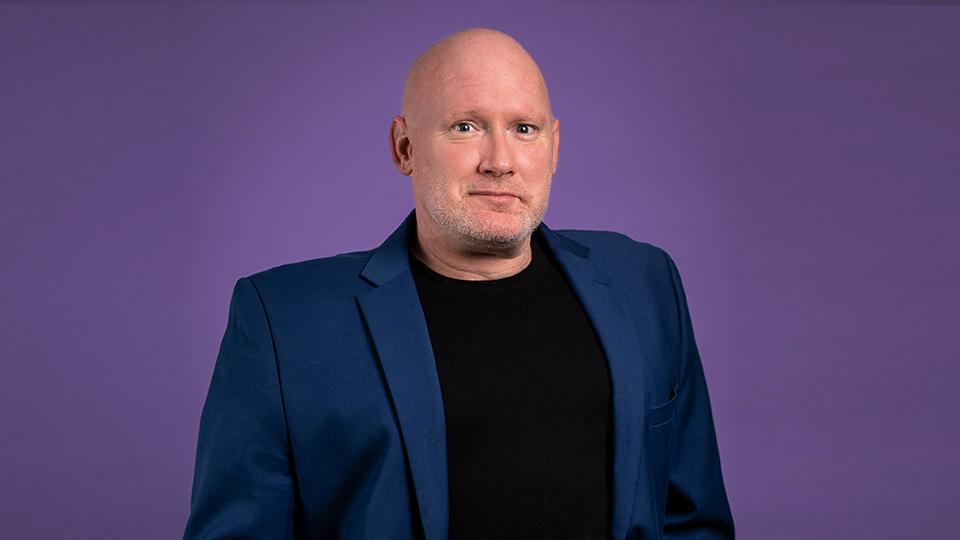
Michael Klozotsky Took the Side Door to the C-Suite - and Kept It Open
Before Michael Klozotsky marketed clinical data, he taught English, worked behind a bar, and wrote about debt collection. The apparent detours became a practical education in attention, systems, and the useful art of asking a stranger question.
CentralReach Turned Autism Care’s Paper Problem Into a $1.65 Billion Operating System
A clinician built a way out of paperwork. Thirteen years later, Roper paid about $1.65 billion for the workflow - and for a lesson in how narrow software becomes essential infrastructure.

Greenlight Guru Put Medical-Device Paperwork in the Cloud - Now It Wants the Whole Product Lifecycle
A medical device can be brilliant and still die in a badly managed document trail. Greenlight Guru built a business around preventing that expensive, deeply unglamorous failure - then expanded from quality records into product development, clinical evidence and AI-assisted work.

InteropX Sold the Plumbing: How a Five-Person Health-Data Company Made Stale Records Useful
Health plans had APIs, repositories and a stubborn problem: the records still arrived stale, duplicated or trapped in documents. InteropX built the virtual pipe between payers and providers, priced retrieval as low as $1 a chart, and eventually sold the system to Onyx.

InsiteOne Put Medical Images in the Cloud Before the Cloud Had a Name
The Connecticut company bet on off-site medical-image archiving in 1999, survived two giant owners, then returned with a broader plan: make radiology data portable, resilient and useful without forcing hospitals into another proprietary corner.
The Most Expensive Vial in a Clinical Trial Is the One Nobody Can Find
QuartzBio built a business around a stubborn problem in drug development: the sample is physical, the evidence is digital, and the two have a habit of losing track of each other. Its software tries to reconnect the chain before a missing vial or mismatched record becomes a costly trial delay.

Medpace
The Cincinnati CRO built a $2.5 billion business by taking on clinical trials that young biotechs cannot run alone - and by keeping the scientists, software, labs and logistics under one roof.

Astraea
Astraea is a San Francisco startup building an AI-native operating system for clinical trial biometrics. Its agentic platform turns raw study data and a protocol into FDA-ready outputs - SDTM and ADaM datasets, TFLs, and submission packages - compressing work that normally takes months into days while keeping humans in the loop for review and regulatory sign-off. Founded in 2026 by Stanford's Joshua Wang and Sanmay Sarada, the company is part of Y Combinator's Spring 2026 (P26) batch.
Frekil
Frekil is an AI-powered real-world evidence (RWE) platform for life sciences that turns raw clinical data - EHR, claims, and registries - into regulatory-grade evidence in minutes instead of months. Its agentic pipeline runs the full study lifecycle, from literature review and cohort building through statistical analysis plan generation and final reports, while keeping clinical data isolated from AI models. Founded in 2025 by IIT Bombay alumni Nikhil Tiwari and Shivesh Gupta, Frekil is a Y Combinator (X25/P25) company serving pharma, biotech, CROs, and academic researchers.

David Lazerson
David Lazerson is the co-founder and CEO of Briya, a healthcare technology company that connects hospitals, research institutions, and life sciences organizations so they can share de-identified, real-world patient data securely and in compliance with U.S. and European privacy rules. A physicist and cognitive scientist by training and a former Israeli military cyber operations officer, Lazerson built Briya on cryptography, federated learning, and zero-knowledge proofs, and in 2025 launched Briya AIRE, a clinical-grade AI research assistant that lets researchers ask questions in plain language instead of writing code.
Predoc
Predoc is a New York-based, clinician-founded startup building an AI-native platform for health information management. It automates the retrieval, cleaning, and structuring of patient medical records - pulling data from digital sources, faxes, and direct provider requests - and turns fragmented, unstructured documents into normalized, actionable data that plugs into existing clinical and research systems. Founded in 2022, the company raised $30M (Series A led by Base10 Partners) and serves oncology groups, research networks, and virtual care providers.
Redox
Redox is a Madison, Wisconsin-based healthcare technology company that runs a cloud network for exchanging clinical and administrative data between health systems, digital health vendors, payers, and life sciences companies. Founded in 2014 by three former Epic Systems engineers, Redox lets a customer connect once to a single API and then reach thousands of healthcare organizations across dozens of electronic health record systems, rather than building and maintaining hundreds of point-to-point integrations. The platform handles standards like HL7v2, CCD, X12, and FHIR, and processes billions of data transactions a year.

Nishant Hari
Nishant Hari is the founder and CEO of Predoc, a New York-based AI-native platform for health information management that retrieves, structures, and analyzes patient medical records for hospitals, oncology practices, and clinical trials. In September 2025 the company disclosed $30 million in combined seed and Series A funding led by Base10 Partners, with Northzone, Eniac, ERA, and angel investors from Flatiron Health, Datavant, Thirty Madison and Blackstone. Predoc reports 700% year-over-year revenue growth and cuts record retrieval times by up to 75% for customers like The Oncology Institute.
Century Health
Century Health is a New York-based health technology company that turns fragmented, messy electronic health record data into clean, structured, analysis-ready real-world evidence. Its AI-powered platform, CHARM (Century Health Abstraction & Retrieval Model), automates the curation, abstraction, and de-identification of clinical data to build disease-specific patient registries for pharmaceutical and life sciences research. Founded in 2023 by Vish Srivastava and Sanjay Hariharan, the company reports 97% accuracy against clinical expert judgment and raised a $5M seed round in 2026 led by Origin Ventures.
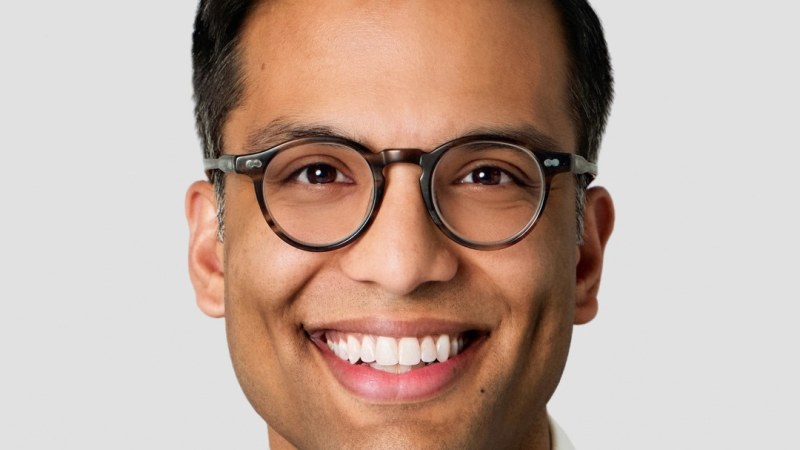
Vish Srivastava
Vish Srivastava is the co-founder and CEO of Century Health, a New York based AI company turning the messy, unstructured clinical notes buried inside electronic health records into structured, analyzable real-world evidence. Century's abstraction engine, CHARM, reads doctors' notes and pathology reports and pulls out clinical variables with 97% validated accuracy while keeping traceability back to the source document. The company focuses on therapeutic areas like gastroenterology, neurology, and rheumatology, and raised an oversubscribed $5M seed round in May 2026 led by Origin Ventures. Srivastava's pitch is simple and stubborn: the data needed to accelerate medical breakthroughs has already been collected during patient care; it just needs to be made accessible and actionable.

PointCross Life Sciences
PointCross Life Sciences is a Foster City, California software and services company that turns the messy data of drug development into FDA-ready submissions. Through its XBIOM platform and eDataValidator, it standardizes nonclinical and clinical study data to CDISC SEND, SDTM and ADaM formats, runs a Hadoop-based data repository for sponsors, and supplies the U.S. FDA itself with the software reviewers use to read nonclinical submissions. The company quietly powers roughly a quarter of all FDA SEND submissions.