The most expensive sentence in healthcare technology may be, “The data is in there somewhere.” It could be in an EHR, a 50-page clinical document, a payer repository last refreshed three months ago, or the fax tray nobody wants to discuss. InteropX built its company around the gap between having a record and being able to use it. From a small base in Clarksville, Maryland, the team connected provider systems to payer operations, pulled patient data continuously, matched and deduplicated it, and delivered the result in a shape an analyst could query before lunch.
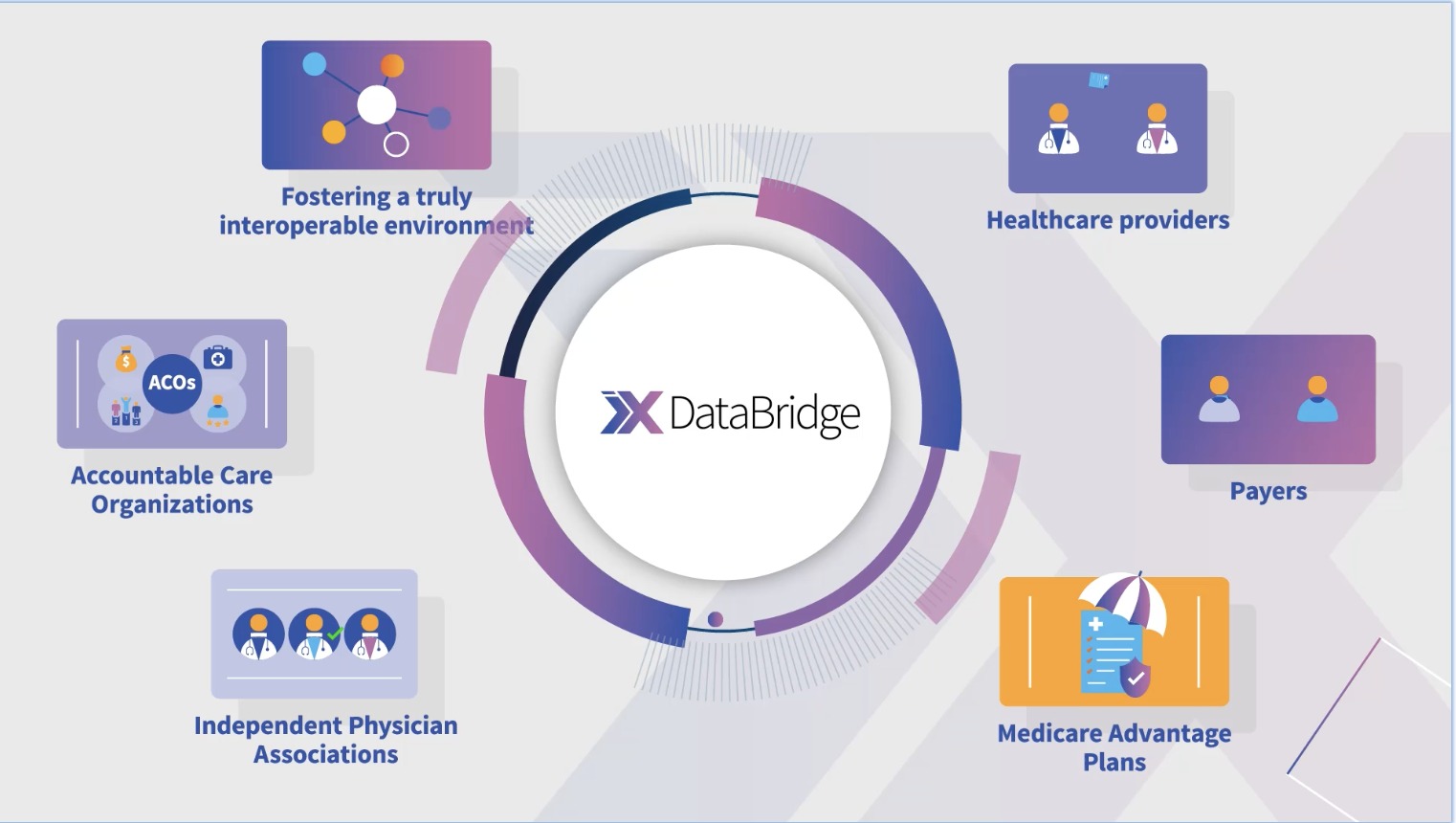
That sounds like plumbing because it is plumbing. The company’s lead product, iX DataBridge, was offered as a HIPAA-compliant cloud platform or installed inside a customer’s private cloud. It could connect to major EHR environments, extract historical records in bulk, fetch updates on demand or after an encounter closed, turn C-CDA documents into structured objects, and write selected information back into a provider workflow. The customers were health plans, Medicare Advantage programs, ACOs, IPAs, public-health systems, EHR vendors and the vendors that make risk and quality teams function.
The first failure was freshness
Healthcare interoperability spent years treating connection as the finish line. Get two systems speaking FHIR, expose the required API, declare victory. InteropX took a more operational view. A clinical data repository loaded once begins aging as soon as the patient sees another clinician. Even when new data arrives, duplicate entries, mismatched identities, absent provenance and inconsistent document formats can leave the repository technically full and practically hostile.
So the company’s “always up to date” claim was not decoration. It described the product loop: collect, validate, match, transform, deliver, repeat. A payer could provide a member roster or chart chase list and identify the destination - Snowflake, Microsoft SQL Server, Oracle or an existing clinical repository. DataBridge then handled the changing provider connections underneath. The point was to let the payer’s staff work on care gaps, risk adjustment, quality reporting or prior authorization instead of becoming permanent custodians of brittle interfaces.
What it cost - and what it really sold
InteropX did publish one unusually legible price: automated medical-record retrieval “for as little as $1 per chart.” That is not the price of an enterprise deployment. Configuration, security review, cloud infrastructure, source-system access and managed work all sit beyond a unit price. Full contracts were not public. Still, the number performed a useful trick. It translated interoperability from an abstract transformation program into a cost a buyer could compare with manual chart chasing.
The business model was enterprise B2B software plus implementation expertise. Customers could use InteropX’s hosted platform or deploy inside their environment. They were not buying a consumer app, a physician dashboard or another place to store PDFs. They were buying maintained connectivity and cleaned data, with regulatory support bundled into the same foundation. The same record could help satisfy patient-access rules, feed prior authorization, support quality measurement and sharpen risk work. One expensive integration became several budget lines’ shared infrastructure.
“The real challenge now is not whether we can exchange data. The challenge is making that data usable.”Nagesh “Dragon” Bashyam, co-founder and CTO
Two founders, one unglamorous seam
Latif Khalil and Nagesh “Dragon” Bashyam founded InteropX in 2016; some company directories use 2017, when the product entered commercial use. Khalil brought enterprise architecture, entrepreneurship and payer execution. Bashyam brought unusual depth in health-data standards. Onyx says he has authored more than 20 HL7 FHIR and C-CDA standards and helped build federal reporting infrastructure serving more than 30 million patients. A later InteropX leadership page listed security veteran Dennis Batchelder as CEO and Khalil as COO, while a 2024 interview identified Khalil as CEO. Titles moved. The founders’ division of labor remained clear: market operations on one side, standards architecture on the other.
 Latif KhalilCustomer fit, enterprise delivery and payer operations
 Nagesh “Dragon” BashyamFHIR, C-CDA and the machinery underneath
The company was initially bootstrapped. In a 2020 interview, Khalil described development funded by partner investment and sweat equity, with outside capital something to consider after launch. He also offered the sharper lesson: do not invent a market if customers already have a growing, painful one. InteropX positioned itself inside healthcare data management, where regulation guaranteed attention but daily operating problems determined whether software survived after the compliance deadline.
Proof without a parade of logos
Enterprise health-tech companies love customer mosaics. InteropX mostly kept its customers anonymous. It said one of the largest healthcare payers used DataBridge and its patient-access APIs to keep a repository current for claims processing, risk adjustment and quality reporting. It also said a large ambulatory EHR vendor embedded its FHIR server and libraries for Cures Act compliance. Those descriptions establish the kind of production work the platform handled, but not contract size, patient count or revenue. There is no responsible way to turn them into market share.
The more concrete proof came from certification. In 2022, Drummond listed InteropX versions 1.5.1, 1.5.2 and 1.5.3 across patient access, provider directory and clinical-data tests. Certification does not guarantee a smooth implementation. It says the product cleared defined conformance work at a moment when payers and EHR suppliers were scrambling to meet federal deadlines. For a tiny company selling to risk-averse buyers, that independent check carried more weight than a polished feature page.
Its culture showed up in the way the founders discussed AI, too. At HIMSS24, Khalil and Bashyam treated the hype cautiously and returned to practical use cases. The later Onyx roadmap followed the same order of operations: acquire the data, normalize it, then apply AI to document interpretation and operational decisions. A model cannot reliably rescue a missing encounter, an ambiguous patient match or an unauthorized exchange. InteropX’s expertise lived in knowing which problem had to be solved first.
What changed the buyer’s mind
The industry’s question shifted. First it was, “Can these systems connect?” Then it became, “Why are our teams still assembling the patient by hand?” CMS rules accelerated FHIR adoption and raised the cost of waiting. But compliance alone rarely paid for the second year of enthusiasm. InteropX moved its message toward operational reuse: a current clinical record could close a care gap, inform risk adjustment, feed a provider-access API and help a prior-authorization decision.
That reframing also explains the Onyx acquisition. The transaction closed on December 31, 2025 and was announced the next month; neither side disclosed the price. Onyx already had CMS interoperability infrastructure and payer reach. InteropX added bi-directional clinical-data pipelines, implementation depth and AI-assisted interpretation of unstructured documents. Onyx’s resulting pitch is “acquire once, interpret once, use everywhere.” In other words: make compliance the foundation, not the product’s final room.
The part worth stealing
InteropX offers a tidy playbook for founders building in regulated markets. The clever bit is not merely following a rule. Everyone sees the deadline. The clever bit is finding the recurring work that remains after the audit passes.
DataBridge sat in front of payer and provider systems instead of demanding a rip-and-replace program.
FHIR knowledge mattered because standards, APIs and source systems keep changing after implementation.
The same cleaned record served compliance and operating workflows - risk, quality, care and authorization.
There is also a condition founders should not copy blindly. This model works when customers have enough record volume, enough source diversity and enough regulatory exposure to justify a specialist layer. It works when provider access is available and data-use agreements permit continuous exchange. It weakens for a small organization with two stable sources, low chart volume and an integration team that can maintain the connections cheaply. It also fails when executives expect FHIR alone to repair bad identity data, incomplete records or unclear governance. A bridge cannot improve the cargo nobody is allowed to load.
Where InteropX fits now
The alternatives range from manual retrieval vendors and internal integration squads to larger interoperability platforms from Smile Digital Health, InterSystems, Redox, Health Gorilla, Rhapsody and ZeOmega. InteropX’s distinction was a narrow payer-centered bundle: continuously acquire the clinical record, make it analyzable, preserve the existing workflow and send information back when the EHR allows it. Its small team could not match a large platform’s distribution. It could own a particularly unpleasant seam.
Now that seam sits inside OnyxOS, where the old iX DataBridge idea feeds a broader clinical-intelligence stack. The brand may fade as the products integrate, but the company’s observation survives: moving healthcare data is a solved problem only from far away. Up close, the records are late, duplicated, mismatched and full of prose. InteropX built a business by staying up close.