A patient can arrive at a clinic with a thick medical history and, for all practical purposes, no history at all. The test was done at one hospital, the medication changed at another, the specialist wrote a note inside a third system. What the clinician sees is a familiar little drama: a blank screen, a patient trying to remember, and an appointment clock that refuses to slow down.
Metriport’s business is to make that scene less common. It connects U.S. health information exchanges, EHRs, labs, pharmacies and event feeds, retrieves the pieces of a patient’s record, and turns mismatched documents into one structured view. A care team can read it in a dashboard, inside an existing chart, through an API or in an analytical warehouse. The company sells infrastructure, but the intended unit of improvement is an ordinary visit.
The short version
- Metriport gives authorized healthcare organizations a way to retrieve and use outside patient records.
- Its open-source platform converts scattered documents into reconciled FHIR R4 data, summaries and alerts.
- Customers include Color Health, Canvas Medical, ArcHouse and Amazon One Medical; the core market is U.S. care delivery.
The detour that found the real problem
Dima Goncharov and Colin Elsinga did not begin with a grand national exchange plan. Their first effort was a consumer health app. During Y Combinator’s summer 2022 batch, they looked harder at the data that app would need and discovered a less photogenic problem: providers and the companies serving them had trouble obtaining useful records at all. Their December 2022 seed announcement described the turn toward an open-source healthcare API. The first released product was a Health Devices API for wearables and remote monitoring. The Medical API followed.
It is a revealing pivot. People may wish to own their health data, but clinicians need it under the pressure of a scheduled encounter. Metriport moved toward the place where missing context has an immediate cost. It also moved into the expensive, unromantic work that makes a data product possible in healthcare: network agreements, identity matching, security reviews, terminology mapping and the occasional PDF that behaves like a stubborn heirloom.


A record is more than a folder
The company’s central trick is easily understated. A query can reach exchange networks and other sources, but a pile of returned files is still a pile. Metriport converts C-CDA documents, HL7 messages, PDFs and native FHIR into FHIR R4 resources. It maps clinical codes into standard vocabularies, identifies duplicates and preserves links back to the source. The result is meant to answer a question such as “What medications is this person taking?” without asking a clinician to open twenty near-identical documents.
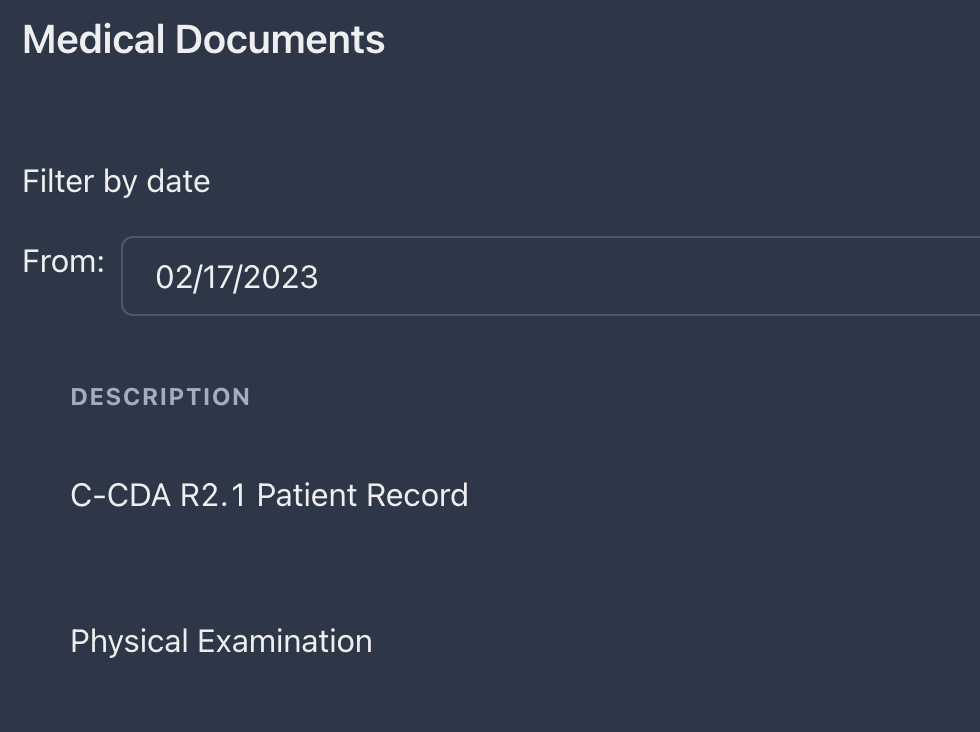
There are several doors into the same system. Developers can use the Medical API and TypeScript or Python SDKs. A smaller practice can use the hosted Dashboard. An EHR vendor can embed the interface in its own product. Analysts can work with flattened clinical tables. Metriport also offers medical record summaries, admission and discharge alerts, and tools for finding care gaps. The business is a paid B2B service built around open-source software. The public sandbox gives technical teams a way to test before a commercial rollout.
“The decisions around how patient information is managed and transformed are too important to trust to a black box.”Colin Elsinga, co-founder and COO
That is the useful difference between Metriport and a closed data vendor. The code can be inspected, and some components can be self-hosted. Yet open code does not by itself grant access to a national exchange or decide whether a patient match is safe. Metriport’s commercial work sits in those difficult layers as much as in the repository. Its buyers can choose how much to build, while the company maintains network connections and a hosted route into care workflows.
The cost of arriving uninformed
Color Health offers a sharp illustration. Cancer care can scatter notes, scans, medicines and pathology across years and institutions. Color says one oncology patient may have more than 2,000 records. Before using Metriport, its staff could spend 30 minutes to two hours actively pursuing records for a patient through calls, faxes and follow-ups. Color began with dashboard access and moved to a full API integration in under two weeks. Its clinicians now use summaries to find a path through the volume, then inspect the underlying record where needed.
ArcHouse, a hospice operations platform, tells a different version of the same story. At admission, delay is not merely irritating. Families may be trying to arrange care in the last days of a life. ArcHouse embedded Metriport in its own workflow and reports saving about an hour of manual record collection per referral. Its rollout took less than a week. The number matters because it is attached to a real action: a referral can be reviewed with conditions, procedures and diagnostic reports already in hand.
Canvas Medical shows why delivery matters as much as retrieval. It uses Metriport to bring outside records into the EHR clinicians already open. Canvas says its providers can view history from other organizations without a second login, and its own updates can flow back through exchange networks. This is a quiet but important distinction. A record that arrives in another portal may be technically available and practically absent.

Where the business sits
Metriport serves provider groups, digital health companies, EHR makers and care management platforms. That places it between the networks that hold or route clinical information and the people who must act on it. The customer does not have to build separate connections to each network, nor invent its own converter for every document format. In 2024, Metriport joined athenahealth’s Marketplace so outside records and summaries could appear within athenaOne. It has also worked with Tuva Health on a pipeline that combines record access with transformation for analysis.
The company says its connected networks can reach records for more than 340 million people in the United States. That is a claim about potential network coverage, not a count of active patients or paying customers. It raised $2.4 million in seed funding in 2022 and announced a $26 million Series A led by Matrix in August 2026. In September 2026 it was accepted as a Candidate QHIN under TEFCA, entering a technical onboarding process toward a larger role in national exchange. Candidate status is a step, not a designation.
The old alternative is easy to picture: separate HIE contracts, bespoke EHR integrations, manual fax requests and a clinician reconstructing the story from fragments. Other interoperability vendors can solve parts of the same problem, and large organizations can build their own stack. Metriport’s bet is that one inspectable platform, delivered directly into a team’s workflow, is a better use of engineering time. That bet is most persuasive when there are enough outside records to retrieve and a real care decision waiting for them.
There is a limit to any such promise. Data can be missing at the source, patient matching must be correct, and exchange access depends on legitimate healthcare use and the rules of each network. A beautifully formatted summary cannot make an absent record appear. Yet the examples at Color, ArcHouse and Canvas suggest a practical measure of progress: fewer minutes hunting, more time reading, and a patient who does not have to recite their entire medical history before the appointment can begin.