Profile / Founder
Nishant
Hari.
He runs Predoc, the New York company that decided the most valuable AI in healthcare might not diagnose anything - it might just find the file.
He runs Predoc, the New York company that decided the most valuable AI in healthcare might not diagnose anything - it might just find the file.
Nishant Hari runs a company that pulls medical records out of American hospitals and, using large language models, makes them useful. This is a boring sentence. It is also, in the small world of healthcare software, roughly the equivalent of announcing you have figured out gravity. Predoc, which Hari founded in 2022 in New York and originally incorporated as MEMR Health, closed a combined $30 million seed and Series A in September 2025 led by Base10 Partners, with Northzone, Eniac, and ERA participating, plus a bench of angels that reads like a healthtech dinner party - the founders of Flatiron Health, Travis May of Datavant, the cofounders of Thirty Madison, and Bill Murphy, formerly CTO of Blackstone. The company reports 700% year-over-year revenue growth and claims to cut medical record retrieval time by 75% for customers like The Oncology Institute. Fortune covered the round under a headline that essentially said: someone finally raised real money to stop chasing documents.
The pitch is unglamorous, which is why it works. Every hospital, every specialty clinic, every clinical trial site in the United States has a version of the same problem: the patient's records are somewhere else. They are at another practice, on another EHR, on paper, on a fax, in a PDF someone scanned at an angle. Getting them takes phone calls. Reading them takes people. Structuring them into anything a downstream system can query takes more people. Predoc automates that entire pipeline - retrieval, indexation, and analysis - and sells the result as a service.
Hari, in the trade press, has been unusually direct about what the company is replacing. Predoc, he has said, has become "the fully outsourced solution, replacing their internal legacy teams" for a growing number of customers. About 35 organizations rely on the retrieval and analysis products today, per the company's disclosure to Fortune. The Oncology Institute is a lighthouse. Oncology is a shrewd wedge: high document volume, high acuity, immediate ROI when a nurse stops spending afternoons on hold with a rural clinic's fax line.
The AI part is the part investors care about, but the operational part is where the money is. Predoc's platform ingests FHIR and CCDA feeds where they exist, extracts data from unstructured PDFs where they don't, and produces what the company calls patient facesheets - one-page views a clinician can actually read before an appointment. The trick, and the reason Base10 wrote the check, is that the work used to be done by humans with clipboards, and now it isn't.
"Within six months we were doing about half a million dollars in revenue," Hari told Fortune, "and that's when we got preempted for our seed round." Half a million ARR in six months, for a company selling into hospital procurement cycles, is either a fluke or a sign that the market has been waiting. It was a sign. The seed round did not need to be marketed. It came to him.
The Series A followed the same pattern, only with better logos on the term sheet. Base10 has been quietly assembling a portfolio of what it calls "real economy" AI companies - firms selling into industries that are not tech, and whose buyers are not paid to care about GPT-4's context window. Predoc fits the thesis exactly. So does the growth curve. 700% is the sort of number that gets a Series A pre-empted the same way the seed was.
Hari has been careful, both in interviews and in his written positioning, to distinguish Predoc from the crowded and often uncomfortable field of AI-that-diagnoses. "We're not looking to replace clinical judgment," he told Fortune. In the HIT Consultant round announcement, he elaborated: "Point solutions tackling this workflow have largely failed to deliver on their promised efficiency gains, and few have unlocked the holy grail of headcount resource reallocation, improved clinical outcomes, or faster clinical trial enrollment. That's why we are building Predoc, to completely offload this painful, messy workflow from our customers, so they can focus on fulfilling their core purpose - to improve human health."
Translate the corporate register and it says: the AI is not there to be the smart one. The AI is there so the smart ones can stop shuffling paper. This is a distinction with commercial consequences. Hospitals will not, in general, buy a product that tells them their oncologists were wrong. They will happily buy a product that tells their oncologists which files matter.
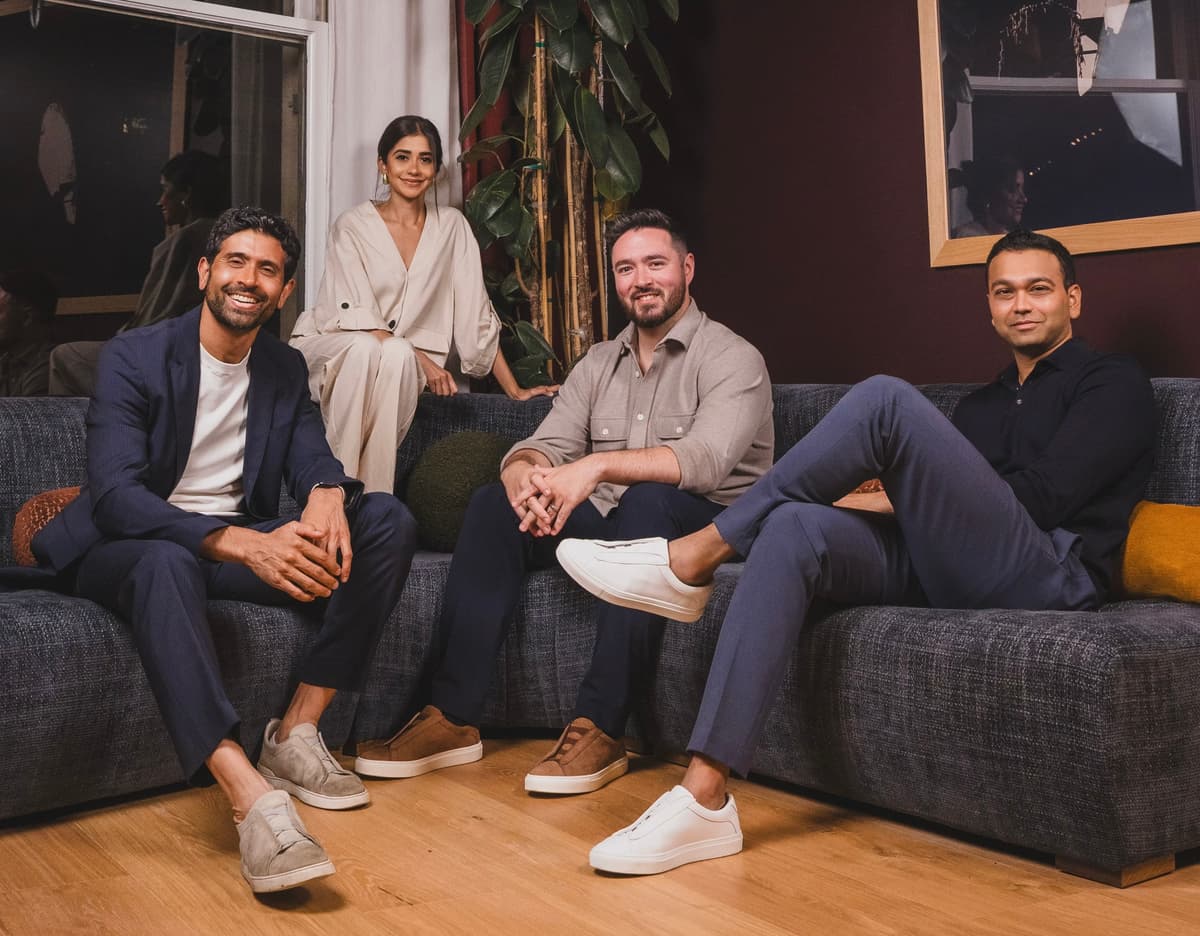
Predoc's founding photograph shows four people. Two of them are physicians. Dr. Kaushal Kulkarni and Dr. Priya Mehta joined Hari and Alex Daniels as cofounders. According to Fortune's account, Hari began building the company before he met Kulkarni; the doctor came in later. That sequencing matters. A software person built a healthcare workflow product first, then went and found the clinicians who could tell him where it was wrong. It is the inverse of the usual healthtech origin story, which tends to start with a clinician who is frustrated and ends with a slide deck. Here the workflow was already running when the medical opinions arrived.
Predoc is headquartered in New York. Public data pegs headcount at 47. For an infrastructure play into hospital IT, that is small. It is also probably about to grow. Series A dollars in healthcare software typically fund the go-to-market engine - implementation managers, security reviewers, HIPAA compliance leads, and the sales people who translate for CIOs. Hari's stated ambition is to expand into clinical trial enrollment, where the same document problem exists but the stakes are different: matching a patient to a trial faster is not just an operational win, it is, in some cancers, the difference between a treatment and no treatment.
None of this makes Predoc a household name. That is the point. The companies that quietly control the middle of American healthcare - the plumbing between EHRs, the clearinghouses, the record-request services - are not household names either. They are billion-dollar businesses run by people you have not heard of. Nishant Hari would very likely be pleased to be one of them.
Within six months we were doing about half a million dollars in revenue, and that's when we got preempted for our seed round.
Two of these bars are the pitch. The other three are consequences. When retrieval time collapses, revenue grows, then customers arrive, then you hire, then you raise. The order matters. Predoc did not raise a Series A and then find its numbers. It found its numbers and then Base10 called.
Originally incorporated as MEMR Health. Hari begins building before the medical cofounders arrive.
Sales cycle short-circuits the fundraising cycle. Seed round pre-empted.
Record retrieval cycle times reportedly cut by 75%.
Base10 Partners leads. Northzone, Eniac, ERA join. Angels from Flatiron, Datavant, Thirty Madison and Blackstone.
Predoc was originally called MEMR Health. The rename came before the money did.
Two of the four founders are practicing physicians. Rare for a company selling into physician workflows.
Datavant's founder is on the cap table. Datavant is arguably the closest publicly known analog to what Predoc is building.
We're not looking to replace clinical judgment.
The founder and CEO of Predoc, a New York-based AI-native health information management platform. He started the company in 2022 and closed a $30M combined seed and Series A in September 2025.
It retrieves, structures and analyzes patient medical records for hospitals, oncology groups and clinical trials, automating a workflow that is otherwise handled by internal document-chasing teams.
About $30 million as of September 2025, in combined seed and Series A funding led by Base10 Partners.
Nishant Hari cofounded Predoc with Dr. Kaushal Kulkarni, Dr. Priya Mehta, and Alex Daniels.
New York, New York.